Artwork
Interior of the Church of St Bavo in Haarlem
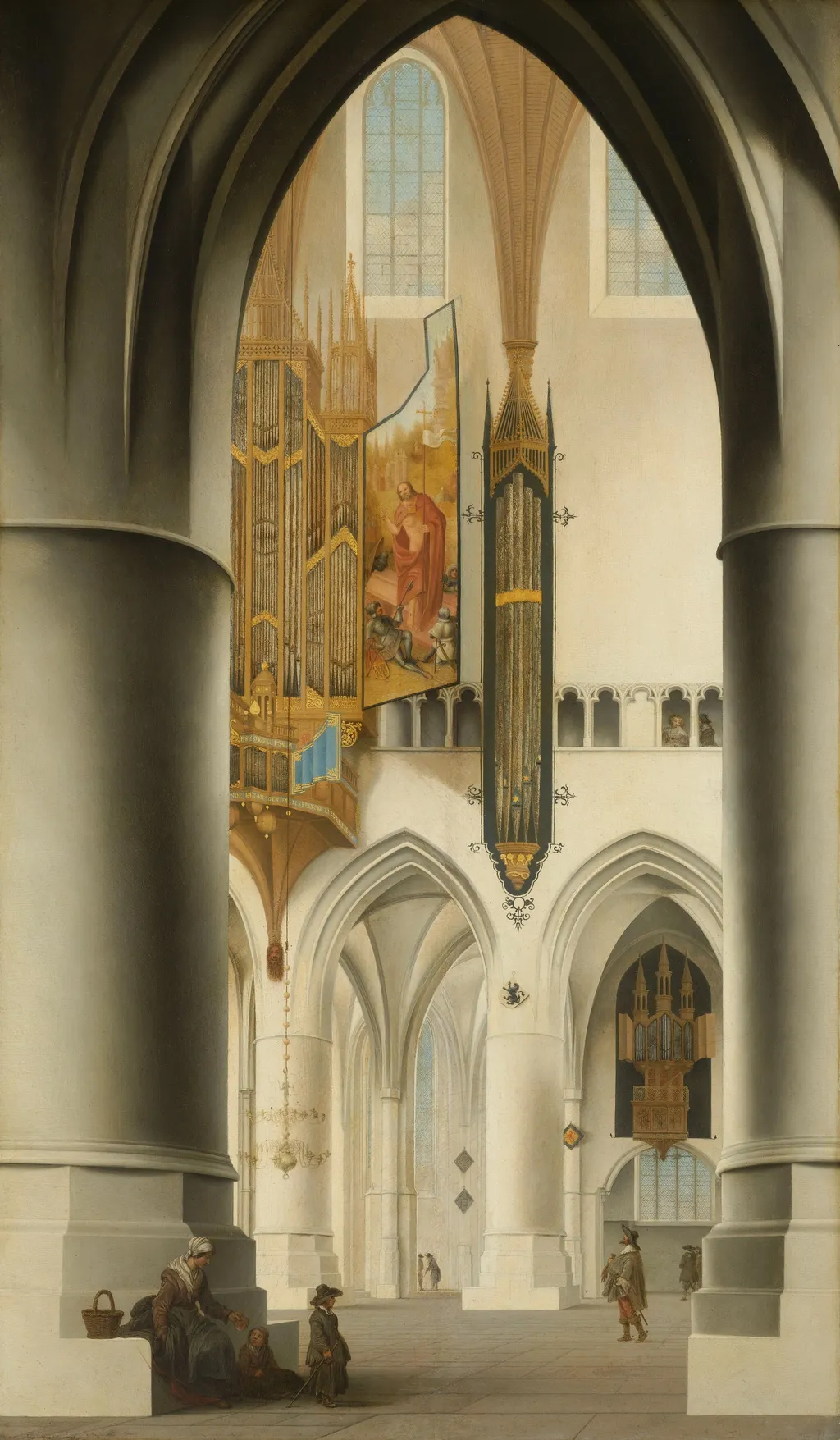
Interior of the Church of St Bavo in Haarlem is an oil painting by the Dutch Golden Age artist Pieter Jansz Saenredam. It dates from 1636 and is held in the collection of the Rijksmuseum.
About this work
Technique & Style
The work is an oil painting executed on a wooden panel, measuring approximately 94 by 55 cm.
The work is an oil painting executed on a wooden panel, measuring approximately 94 by 55 cm. Saenredam prepared it through a rigorous, mathematically grounded procedure: in 1635 he made a detailed on-site sketch inside the Sint-Bavokerk, from which he derived a perspectively correct construction drawing, then transferred the design to a larger panel using grid patterns before completing the painting on 15 April 1636.
Stylistically, the composition is framed by a Gothic arch in the southern choir ambulatory, through which the eye is drawn upward to the gilded late-medieval organ in the northern ambulatory. Saenredam deliberately narrowed and sharpened this arch relative to his preparatory sketch, producing the pronounced vertical thrust and austere Gothic severity for which the picture is known. He rendered the characteristic white tones of the Calvinist interior by adding chalk to the paint, creating a whitewash-like effect, and he progressively lightened the spaces toward the rear to model light and shadow.
Warm brown-red-grey tones in the organ contrast with the smooth columns, while small staffage figures in matching hues emphasize the building's scale and lend human warmth to the otherwise strict architecture.
History & Provenance
Pieter Jansz. Saenredam created this oil-on-panel work in 1636, specifically completing the painting on April 15 of that year. The artist, who resided in Haarlem at the time, prepared for the commission by producing a detailed on-site sketch of the St. Bavo's Church interior in 1635.
He subsequently developed this preliminary study into a mathematically precise construction drawing to resolve the perspective. Using grid patterns, Saenredam transferred the design onto a larger panel to execute the final image. Although he generally strove for factual accuracy, he made minor adjustments to the architectural forms, such as narrowing the arches, to enhance the vertical emphasis and pictorial effect of the Gothic space.
The painting is held in the collection of the Rijksmuseum in Amsterdam. Sources describe the work as part of the museum's holdings, with one reference specifically locating it within the Gallery of Honour. The artwork was created in 1636 and measures approximately 94 by 55 centimeters, though some records specify dimensions of 93.7 by 55.2 centimeters.
While the work is documented in various art historical publications and museum catalogs from the early 21st century, the provided sources do not list specific past exhibitions, loan histories, or inventory accession numbers beyond its general presence in the Rijksmuseum collection.
Context
Pieter Jansz. Saenredam’s Interior of the Church of St Bavo in Haarlem (1636) exemplifies his pivotal role in establishing a distinct genre of Dutch architectural painting. Working during the Eighty Years’ War, Saenredam documented the stripped Calvinist interiors of northern Netherlands churches, transforming austere spaces into compositions governed by rigorous perspective and measured light.
His method relied on on-site preparatory drawings later refined into mathematically exact construction drawings, transferred via grids to panel, ensuring both topographical accuracy and pictorial harmony.
Scholarship emphasizes Saenredam’s departure from contemporary Mannerist excess, favoring restrained realism and subtle perspectival adjustments to heighten verticality and Gothic austerity. Critics note the interplay of cool architectural planes with warm organ tones and carefully placed figures, which guide the viewer’s gaze while humanizing the monumental space. His approach, rooted in empiricism yet refined for effect, influenced generations of Dutch interior painters and secured his status as the genre’s founding figure in Dutch art.
Legacy
Pieter Jansz. Saenredam is recognized as the initiator of a new genre within Dutch art focused on urban landscapes and specifically church interiors. His meticulous approach to architectural representation, characterized by mathematical precision and a serene atmosphere, established a style that found many imitators.
However, contemporary and later assessments suggest that while his technique was widely followed, his unique ability to balance strict perspective with warm, atmospheric depth was never truly equaled. This specific work, along with his other depictions of the Grote Kerk, solidified his career-long specialization in architectural subjects, distinguishing him from peers who focused on seascapes or winter scenes.
Overview
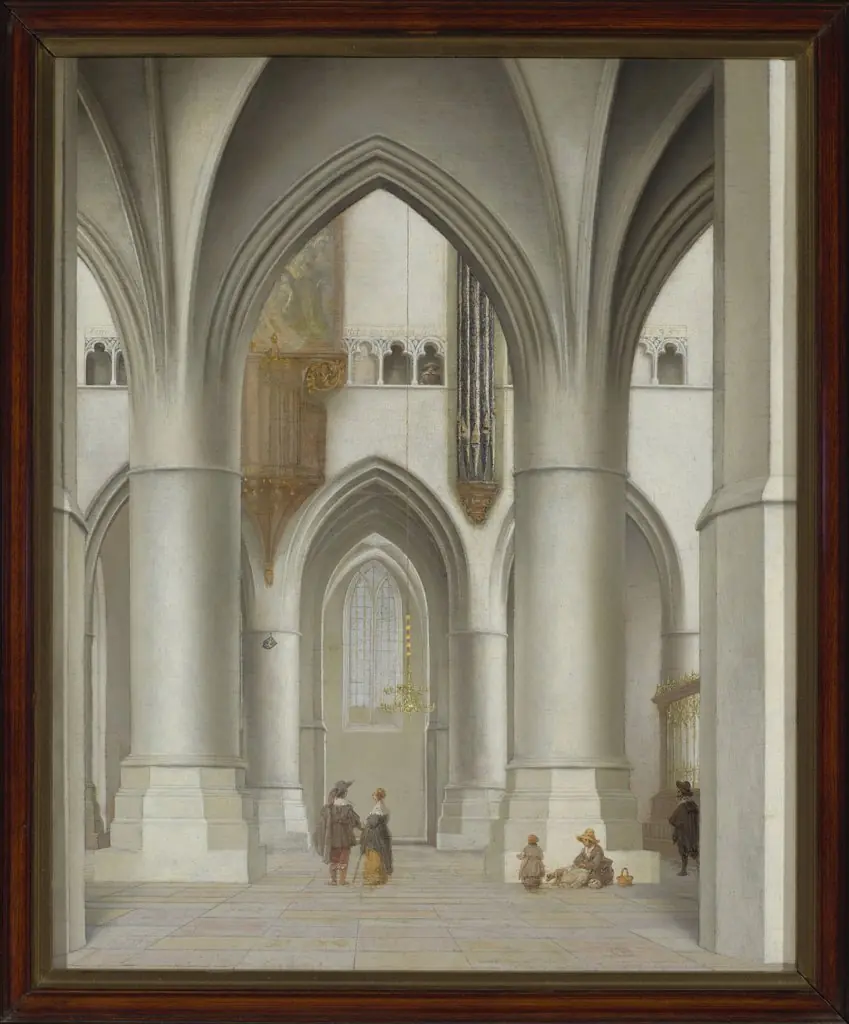
Created in 1636, this oil‑on‑panel work by Pieter Jansz Saenredam records the nave of Haarlem’s St Bavo’s Church. The composition captures a spacious interior bathed in diffused daylight, with a modest group of figures positioned on the lower steps. The painting is part of the Rijksmuseum’s collection in Amsterdam.
Subject & Meaning
The scene presents a tranquil ecclesiastical space, emphasizing architectural order over narrative action. A woman seated with a basket and a man in dark attire stand near the entrance, suggesting everyday activity within a sacred setting. The modest human presence underscores the church’s function as a communal gathering place rather than a theatrical stage.
Own this work as a print
Artist & collection

Artist
Pieter Janszoon (abbr. Jansz.) Saenredam (9 June 1597 – buried 31 May 1665) was a painter of the Dutch Golden Age, known for his distinctive paintings of whitewashed church interiors such as Interior of St Bavo's Church…

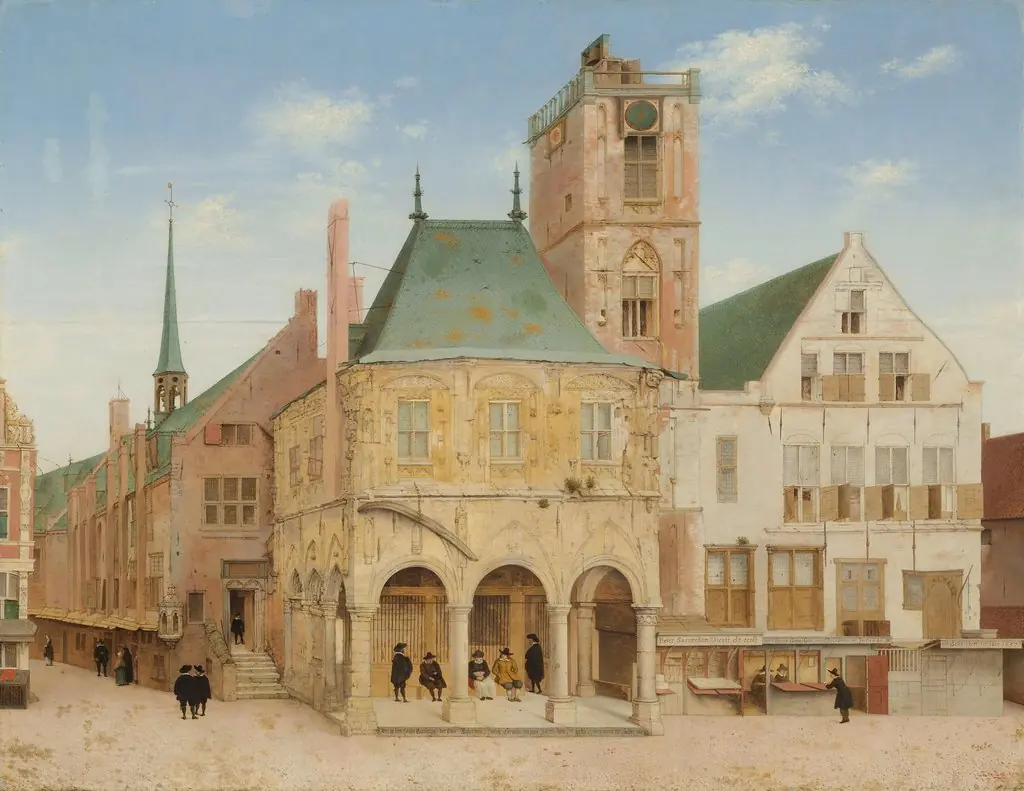
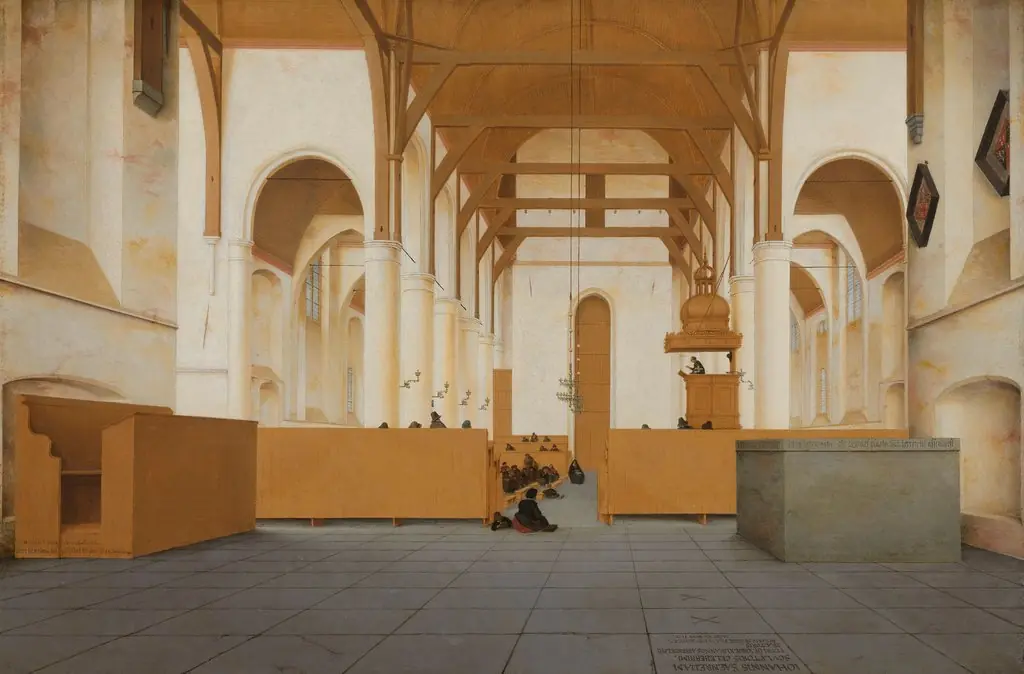
- View of the interior of the St. Bavo Church in Haarlem
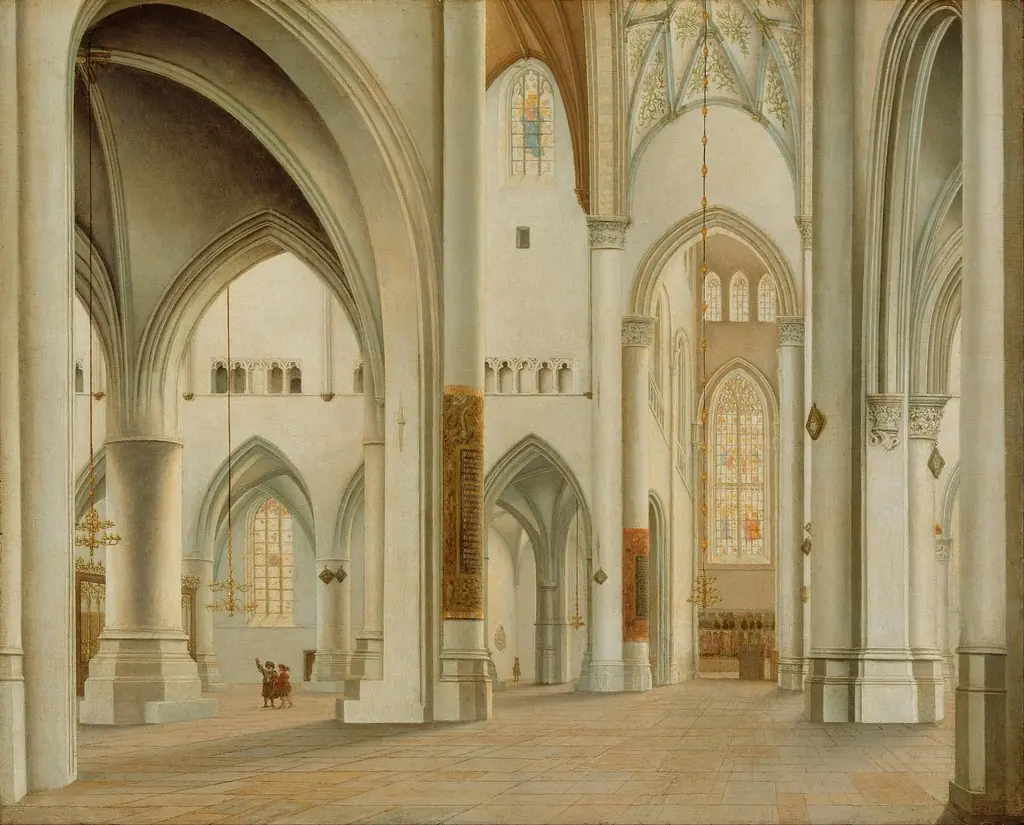 The Interior of St. Bavo, Haarlem
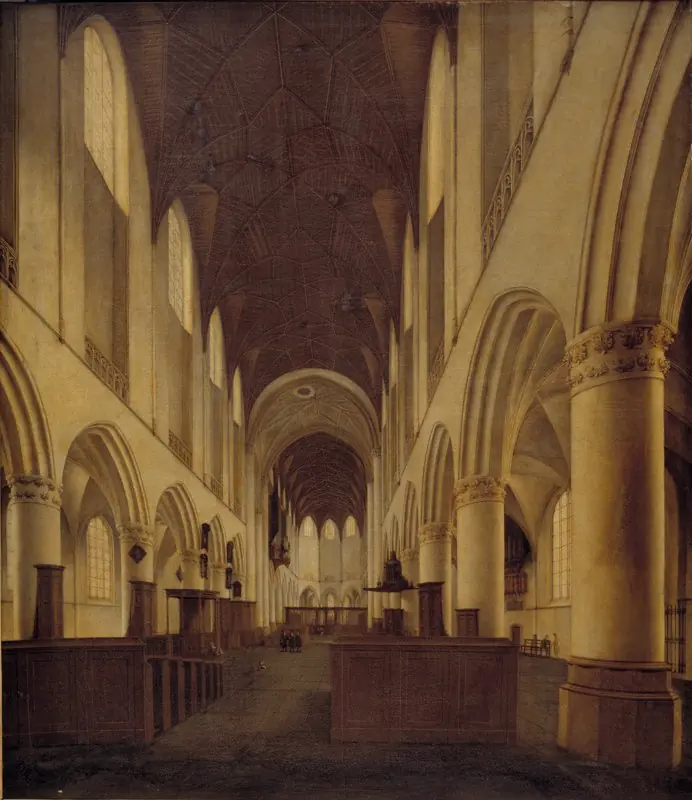 Interior of St Bavo Church in Haarlem. View from the Nave towards the Choir
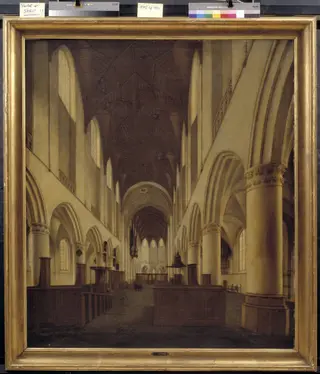 Interior of St Bavo Church in Haarlem. View from the Nave towards the Choir
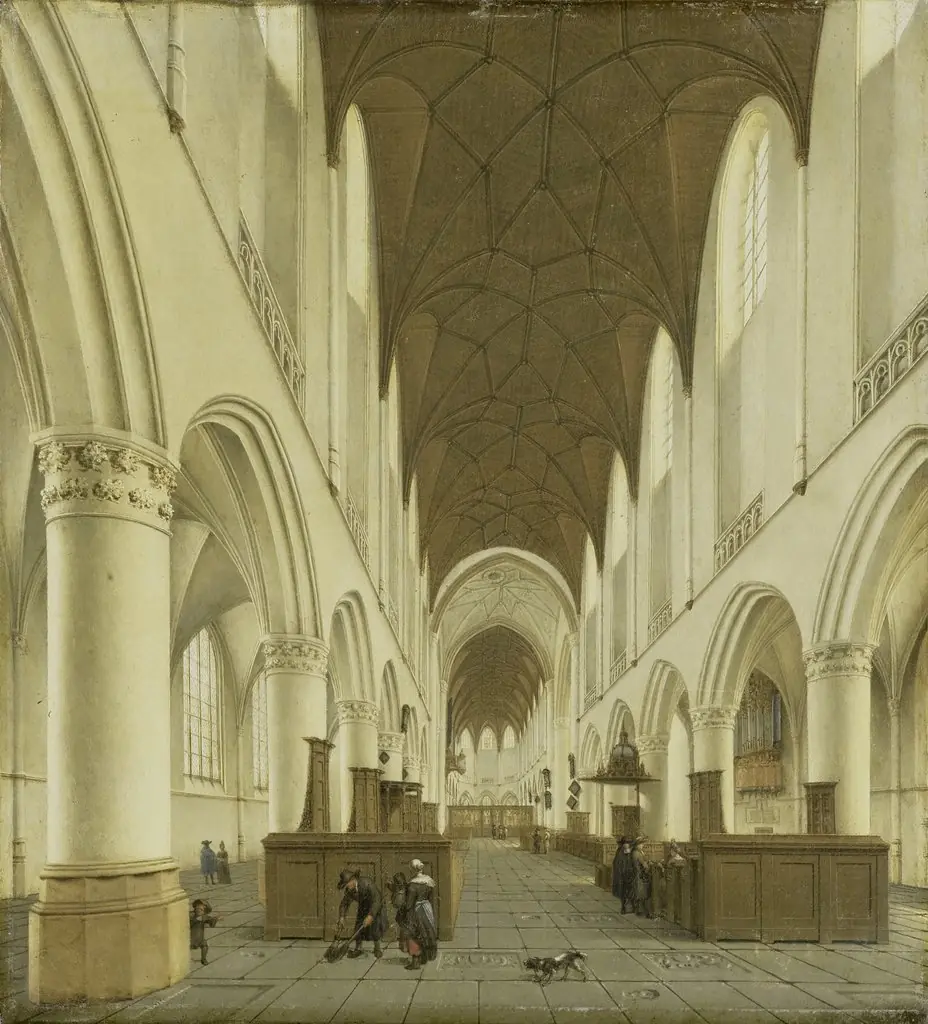 The interior of Saint Bavo's Church in Haarlem
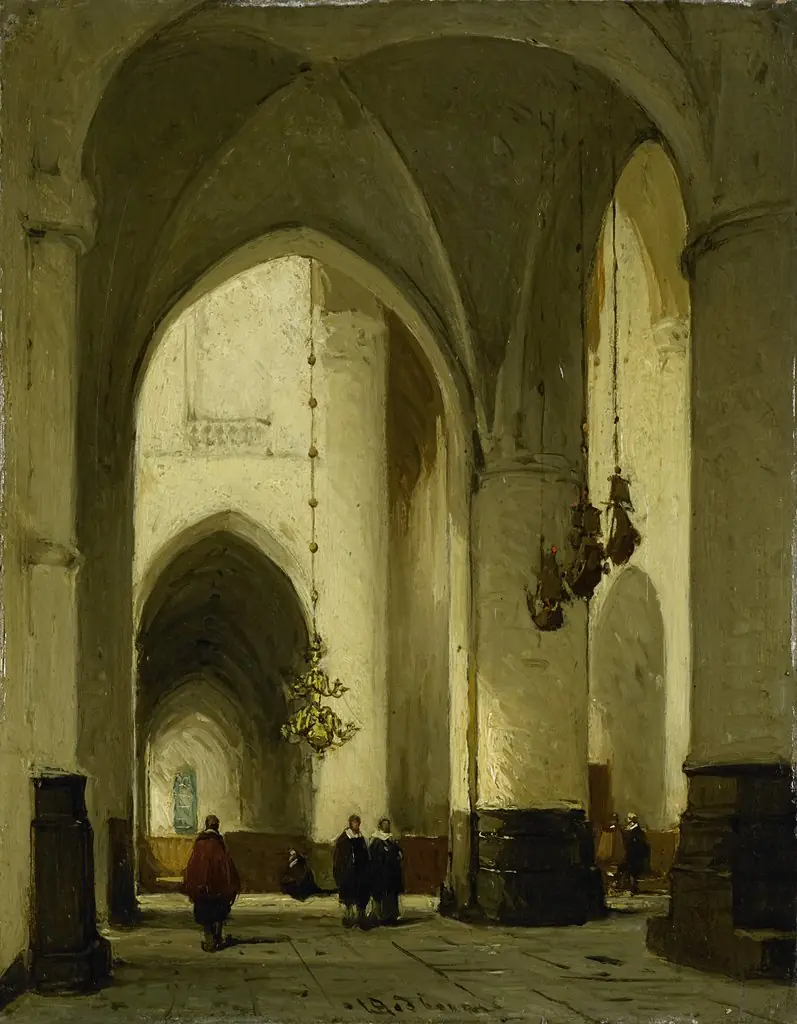 Interior of the Church of St Bavo in Haarlem
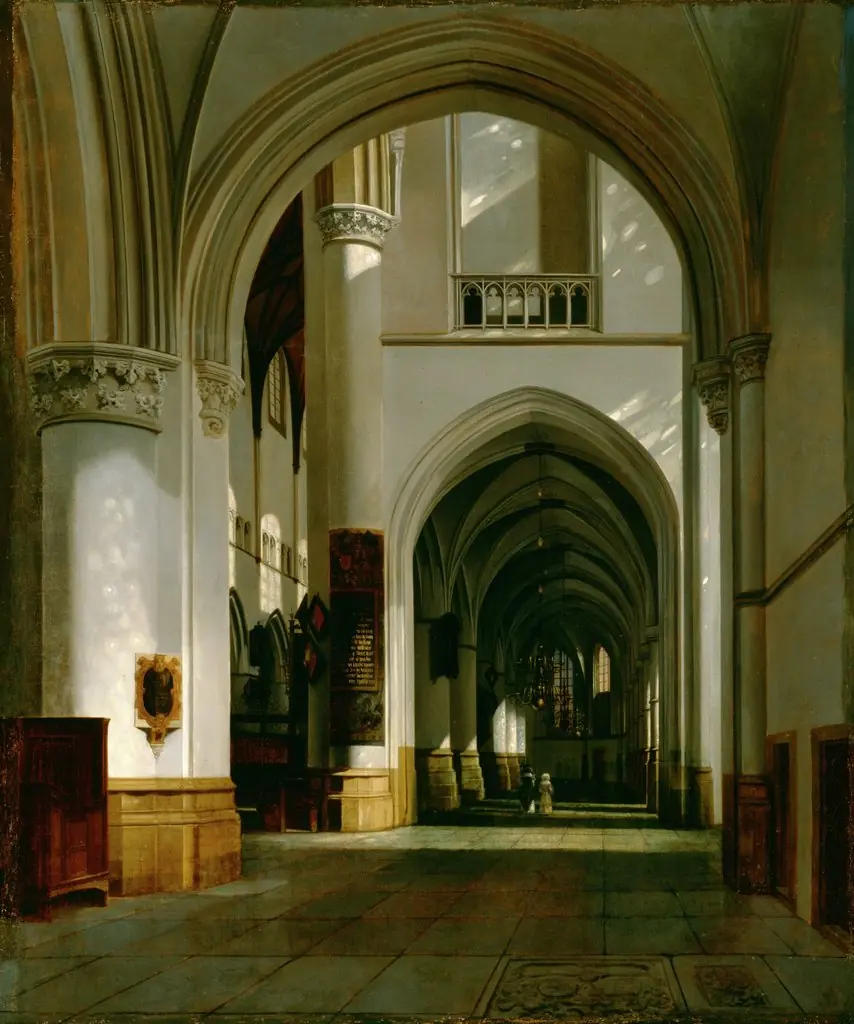 Interior of the Grote Kerk, Haarlem
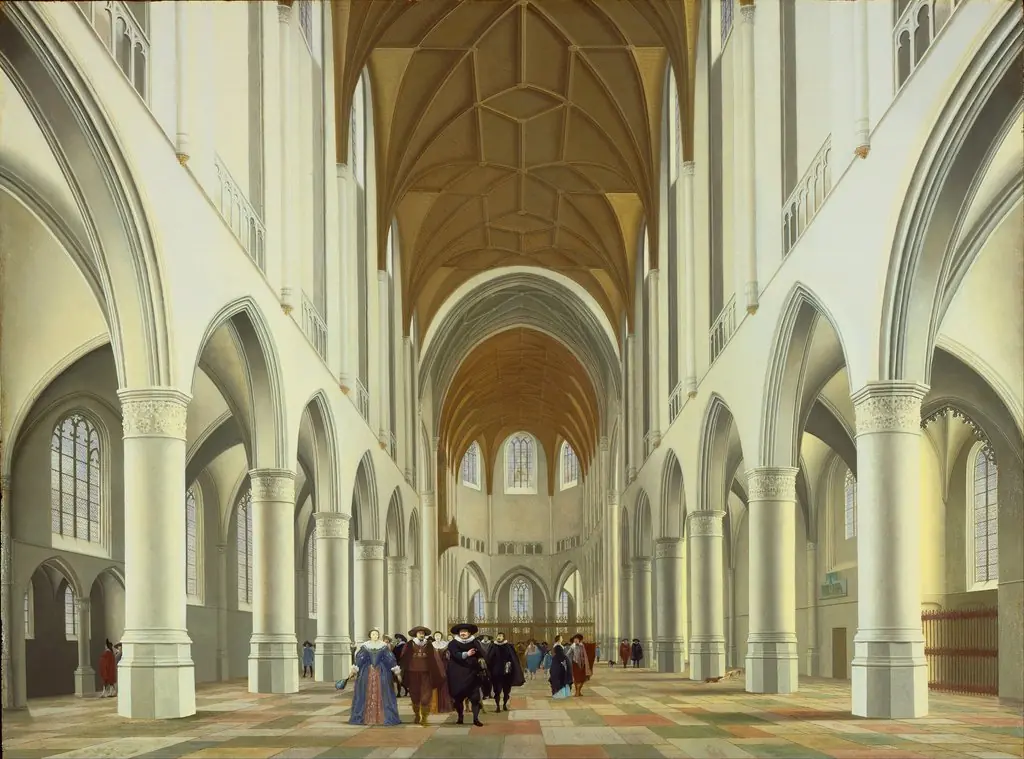 Interior of Saint Bavo, Haarlem
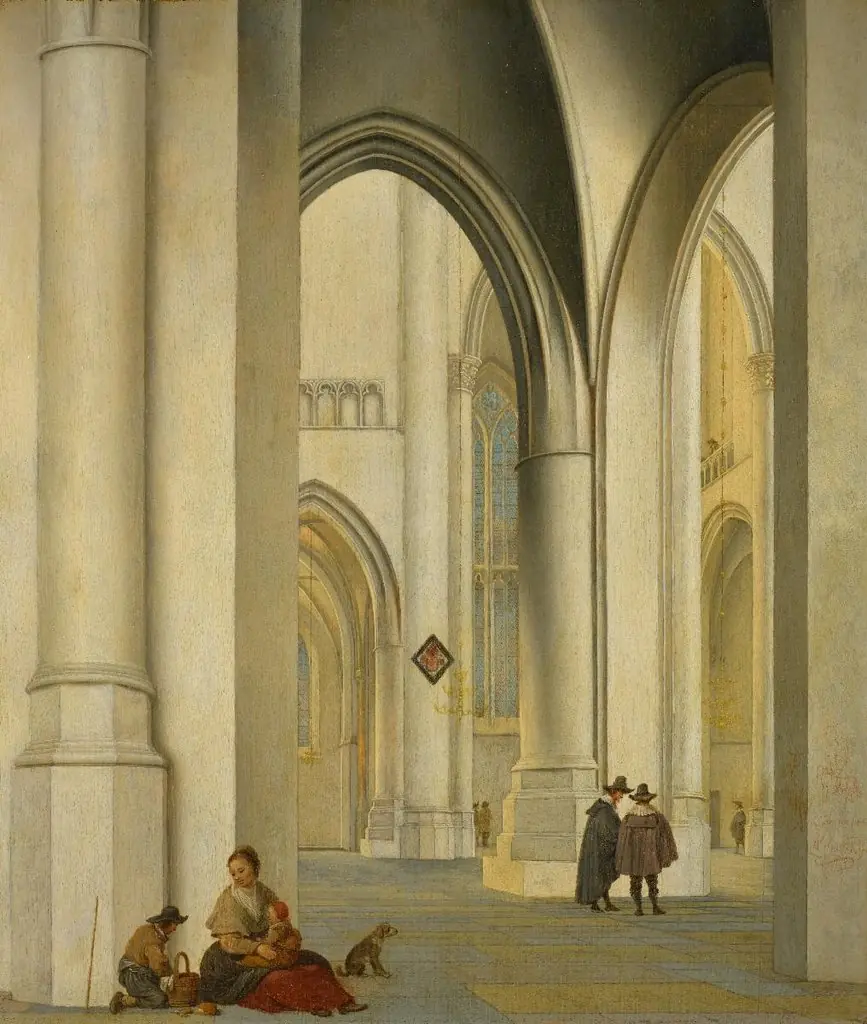 Interior of St. Bavo in Haarlem
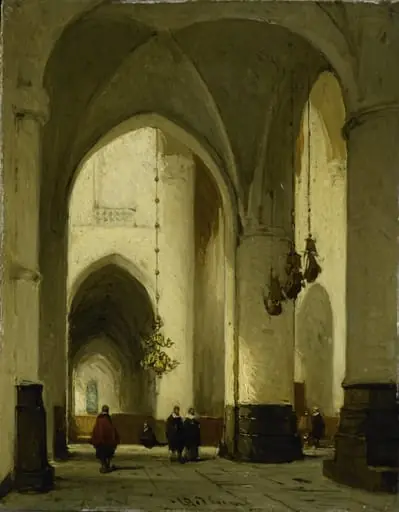 Interior of the Church of St Bavo in Haarlem
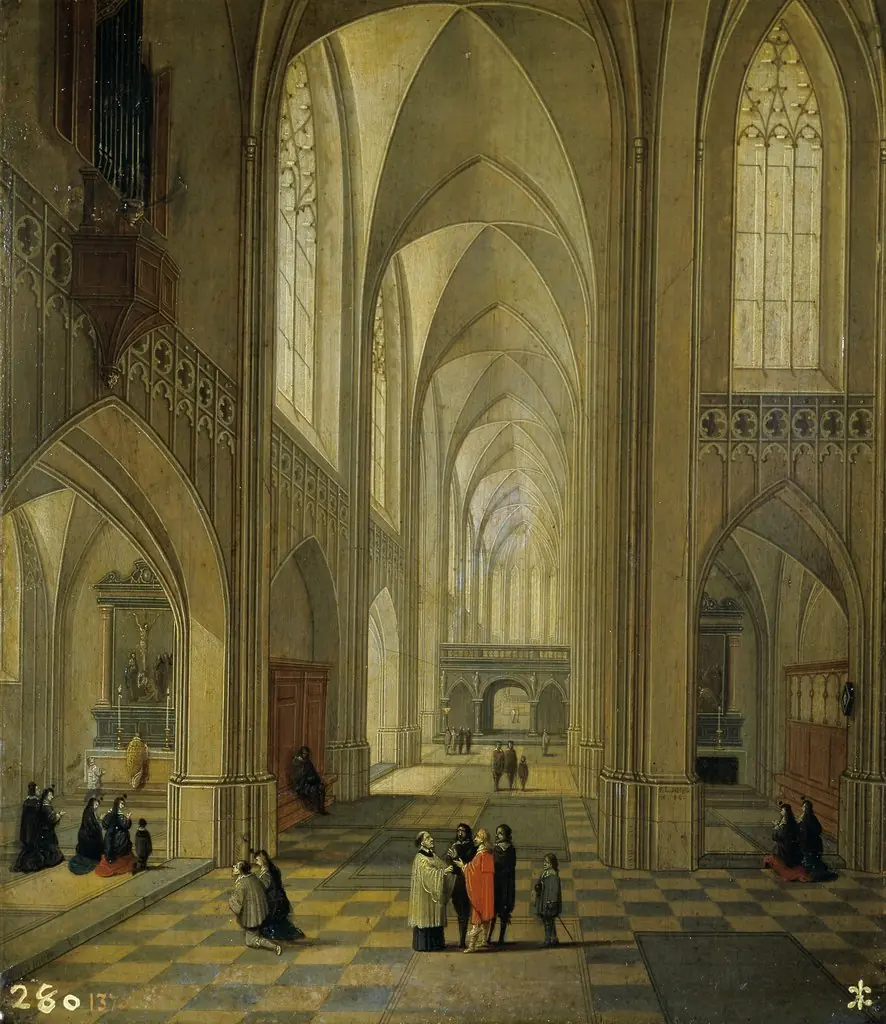 Interior of a Church