Artwork
Two wings of a triptych, with the portraits of a man and a woman, accompanied respectively by John the Baptist and St. Adrianus
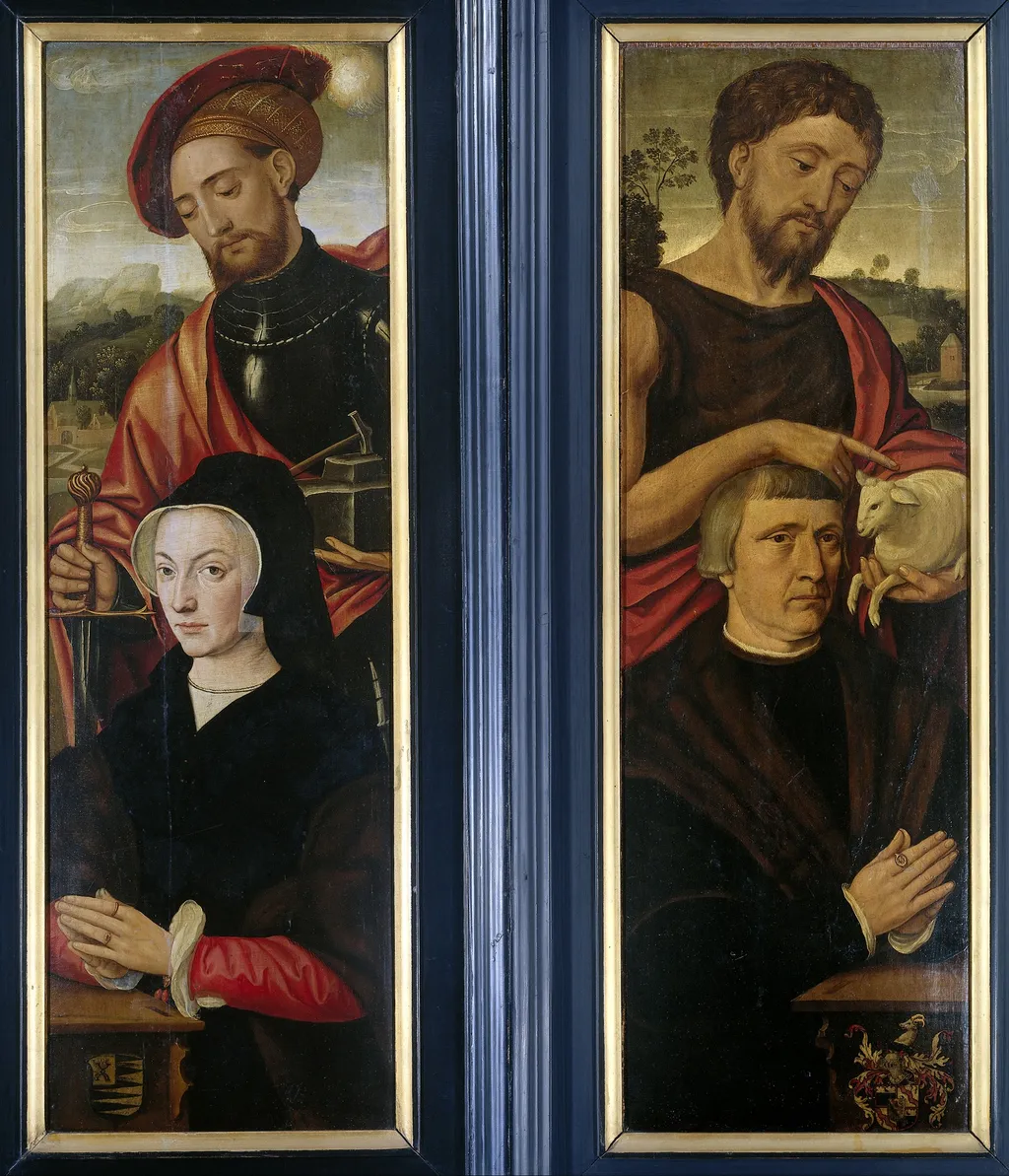
Two wings of a triptych, with the portraits of a man and a woman, accompanied respectively by John the Baptist and St. Adrianus is an oil painting by the Northern Renaissance artist Pieter Pourbus. It dates from 1550 and is held in the collection of the Rijksmuseum.
About this work
Subject & Meaning
Together the two panels would have flanked a central image, typically a Crucifixion or Madonna, that the donors were imagined to be contemplating.
The two surviving wings of this 1550 triptych by Pieter Pourbus unite donor portraiture with sacred intercession, a common devotional format in Netherlandish painting. The male donor is paired with John the Baptist, while the female donor is accompanied by St. Adrian of Nicomedia, each saint serving as a heavenly patron and model of virtue for the layperson beside him. John the Baptist, associated with penitence, baptism, and witness to Christ, lends spiritual gravity to the male portrait, while St. Adrian, a Roman soldier-saint venerated as a martyr, frames the woman within a tradition of steadfast faith.
Such wings functioned as protective intermediaries, presenting the patrons in pious association with holy figures. Together the two panels would have flanked a central image, typically a Crucifixion or Madonna, that the donors were imagined to be contemplating.
Technique & Style
The two wings are executed in oil paint on panel, a support characteristic of mid-sixteenth-century Netherlandish portraiture. Each wing is a tall, narrow vertical format measuring 91 cm in height by 29 cm in width, dimensions consistent with their function as hinged flanks of a triptych. The composition pairs a portrait of a man with John the Baptist on one wing and a portrait of a woman with St. Adrianus on the other, integrating donor figures with their patron saints in the conventional arrangement used for devotional triptych wings of the period.
History & Provenance
The wings are dated to 1550, within Pieter Pourbus's career in Bruges. They are held in the collection of the Rijksmuseum, where they remain. The work is executed in oil paint on panel and pairs a portrait of a man with John the Baptist and a portrait of a woman with St. Adrianus.
No archival evidence connects them directly to a named patron or documented commission, and no specific inventory number or exhibition history is recorded in the available sources.
Overview
This oil painting, created by the Flemish Renaissance artist Pieter Pourbus around 1550, comprises two panels that once formed the wings of a triptych. Titled Two wings of a triptych, with the portraits of a man and a woman, accompanied respectively by John the Baptist and St. Adrianus, the work combines portraiture with religious iconography. It depicts a male and female sitter, each presented alongside their respective patron saint, reflecting a common practice in Northern European art of the period.
Context
Pieter Pourbus was a prominent painter active in Bruges during the 16th century, a period when the city was a significant artistic center in the Low Countries. His work is firmly rooted in the Flemish Renaissance tradition, which emphasized meticulous detail, rich color, and a blend of secular and sacred themes. This triptych fragment reflects the artistic trends and patronage practices prevalent in the region during Pourbus's career.
Own this work as a print
Artist & collection
Artist
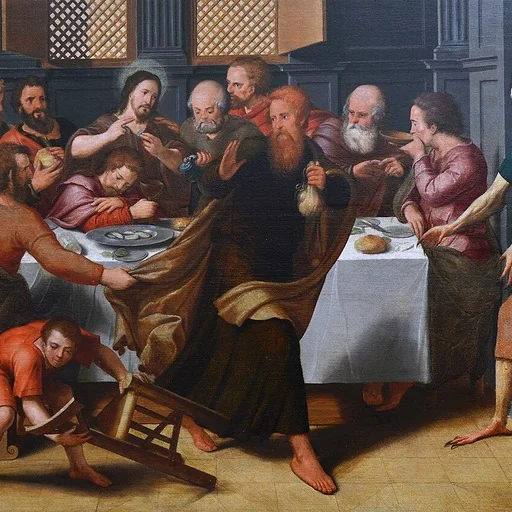
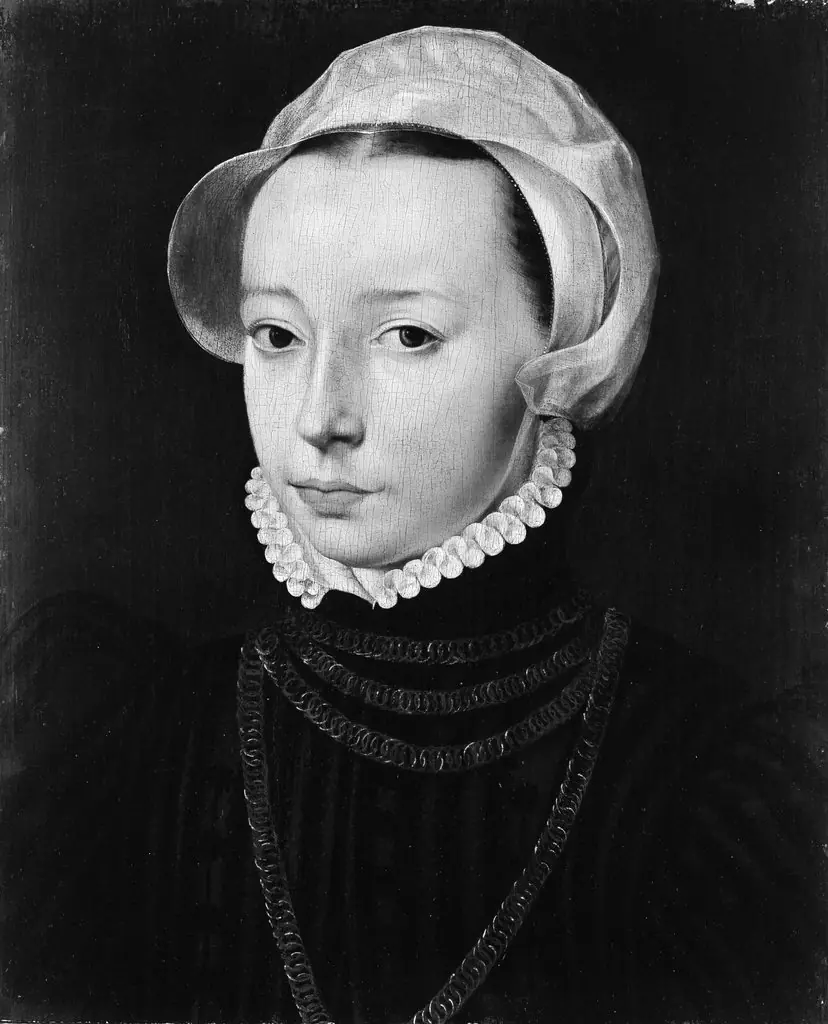
Pieter Jansz. Pourbus (c. 1523–1584) was a Flemish Renaissance painter, draftsman, engineer and cartographer who was active in Bruges during the 16th century. He is known primarily for his religious and portrait paintings.

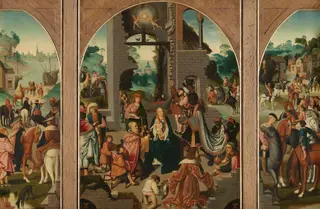 Triptych with Adoration of the Magi (center and inner wings), Saint Antony Abbot (left, outer wing) and Saint Adrian (right, outer wing)
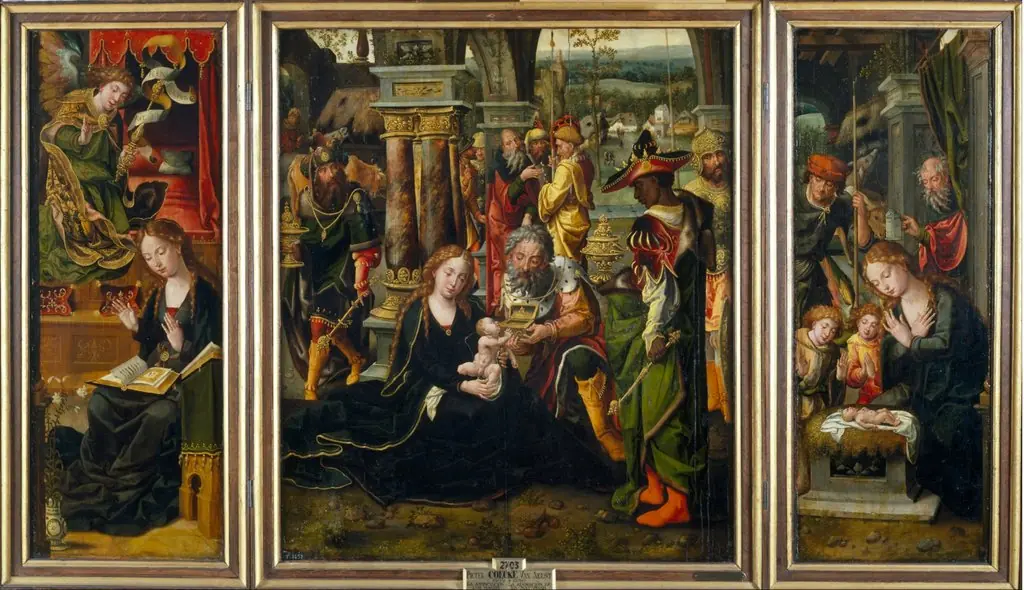 Triptych with the Annunciation, the Adoration of the Magi and the Nativity with Angels and Shepherds
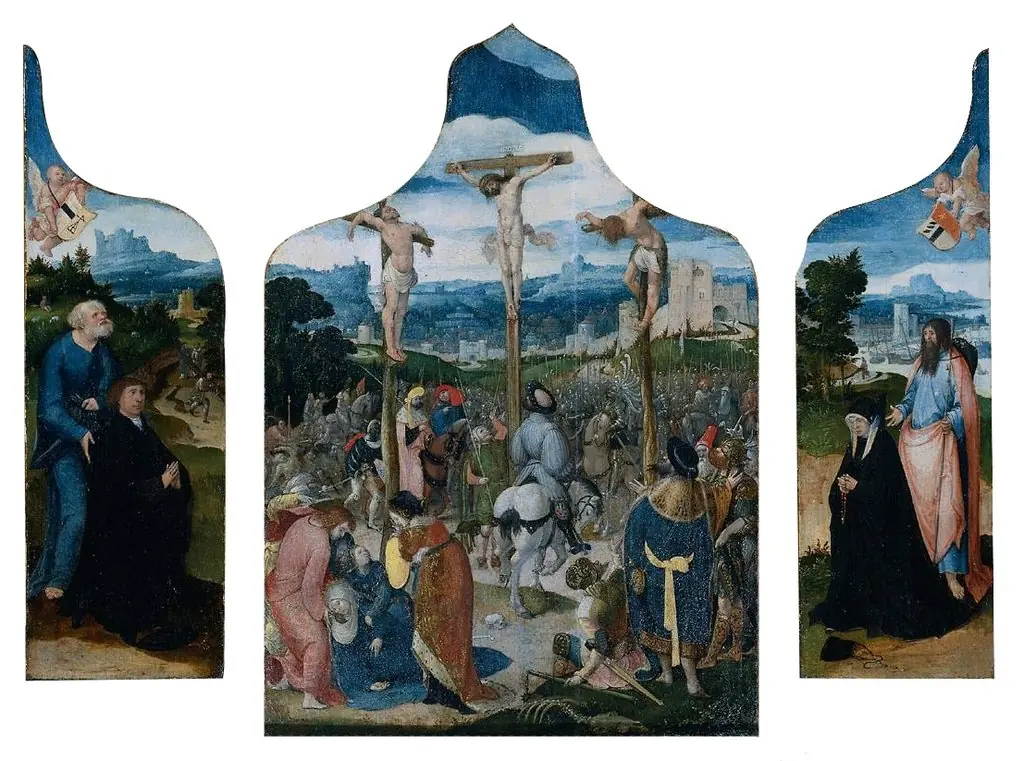 Triptych with the Crucifixion (centre panel), St Peter and a Male Donor (inner left wing), St James and a Female Donor (inner right wing), St Christopher and the Christ Child on the Road of Life (outer wings)
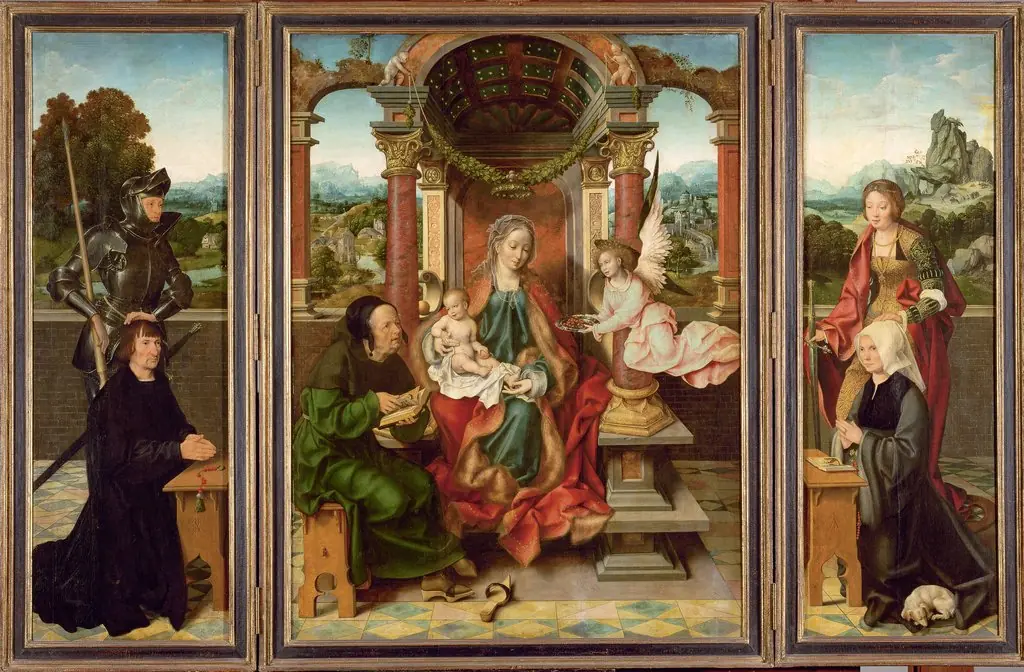 Winged Altar
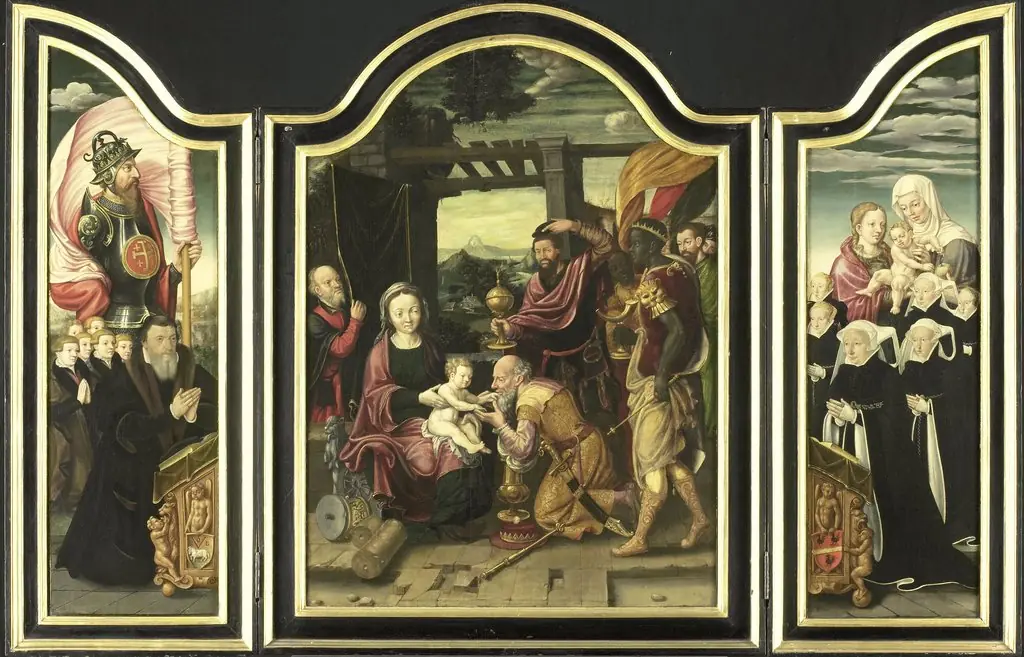 Triptych with the Adoration of the Magi
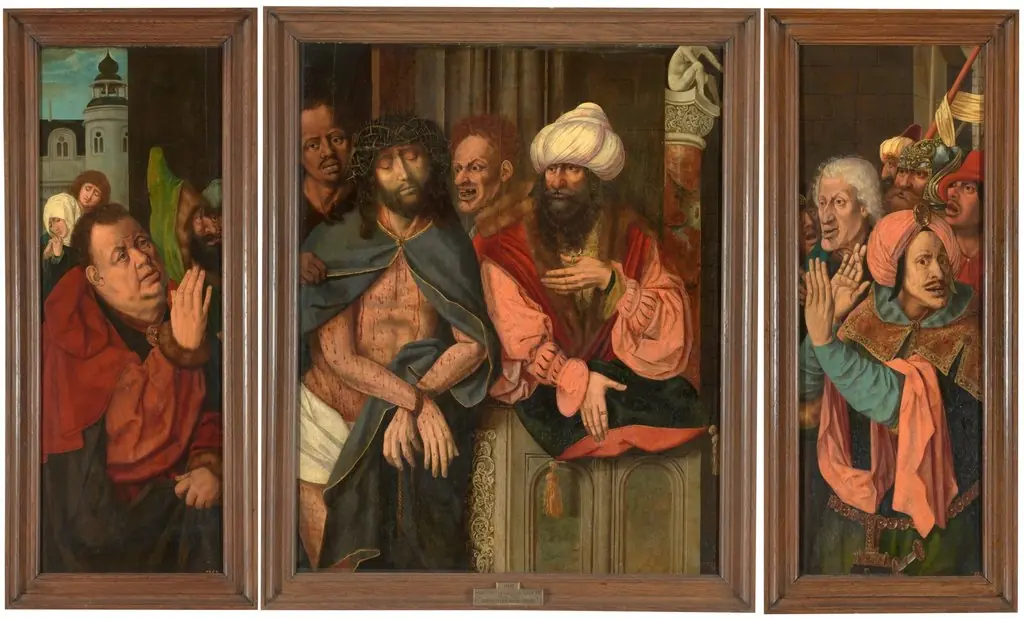 Ecce Homo
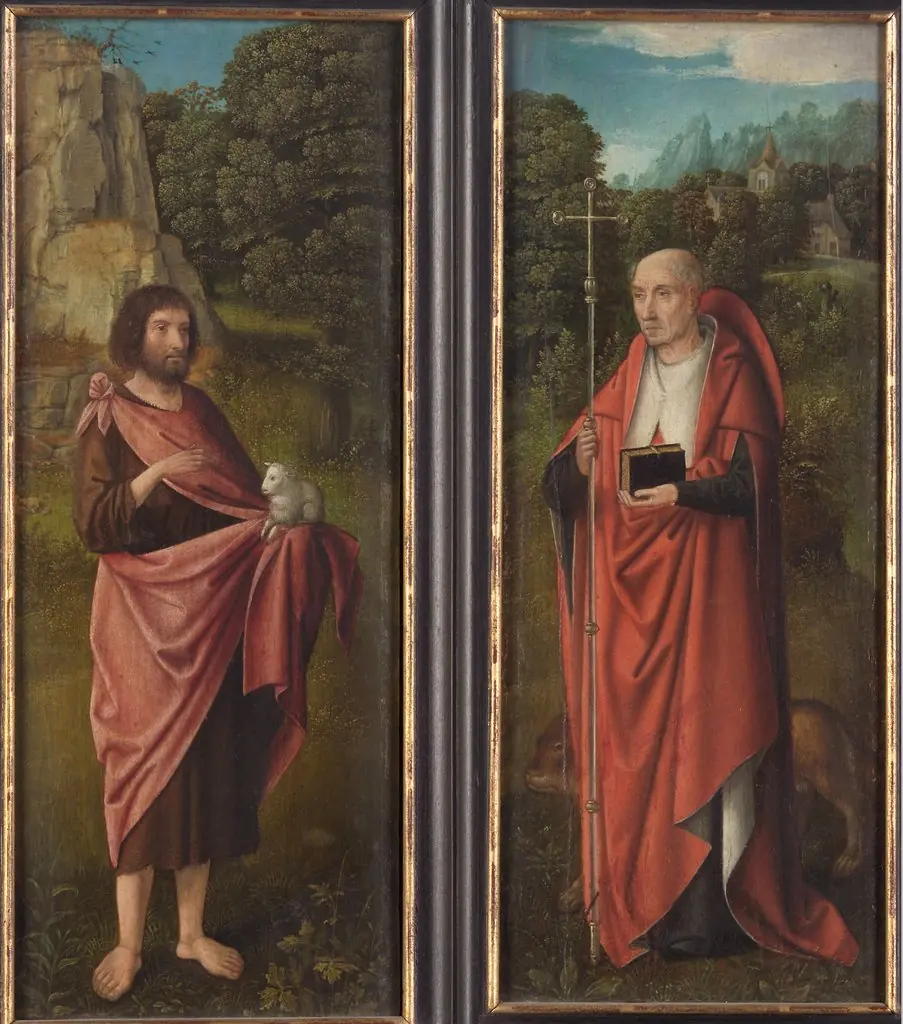 Saint John the Baptist and Saint Jerome
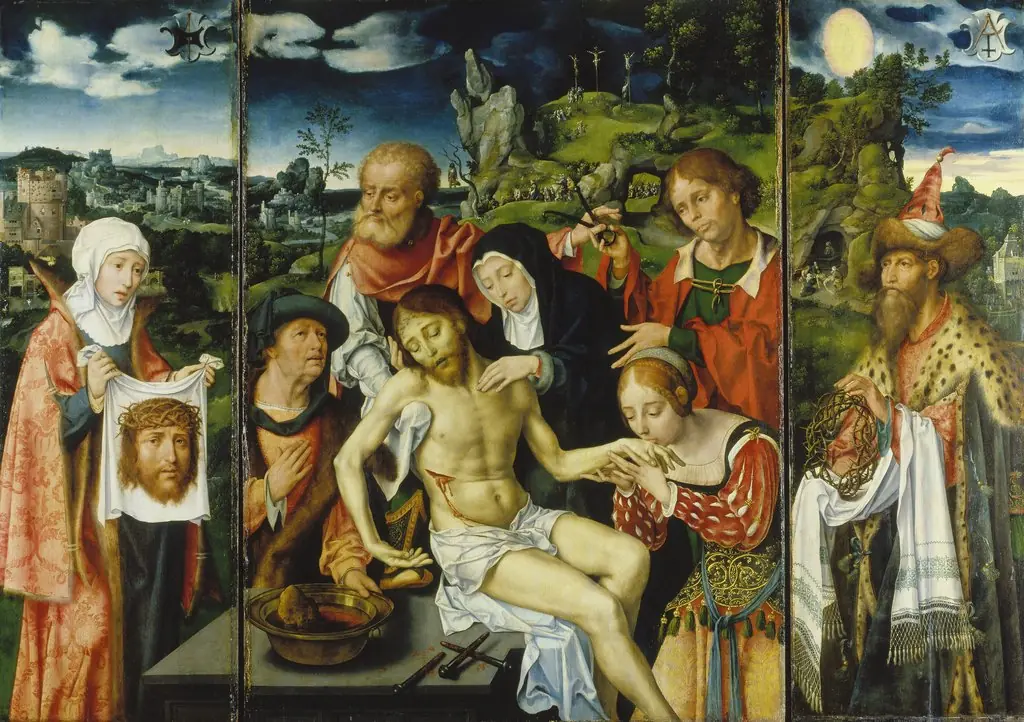 Triptych with the Lamentation of Christ