Artwork
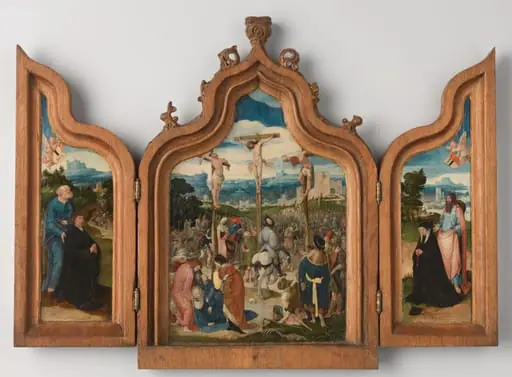
Triptych with the Crucifixion (centre panel), St Peter and a Male Donor (inner left wing), St James and a Female Donor (inner right wing), St Christopher and the Christ Child on the Road of Life (outer wings)
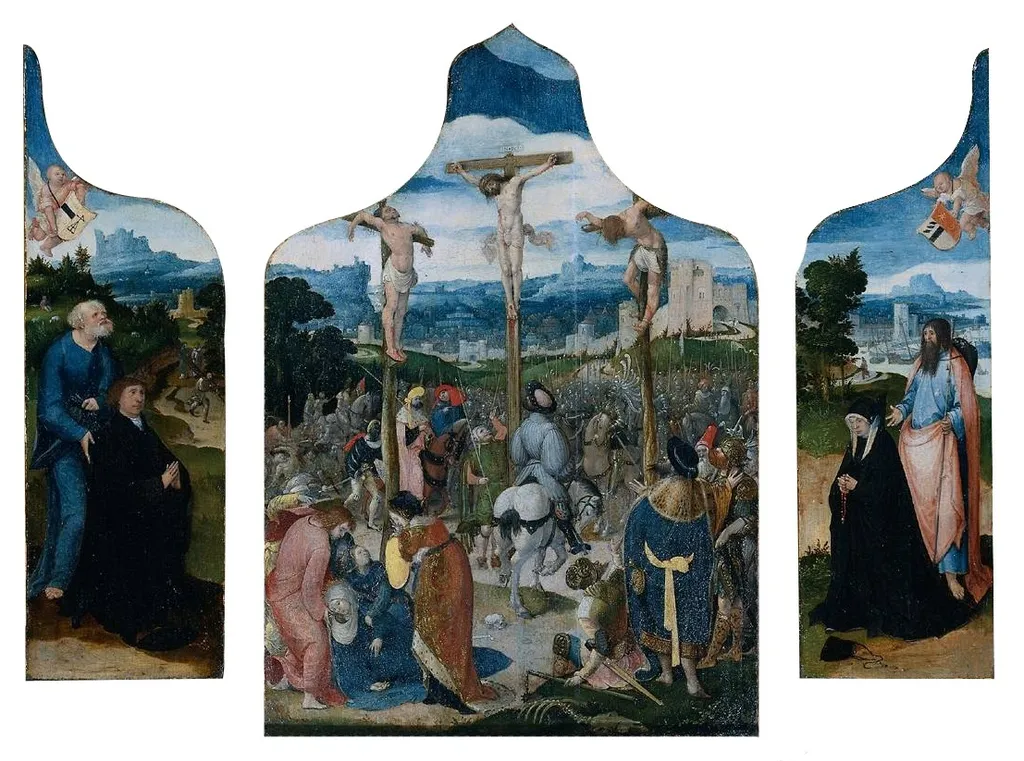
Triptych with the Crucifixion (centre panel), St Peter and a Male Donor (inner left wing), St James and a Female Donor (inner right wing), St Christopher and the Christ Child on the Road of Life (outer wings) is an oil painting by the Northern Renaissance artist Pseudo Jan Wellens de Cock. It dates from 1525 and is held in the collection of the Rijksmuseum.
About this work
Subject & Meaning
The work depicts a Crucifixion with the Virgin Mary and Saint John flanking the central panel, alongside donor portraits of Saints Peter and James presented with a male and female patron respectively, while the outer wings show Saint Christopher bearing the infant Christ on his shoulders, symbolizing protection of travelers. The iconography combines narrative elements of the Passion with personal devotional gestures, linking the donors' identities to specific saints and emphasizing their role as intercessors. Saint Christopher's imagery on the wings functions as a protective emblem for travelers, reinforcing the work's devotional context and its intended use within a private devotional setting.
Technique & Style
Created in 1525, this religious triptych is executed in oil paint on a wooden panel support. The work measures 42 cm in height and 16.5 cm in width. Attributed to the Pseudo Jan Wellens de Cock, the painting reflects the stylistic and formal conventions of early 16th-century religious art.
History & Provenance
The Triptych with the Crucifixion, St Peter, St James, and St Christopher was created in 1525 by the artist known as Pseudo Jan Wellens de Cock.
The Triptych with the Crucifixion, St Peter, St James, and St Christopher was created in 1525 by the artist known as Pseudo Jan Wellens de Cock. Executed in oil paint on panel, the work is a religious piece that measures 42 cm in height with a width of 16.5 cm for the individual sections. The creation date is firmly established as 1525. The artwork is currently held in the collection of the Rijksmuseum.
The triptych is housed in the Rijksmuseum, where it is catalogued under inventory number SK-A-1166. According to the museum's records, the work has been part of the permanent collection since its acquisition and was featured in the 2011 exhibition "Early Netherlandish Painting in the Rijksmuseum," which highlighted key pieces from the 15th and 16th centuries.
The painting measures 42 cm in height and 16.5 cm in width.
Overview
This triptych, created by Pseudo Jan Wellens de Cock in 1525, is a religious oil painting composed of three main panels and two outer wings. The work is currently part of the Rijksmuseum's collection.
Context
As a religious triptych from 1525, this work reflects the continued importance of devotional art in the early 16th century, blending traditional Christian themes with the emerging artistic techniques of the time, such as chiaroscuro.
Legacy
While specific influences or direct artistic lineage are not highlighted in the provided details, the triptych represents a preserved example of early 16th-century religious art, contributing to the broader understanding of Netherlandish painting traditions during this period.
Artist & collection
Artist
Pseudo Jan Wellens de Cock is a conventional name assigned by art historians to an unidentified early Netherlandish artist active in the early sixteenth century, probably in Antwerp.

- Drieluik
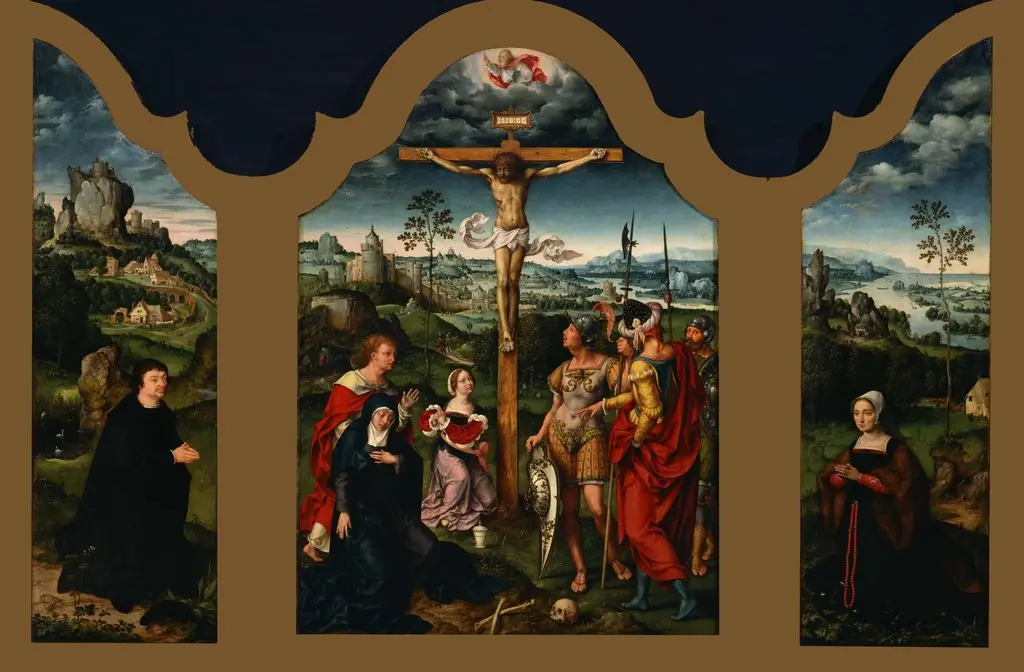 Triptych: The Crucifixion Flanked by the Kneeling Donor and His Wife
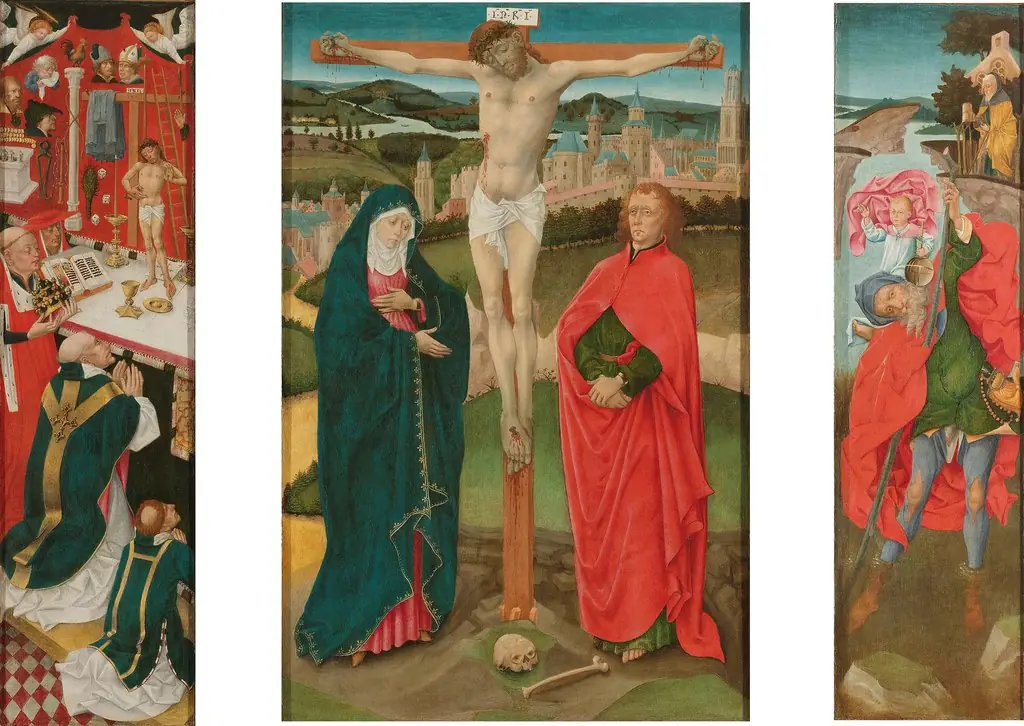 Triptych with the Crucifixion
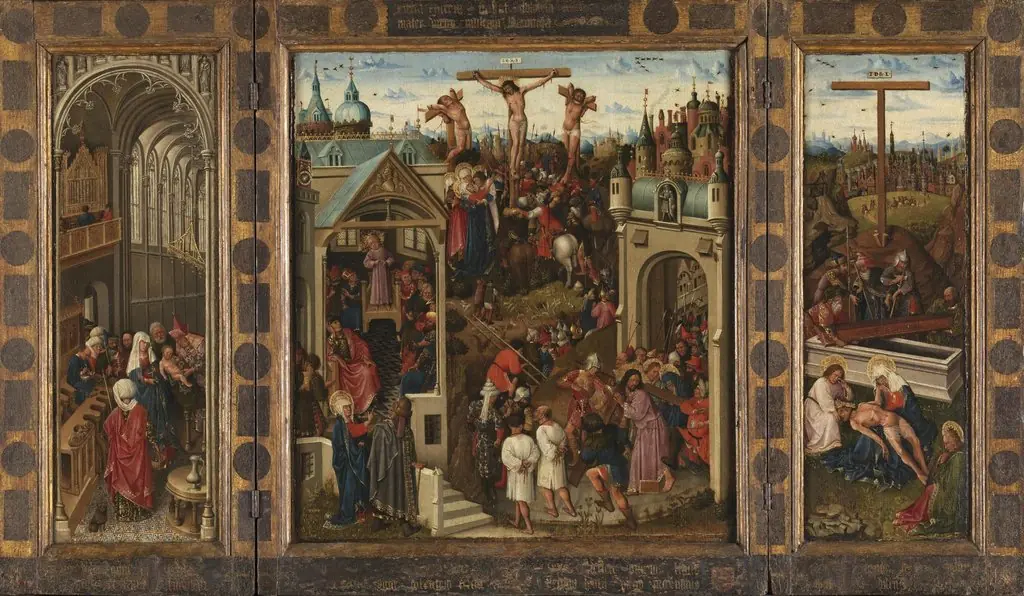 Triptych with Scenes from the Life of Christ
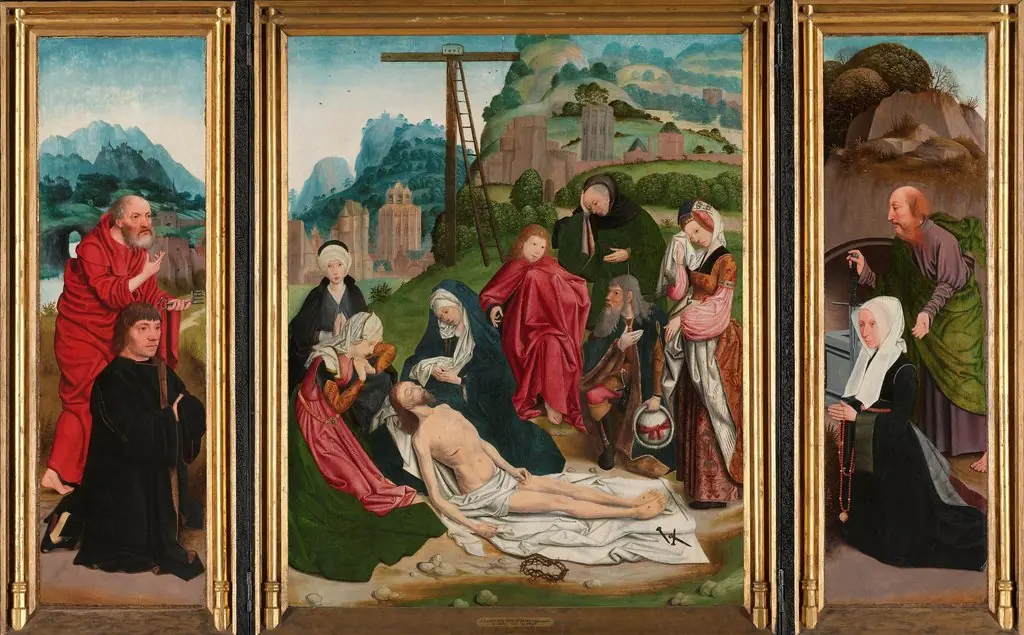 Triptych with the Lamentation (centre panel), the donor with St Peter (inner left wing), the donor’s wife with St Paul (inner right wing) and the donors’ coats of arms (outer wings)
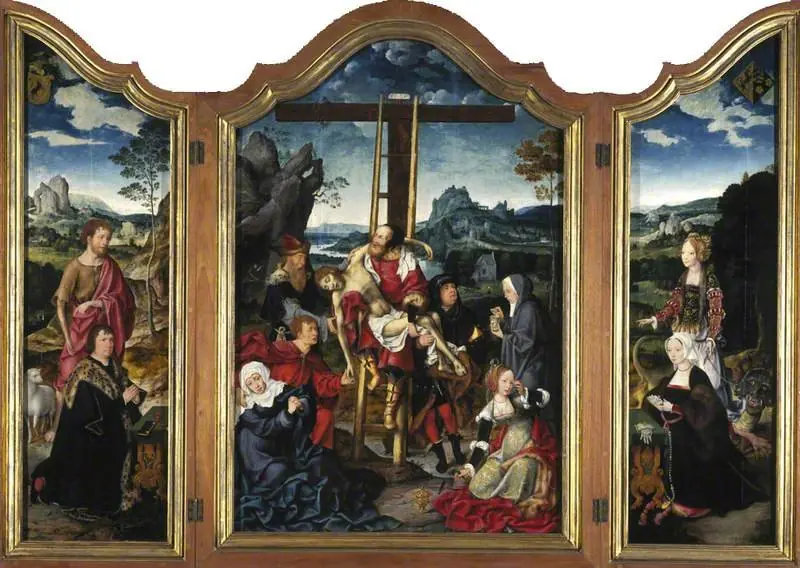 Triptych. Centre: the Deposition from the Cross; Left wing: St John the Baptist with a Donor; Right wing: St Margaret of Antioch with a Donatrix
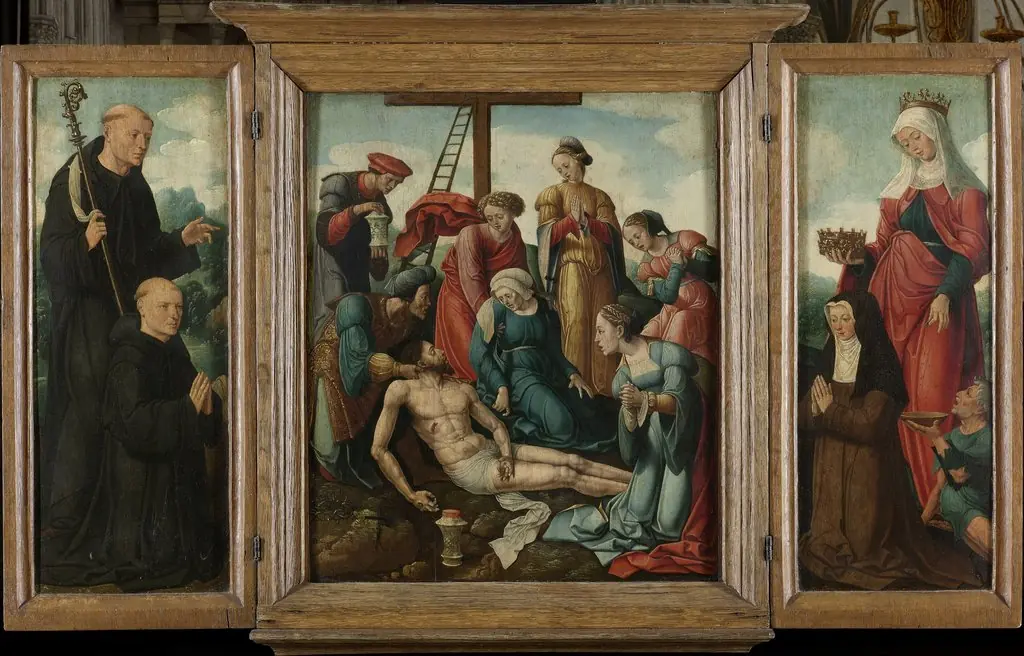 Triptych with the Lamentation of Christ (centre panel), the donor with St Benedict (inner left wing) and the donatrix with St Elizabeth of Thuringia (inner right wing)
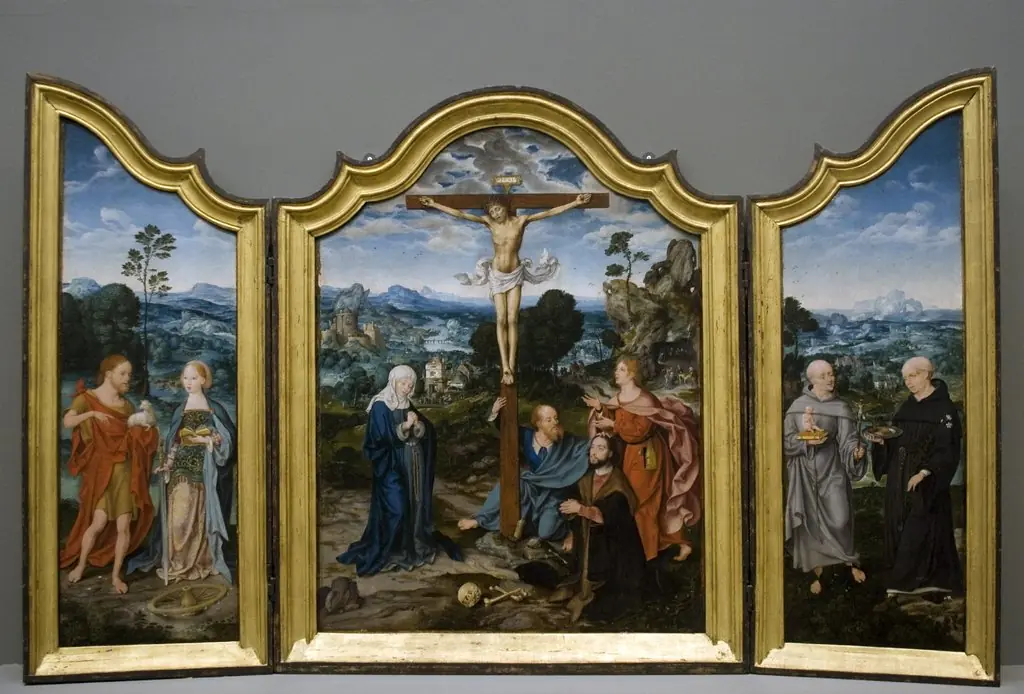 The Crucifixion with Saints and a Donor