Artwork
Bust of an old woman
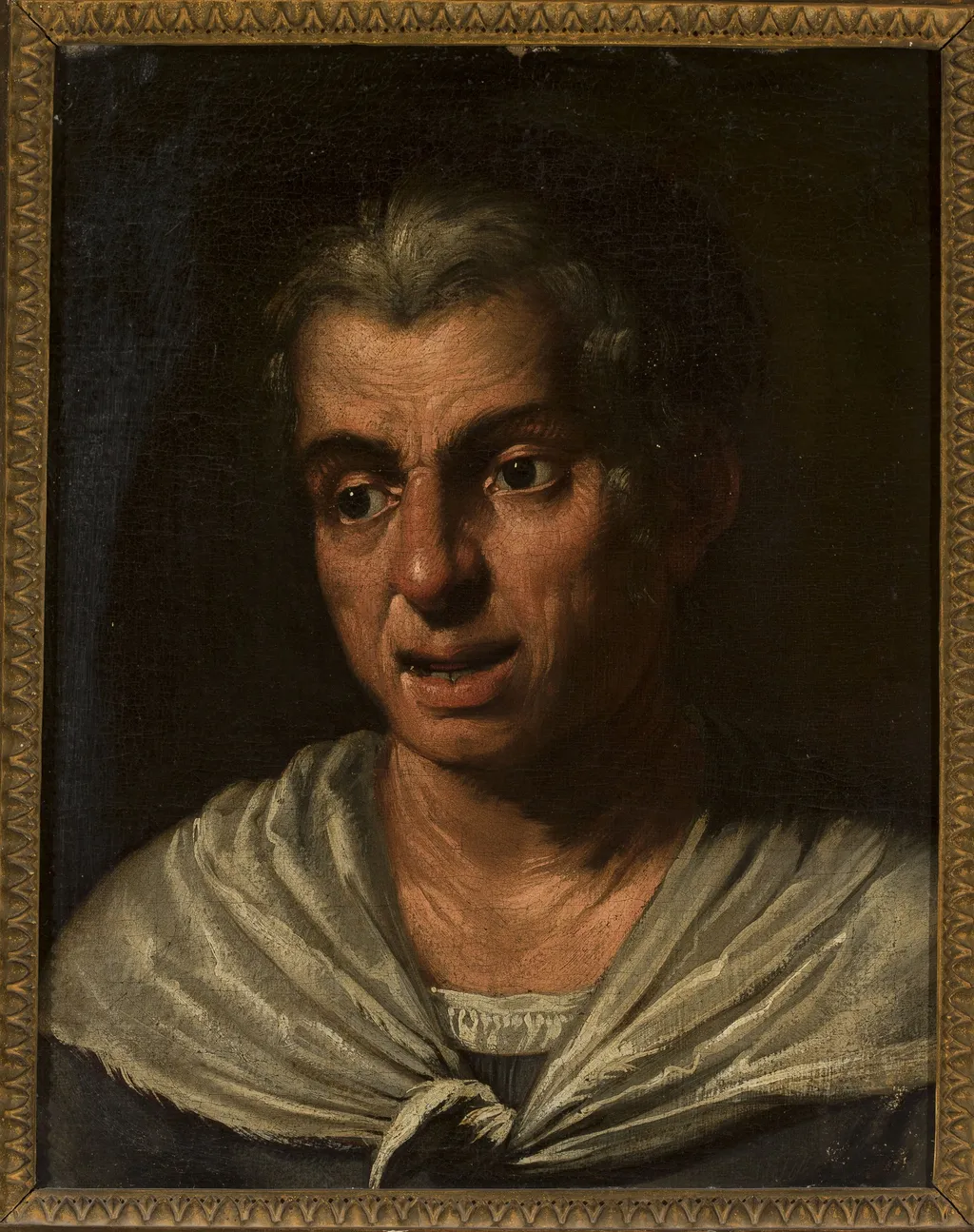
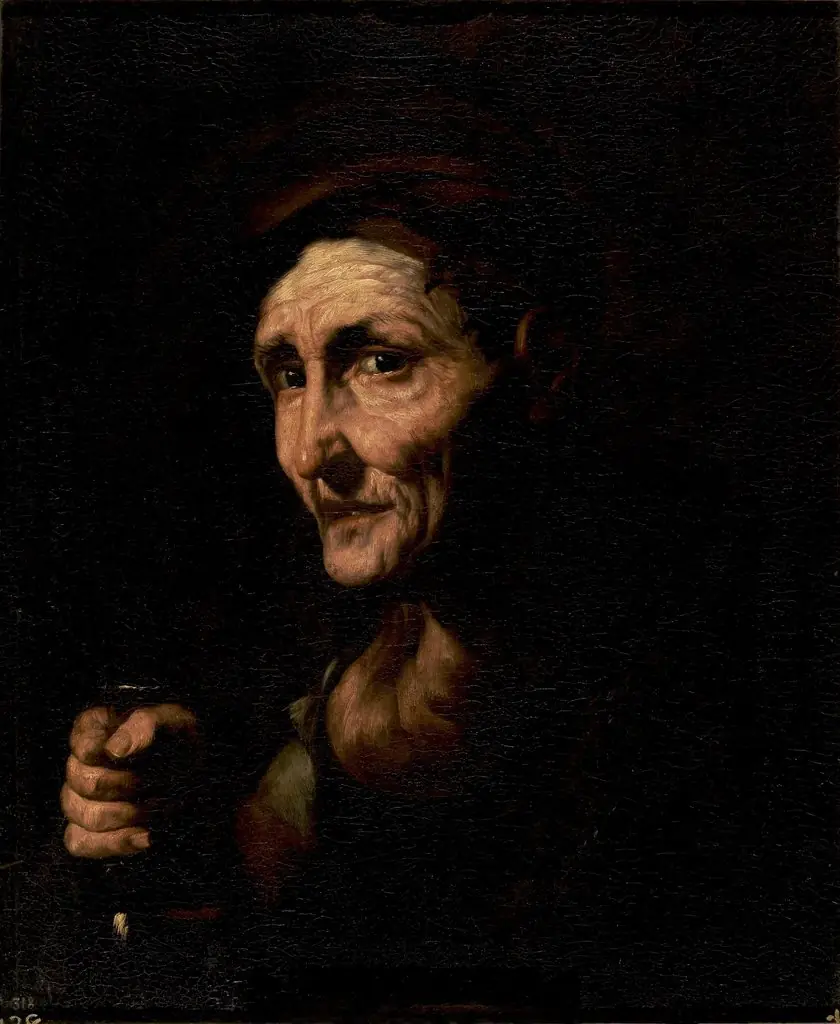
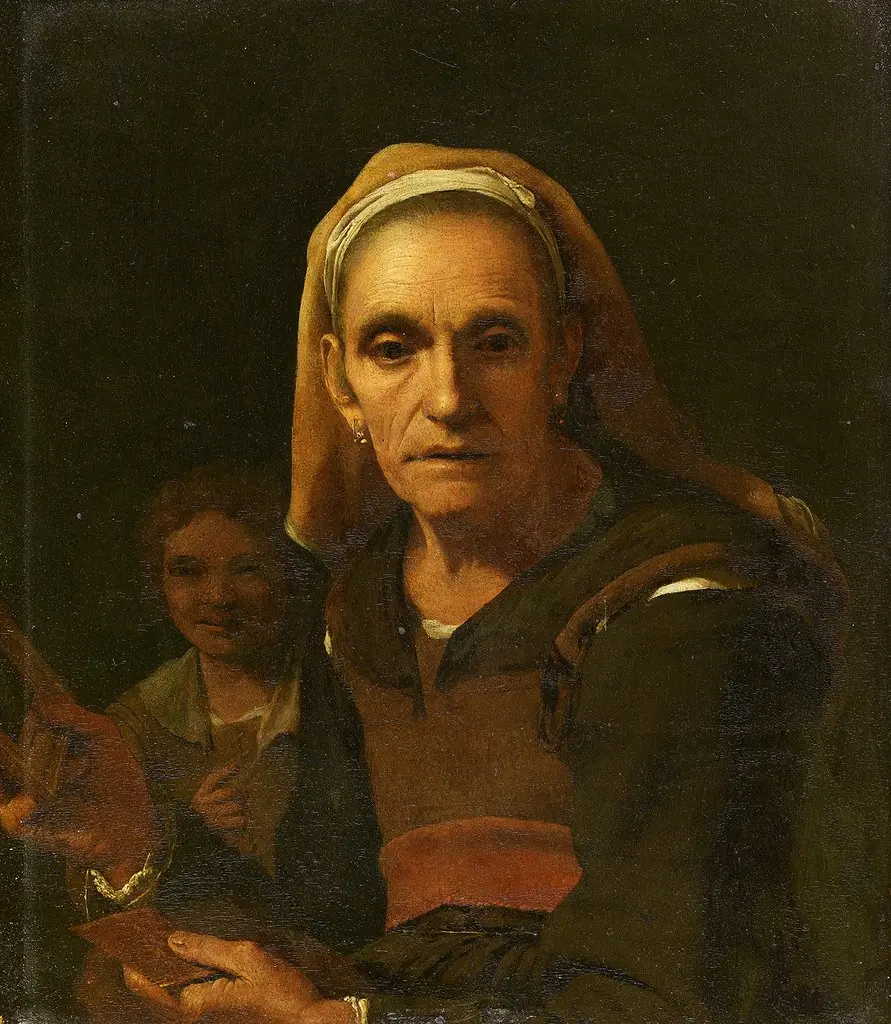
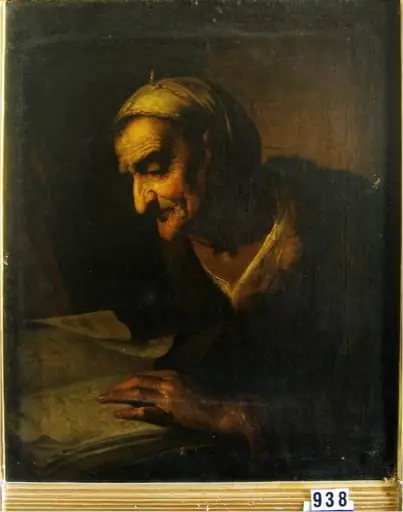
Bust of an old woman is an oil painting by Pietro Bellotti. It dates from 1672 and is held in the collection of the National Museum in Warsaw.
About this work
Overview
Her skin is detailed with deep wrinkles, and her mouth is slightly parted, suggesting a moment of speech or breath rather than a static pose.
Pietro Bellotti's 'Bust of an Old Woman,' executed in 1672, is a character study rendered in oil paint that exemplifies the artist's engagement with genre portraiture during the late Baroque period. The composition isolates the subject against a dark, non-descript background, directing the viewer's attention entirely to the sitter's facial features and expression. The woman is depicted with short, dark hair interspersed with gray strands, emphasizing her advanced age.
Her skin is detailed with deep wrinkles, and her mouth is slightly parted, suggesting a moment of speech or breath rather than a static pose. She wears a white scarf tied in a simple knot at the front of her neck, providing a stark tonal contrast to the shadowed surroundings. Bellotti, an Italian painter active in the Lombardy region, is known for his naturalistic approach to common figures, often capturing the psychological depth and physical reality of his subjects without idealization.
This work reflects his skill in manipulating light to model form and texture, particularly in the rendering of aged skin and fabric. Created during the height of his career, the painting stands as a testament to the 17th-century interest in veristic depictions of everyday life and the human condition.
Subject & Meaning
The figure is an older woman with short, dark hair streaked with gray, her skin marked by wrinkles and a slightly open mouth. She wears a plain white scarf tied in a modest knot at the throat. Her direct gaze and solemn expression suggest a dignified, perhaps introspective presence, inviting contemplation of age and experience.
Technique & Style
Executed in oil, the painting employs chiaroscuro to model the facial planes, creating a three‑dimensional effect. The dark background isolates the sitter, while the textured brushwork gives the skin and fabric a tactile quality. Bellotti’s handling of light emphasizes the contours of the face, reinforcing the realism typical of late‑Baroque portraiture.
History & Provenance
Created circa 1672, the portrait entered the holdings of Warsaw’s National Museum, where it remains on display. Its provenance prior to acquisition is not extensively documented, but the work reflects Bellotti’s activity in the latter half of the 17th century, a period when portraiture served both personal commemoration and broader social representation.
Own this work as a print
Artist & collection