Artwork
Head of a Man in Profile
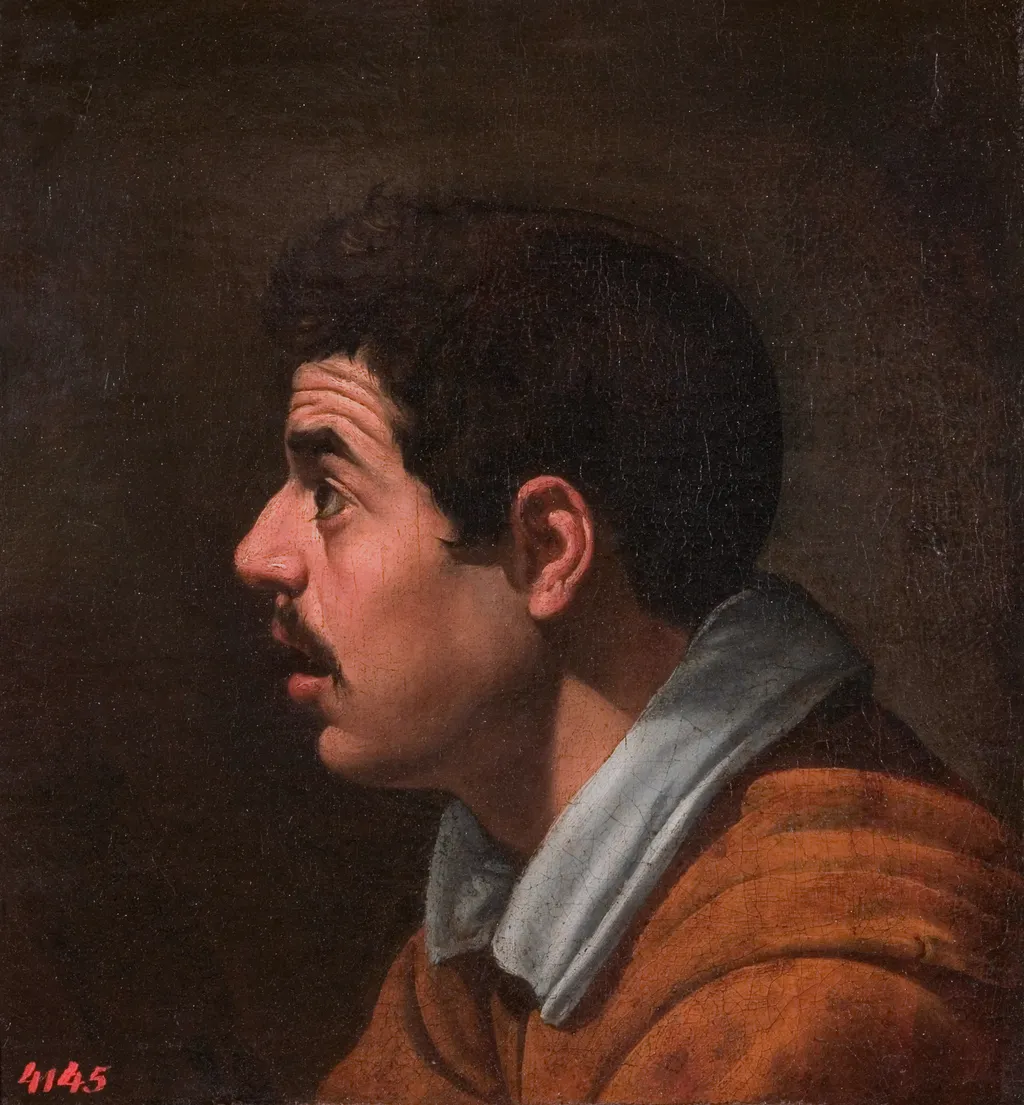
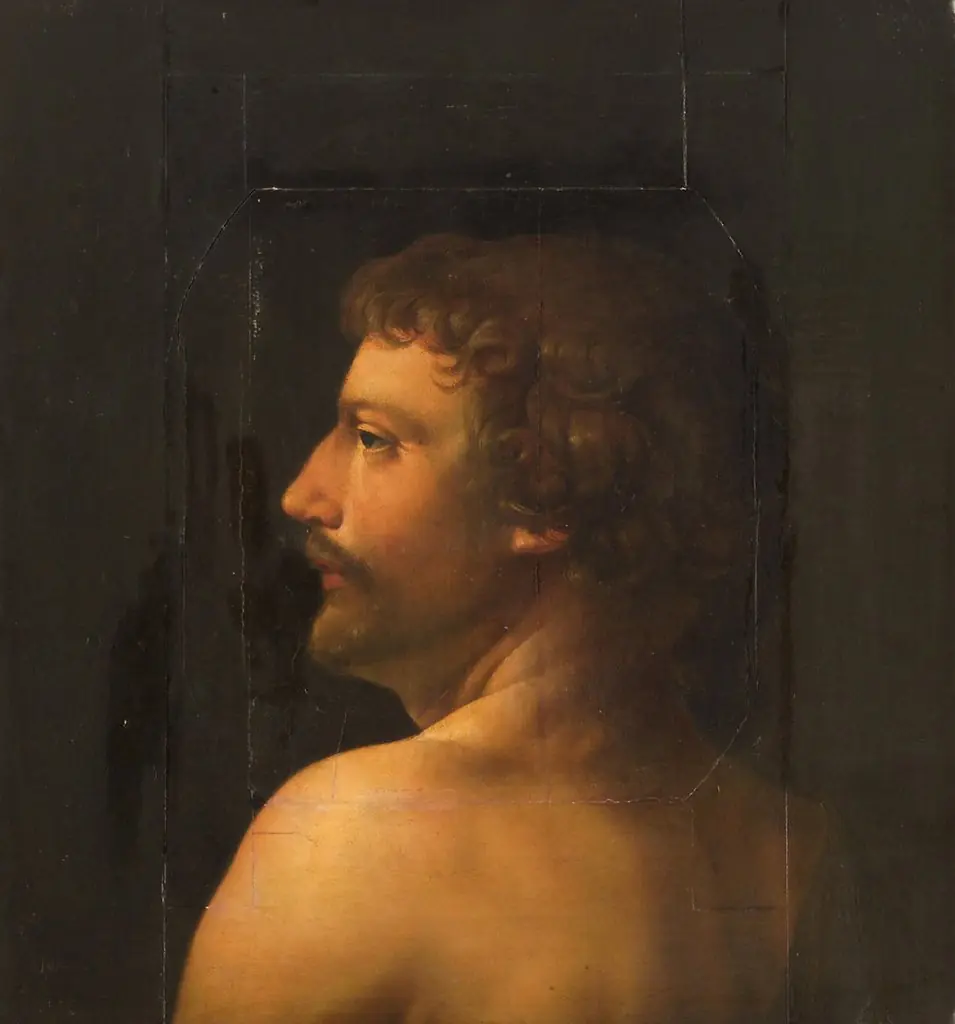
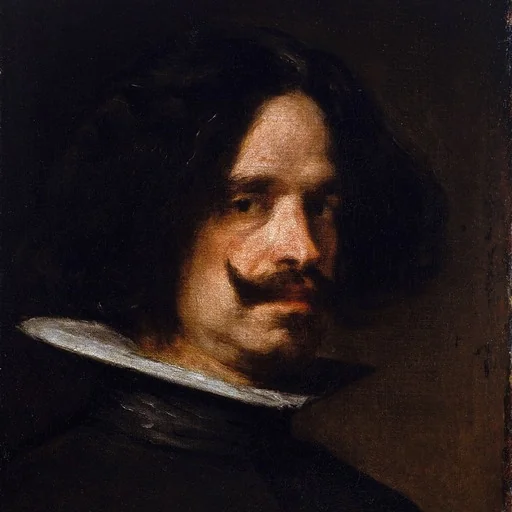
Head of a Man in Profile is an oil painting by the Early Baroque Italian artist Diego Velázquez. It dates from 1618 and is held in the collection of the Hermitage Museum.
About this work
Overview
X-ray analysis has further revealed that the canvas was reused, adding a layer of technical and historical importance to the work.
Head of a Man in Profile is an oil on canvas painting by Diego Velázquez, dated to 1618 and created in Seville, Spain. Measuring 39.5 by 35.5 centimeters, the work is a bust-length portrait of an unidentified young man turned in left profile. It is currently housed in the State Hermitage Museum in Saint Petersburg, Russia, under inventory number 295. The painting is significant both as an example of Velázquez's early Seville period naturalism and for its complex attribution history, having been reattributed to Velázquez in 1959 after previously being assigned to Francisco de Zurbarán. X-ray analysis has further revealed that the canvas was reused, adding a layer of technical and historical importance to the work.
Subject & Meaning
The painting depicts a young man with dark curly hair, a prominent nose, and a dark mustache, wearing a white upright collar over a rust-orange garment. He looks forward from his left profile, his brow slightly furrowed and his mouth slightly parted. This expression gives the figure an impression of alertness, surprise, or deep psychological engagement, as if he is listening to someone outside the frame. The work functions as a profound psychological study rather than a formal portrait of a specific individual, sharing characteristics with the Dutch tronie tradition, which emphasized character and expression over identity. Scholars have debated whether it was intended as a preparatory color study for a larger composition or as a fragment of a larger, more complete narrative painting due to its highly finished execution.
Technique & Style
Velázquez employed a warm, earth-toned palette dominated by deep oranges, warm browns, and muted whites set against a near-black background. A strong light enters from the left, raking across the profile to illuminate the facial features, the ear, and the white collar while casting the far side of the head and background into deep shadow. This tenebrist approach relies on a sophisticated sequence of halftones rather than harsh contrasts, with warm ochres transitioning to highlights and cooler grays defining the receding planes. The brushwork is smooth and blended on the flesh, with more visible texture in the fabric and hair. The surface exhibits extensive fine craquelure. A red number, 4145, is visible in the lower left corner.
History & Provenance
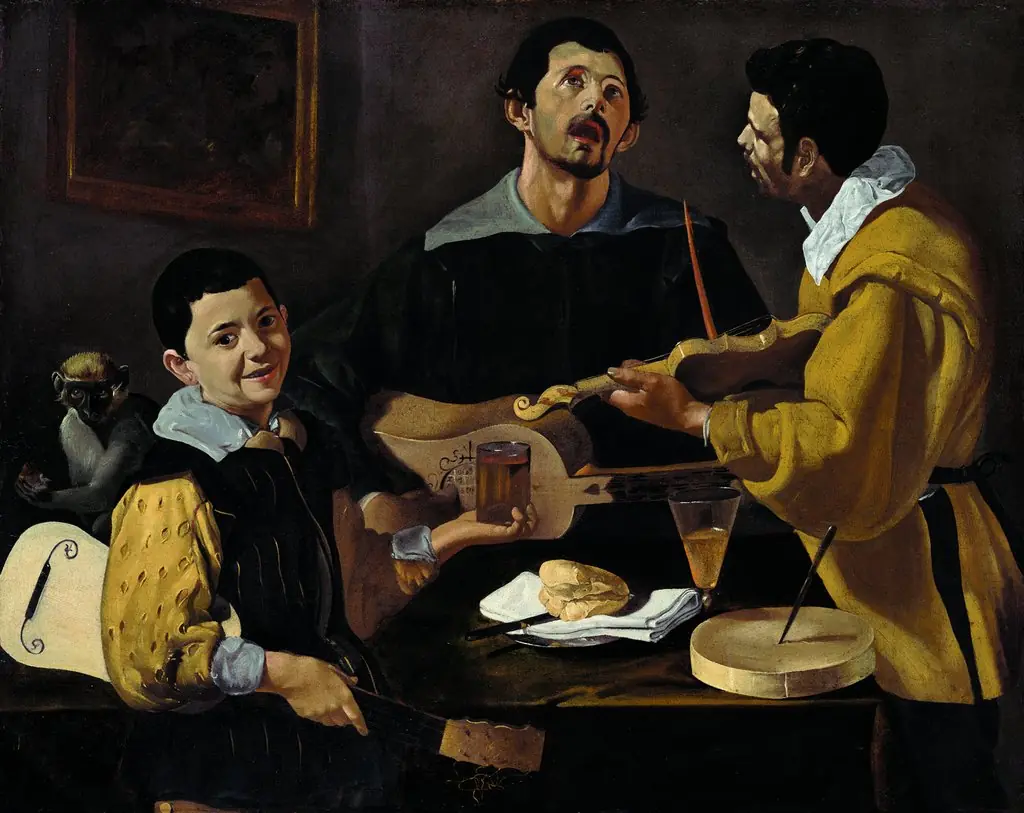
Created in Seville around 1618, the painting entered the Hermitage Museum collection in 1814. It was acquired in Amsterdam by Alexander I of Russia with an explicit attribution to Velázquez. However, subsequent museum catalogs downgraded the work, reassigning it to Francisco de Zurbarán. In 1959, the scholar José López-Rey examined the canvas and confirmed a hypothesis previously advanced by Allende-Salazar, formally restoring the attribution to Velázquez. Radiographs taken by the museum revealed a previous composition beneath the current profile: an earlier face painted frontally, resembling the central figure in Velázquez's Three Musicians, though looking to the right unlike the Berlin version of that painting. This indicates the original canvas was started, abandoned, cut apart, and a fragment reused for the present study.
Context
The painting belongs to Velázquez's formative early Seville period, a time when the artist was developing his observational skills and moving beyond the strict iconographic teachings of his master, Francisco Pacheco, toward a striking naturalism. Scholars, including López-Rey, have identified the figure as a study for the man seated on the right in the Peasant Lunch currently in Budapest. The head is considered psychologically superior to the corresponding figure in the Budapest painting. This repetition of models across Velázquez's oeuvre has been explained by scholar McKim-Smith as a practice tied to the frequent reuse of engraved prints at the time, which allowed artists to recompose preexisting elements. Velázquez consistently introduced variations to his models to avoid literal copying. The study likely dates to an intermediate point between the Hermitage's own Peasant Lunch, presumably the first version of the theme, and the Budapest version.
Legacy
The Head of a Man in Profile remains a vital document of Velázquez's early working methods and his mastery of tenebrist lighting. The debate over its function, whether as an independent tronie, a preparatory study, or a fragment of a larger composition, highlights the evolving understanding of his workshop practices. The painting's influence is indirectly tracked through several known replicas of the Peasant Lunch compositions, which copy the seated figure derived from this study. These replicas, found in collections such as those of L. Garrouste in Madrid and Lord Moyne in Andover, demonstrate how Velázquez's motifs circulated and were reinterpreted. The Hermitage canvas itself stands as a testament to the young artist's ability to elevate a simple character study into a work of profound psychological depth and formal resolution.
![Head of a Man [recto]](https://artifactworldgallery.com/img/theodore-gericault--head-of-a-man-recto--d6e68ba78da40efa-w320.webp)
Own this work as a print
Artist & collection
Artist
Diego Rodríguez de Silva y Velázquez was a Spanish Baroque painter, the leading artist in the court of King Philip IV of Spain and Portugal, and of the Spanish Golden Age.