Artwork
The Baptism of Christ
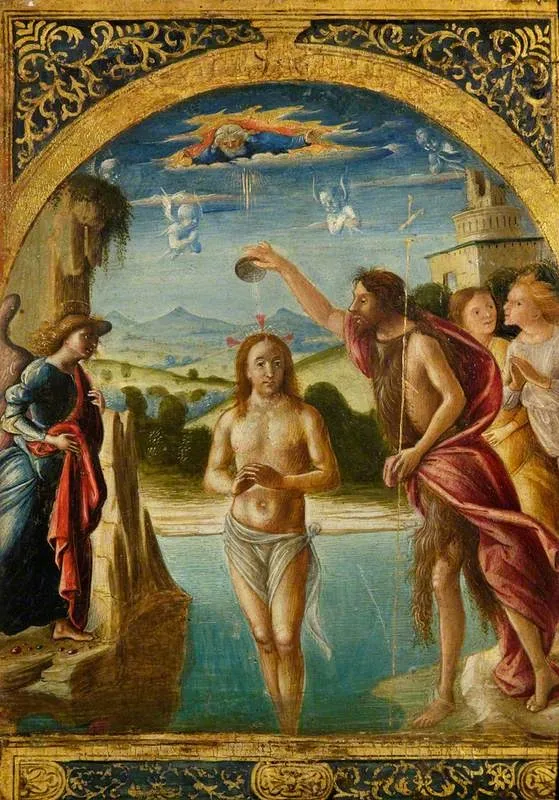
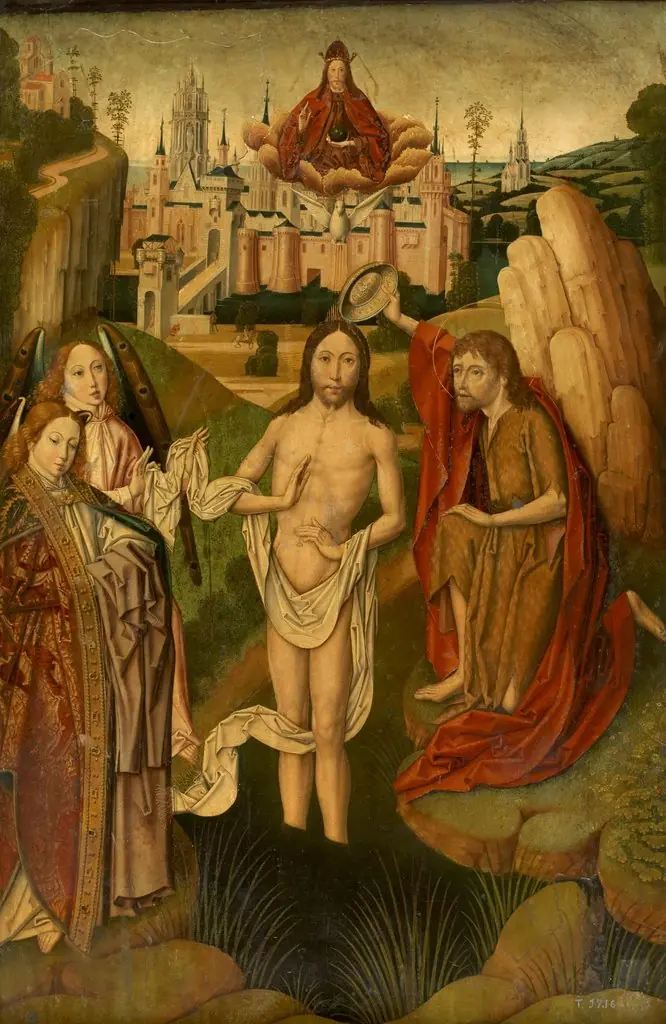
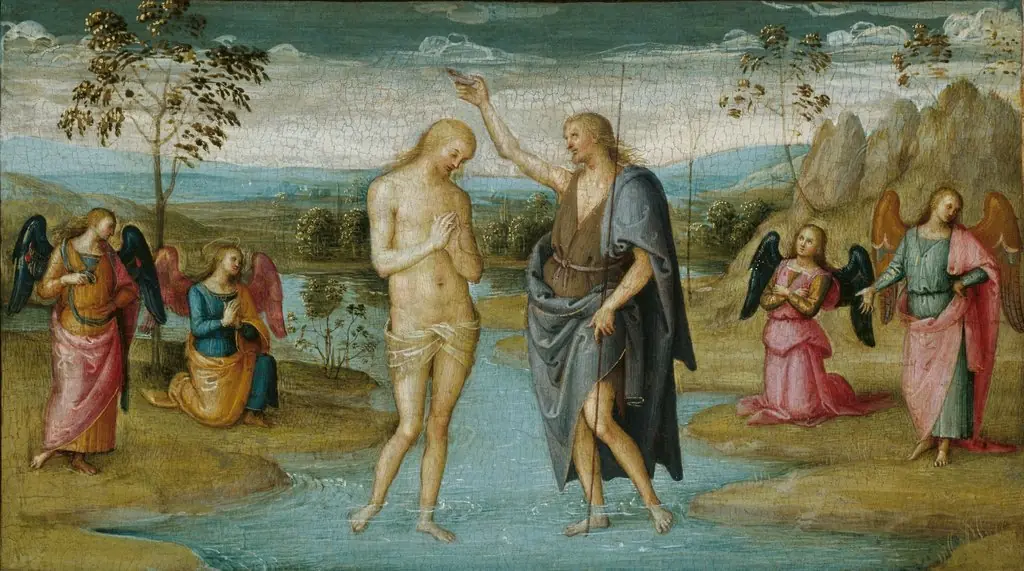
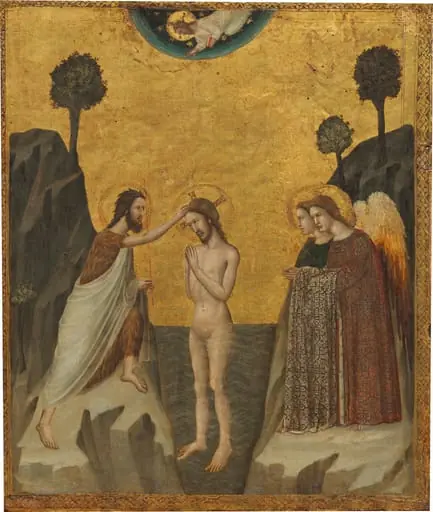
The Baptism of Christ is an unspecified painting by the Italo Byzantine artist Pietro di Francesco degli Orioli. It dates from 1487 and is held in the collection of the Fitzwilliam Museum.
About this work
Overview
Painted around 1487 by Pietro di Francesco degli Orioli, this work captures the moment of Christ’s baptism by John the Baptist.
Painted around 1487 by Pietro di Francesco degli Orioli, this work captures the moment of Christ’s baptism by John the Baptist. Executed in tempera and gold on panel, it was likely intended for private devotion. The painting resides in the Fitzwilliam Museum, Cambridge, having entered its collection in the 19th century. Its quiet composition and restrained palette reflect the devotional tone common in late 15th-century Tuscany.
Subject & Meaning
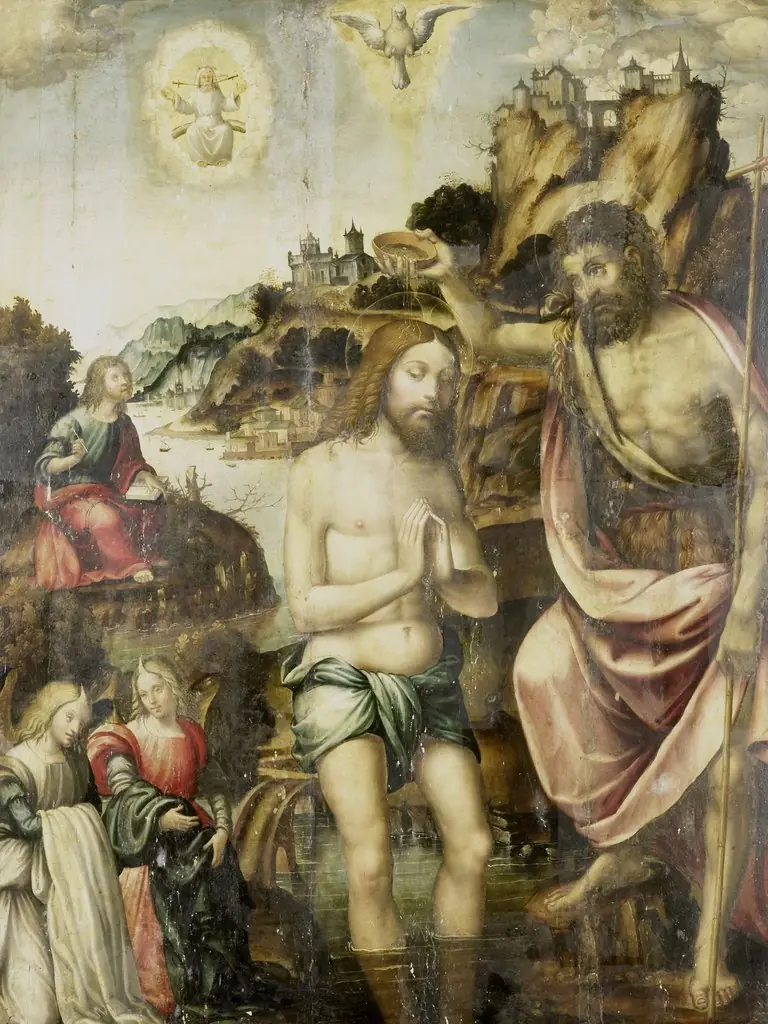
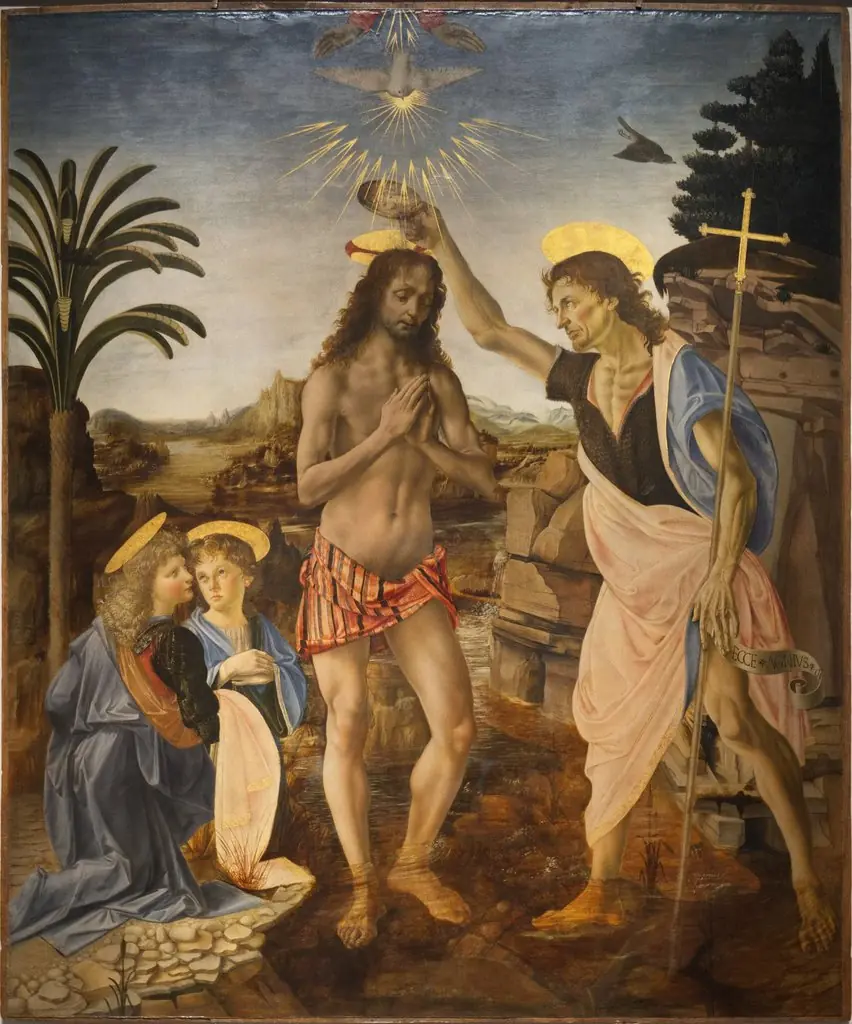
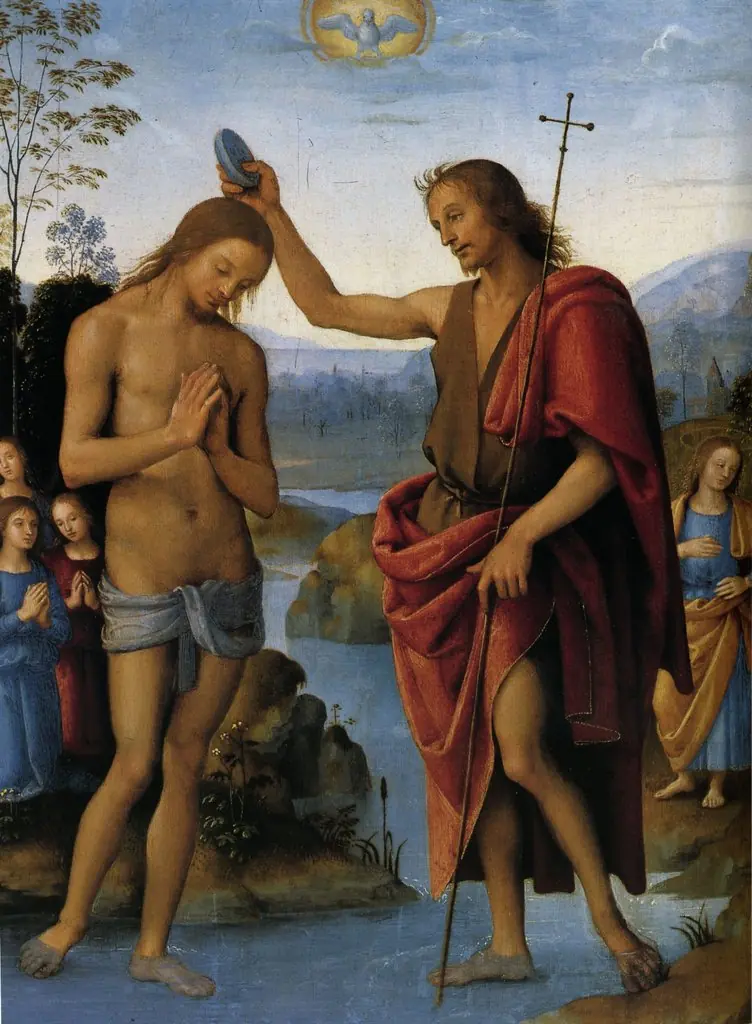
The scene centers on Christ standing waist-deep in the Jordan River as John pours water over his head, fulfilling the ritual described in the Gospels. Above, the Holy Spirit descends as a dove, framed by open heavens. Surrounding figures, angels and witnesses, observe in stillness, their gestures of prayer emphasizing the sacredness of the moment. The composition avoids dramatic action, instead inviting contemplation of divine presence in humble circumstance.
Technique & Style
Orioli employed tempera on wood panel, with fine brushwork defining textures in fabric, water, and foliage. The figures are rendered with naturalistic proportions and subtle modeling, though their poses retain a degree of formality. A muted palette of soft blues, greens, and earth tones dominates, enhanced by delicate gold leaf accents in the halo and sky. The background’s hazy hills and cloud-filled sky suggest depth without perspective distortion, typical of regional Florentine practice.
History & Provenance
The painting was likely commissioned for a private chapel or domestic setting in Siena, where Orioli worked. It remained in Italian collections until the 1800s, when it entered the British art market. The Fitzwilliam Museum acquired it in 1874 from the collection of Sir Richard Wallace.
Its survival in good condition is uncommon for works of this period, allowing clear study of its original execution.
Context
Created during the height of the Early Renaissance in central Italy, the painting reflects the influence of Fra Angelico and Domenico Ghirlandaio in its clarity and spiritual calm. Unlike grand altarpieces, this smaller panel suggests a personal, meditative function. The emphasis on quiet reverence aligns with Dominican and Franciscan devotional trends, which favored intimate scenes over theatrical narratives.
Legacy
Though not widely known outside scholarly circles, the painting exemplifies the quiet devotional style of late Quattrocento Sienese painting. Its preservation offers insight into how religious imagery functioned in private spaces, away from public churches. Art historians value it for its technical restraint and emotional subtlety, contrasting with the more flamboyant styles emerging in Florence at the time.
Artist & collection
Artist
Pietro di Francesco degli Orioli
Pietro di Francesco degli Orioli (1458–1496) was an artist, born in Siena.