Artwork
Appartenenze d'antiche terme con scale che conducono alla palestar, e al teatro
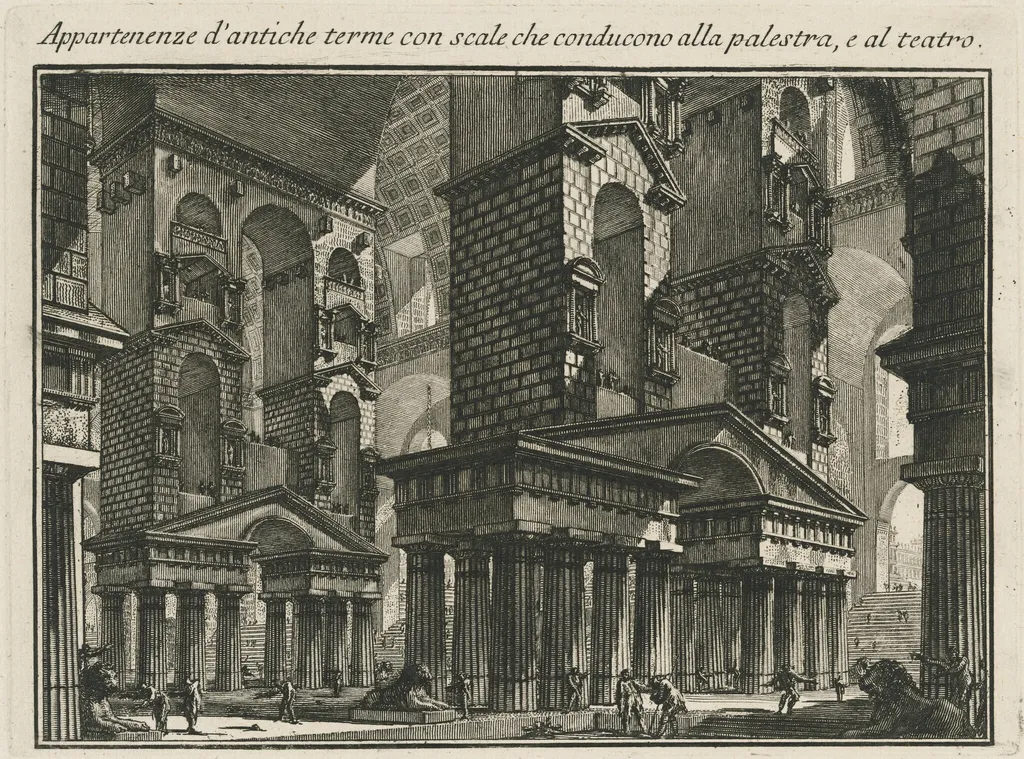
Appartenenze d'antiche terme con scale che conducono alla palestar, e al teatro is an ink print by the Romanticist artist Giovanni Battista Piranesi. It dates from 1750 and is held in the collection of the National Gallery of Art. Created in 1750, this etching on laid paper presents a densely packed ruin of an ancient Roman bath complex.
- Inscription
- Inscribed:upper center in plate: Appartenze d'antiche terme con scale che conducono alla palestra, e al teatro
About this work
Overview
Created in 1750, this etching on laid paper presents a densely packed ruin of an ancient Roman bath complex. Towering columns and fragmented arches dominate the composition, while a multitude of figures navigate the lower levels. Stairways ascend toward a gymnasium and a theater, suggesting a multifunctional civic space rendered in a dramatic, shadow‑filled atmosphere.
Subject & Meaning
The print depicts the imagined remains of a thermae, emphasizing the interplay between public leisure and performance venues in Roman urban life. By juxtaposing decayed architectural elements with bustling human activity, the image conveys both the grandeur of antiquity and the transience of its material culture, inviting contemplation of how past societies organized communal spaces.
Technique & Style
Executed with fine etching lines on laid paper, the work showcases Piranesi’s capacity to render intricate textures, from the roughness of crumbling stone to the delicate silhouettes of distant figures. The artist’s use of hatching creates deep chiaroscuro, accentuating the depth of the ruined structures and the lingering play of light across the scene.
History & Provenance
Giovanni Battista Piranesi, noted for his archaeological studies and architectural drawings, produced this print as part of his broader series exploring Rome’s ancient monuments. The piece reflects his interest in both accurate documentation and imaginative reconstruction, a duality that characterized much of his output during the mid‑18th century.
Context
Emerging during a period of heightened antiquarian enthusiasm, the etching aligns with the Enlightenment’s fascination with classical heritage. Piranesi’s work contributed to contemporary understandings of Roman architecture, influencing scholars and architects who sought to revive classical forms in modern design.
Own this work as a print
Artist & collection
Artist
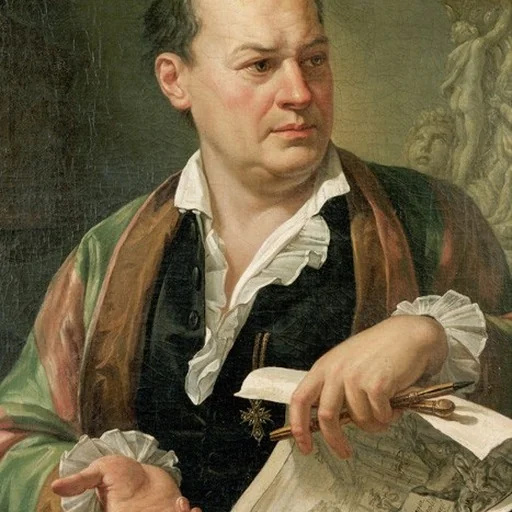
Giovanni Battista (or Giambattista) Piranesi (Italian pronunciation:; also known as simply Piranesi; 4 October 1720 – 9 November 1778) was an Italian classical archaeologist, architect, and artist, famous for his…

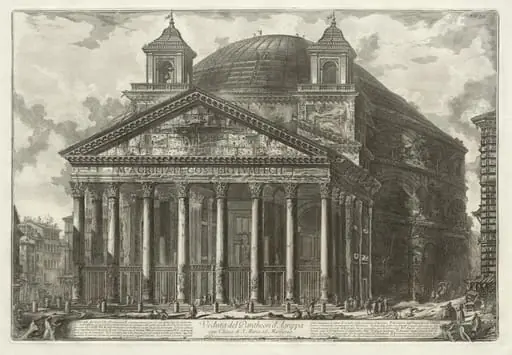 Views of Rome: The Pantheon
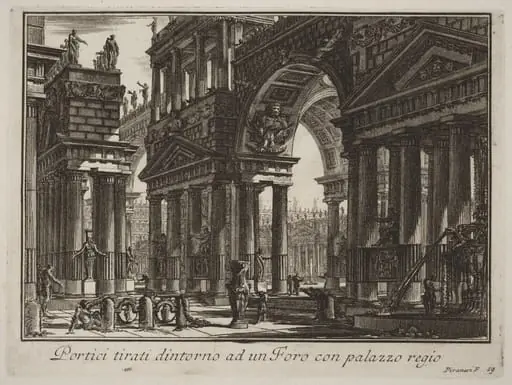 Portici tirati dintorno ad un Foro con palazzo regio
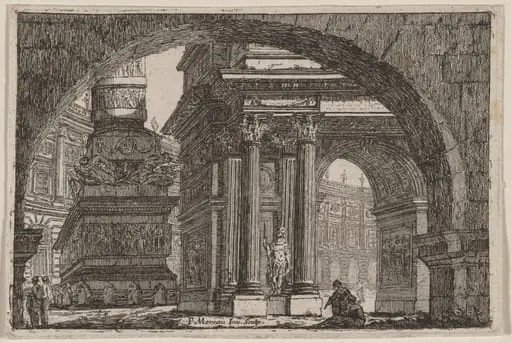 Ancient Forum Seen Beneath an Arch
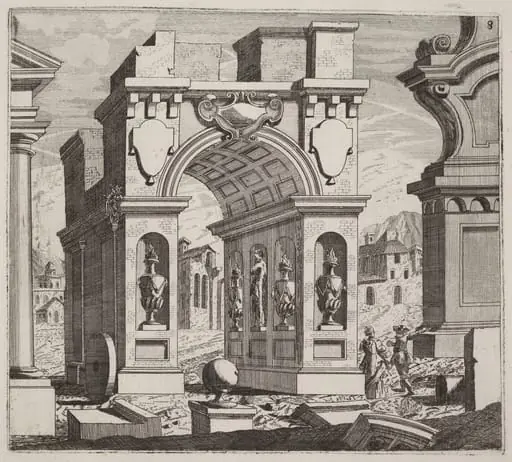 Architectural Fantasy with a Triumphal Arch
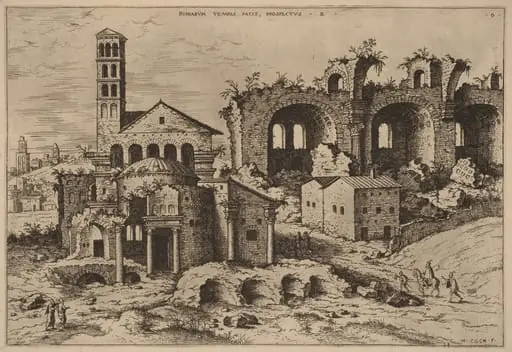 The Temple of Augustus and Faustina, the Temple of Divus Romulus, and the Basilica of Constantine
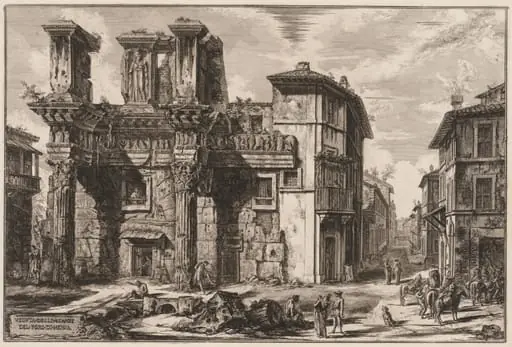 Views of Rome: Forum of Nerva
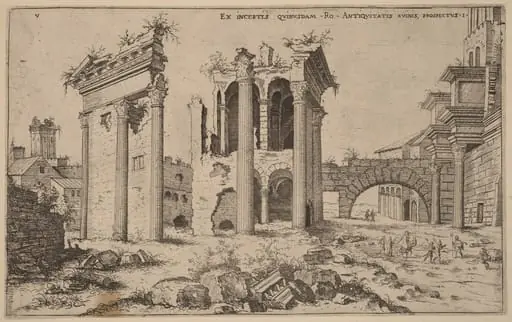 View of the Forum of Nerva
![View of the Quadrant: the Main Door, the Square, the Church and the Loggia of the Monastery of the Monte della Vernia (Prospettiva dell'ingresso della prima porta, con la Piazza, Chiesa, & Loggie del Monastero del Monte della Vernia, come sta quest'Anno MDCXII) [plate D], by Jacopo Ligozzi](https://artifactworldgallery.com/img/jacopo-ligozzi--view-of-the-quadrant-the-main-door-the-square-the-church-and--5e02c68b32f38e19-w320.webp) View of the Quadrant: the Main Door, the Square, the Church and the Loggia of the Monastery of the Monte della Vernia (Prospettiva dell'ingresso della prima porta, con la Piazza, Chiesa, & Loggie del Monastero del Monte della Vernia, come sta quest'Anno MDCXII) [plate D]
View of the Quadrant: the Main Door, the Square, the Church and the Loggia of the Monastery of the Monte della Vernia (Prospettiva dell'ingresso della prima porta, con la Piazza, Chiesa, & Loggie del Monastero del Monte della Vernia, come sta quest'Anno MDCXII) [plate D]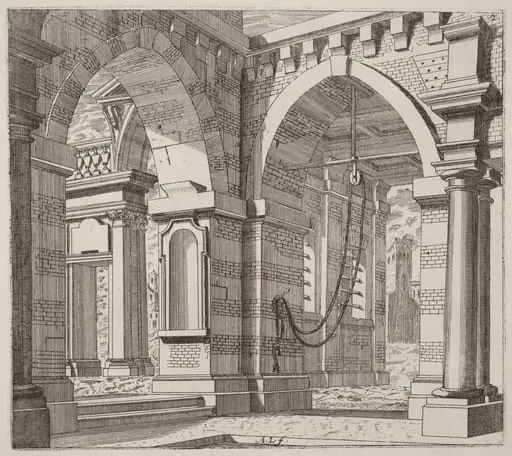 Architectural Fantasy with Arched Gateways
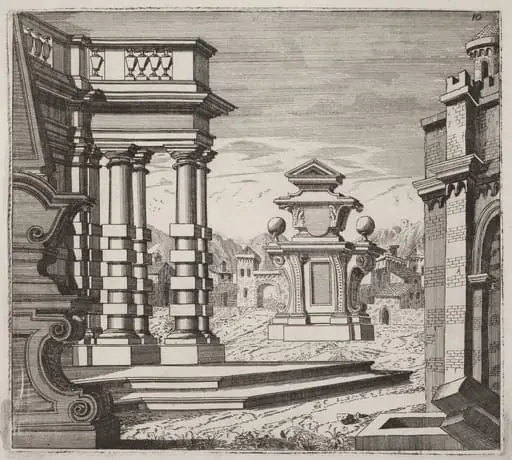 Architectural Fantasy with Portals and Monuments