Artwork
The Lion Bas-Reliefs
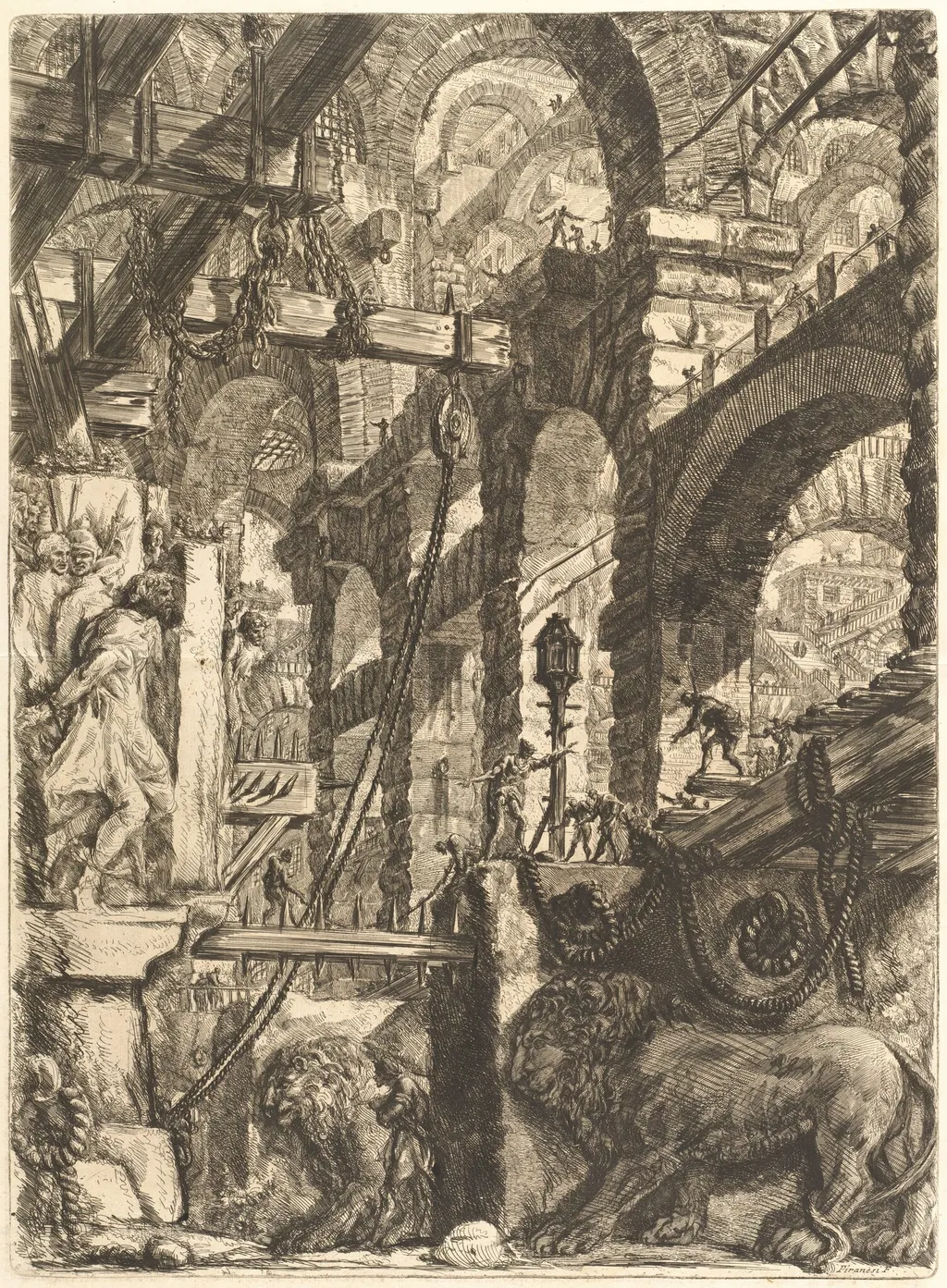
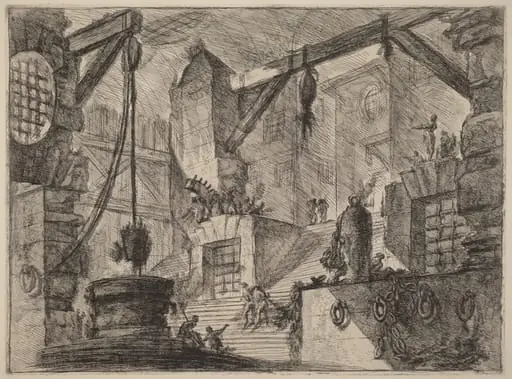
The Lion Bas-Reliefs is an ink print by the Romanticist artist Giovanni Battista Piranesi. It dates from 1761 and is held in the collection of the National Gallery of Art.
- Inscription
- Inscribed:lower right in plate: Piranesi F.
About this work
Overview
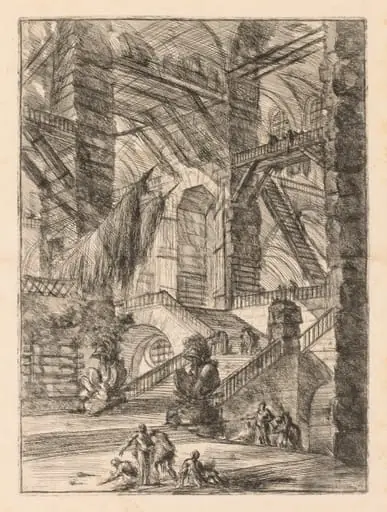
Created in 1761, The Lion Bas-Reliefs is a print by Giovanni Battista Piranesi that combines etching and engraving on laid paper. The image presents a dense assemblage of decaying architectural elements, arches, broken columns, twisted metal, populated by figures navigating the wreckage. The composition conveys a weighty, shadowy atmosphere that evokes a nightmarish vision of a ruined city.
Subject & Meaning
The work reflects Piranesi’s long‑standing fascination with the remnants of ancient Rome.
The work reflects Piranesi’s long‑standing fascination with the remnants of ancient Rome. By juxtaposing crumbling structures with wandering people, the print suggests both the physical decay of the empire and the psychological disorientation that such ruins can inspire. The title’s reference to lion bas‑reliefs hints at the ornamental fragments that once adorned classical monuments, now reduced to fragments within a chaotic whole.
Technique & Style
Piranesi employed both etching and engraving, using acid‑etched lines alongside hand‑cut incisions to achieve a dense network of sharp, intersecting strokes. The laid‑paper support adds a textured surface that accentuates the contrast between deep shadows and fine details. The overall style is deliberately rough; the jagged, overlapping lines avoid smooth rendering, reinforcing the sense of disorder and ruin.
History & Provenance
The print was produced during the later phase of Piranesi’s career, when his interest in antiquarian subjects had intensified. It was issued as part of a series of prints that explored imagined or exaggerated Roman ruins, a motif that appealed to eighteenth‑century collectors of antiquities. Original impressions remain in several European museum collections, documenting the artist’s influence on the visual culture of his time.
Own this work as a print
Artist & collection

Artist
Giovanni Battista (or Giambattista) Piranesi (Italian pronunciation:; also known as simply Piranesi; 4 October 1720 – 9 November 1778) was an Italian classical archaeologist, architect, and artist, famous for his…

 The Prisons: A Vast Interior with Trophies
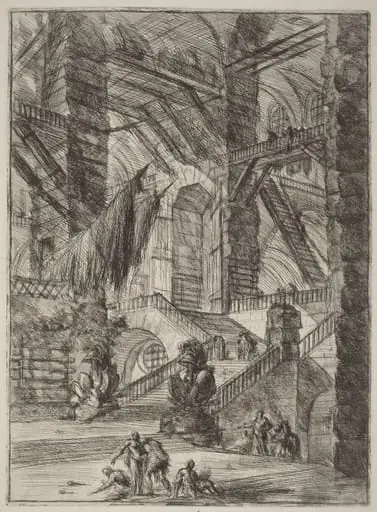 The Staircase with Trophies
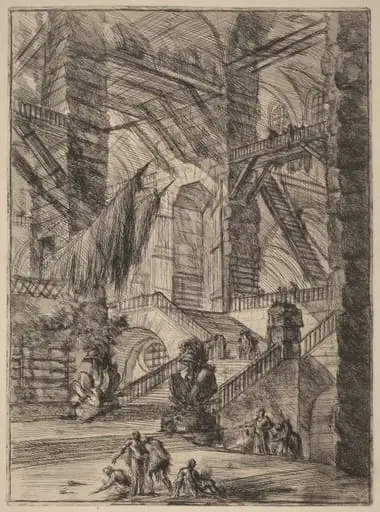 The Staircase with Trophies
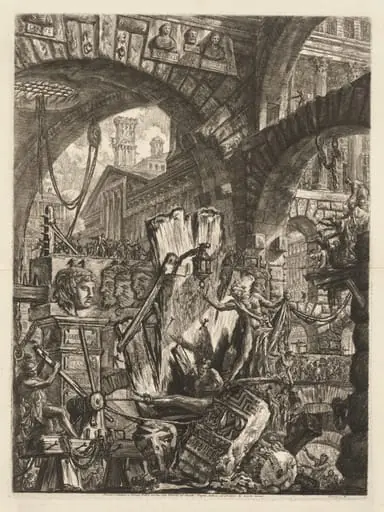 The Prisons: An Architectural Medly, with a Man on the Rock in the Foreground
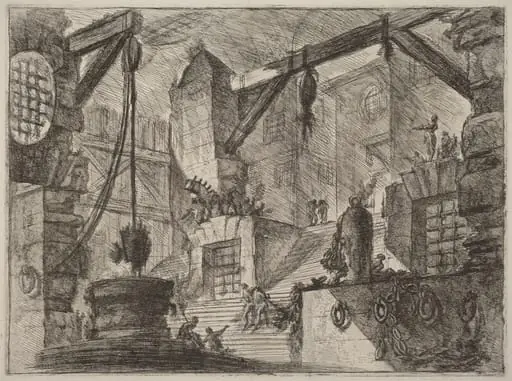 The Well
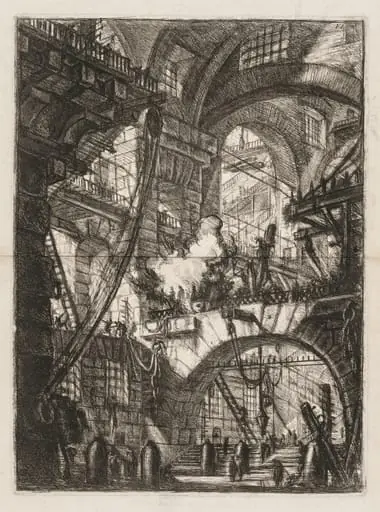 The Prisons: A Perspective of Arches with a Smoking Fire in the Center
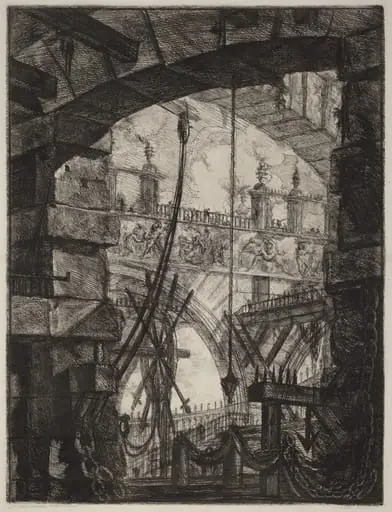 The Grand Piazza
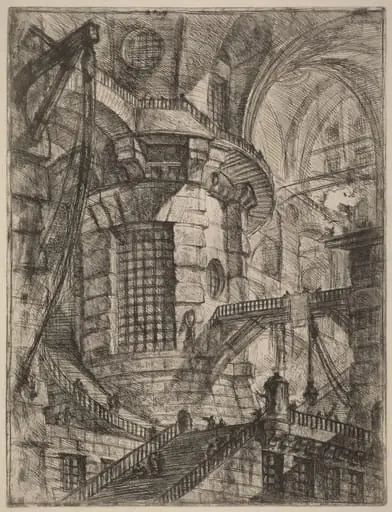 The Round Tower
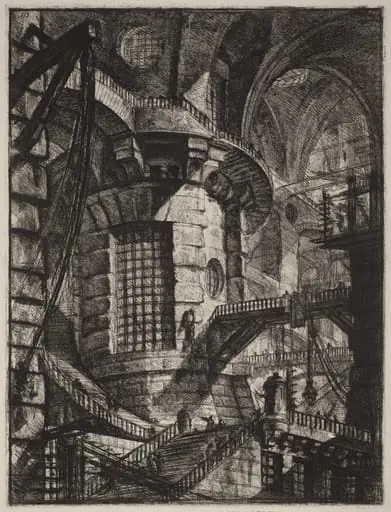 The Round Tower
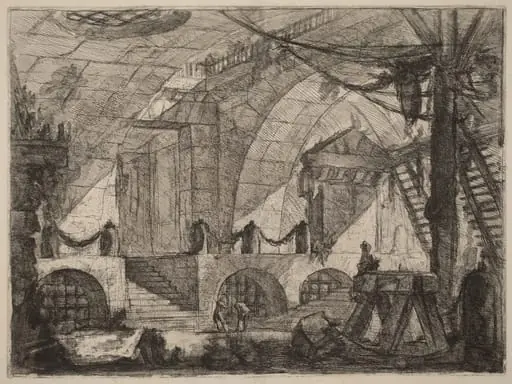 The Sawhorse
 The Well
- The Prisons: A Perspective of Roman Arches, with Two Lions Carved in Relief on Stone Slabs in the Foreground