Artwork
Sheepcote
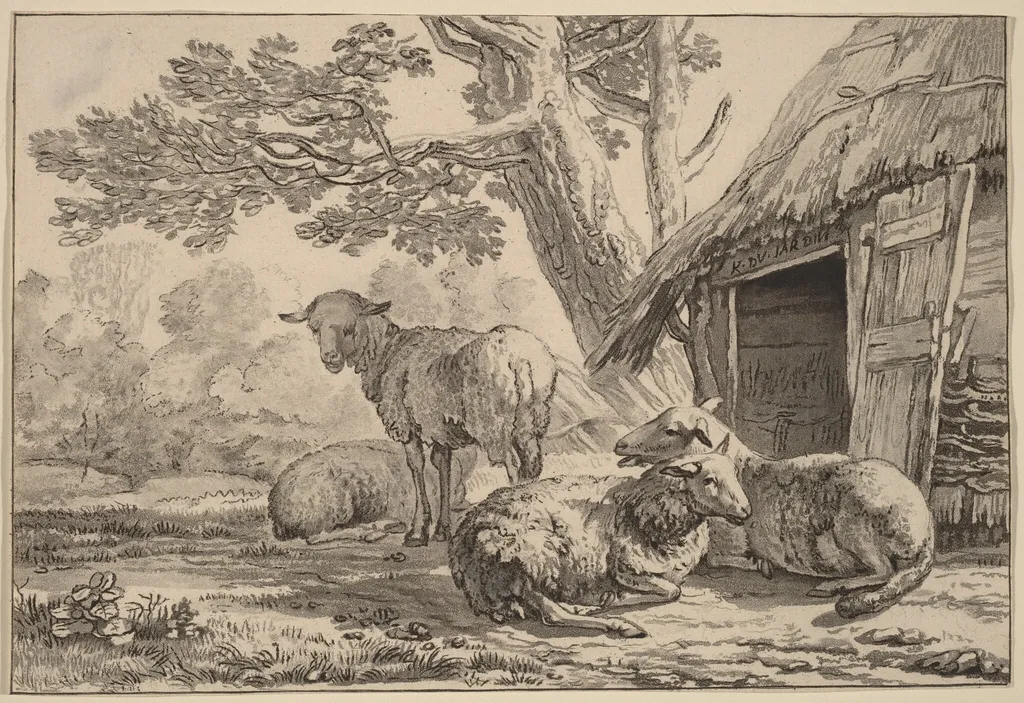
Sheepcote is a chalk print by the Romanticist artist Cornelis Ploos van Amstel. It dates from 1781 and is held in the collection of the National Gallery of Art.
- Inscription
- Inscribed:verso in center in graphite: Geoffererd aan den Eerw de heer J.F. Martinet / door den ... Ploos van Amstel / Y; verso along bottom in graphite: ...1675 del. PlvAmstel fec
- Markings
- Marked:verso: artist's mark (Eusman 9)
About this work
Overview
Created in 1781 by Cornelis Ploos van Amstel, Sheepcote is a print executed in chalk manner and aquatint, printed in black ink on laid paper.
Created in 1781 by Cornelis Ploos van Amstel, Sheepcote is a print executed in chalk manner and aquatint, printed in black ink on laid paper. It depicts a tranquil Dutch pastoral scene, characterized by muted tones and subtle gradations of light. The work stands out for its unusual combination of techniques, blending the textural qualities of chalk drawing with the tonal depth of aquatint to achieve a soft, atmospheric effect.
Subject & Meaning
The scene portrays a quiet rural landscape: a low stone wall separates grazing sheep from a modest wooden shed in the distance. There is no human presence, emphasizing solitude and the rhythms of agricultural life. The composition invites contemplation, focusing on the stillness of the land and the quiet harmony between structure and nature, reflecting an 18th-century Dutch appreciation for humble, everyday environments.
Technique & Style
Ploos van Amstel employed chalk manner, a rare method involving direct drawing on the metal plate with chalk-like material, combined with aquatint to build tonal layers. He further enhanced the shadows by applying ink with a brush, creating soft, diffused gradations. This hybrid approach produced a luminous, painterly quality, evoking the chiaroscuro of Rembrandt’s etchings without direct imitation, favoring quietude over dramatic contrast.
History & Provenance
The print was made in the Netherlands during a period when printmaking was valued for its accessibility and expressive potential. Ploos van Amstel, a lesser-known but technically inventive artist, was active in the late 18th century and associated with regional print circles. Sheepcote survives in limited impressions, primarily held in European institutional collections, with no known record of early private ownership.
Context
In late 18th-century Holland, landscape prints often celebrated rural life as a counterpoint to urbanization. Artists like Ploos van Amstel drew from the tradition of Dutch Golden Age printmaking, adapting its realism with newer tonal techniques. While not part of the mainstream artistic elite, his work reflects a broader cultural interest in quiet, unidealized nature and the materiality of the print medium itself.
Legacy
Sheepcote remains a quiet example of technical experimentation in Dutch printmaking. Though Ploos van Amstel did not achieve widespread fame, his use of chalk manner and brush-applied aquatint influenced later artists seeking to merge drawing and printing. The work is studied today for its nuanced handling of tone and its role in the evolution of print techniques beyond traditional etching.
Own this work as a print
Artist & collection

 Portrait of Cornelis Ploos van Amstel
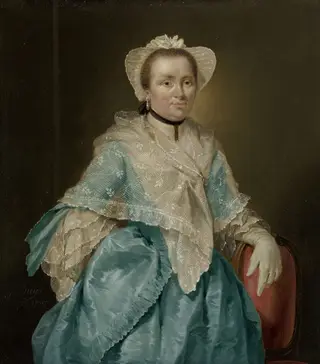 Portrait of Elisabeth Troost (1730-1790)
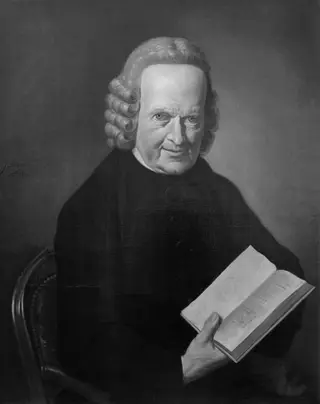 Johannes Monnikhoff (1707-1787)
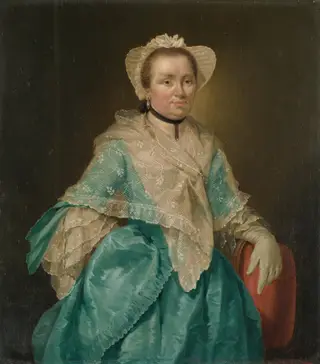 Portrait of Elisabeth Troost (1730-1790)
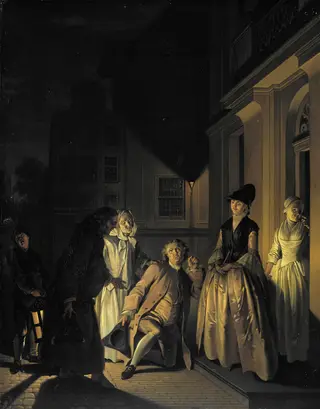 Scene from the Play 'Lubbert Lubbertse of de geadelde boer' by M. van Breda
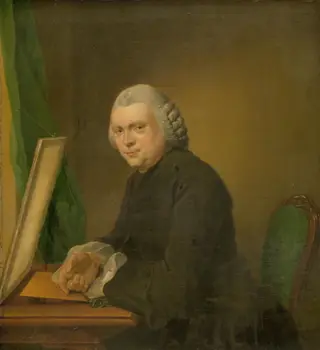 Portrait of Cornelis Ploos van Amstel
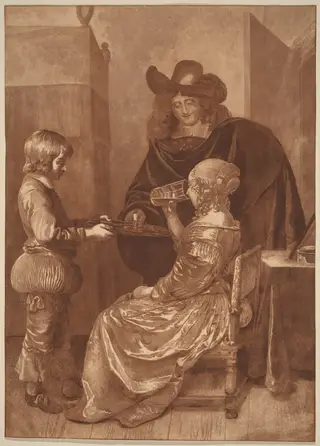 Cavalier and Lady with a Page
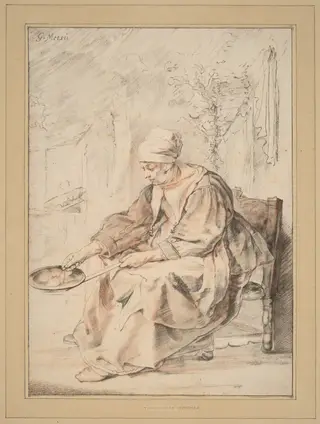 Pancake Woman
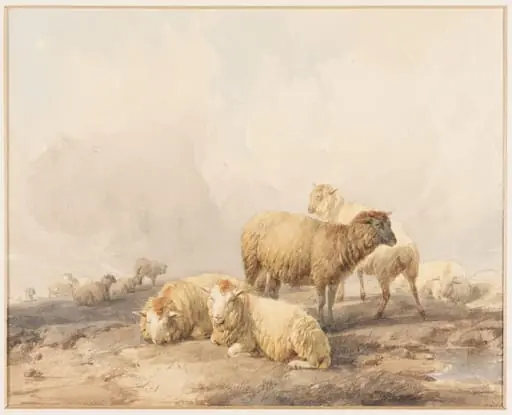 Sheep
Sheep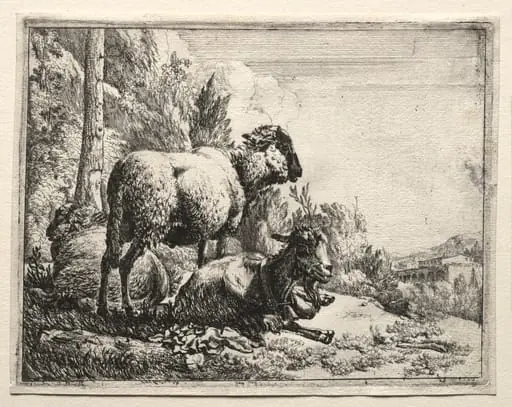 Goat with Bell
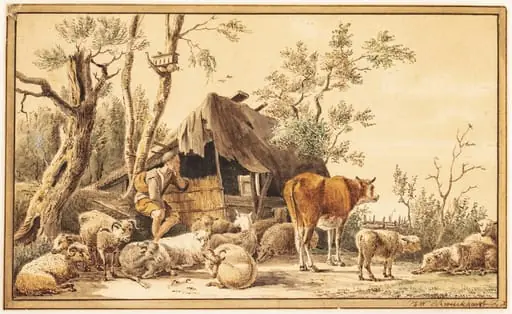 En fårehyrde med sin hjord ved et skur
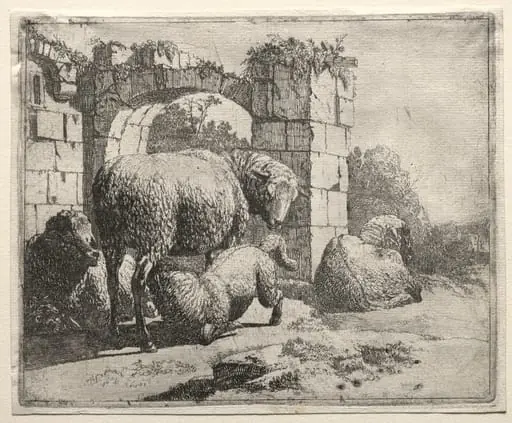 Sheep Near the Ruins of an Arch
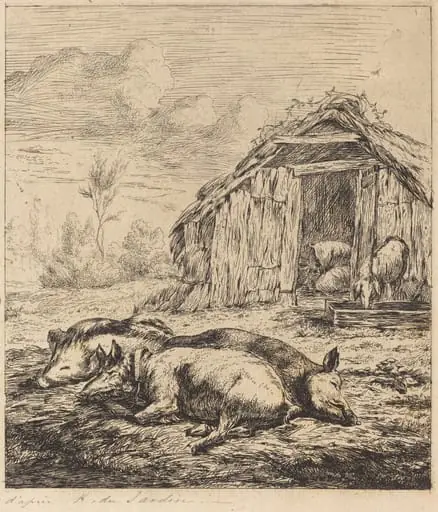 Les trois cochons couchés devant l'étable (Three Swine Lying In Front of a Sty)
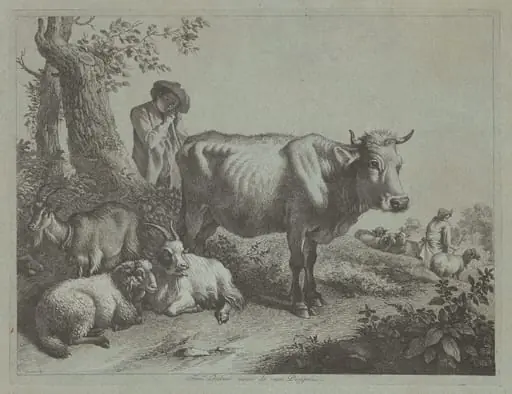 Standing Cow and a Shepherd Boy with Flock
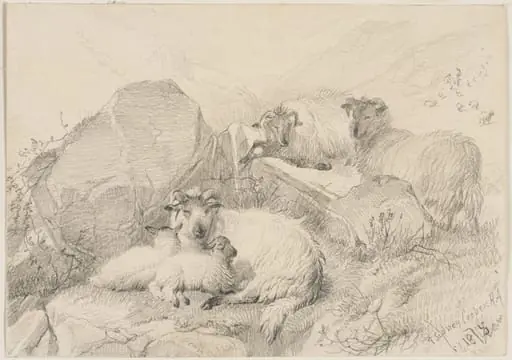 Sheep and their lambs in a mountain landscape
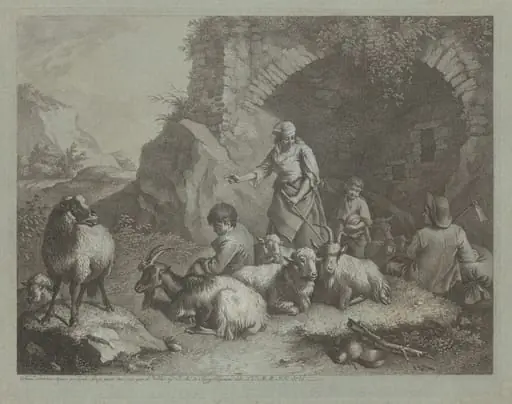 Woman, Shepherd Boys, and Sheep near an Arch
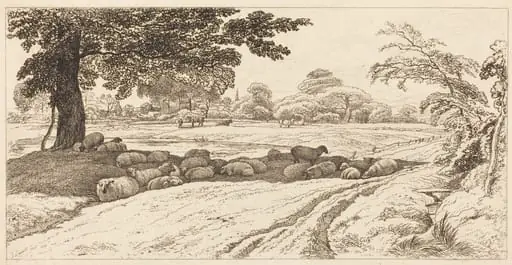 Sheep at Noon