Artwork
Shipyard
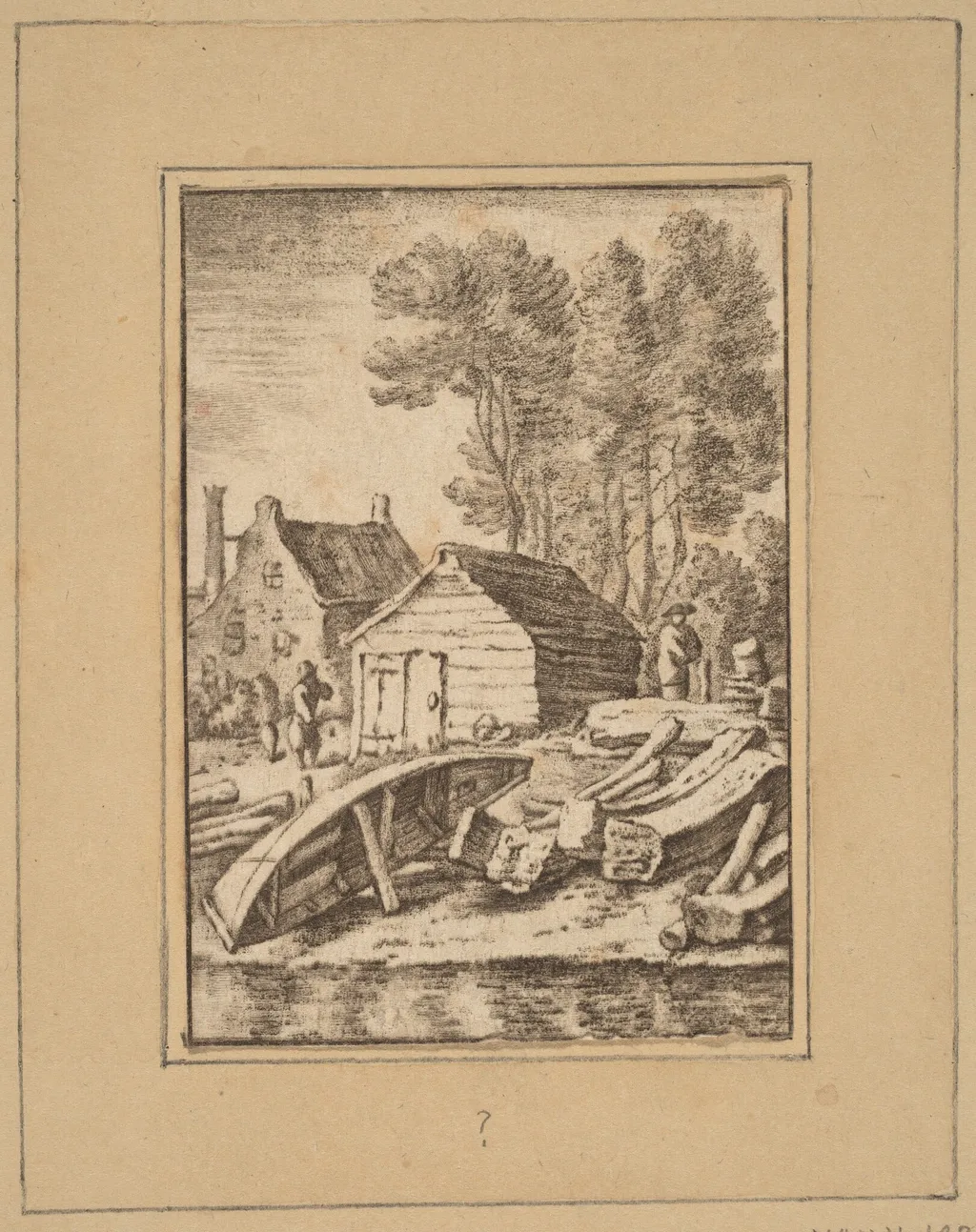
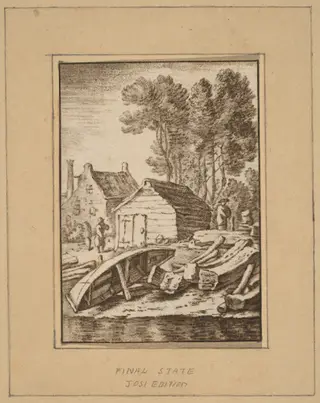
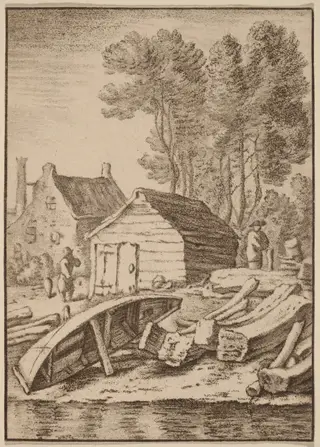
Shipyard is a chalk print by the Romanticist artist Cornelis Ploos van Amstel. It dates from 1761 and is held in the collection of the National Gallery of Art.
- Markings
- Marked:verso: artist's mark (Eusman 1)
About this work
Overview
In the foreground, a substantial wooden structure and a boat anchor the composition, situated near a pile of logs that suggests active timber processing.
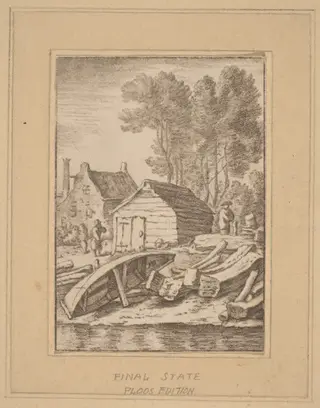
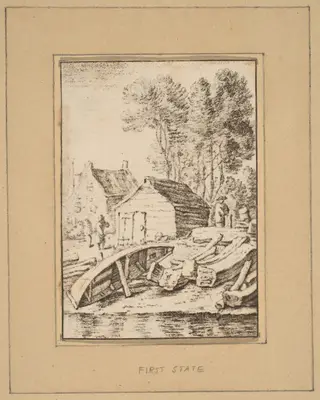
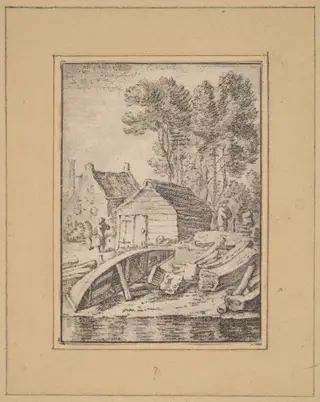
Created in 1761, Shipyard is a print by the Dutch artist Cornelis Ploos van Amstel, executed in the chalk manner with etched hatching and printed in black ink on laid paper. The work depicts a maritime industrial scene centered on a shipyard. In the foreground, a substantial wooden structure and a boat anchor the composition, situated near a pile of logs that suggests active timber processing.
The middle ground extends toward a shoreline where several small figures are visible, including one standing alone, providing a sense of scale and human activity within the workspace. The background is defined by a line of trees that frames the scene and adds depth to the landscape. Ploos van Amstel, known for his meticulous reproductive prints and drawings of Dutch landscapes and maritime subjects, utilized the chalk manner technique to mimic the tonal softness of chalk drawings while employing etched hatching to define form and texture.
This piece reflects the artist's dedication to documenting the Dutch maritime economy and landscape during the 18th century, capturing the functional aesthetics of shipbuilding with precise draftsmanship.
Subject & Meaning
The image presents a wooden dock structure, a small vessel, and a stack of timber logs in the foreground, while trees and a few figures, one standing on the shore, populate the distance. The arrangement suggests routine industriousness, emphasizing the quiet, orderly rhythm of shipyard work rather than dramatic narrative.
Technique & Style
Ploos van Amstel employed a chalk manner combined with etched hatching, producing fine, linear textures that translate into a printed image on laid paper. The black ink application highlights contrasts between light and shadow, while the etched lines convey the material qualities of wood, water, and foliage with restrained detail.
History & Provenance
Created in 1761, the print belongs to the artist’s broader output of topographical and genre works. It survives as an example of Dutch printmaking practices of the mid‑18th century, though specific ownership records prior to modern collection are not documented.
Own this work as a print
Artist & collection

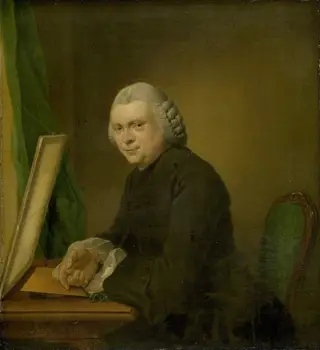 Portrait of Cornelis Ploos van Amstel
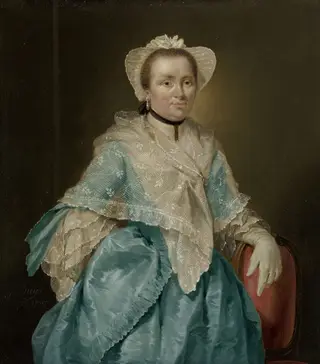 Portrait of Elisabeth Troost (1730-1790)
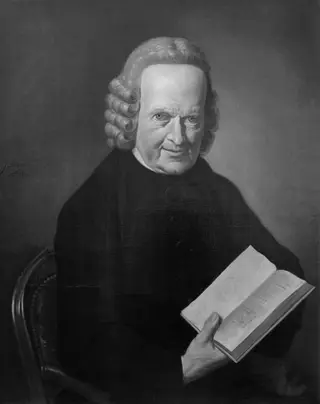 Johannes Monnikhoff (1707-1787)
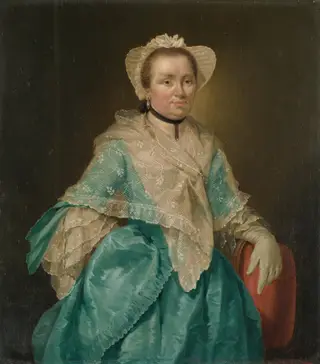 Portrait of Elisabeth Troost (1730-1790)
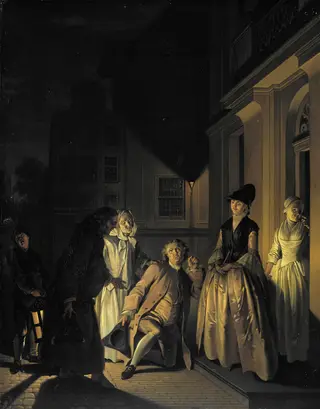 Scene from the Play 'Lubbert Lubbertse of de geadelde boer' by M. van Breda
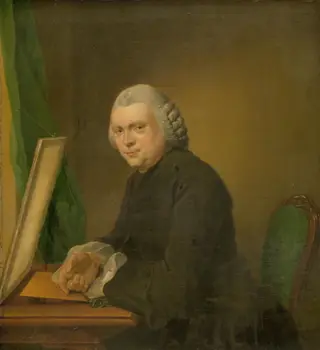 Portrait of Cornelis Ploos van Amstel
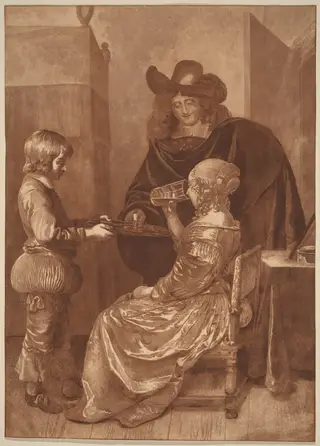 Cavalier and Lady with a Page
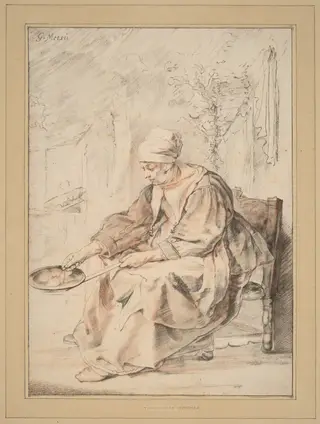 Pancake Woman