Artwork
Cimitir turcesc
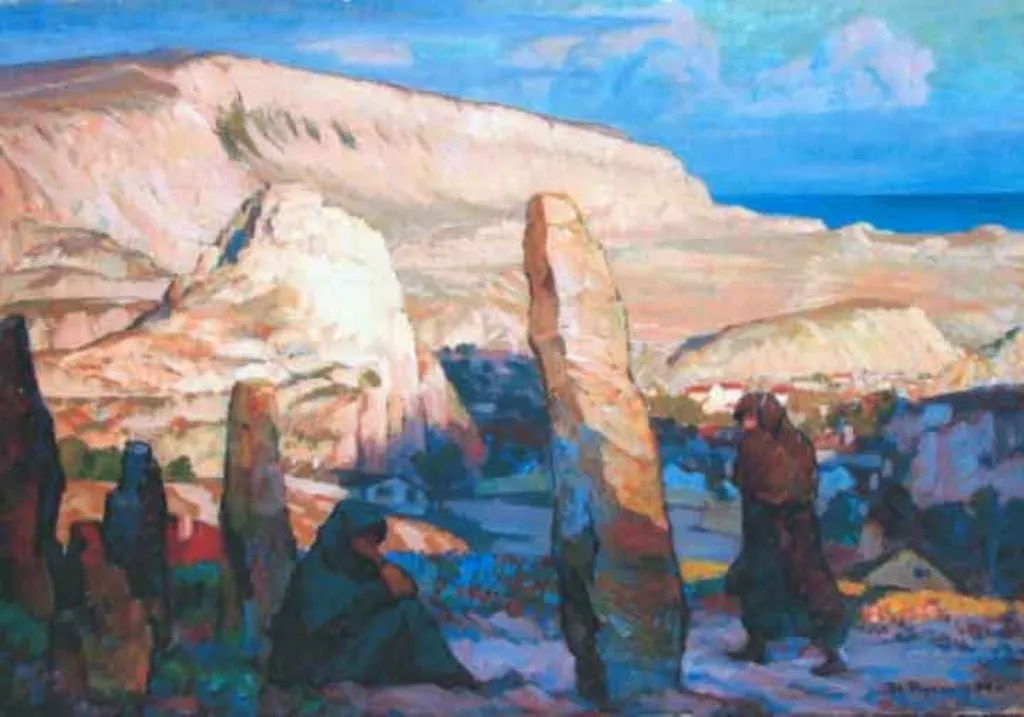
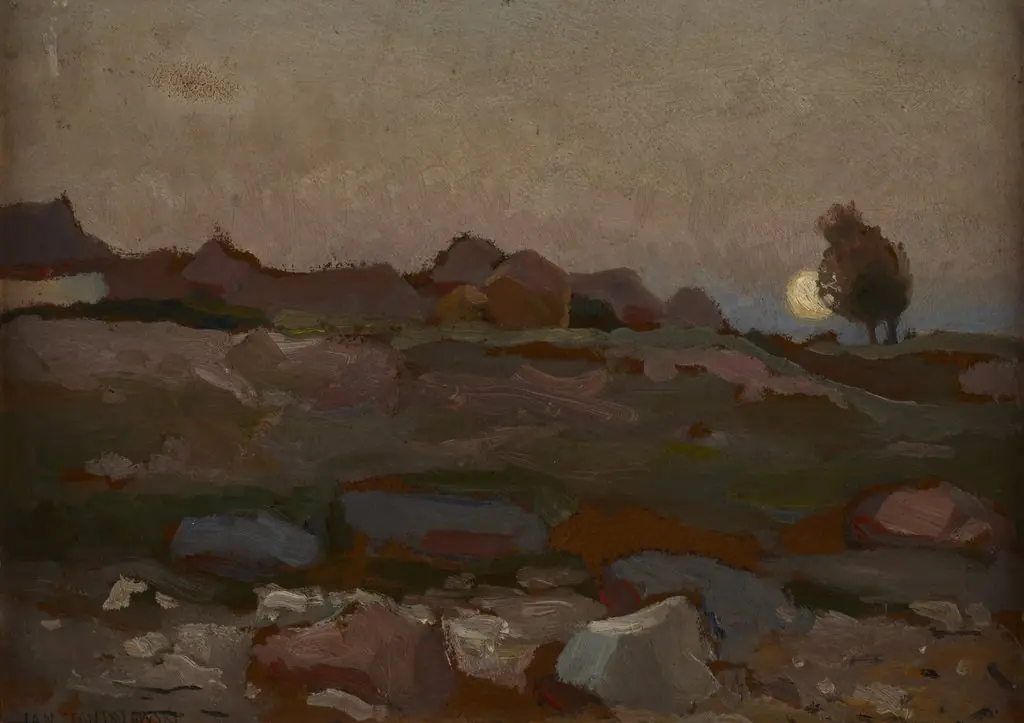
Cimitir turcesc is an unspecified painting by the Romanesque artist Ștefan Popescu. It dates from 1922 and is held in the collection of the Ion Ionescu-Quintus Prahova County Art Museum.
About this work
Overview
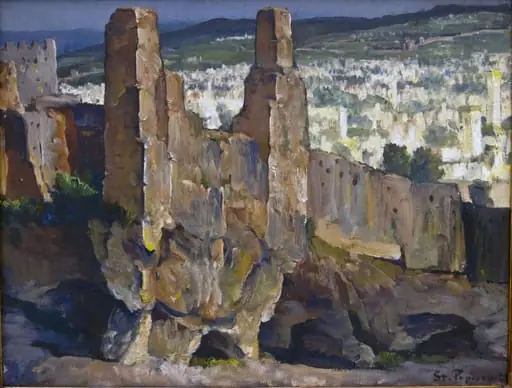
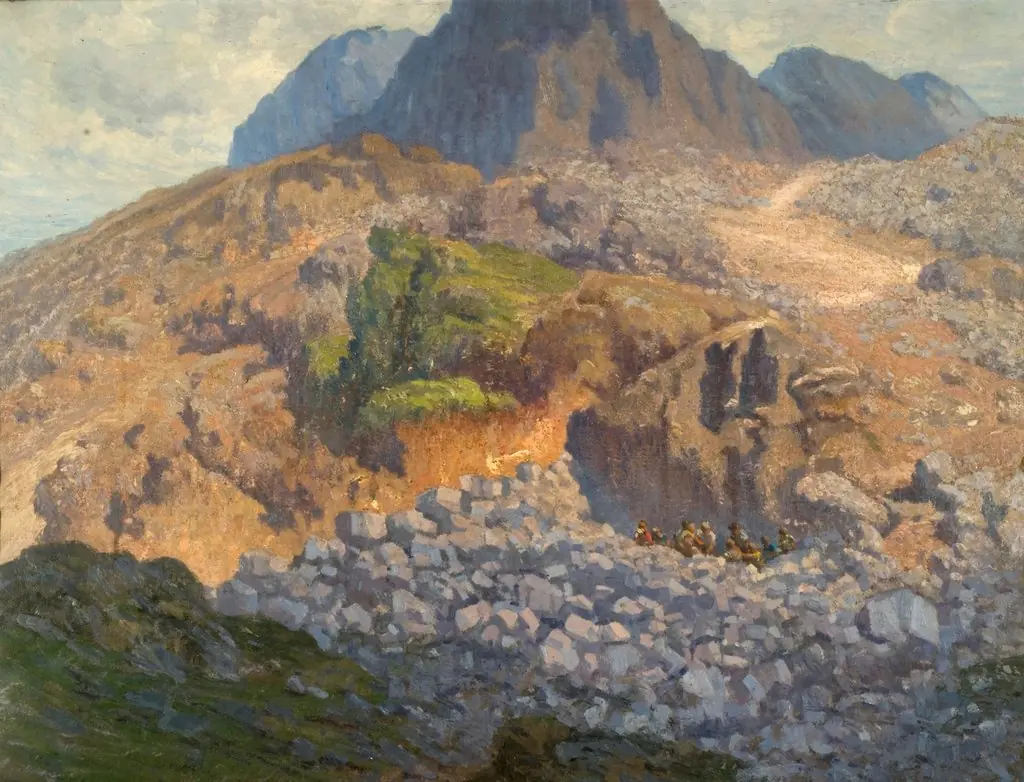
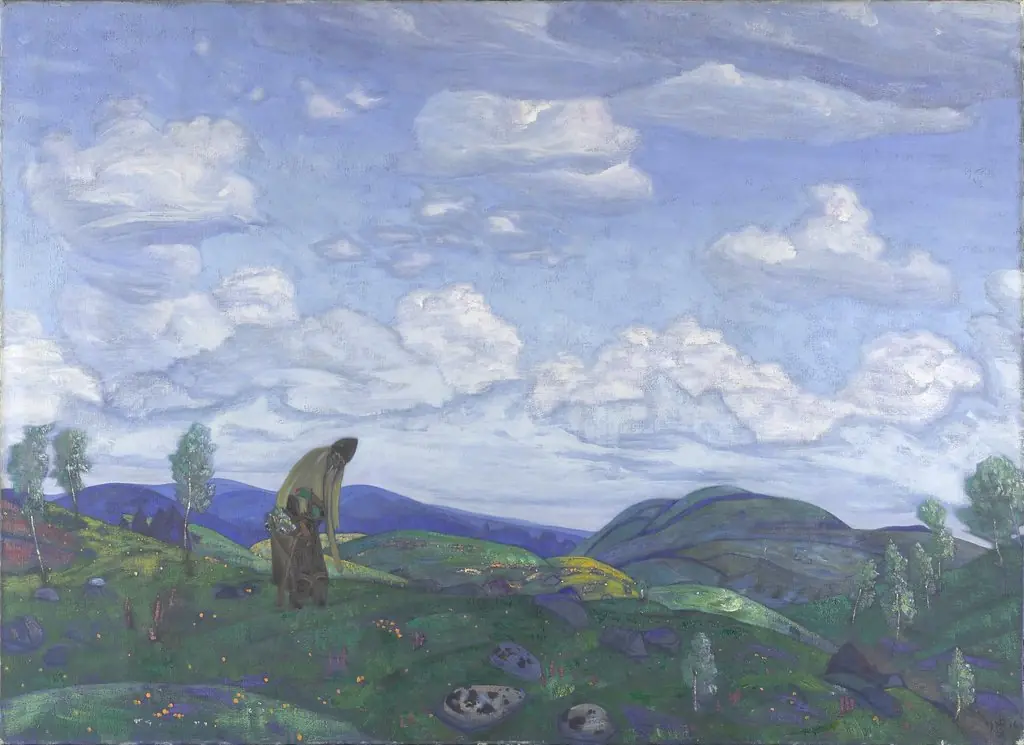
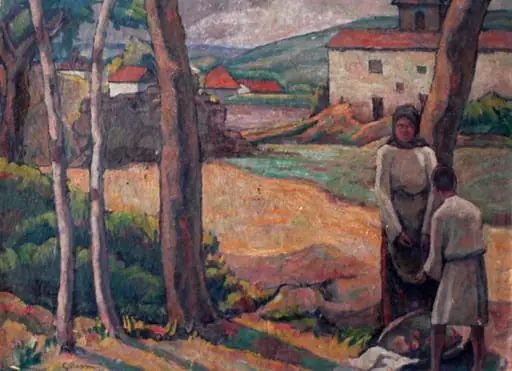
Ștefan Popescu’s 1922 work titled Cimitir turcesc is part of the collection at the Museum of Ethnography. The image portrays a solitary figure set within a stark, rocky terrain, where jagged cliffs dominate the background. The composition balances a muted foreground of dark stones and sparse vegetation with a pale sky tinged with yellow, creating a sense of expansive isolation.
Subject & Meaning
The central figure appears diminutive against the towering cliffs, emphasizing human vulnerability within a harsh natural environment. The barren landscape, with its uneven rocks and limited greenery, reinforces a mood of solitude and perhaps contemplation of mortality, suggested by the title’s reference to a Turkish cemetery.
Technique & Style
Popescu employs a thick, textured brushstroke that builds a palpable surface, characteristic of impasto application. The rough, gestural strokes in whites and grays render the cliffs with a tactile quality, while the darker foreground and subtle sky hues contrast to enhance depth and atmospheric tension.
History & Provenance
Created in 1922, Cimitir turcesc entered the Museum of Ethnography’s holdings, where it remains on display. The work reflects Popescu’s early twentieth‑century interest in landscape and cultural themes, aligning with the museum’s focus on ethnographic visual documentation.
Artist & collection
Artist
Ștefan Popescu painted quiet scenes from the 1920s, blending everyday places with soft light.
Museum
Ion Ionescu-Quintus Prahova County Art Museum
Continue through works from the same source collection.