Artwork
The Prima Macchina for the Chinea of 1757: The Colonnade of the Athenian Lyceum
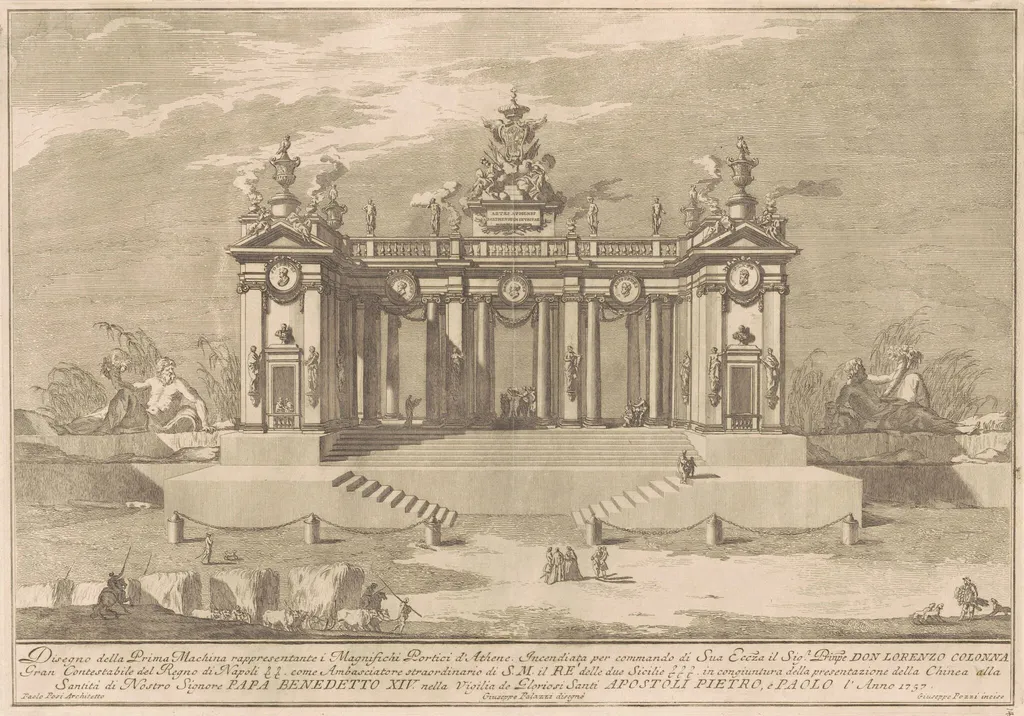
The Prima Macchina for the Chinea of 1757: The Colonnade of the Athenian Lyceum is an ink print by the Romanticist artist Giuseppe Pozzi. It dates from 1757 and is held in the collection of the National Gallery of Art.
- Inscription
- Inscribed:Lettered LL: "Paolo Posi Architetto" Lettered LC: "Giuseppe Palazzi disegno'" Lettered LR: "Giuseppe Pozzi incise" Lettered LC: "Disegno della Prima Machina rappresentante i Magnifichi Portici d'Athene [...] l'Anno 1757"
About this work
This drawing shows a grand building with tall columns and statues on top.
This drawing shows a grand building with tall columns and statues on top. In front, there’s a wide staircase leading up. To the sides, people are climbing rocks and working near the water. The sky is light, with some clouds.
The text at the bottom says this was made for a special event in 1757. It looks like a temporary stage built to impress someone important.
Want to know more? Check out etching to see how this kind of drawing was made.
Overview
Giuseppe Pozzi’s 1757 etching, titled Prima Macchina for the Chinea of 1757: The Colonnade of the Athenian Lyceum, records a temporary architectural spectacle erected for a ceremonial occasion. The print captures a monumental façade with towering columns and crowning statues, set before a broad stairway that ascends toward the structure. Figures are shown scaling rocky outcrops and attending to tasks near water, all under a pale, lightly clouded sky.
Subject & Meaning
The image documents a staged construction intended to impress a distinguished guest during the 1757 Chinea festivities, a diplomatic event linking the Papal States and the Kingdom of Naples. By depicting the Lyceum’s colonnade as a grand, almost theatrical backdrop, the work underscores the political importance of visual splendor in public celebrations of the era.
Technique & Style
Executed as an etching, the print employs fine line work to render architectural details, such as the fluted columns and ornamental statues, while broader strokes suggest the mass of the staircase and surrounding landscape. Pozzi’s handling of light and shadow creates a sense of depth, and the inclusion of numerous small figures adds narrative dynamism typical of mid‑18th‑century celebratory prints.
History & Provenance
Created expressly for the 1757 Chinea ceremony, the etching likely served as a visual record for patrons and officials. While the original temporary structure no longer exists, the print has survived in several European print collections, indicating its role as both a documentary and commemorative artifact of the event.
Context
The Chinea was an annual tribute sent by the Kingdom of Naples to the Pope, often accompanied by elaborate pageantry. Pozzi’s depiction aligns with the broader 18th‑century trend of producing printed images of temporary festival architecture, which functioned as both propaganda and a means of preserving fleeting civic spectacles for posterity.
Own this work as a print
Artist & collection


 The Prima Macchina for the Chinea of 1757: The Colonnade of the Athenian Lyceum
 The Prima Macchina for the Chinea of 1756: A Triumphal Arch between Mount Etna and Mount Vesuvius
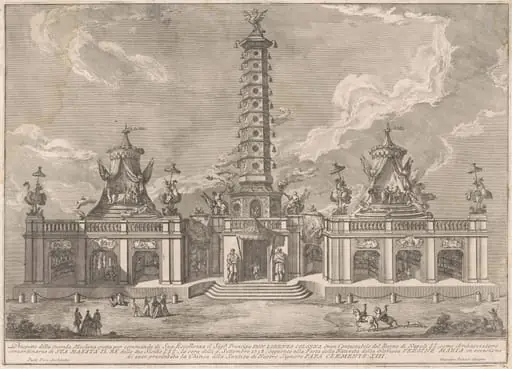 The Seconda Macchina for the Chinea of 1758: The Porcelain Tower of Nanjing
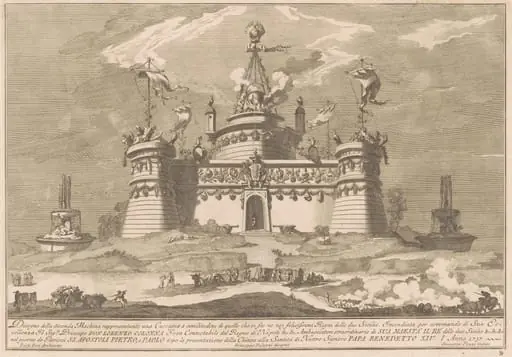 The Seconda Macchina for the Chinea of 1757: The Fortress of Cockaigne
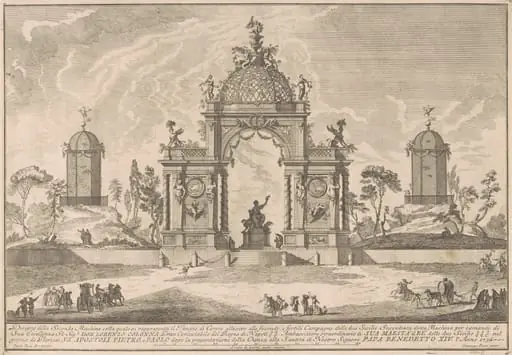 The Seconda Macchina for the Chinea of 1756: The Temple of Ceres
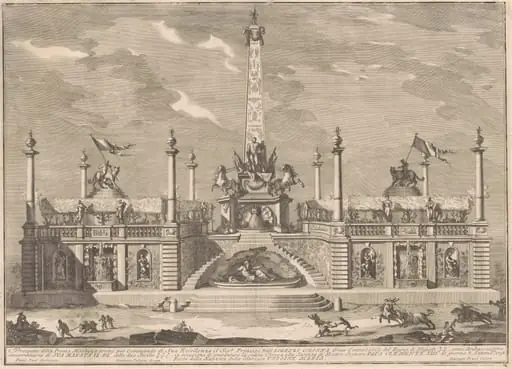 The Prima Macchina for the Chinea of 1758: A "Deliziosa" with Hanging Gardens
- The Prima Macchina for the Chinea of 1754: The Palace of Venus in Cyprus
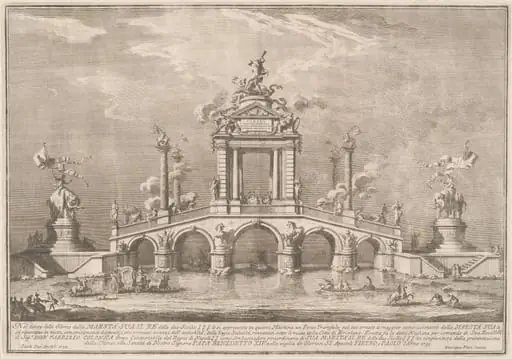 The Prima Macchina for the Chinea of 1755: A Triumphal Bridge with Antiquities from Herculaneum
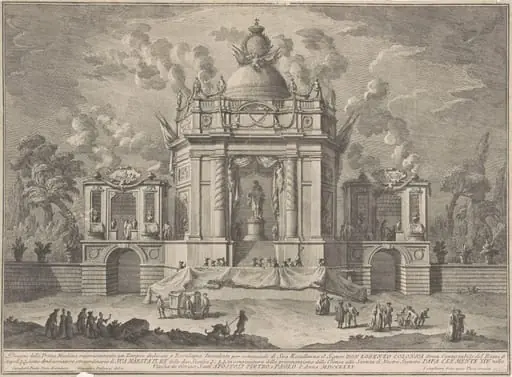 The Prima Macchina for the Chinea of 1771: The Temple of Asclepius
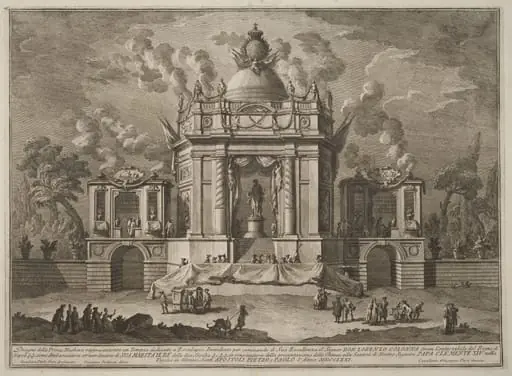 The Prima Macchina for the Chinea of 1771: The Temple of Asclepius
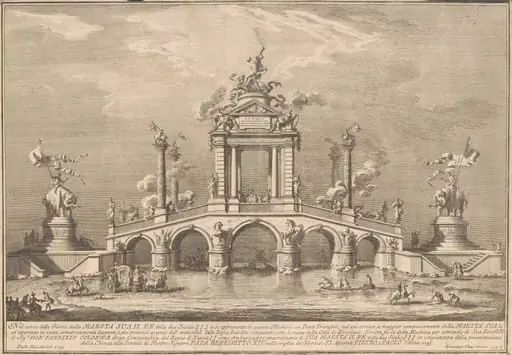 The Prima Macchina for the Chinea of 1755: A Triumphal Bridge with Antiquities from Herculaneum
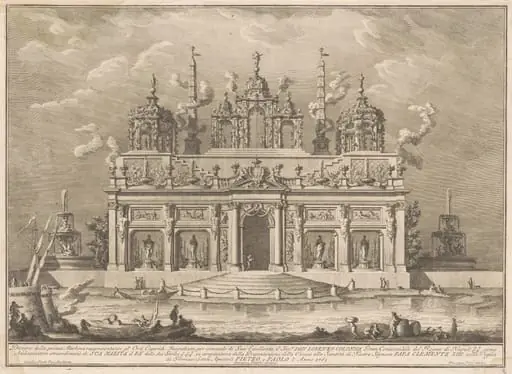 The Prima Macchina for the Chinea of 1765: The Garden of the Hesperides
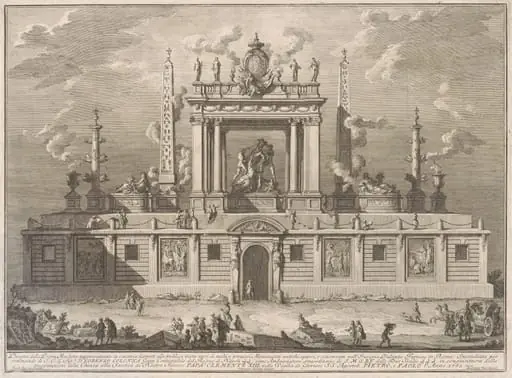 The Prima Macchina for the Chinea of 1762: The Farnese Bull and Other Antiquities from Palazzo Farnese
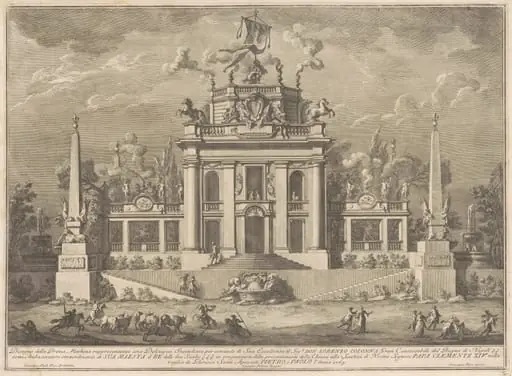 The Prima Macchina for the Chinea of 1769: A "Deliziosa"