Artwork
The Prima Macchina for the Chinea of 1758: A "Deliziosa" with Hanging Gardens
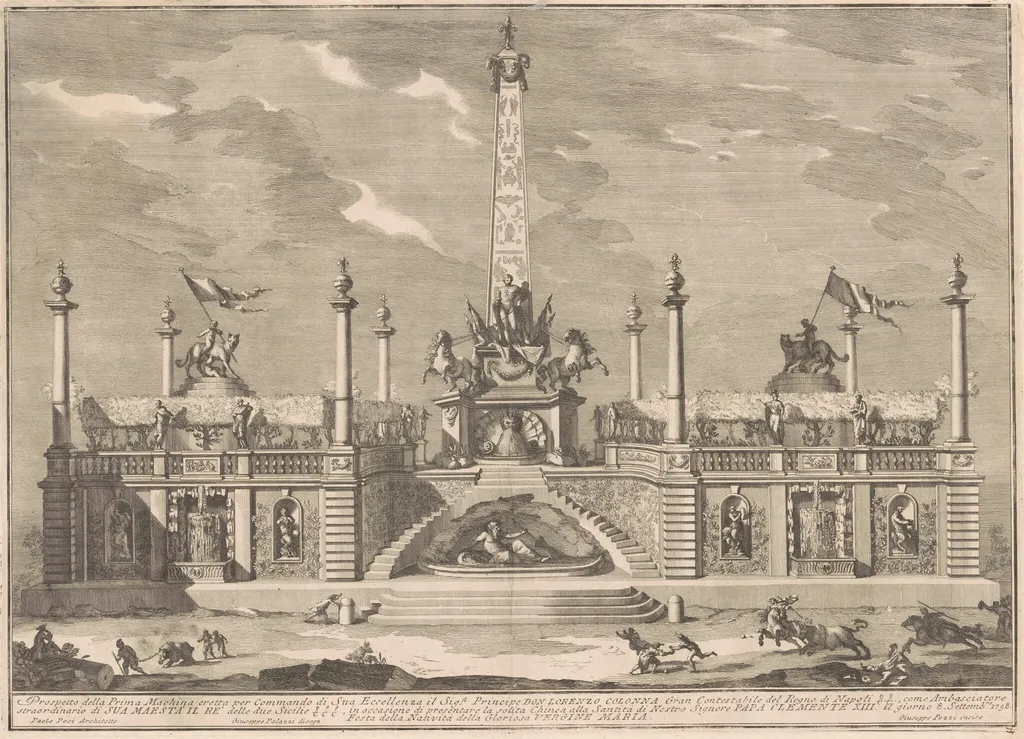
The Prima Macchina for the Chinea of 1758: A "Deliziosa" with Hanging Gardens is an ink print by the Romanticist artist Giuseppe Pozzi. It dates from 1758 and is held in the collection of the National Gallery of Art.
- Inscription
- Inscribed:Lettered LL: "Paolo Posi Architetto" Lettered LC: "Giuseppe Palazzi disegn." Lettered LR: "Giuseppe Pozzi incise" Lettered LC: "Prospetto della Prima Machina eretta per COmmando di Sue Eccellenza [...] 1758"
About this work
The whole scene looks like a mix of a palace and a garden, with flags and decorative details everywhere.
This image shows a grand, imaginary stage set with tall columns and statues. At the center is a tall column topped with a statue, flanked by two smaller statues on horses. Below it, a wide staircase leads up to a platform with more statues and framed pictures.
The whole scene looks like a mix of a palace and a garden, with flags and decorative details everywhere.
The tiny figures at the bottom suggest this was meant for a performance or ceremony. The text at the bottom hints it was built for a special event in 1758.
Check out the technique: etching to see how artists like Pozzi created these detailed prints.
Overview
The Prima Macchina for the Chinea of 1758: A 'Deliziosa' with Hanging Gardens is an etching by Giuseppe Pozzi, created in 1758. It depicts a fantastical architectural scene with ornate details and figures.
Subject & Meaning
The print shows an elaborate, imaginary setting with a central column, statues, and a staircase leading to a decorated platform. The presence of tiny figures and the overall design suggest it was intended for a ceremonial or performance context.
Technique & Style
The work is an etching, a technique that allowed Pozzi to achieve a high level of detail in the print. The level of intricacy in the architectural and decorative elements is notable.
History & Provenance
The print was created for a special event in 1758, as indicated by the text at the bottom of the image. It is associated with the Chinea, a significant occasion that year.
Own this work as a print
Artist & collection


 The Prima Macchina for the Chinea of 1757: The Colonnade of the Athenian Lyceum
 The Prima Macchina for the Chinea of 1757: The Colonnade of the Athenian Lyceum
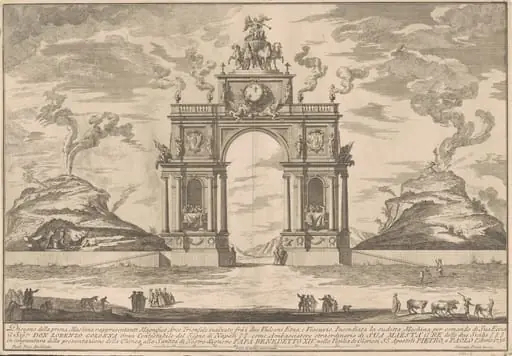 The Prima Macchina for the Chinea of 1756: A Triumphal Arch between Mount Etna and Mount Vesuvius
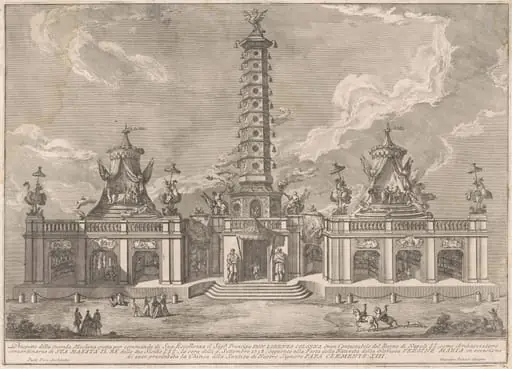 The Seconda Macchina for the Chinea of 1758: The Porcelain Tower of Nanjing
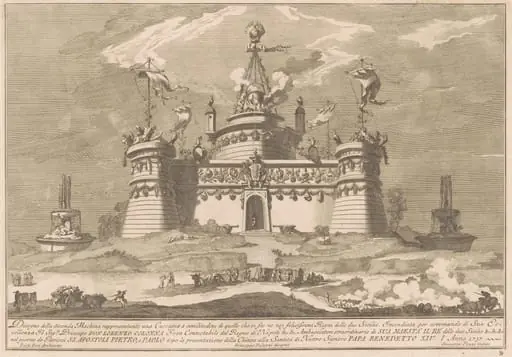 The Seconda Macchina for the Chinea of 1757: The Fortress of Cockaigne
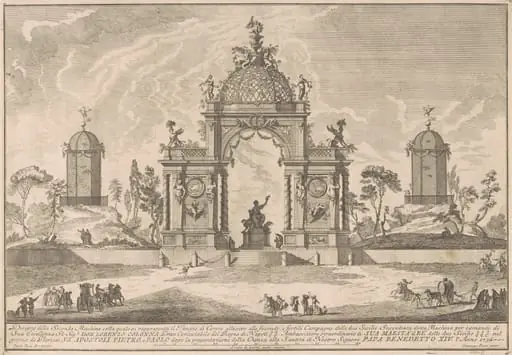 The Seconda Macchina for the Chinea of 1756: The Temple of Ceres
- The Prima Macchina for the Chinea of 1769: A "Deliziosa"
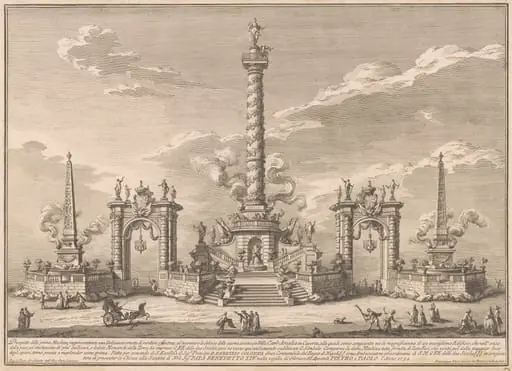 The Prima Macchina for the Chinea of 1752: A "Deliziosa" Alluding to Villa Carl'Amalia in Caserta
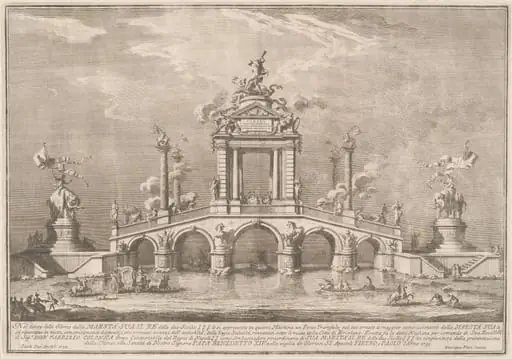 The Prima Macchina for the Chinea of 1755: A Triumphal Bridge with Antiquities from Herculaneum
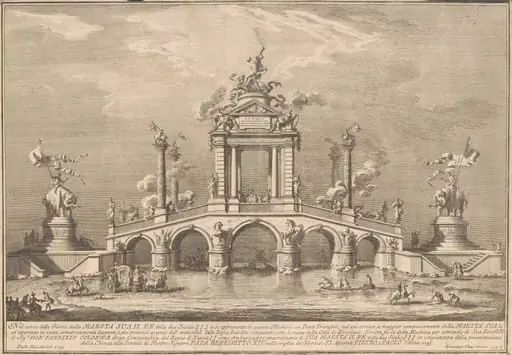 The Prima Macchina for the Chinea of 1755: A Triumphal Bridge with Antiquities from Herculaneum
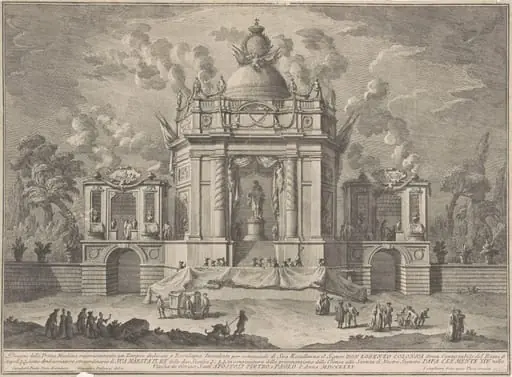 The Prima Macchina for the Chinea of 1771: The Temple of Asclepius
 The Prima Macchina for the Chinea of 1771: The Temple of Asclepius
 The Prima Macchina for the Chinea of 1754: The Palace of Venus in Cyprus
 The Prima Macchina for the Chinea of 1765: The Garden of the Hesperides
 The Prima Macchina for the Chinea of 1762: The Farnese Bull and Other Antiquities from Palazzo Farnese
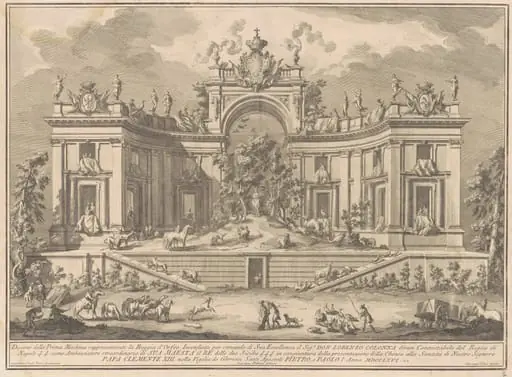 The Prima Macchina for the Chinea of 1766: The Palace of Orpheus
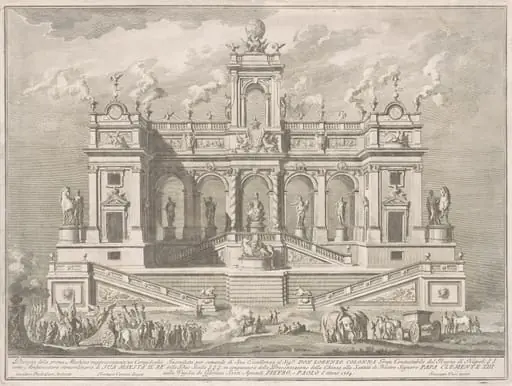 The Prima Macchina for the Chinea of 1764: A Capitol Building
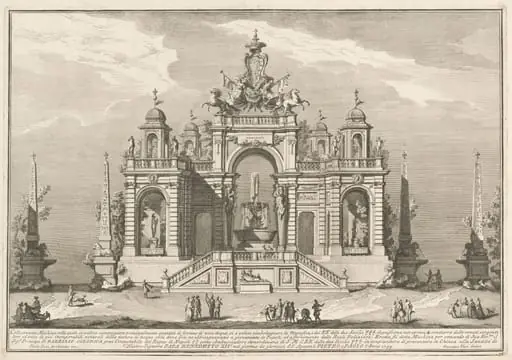 The Seconda Macchina for the Chinea of 1754: An Allegory of Waterworks