Artwork
The Prima Macchina for the Chinea of 1756: A Triumphal Arch between Mount Etna and Mount Vesuvius
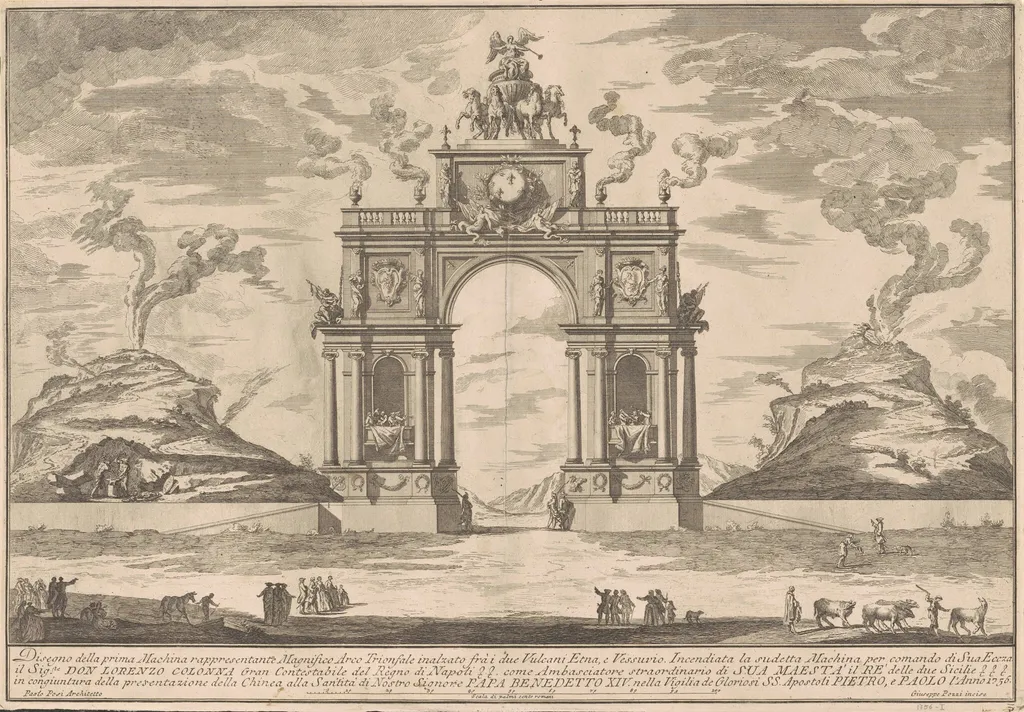
The Prima Macchina for the Chinea of 1756: A Triumphal Arch between Mount Etna and Mount Vesuvius is an ink print by the Romanticist artist Giuseppe Pozzi. It dates from 1756 and is held in the collection of the National Gallery of Art.
- Inscription
- Inscribed:Lettered LL: "Paolo Posi Architetto" Lettered LR: "Giuseppe Pozzi incise" Lettered LC: "Disegno della prima Machina rappresentante Magnifico Arco Trionfale inalzato fra i due Vulcani Etna e Vessuvio [...] l'Anno 1756"
About this work
Overview
Giuseppe Pozzi’s 1756 etching, titled The Prima Macchina for the Chinea of 1756: A Triumphal Arch between Mount Etna and Mount Vesuvius, presents a monumental arch set against a dramatic volcanic landscape. The composition balances architectural splendor with the natural power of Etna and Vesuvius, while a bustling foreground of figures and animals adds narrative depth.
Subject & Meaning
The work celebrates a ceremonial chinea, a tribute sent by the Kingdom of Naples to the Pope, by framing the tribute within a triumphal arch. By positioning the arch between two iconic volcanoes, Pozzi juxtaposes human ceremony with the volatile forces of the region, suggesting both the grandeur of the event and the ever‑present natural drama of southern Italy.
Technique & Style
Executed in fine etching, Pozzi achieves a layered sense of space through delicate line work and cross‑hatching that render the cloudy sky, the smoky peaks, and the intricate sculptural details of the arch. The medium allows subtle tonal variations, giving texture to stone, fabric, and animal fur, and guiding the eye from foreground activity to the distant volcanic horizon.
History & Provenance
Created in the mid‑18th century, the print was likely produced to commemorate the 1756 chinea procession, a diplomatic exchange between Naples and the Holy See. While the original plate’s whereabouts remain undocumented, surviving impressions have circulated among collectors of Italian prints and are now held in several European museum collections.
Own this work as a print
Artist & collection


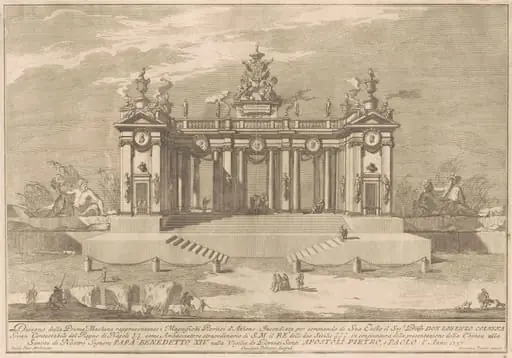 The Prima Macchina for the Chinea of 1757: The Colonnade of the Athenian Lyceum
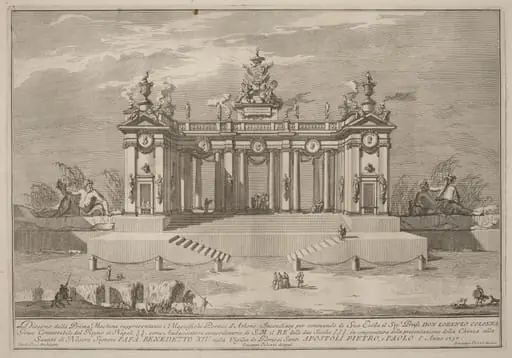 The Prima Macchina for the Chinea of 1757: The Colonnade of the Athenian Lyceum
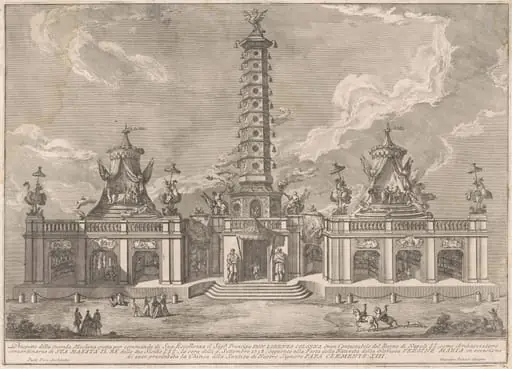 The Seconda Macchina for the Chinea of 1758: The Porcelain Tower of Nanjing
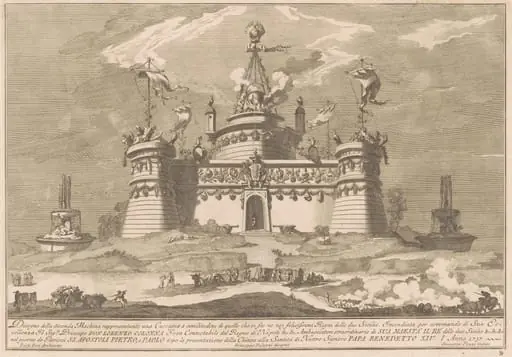 The Seconda Macchina for the Chinea of 1757: The Fortress of Cockaigne
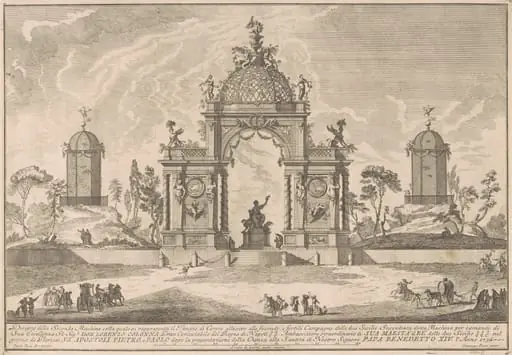 The Seconda Macchina for the Chinea of 1756: The Temple of Ceres
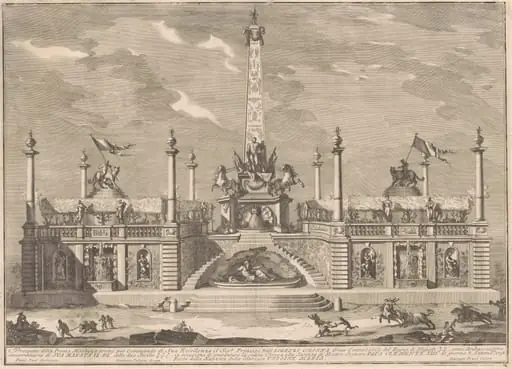 The Prima Macchina for the Chinea of 1758: A "Deliziosa" with Hanging Gardens
- The Prima Macchina for the Chinea of 1755: A Triumphal Bridge with Antiquities from Herculaneum
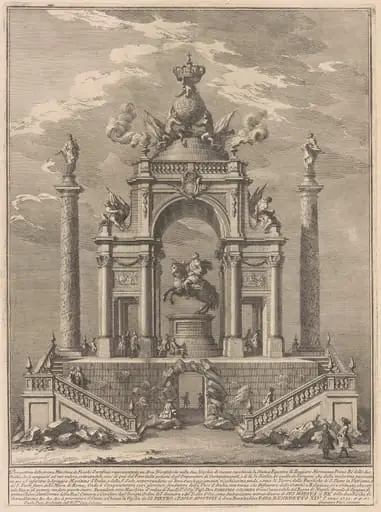 The Prima Macchina for the Chinea of 1751: Triumphal Arch for Roger I of Sicily
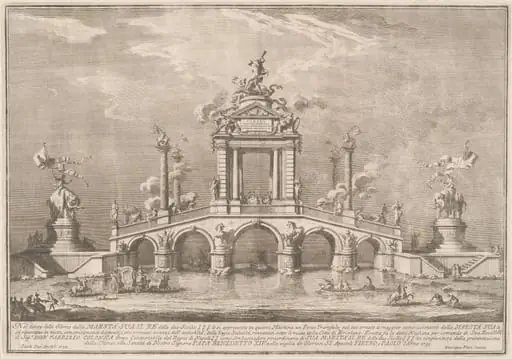 The Prima Macchina for the Chinea of 1755: A Triumphal Bridge with Antiquities from Herculaneum
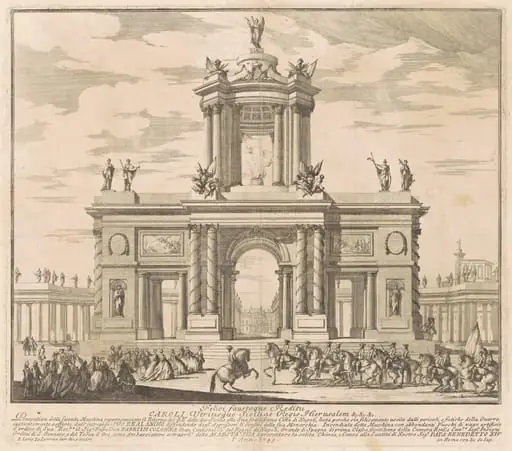 The Seconda Macchina for the Chinea of 1745: Triumphal Arch for the Return of King Charles of Bourbon to Naples
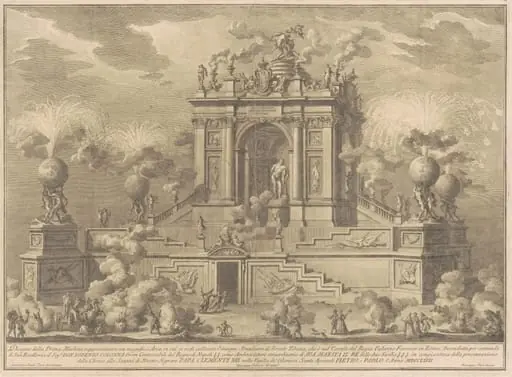 The Prima Macchina for the Chinea of 1767: A Triumphal Arch with the Farnese Hercules
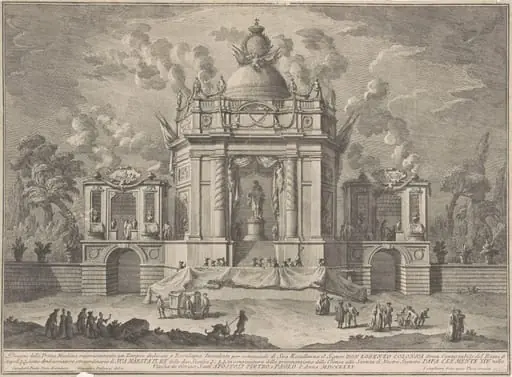 The Prima Macchina for the Chinea of 1771: The Temple of Asclepius
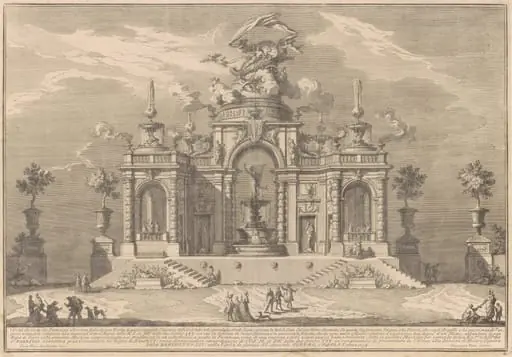 The Prima Macchina for the Chinea of 1754: The Palace of Venus in Cyprus
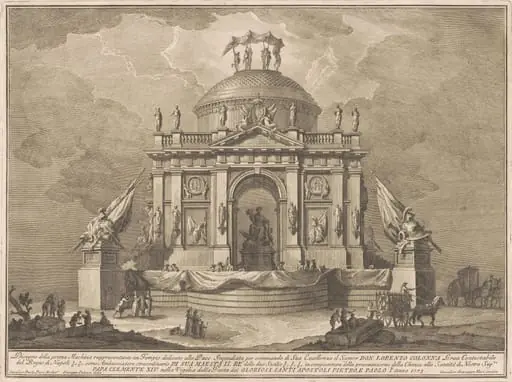 The Prima Macchina for the Chinea of 1773: The Temple of Peace
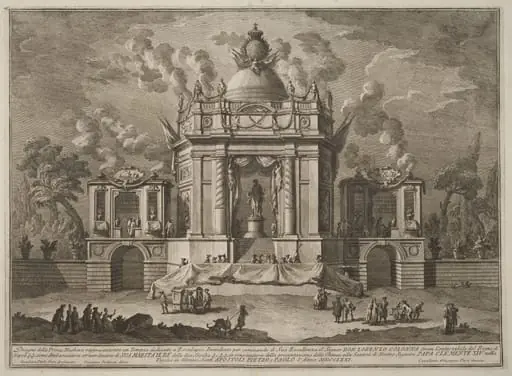 The Prima Macchina for the Chinea of 1771: The Temple of Asclepius