Artwork
Parisian Omnibus
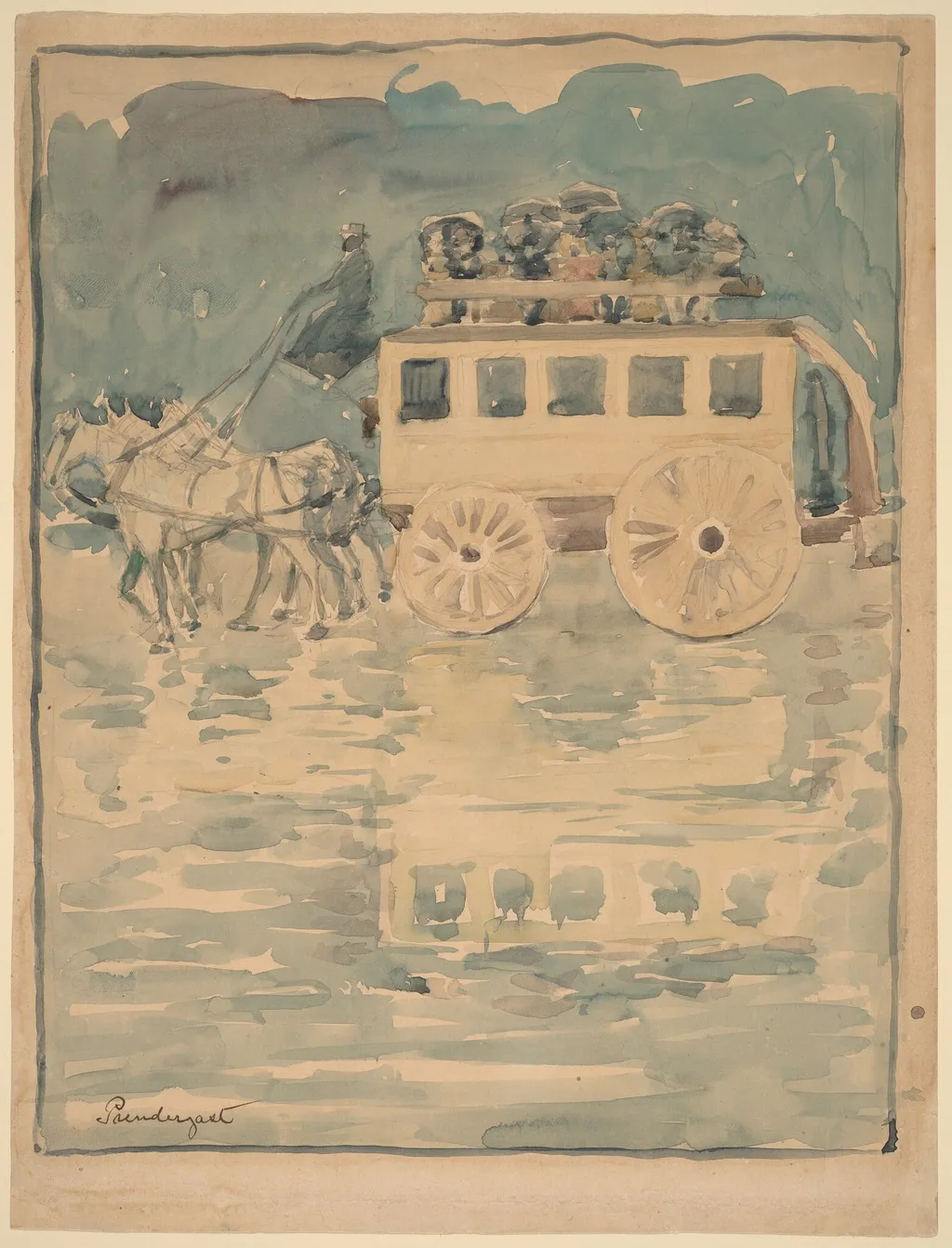
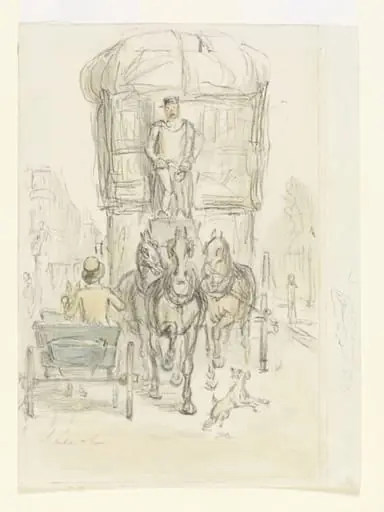
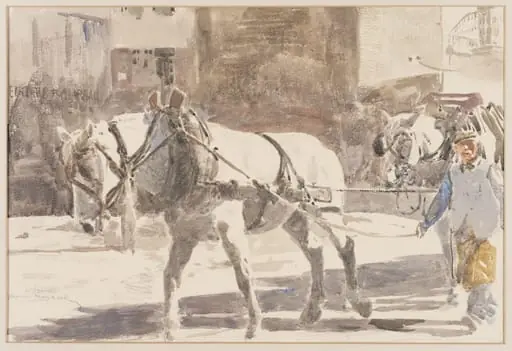
Parisian Omnibus is a graphite drawing by the Impressionist artist Maurice Prendergast. It dates from 1894 and is held in the collection of the National Gallery of Art.
- Inscription
- Inscribed:lower left in pen and black ink: Prendergast; upper left verso in graphite by unknown hand: (eLon?)466; upper right verso in blue ink by unknown hand: H2
About this work
This watercolor shows a crowded Paris bus with riders facing forward. The colors are bright and flat. You can see women in hats and men in suits.
Prendergast painted this while visiting Paris in 1894. He used watercolor in a special way, layering colors to make them glow. That’s called glazing.
Next, look up Prendergast, Maurice to see more of his work.
Overview
Maurice Brazil Prendergast’s Parisian Omnibus (1894) is a watercolor executed on wove paper, combining graphite underdrawing with translucent layers of pigment. The work belongs to a series of urban scenes the artist produced during a sojourn in Europe, distilling the rhythms of city life into a composition of intersecting planes and luminous hues.
Subject & Meaning
The drawing centers on a horse-drawn omnibus crowded with passengers, women in elaborate hats, men in tailored coats, all seated in parallel rows. Rather than individual narratives, the image conveys the collective experience of public transit in late-nineteenth-century Paris, emphasizing anonymity and shared movement within the modern metropolis.
Technique & Style
Prendergast applied watercolor in successive glazes, allowing underlying strokes to remain visible and colors to achieve a stained-glass vibrancy. Forms are simplified into flat, interlocking shapes, a method that aligns with Post-Impressionist experiments in optical mixing. The graphite understructure provides linear definition, while brushwork retains a spontaneous, sketch-like immediacy.
History & Provenance
After returning to the United States, he became affiliated with The Eight, though his aesthetic diverged from the group’s dominant realist tendencies.
Executed in 1894 while Prendergast resided in Paris, the watercolor reflects his exposure to European avant-garde practices. After returning to the United States, he became affiliated with The Eight, though his aesthetic diverged from the group’s dominant realist tendencies. The work has remained in private and institutional collections, preserving its status as a document of transatlantic artistic exchange.
Context
During the 1890s, Paris served as a crucible for artists exploring urban themes. Prendergast’s omnibus scene participates in this discourse, capturing the democratization of space in a rapidly industrializing city. His approach, balancing observation with abstraction, anticipates later developments in American modernism, even as it retains ties to fin-de-siècle European influences.
Legacy
Though less overtly radical than the work of his contemporaries, Parisian Omnibus exemplifies Prendergast’s contribution to early American modernism. Its synthesis of European technique and domestic subject matter influenced subsequent generations of watercolorists, while its depiction of quotidian urbanity prefigures later engagements with public life in twentieth-century art.
Own this work as a print
Artist & collection
Artist
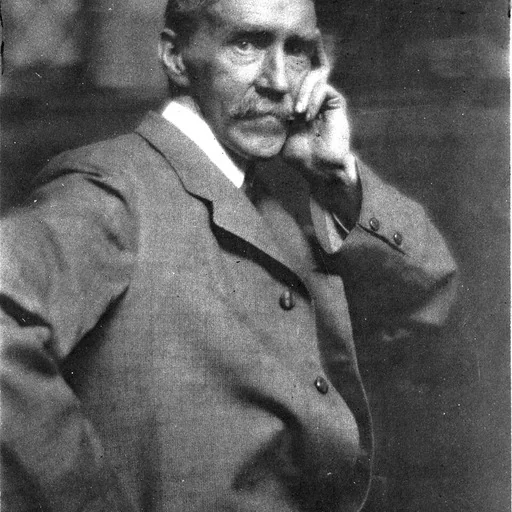
Maurice Brazil Prendergast (October 10, 1858 – February 1, 1924) was a Newfoundlander-American artist who painted in oil and watercolor, and created monotypes.