Artwork
Calvary
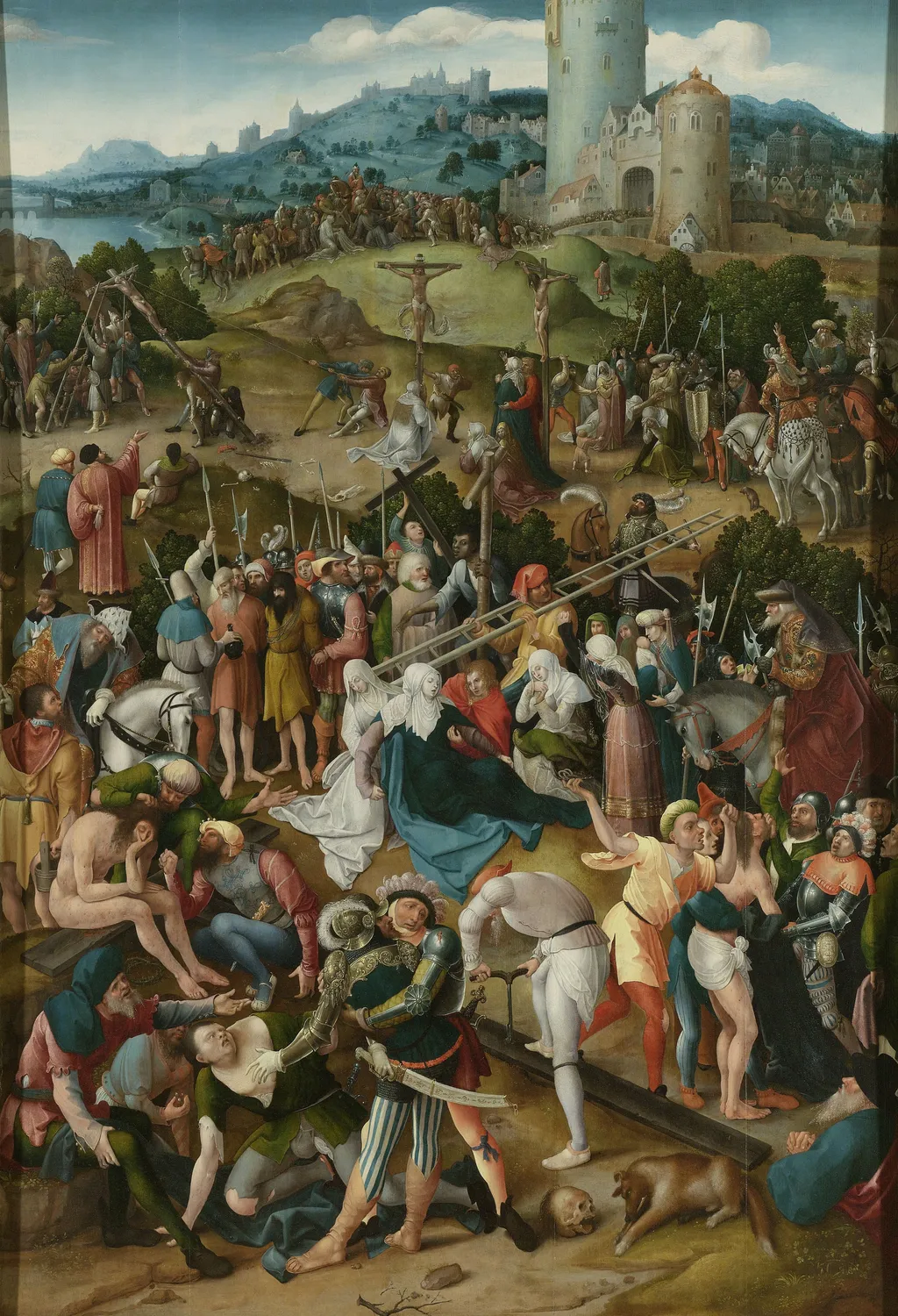
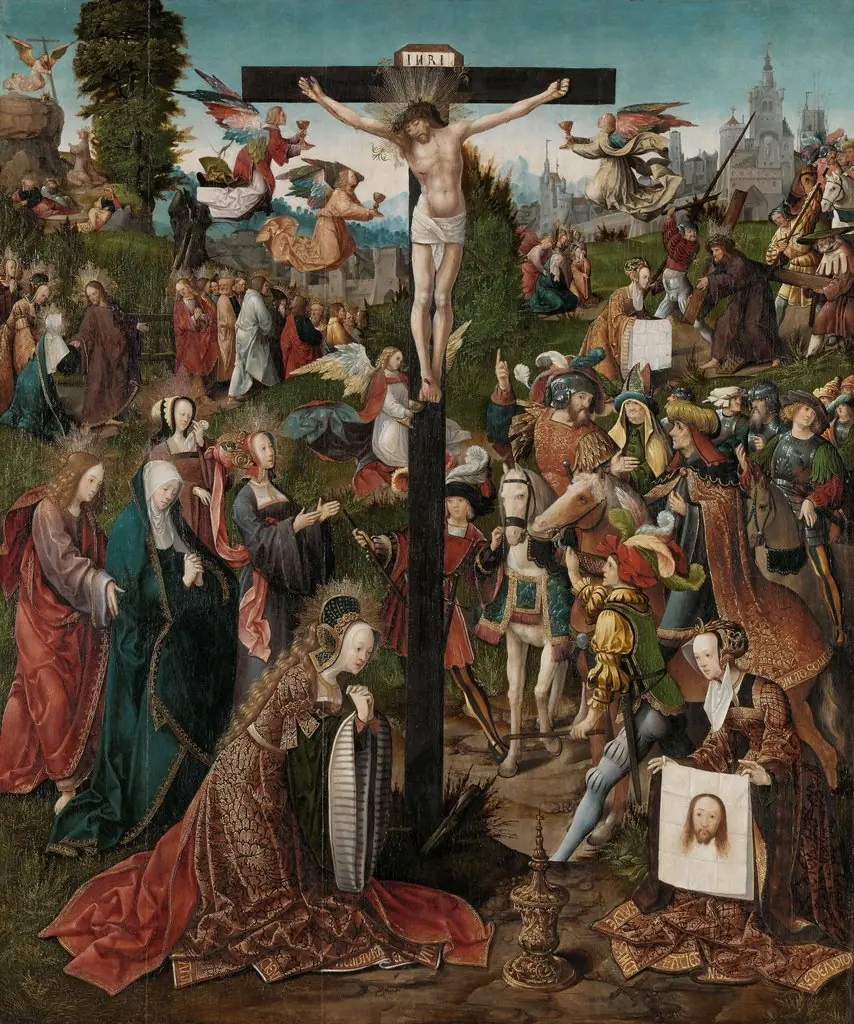
Calvary is an oil painting by the Northern Renaissance artist Pseudo Jan Wellens de Cock. It dates from 1520 and is held in the collection of the Rijksmuseum.
About this work
Subject & Meaning
The painting's main subject is the crucifixion of Jesus, presenting a Calvary scene rooted in Christian religious tradition.
The painting's main subject is the crucifixion of Jesus, presenting a Calvary scene rooted in Christian religious tradition. The composition centers on the figure of Jesus Christ on the cross, surrounded by soldiers and horses gathered at the foot of the tree, a grouping that evokes the Gospel accounts of the Crucifixion and the mocking of Christ by Roman guards. The presence of the tree reinforces the symbolism of the cross as both the instrument of sacrifice and the "tree of life," a common motif in Northern Renaissance devotional imagery.
Produced in Leiden in 1520 as a religious oil painting on panel, the work belongs to a tradition of Passion imagery intended for devotional contemplation, inviting the viewer to meditate on Christ's redemptive death.
The depiction of mounted soldiers and onlookers around the cross reflects the iconographic convention of populating Calvary with witnesses, emphasizing the public and historical dimension of the event while underscoring themes of suffering, sacrifice, and salvation central to the work's meaning.
Technique & Style
Calvary is executed in oil paint on panel, a standard support for early sixteenth-century Netherlandish religious painting. The work measures 172.5 cm in height by 119 cm in width, giving it a tall, vertical format suited to its crucifixion subject. Its composition depicts the Crucifixion of Jesus, populated with horses, soldiers, trees, and the figure of Christ, consistent with the religious genre attributed to Pseudo Jan Wellens de Cock and dated to 1520.
Stylistically, the painting is associated with a circle of artists including Jan Wellens de Cock, Cornelis Cornelisz Kunst, and Lucas Cornelisz de Kock, and was produced in Leiden. The handling reflects the Netherlandish tradition of oil on panel, with the panel providing a rigid ground for detailed figural and landscape elements. No specific condition notes are recorded in the available sources.
History & Provenance
The Calvary by Pseudo Jan Wellens de Cock is dated to 1520, aligning with the early 16th-century Northern Renaissance tradition of religious panel painting. The work’s creation is associated with Leiden, reflecting the artist’s regional activity during this period.
By the 20th century, the painting entered the collection of Museum De Lakenhal in Leiden, where it was held as part of the civic cultural holdings. Later, it was transferred to the Rijksmuseum, Amsterdam, where it is currently located.
The painting Calvary by Pseudo Jan Wellens de Cock is held in the collections of the Rijksmuseum and Museum De Lakenhal. Within the Rijksmuseum, the work is currently displayed in hall 0.1. The piece was created in Leiden in 1520 and has been documented as part of the exhibition history for the Exposition des primitifs flamands à Bruges.
Overview
Authored by the artist known as Pseudo Jan Wellens de Cock, "Calvary" is an oil painting created around 1520. This work portrays the Crucifixion of Jesus Christ, rendered with a dramatic and tumultuous atmosphere. It stands as a notable example of religious art from the early 16th century, currently held within the collection of the Rijksmuseum. The painting's composition effectively conveys the chaotic nature of the event, drawing viewers into its intense narrative.
Own this work as a print
Artist & collection
Artist
Pseudo Jan Wellens de Cock is a conventional name assigned by art historians to an unidentified early Netherlandish artist active in the early sixteenth century, probably in Antwerp.

![The Raising of the Cross [center, left, and right panels], by Master of the Starck Triptych](https://artifactworldgallery.com/img/master-of-the-starck-triptych--the-raising-of-the-cross-center-left-and-right-panels--5f0053e23b45aff7-w320.webp)