Artwork
The Crucifixion
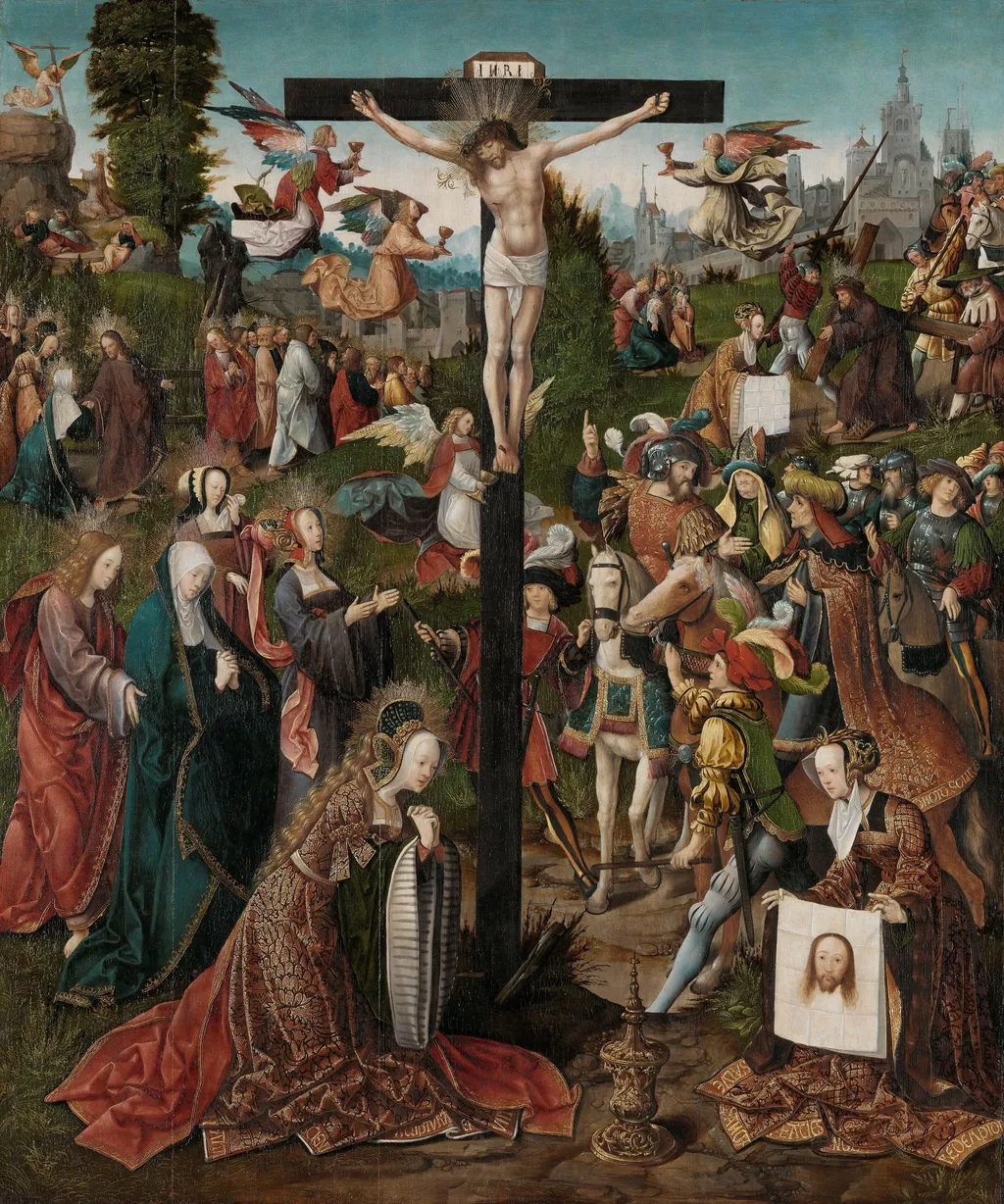
The Crucifixion is an oil painting by the Northern Renaissance artist Jacob Cornelisz. van Oostsanen. It dates from 1508 and is held in the collection of the Rijksmuseum. Jacob Cornelisz.
About this work
Subject & Meaning
Below, the kneeling figure of Veronica holds aloft the Veil bearing Christ’s miraculous image, an emblem of divine presence and relic of his Passion.
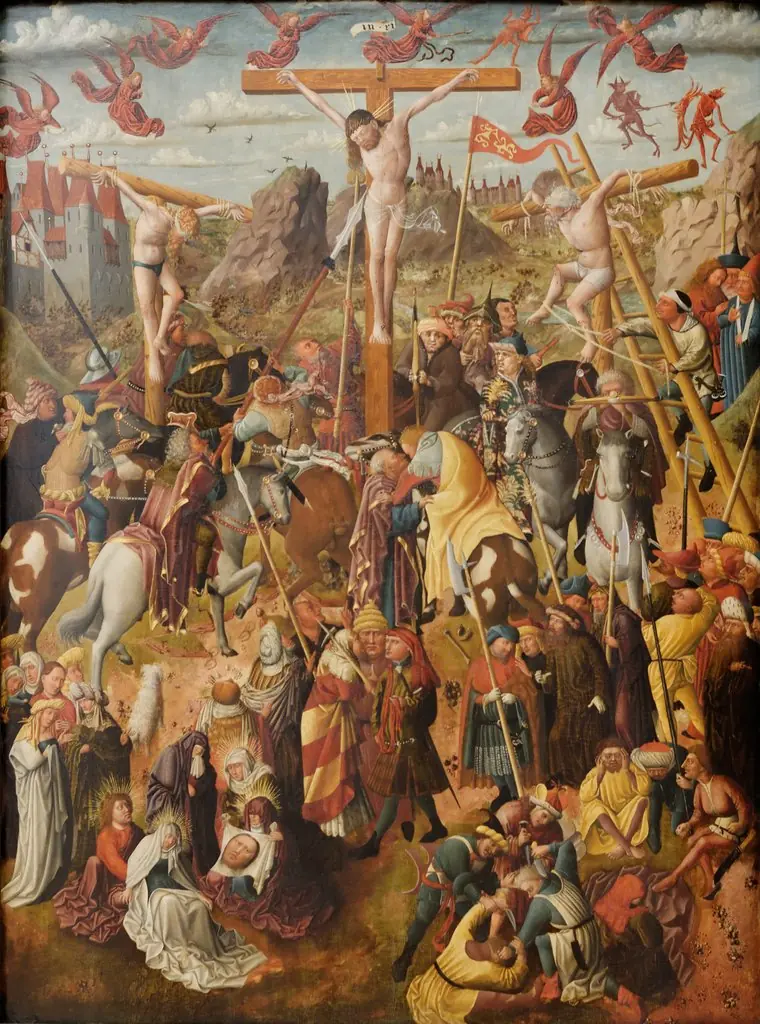
The painting depicts the Crucifixion of Jesus, a central subject in Christian iconography, set against a dark ground with three crosses on Calvary. Christ is shown on the central cross, his body marked by the wounds of the Passion, while the two thieves flank him. Below, the kneeling figure of Veronica holds aloft the Veil bearing Christ’s miraculous image, an emblem of divine presence and relic of his Passion.
A chalice placed near the base evokes the Eucharist and the blood of Christ, linking the sacrifice on the cross to the sacrament of the Mass.
The composition emphasizes suffering and redemption, with the verticality of the crosses directing the viewer’s gaze to Christ’s outstretched body and the downward tilt of his head signaling death. Veronica’s gesture underscores the theme of witness and the power of relics in late medieval devotion.
Technique & Style
Created in 1508 by Jacob Cornelisz. van Oostsanen, this religious painting is executed in oil paint on a wooden panel. The work measures 105 cm in height and 86.5 cm in width. Produced in Amsterdam, the composition centers on the crucifixion of Jesus Christ.
Distinctive iconographic elements include the Veil of Veronica, which is held aloft by Saint Veronica, and a chalice positioned within the scene. These formal qualities characterize the artist's approach to depicting the main subject during the early sixteenth century.
History & Provenance
The Crucifixion is an oil painting on panel created in Amsterdam in 1508 by Jacob Cornelisz. van Oostsanen. It was commissioned by Andreas van den Bogaerde van Terbrugge and later passed to his relative Donatus van den Boegarde van Terbruggen. The work entered the collection of the Rijksmuseum through the Baron Van Den Bogaerde bequest and is currently displayed in hall 0.1 at Heeswijk Castle within the museum’s holdings.
The painting measures 105 cm in height and 86.5 cm in width, depicting the crucifixion of Jesus alongside Veronica holding the veil and a chalice. Its creation is dated to 1508 based on archival records, and it remains part of the Rijksmuseum’s collection under the provenance of the Van den Bogaerde family.
The Crucifixion by Jacob Cornelisz. van Oostsanen is held in the Rijksmuseum, where it is displayed in hall 0.1. It is part of the Collection Baron Van Den Bogaerde, and its earlier provenance traces to ownership by Andreas van den Bogaerde van Terbrugge and Donatus van den Boegarde van Terbruggen. The painting is also associated with Heeswijk Castle as a location.
No exhibition history is documented in the available sources.
Context
The Crucifixion (1508) by Jacob Cornelisz. van Oostsanen occupies a pivotal position within early Dutch Renaissance religious painting, reflecting both devotional practices of the period and the stylistic innovations of Amsterdam workshop traditions. Its depiction of the crucifixion alongside the Veil of Veronica and a chalice demonstrates compositional strategies common in late medieval devotional art while anticipating shifts toward narrative complexity in the early 16th century. The work's provenance through the van den Bogaerde family and eventual acquisition by the Rijksmuseum underscores its significance within Dutch cultural patrimony, while its formal qualities, particularly the use of oil paint on panel measuring 105 × 86.5 cm, reveal technical developments in Netherlandish panel painting.
Scholarship emphasizes its role in contextualizing van Oostsanen's contribution to transitional religious imagery preceding the Dutch Golden Age's artistic zenith.
Overview
Jacob Cornelisz. van Oostsanen’s The Crucifixion (1508) is an oil painting that presents the biblical moment of Christ on the cross. Central to the composition is the crucified figure, surrounded by a multitude of onlookers, angels, and architectural elements, all rendered against a bright sky.
Own this work as a print
Artist & collection

Artist
Jacob Cornelisz. van Oostsanen
Jacob Cornelisz van Oostsanen (before 1470 – 1533) was a Northern Netherlandish designer of woodcuts and painter.

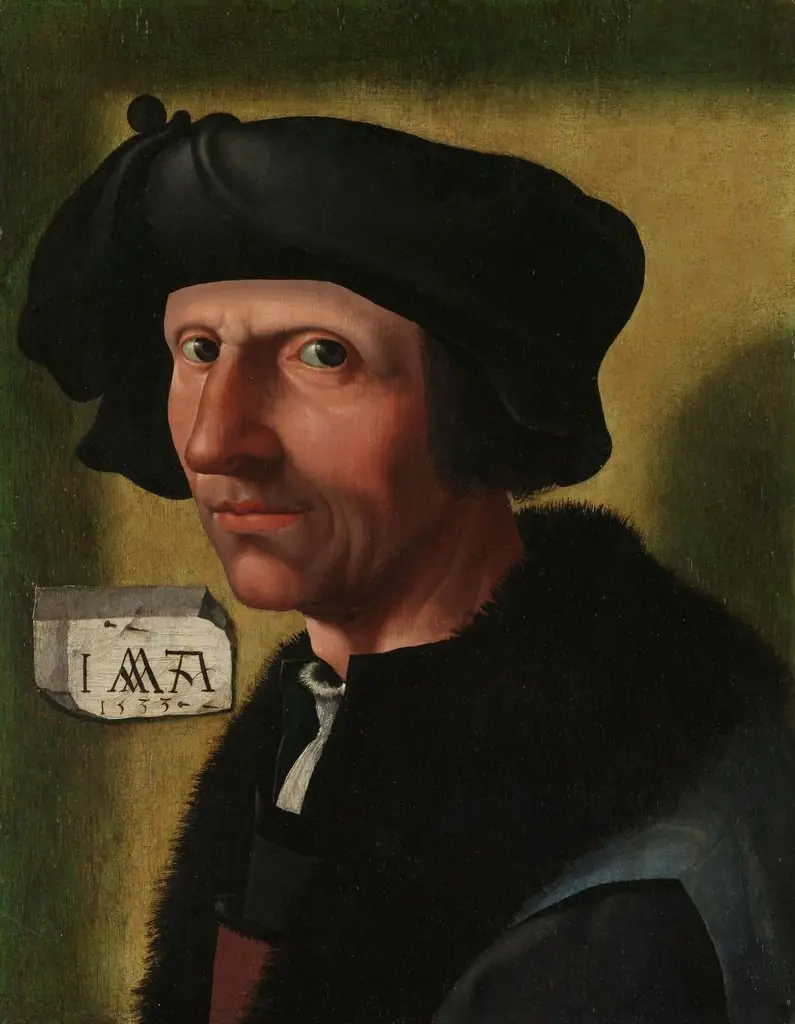
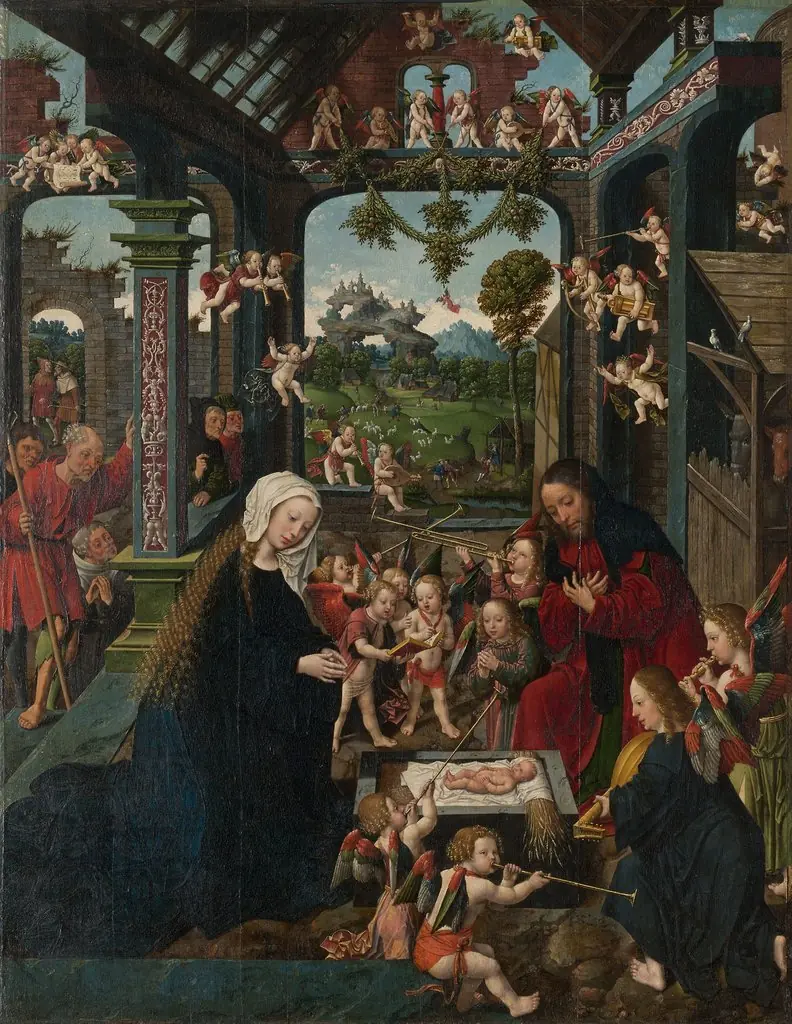
- The Crucifixion
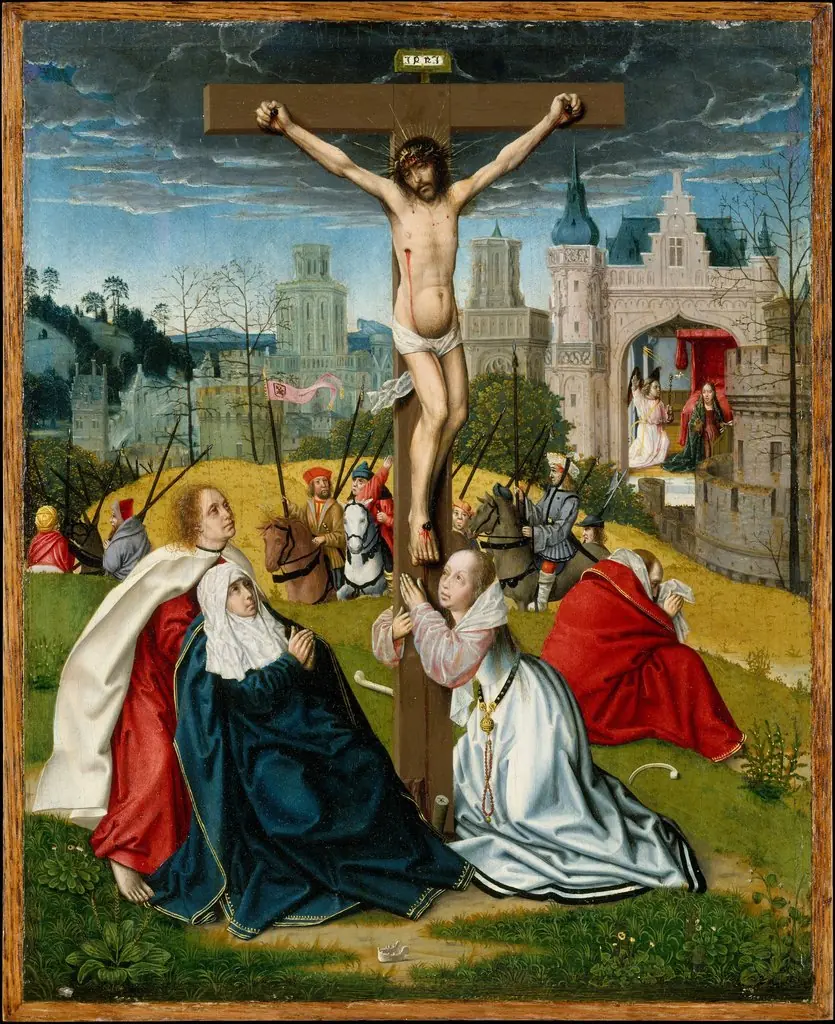 The Crucifixion
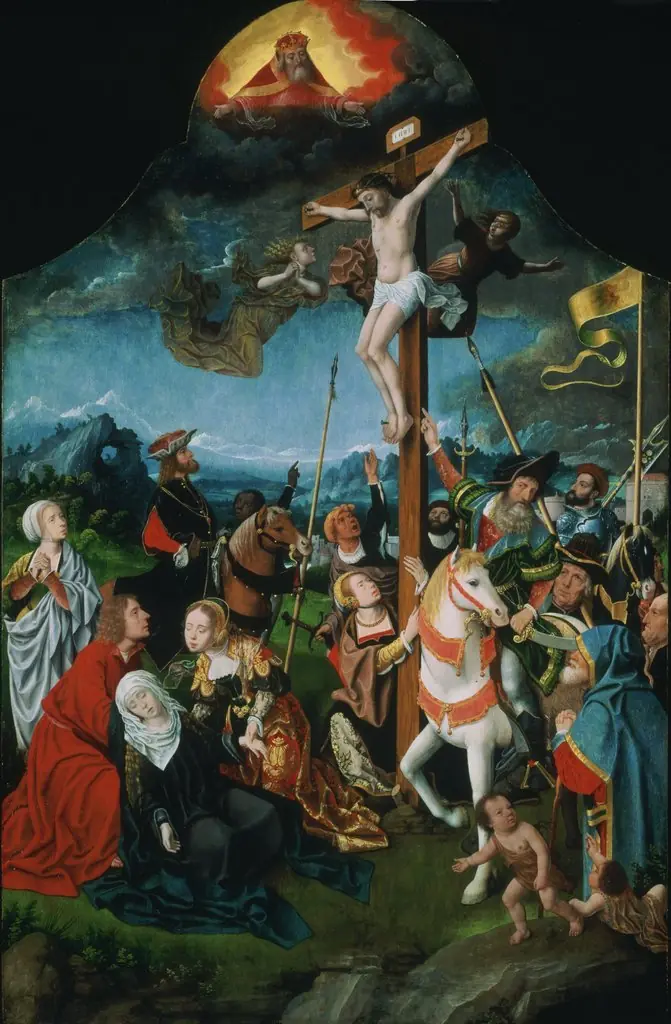 The Crucifixion
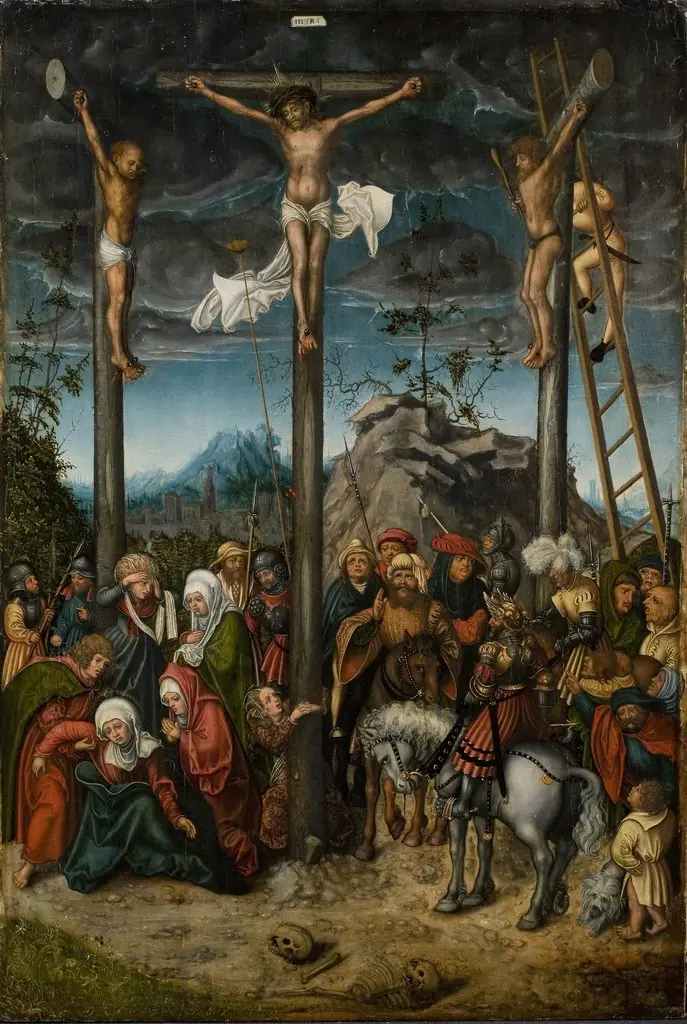 The Crucifixion
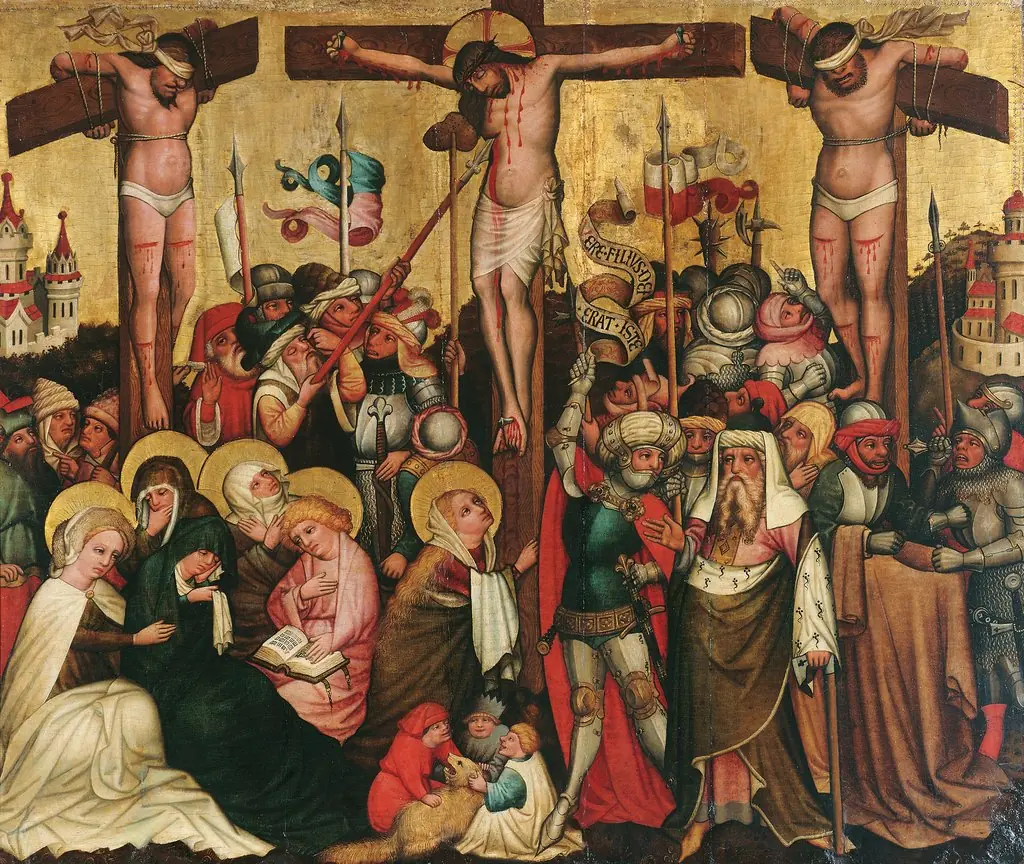 The crucifixion
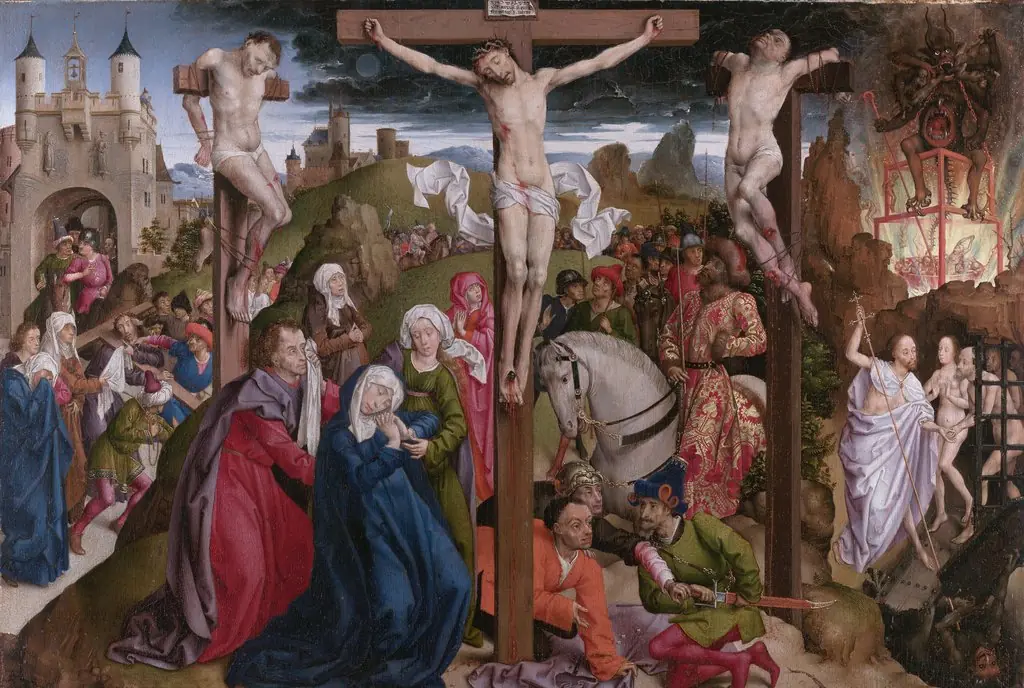 The Crucifixion
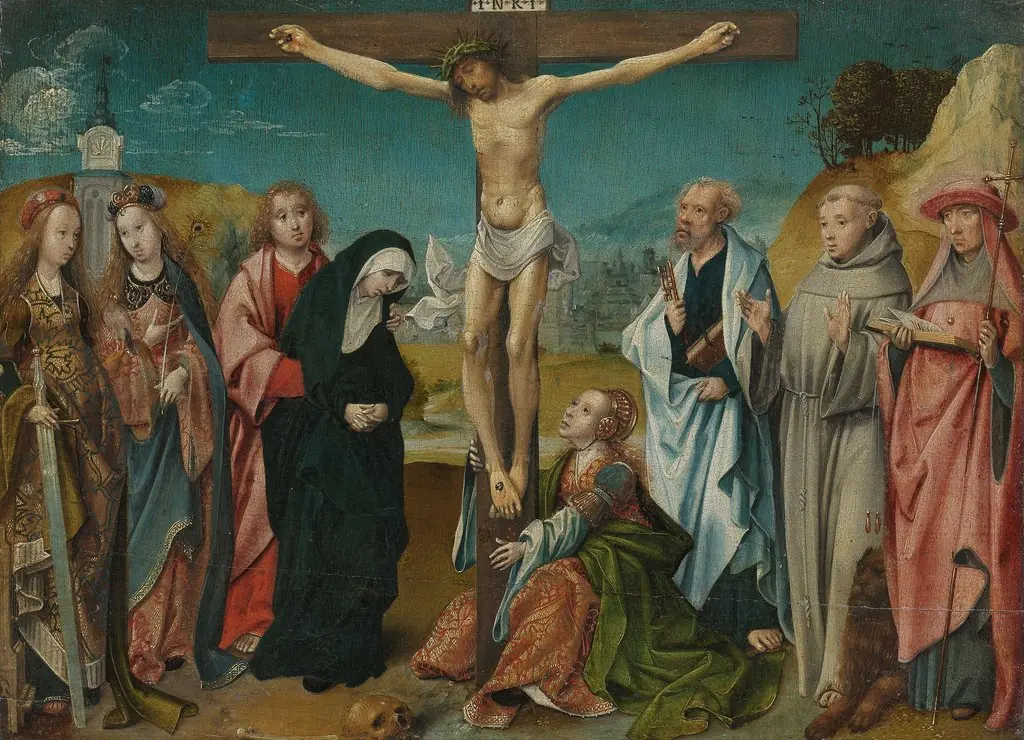 Christ on the cross with the Virgin, St John the Evangelist, Mary Magdalen, and Sts Cecilia and Barbara (left), and Sts Peter, Francis and Jerome (right)
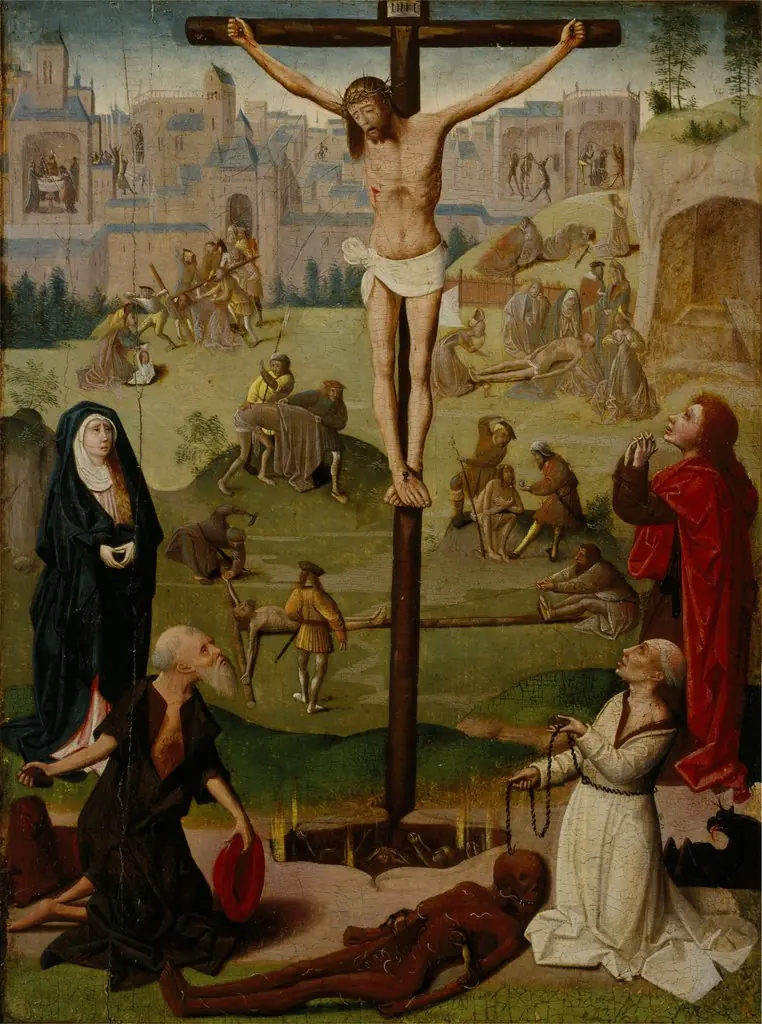 The Crucifixion with St Jerome and St Dominic and Scenes from the Passion
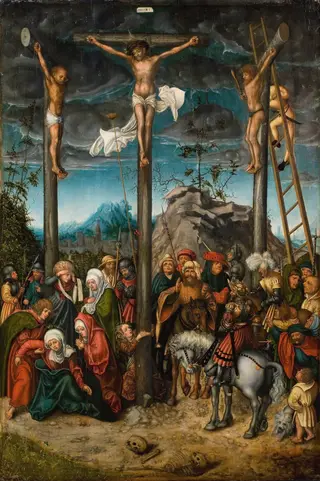 The Crucifixion
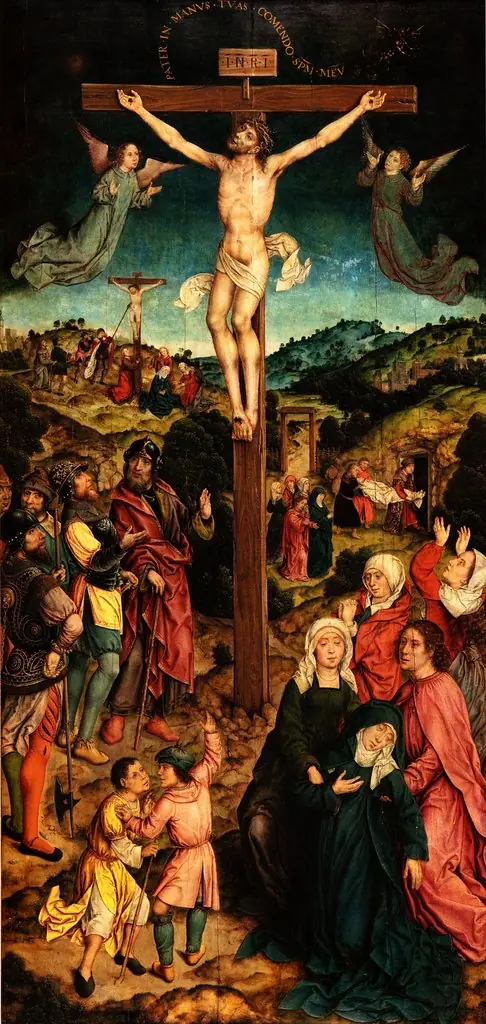 Crucifixion
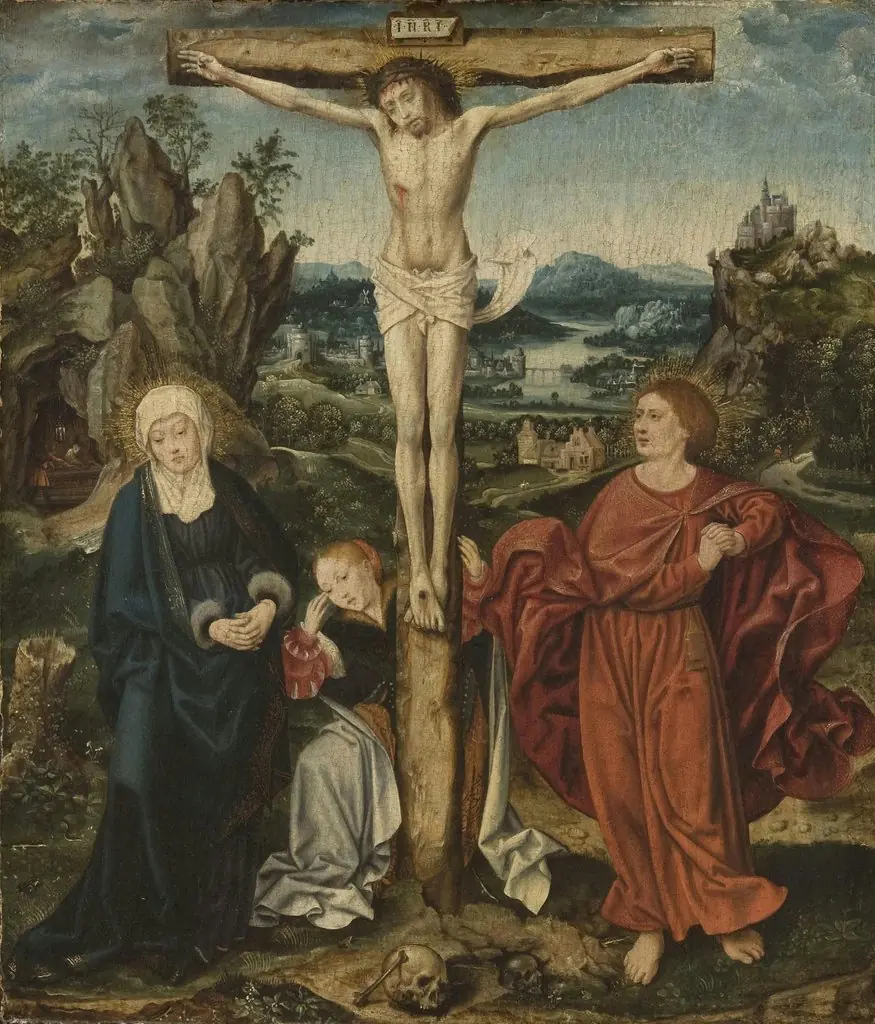 Crucifixion
 Crucifixion