Artwork
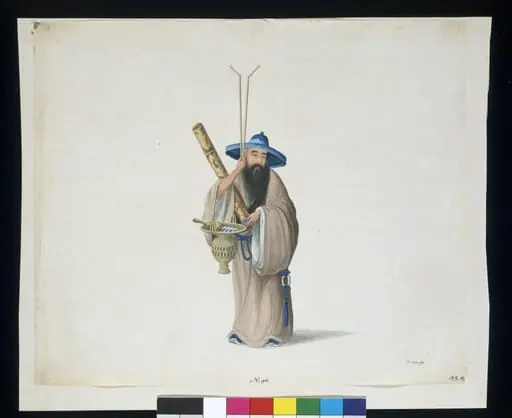
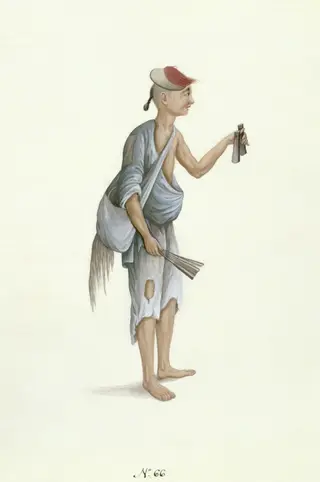
An Ascetic Monk Torturing Himself
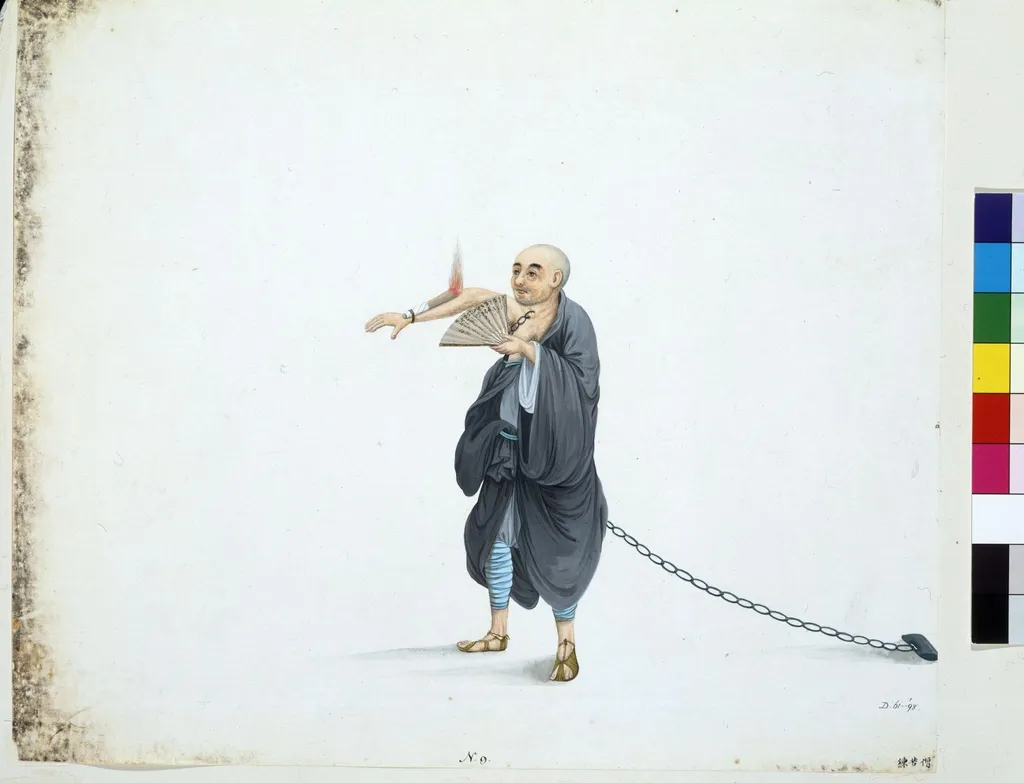
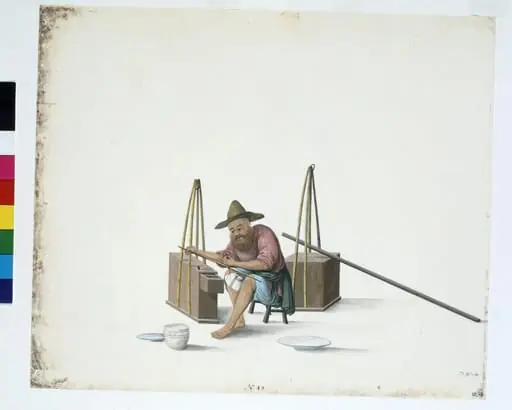
An Ascetic Monk Torturing Himself is a paint painting by the Patna School of Painting artist Puqua. It dates from 1790 and is held in the collection of the Victoria and Albert Museum.
About this work
Overview
The monk depicted here is shown in a physical discipline that blends spiritual rigor with martial training, reflecting a practice known locally as ching quan.
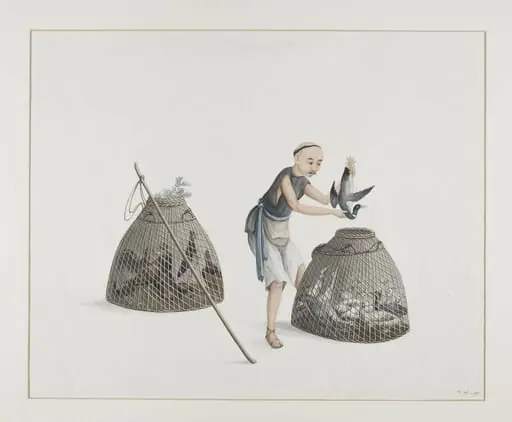
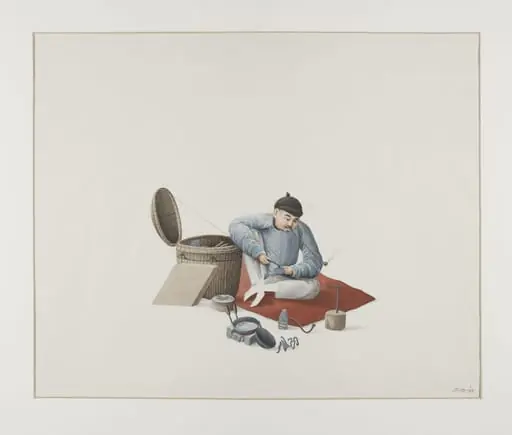
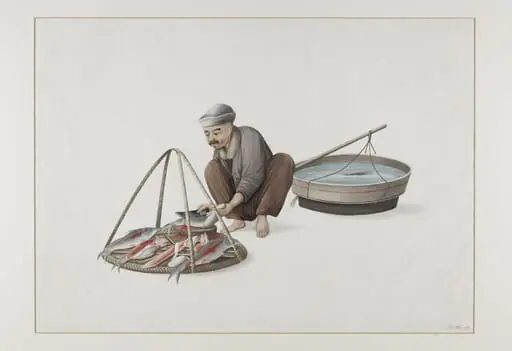
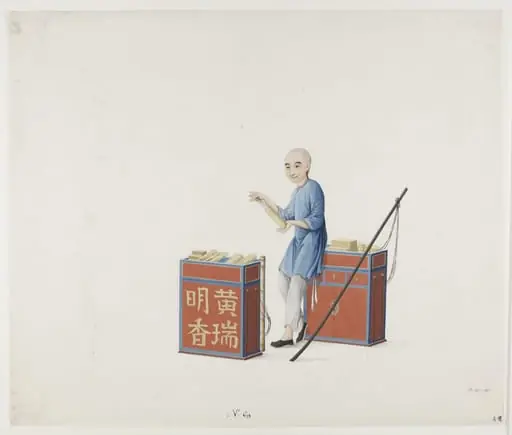
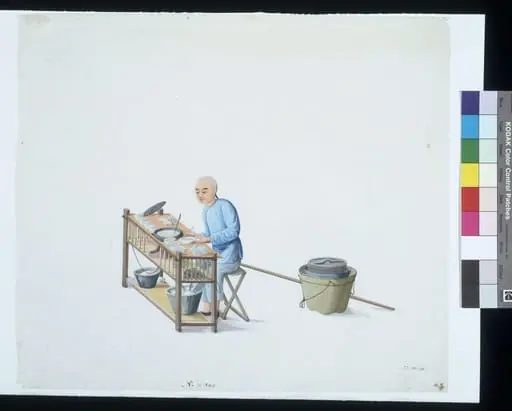
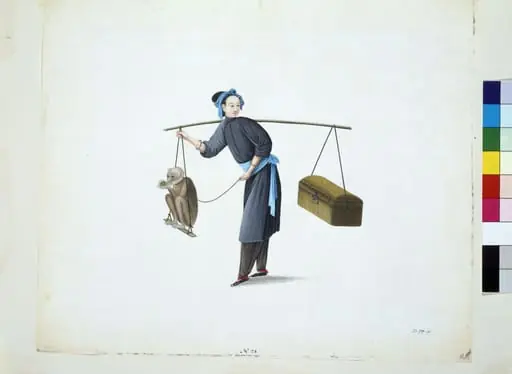
This painting belongs to a series of one hundred works produced in Canton during the late 18th or early 19th century, commissioned for European audiences. Each piece documents a distinct trade or practice, offering a visual catalog of Chinese daily life. The monk depicted here is shown in a physical discipline that blends spiritual rigor with martial training, reflecting a practice known locally as ching quan.
Subject & Meaning
The figure is not engaged in passive prayer but in an ascetic martial discipline, where bodily strain serves as both physical conditioning and spiritual cultivation. His posture, elbows pressed against knees, hands clasped before the chest, suggests controlled exertion, aligning with traditions that equate self-discipline with moral fortitude. The red headcloth, typical of monastic attire, reinforces his religious identity within this context.
Technique & Style
Executed in watercolor on paper, the painting employs clear outlines and muted, localized color to define form without elaborate shading. Details like the folds of the cloth and the positioning of limbs are rendered with precision, prioritizing clarity over emotional intensity. The composition is frontal and static, typical of export art designed for easy comprehension by foreign viewers.
History & Provenance
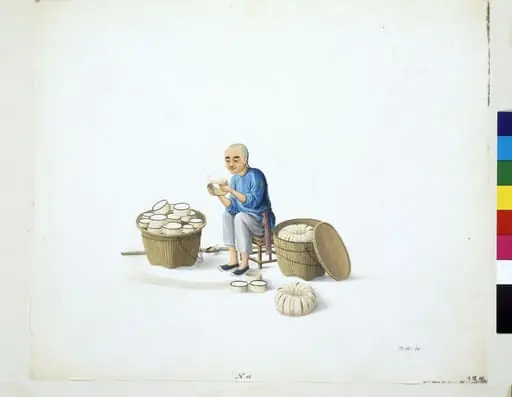
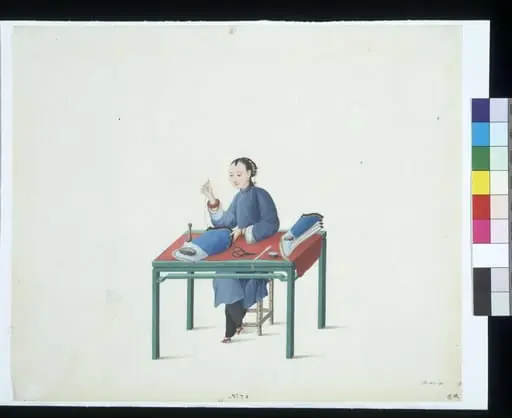
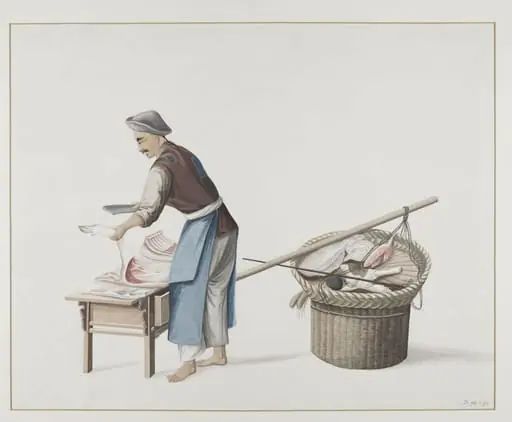
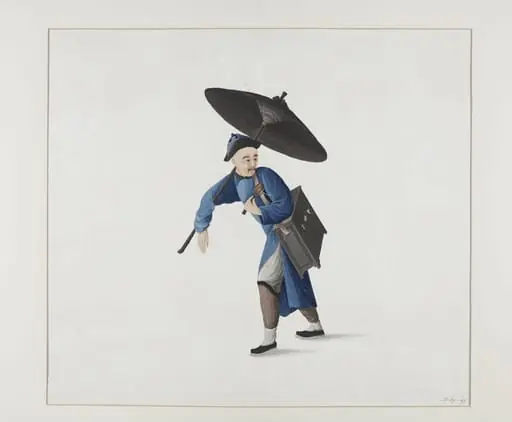
Produced by Cantonese artists for the foreign trade market, these paintings circulated among European collectors and curiosity seekers. They were often bound into albums or displayed as decorative objects, serving as ethnographic curiosities. The series as a whole represents an early form of cultural documentation shaped by commercial demand rather than internal Chinese artistic priorities.
Context
During this period, European interest in China was fueled by trade and missionary reports, leading to a demand for images that depicted authentic, everyday practices. Artists in Canton adapted local subjects to suit foreign expectations, sometimes blending observation with convention. The inclusion of ching quan, a practice rarely highlighted in Western accounts, suggests a deliberate effort to showcase lesser-known aspects of Chinese culture.
Legacy
The series remains a valuable record of how Chinese artisans interpreted their own traditions for external audiences. While not created for domestic consumption, these works preserved visual knowledge of practices that might otherwise have been overlooked. They also illustrate the complex dynamics of cross-cultural representation during the early global exchange of goods and imagery.
Own this work as a print
Artist & collection