Artwork
Figure
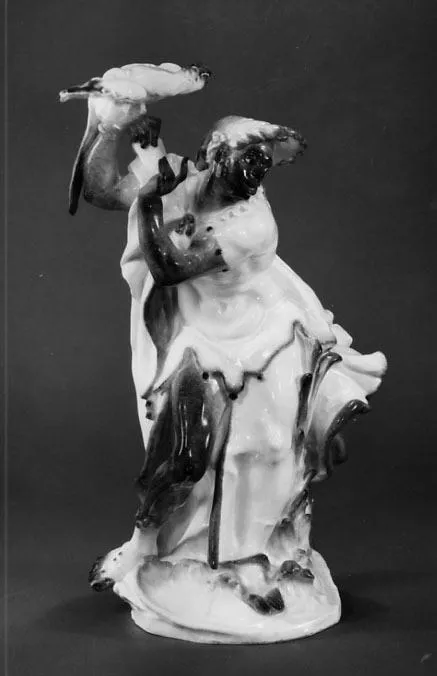
Figure is an unspecified painting. It dates from 1924 and is held in the collection of the Metropolitan Museum of Art.
About this work
Subject & Meaning
The painting titled Figure, created in 1924 by Paul Scheurich, depicts a woman. As a figurative work, the subject centers on the female form, serving as the primary iconographic element of the composition. The Metropolitan Museum of Art holds the piece in its collection, where it is cataloged specifically for its representation of this singular figure.
History & Provenance
The painting Figure, created by Paul Scheurich in 1924, is held in the collection of the Metropolitan Museum of Art. While the specific inventory or accession number is not provided in the available records, the work is cataloged within the museum's holdings. The piece depicts a woman and measures 26.5 cm in height. No exhibition history is documented in the provided sources.
Overview
The subject is a female form dressed in a flowing gown, holding a bird in her right hand and a staff in her left, poised upon a circular pedestal.
The work presents a monochrome photograph of a porcelain figure, rendered in white with black detailing. The subject is a female form dressed in a flowing gown, holding a bird in her right hand and a staff in her left, poised upon a circular pedestal. The dark background of the photograph accentuates the contrast between the porcelain’s surface and its decorative accents, emphasizing the sculptural qualities of the object.
Technique & Style
Crafted from white porcelain, the figure incorporates black-painted elements that outline clothing folds, the bird, and the staff, producing a stark visual opposition. The precise modeling of the drapery and the delicate rendering of the bird’s feathers demonstrate high levels of skill in both shaping and surface decoration. The photograph’s lighting isolates the object against a dark backdrop, further highlighting the material contrast.
Context
Porcelain figures of this type often emerge from European decorative arts traditions, where white ceramic bodies were frequently embellished with painted accents to imitate painted sculpture. The inclusion of symbolic accessories such as birds and staffs aligns the piece with allegorical motifs prevalent in 18th‑ and 19th‑century ornamental art, situating it within a broader narrative of aesthetic and cultural representation.
Artist & collection

- Untitled
 Saint John
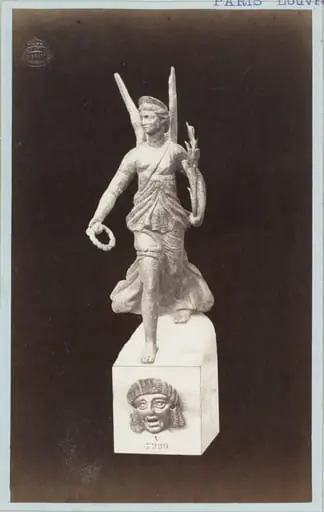 Bronze statuette (possibly of Victory?)
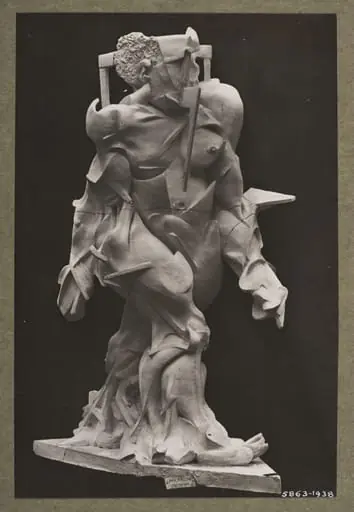 Human Dynamism
 Untitled
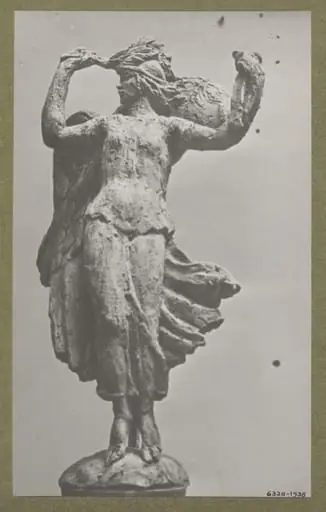 Untitled
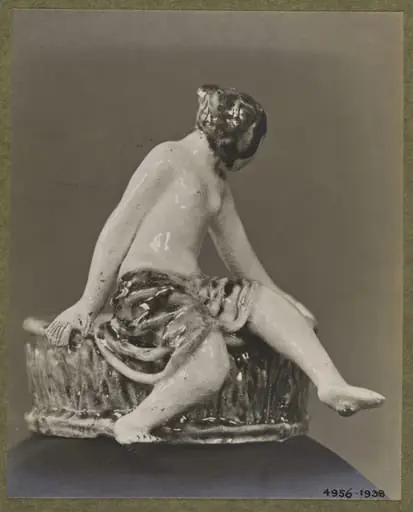 Untitled
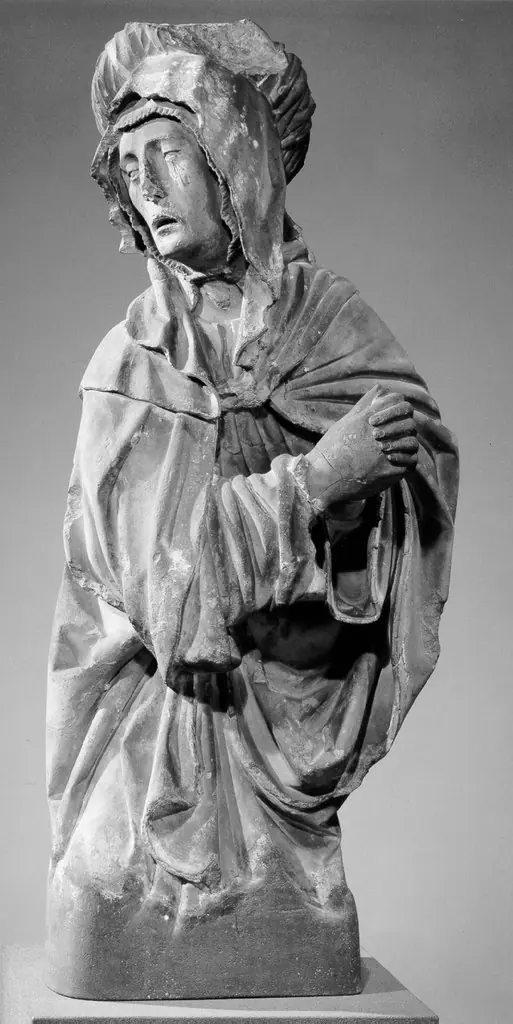 Mourning Woman
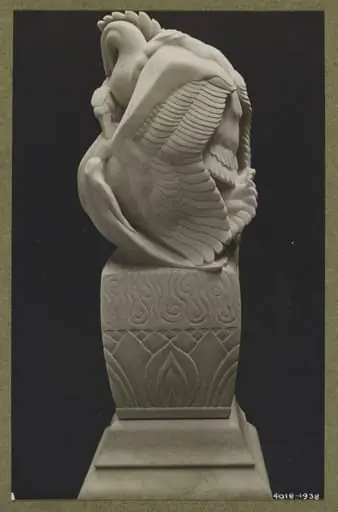 Untitled
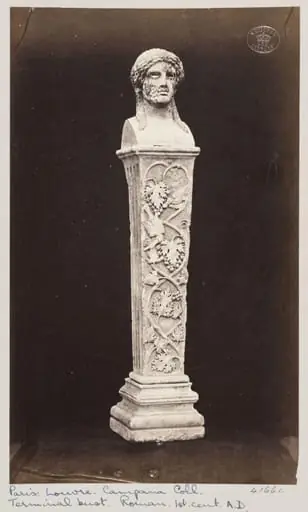 Marble herma with the head of Baccus ornamented with vine leaves and fruit
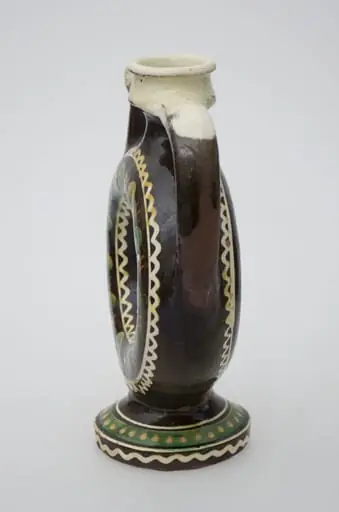 Ulcior-covrig cu manușă puternic arcuită având ”țâța” în părți: ornament cu"ochișori" încadrat de o linie dreptă și una șerpuită; Cromatică: fond: maron; motive: verde; cărămiziu; alb; crem.
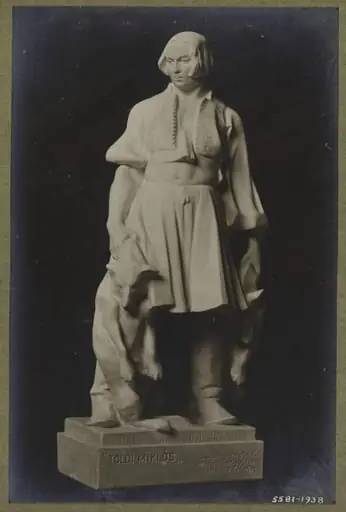 Untitled