Artwork
Saint John
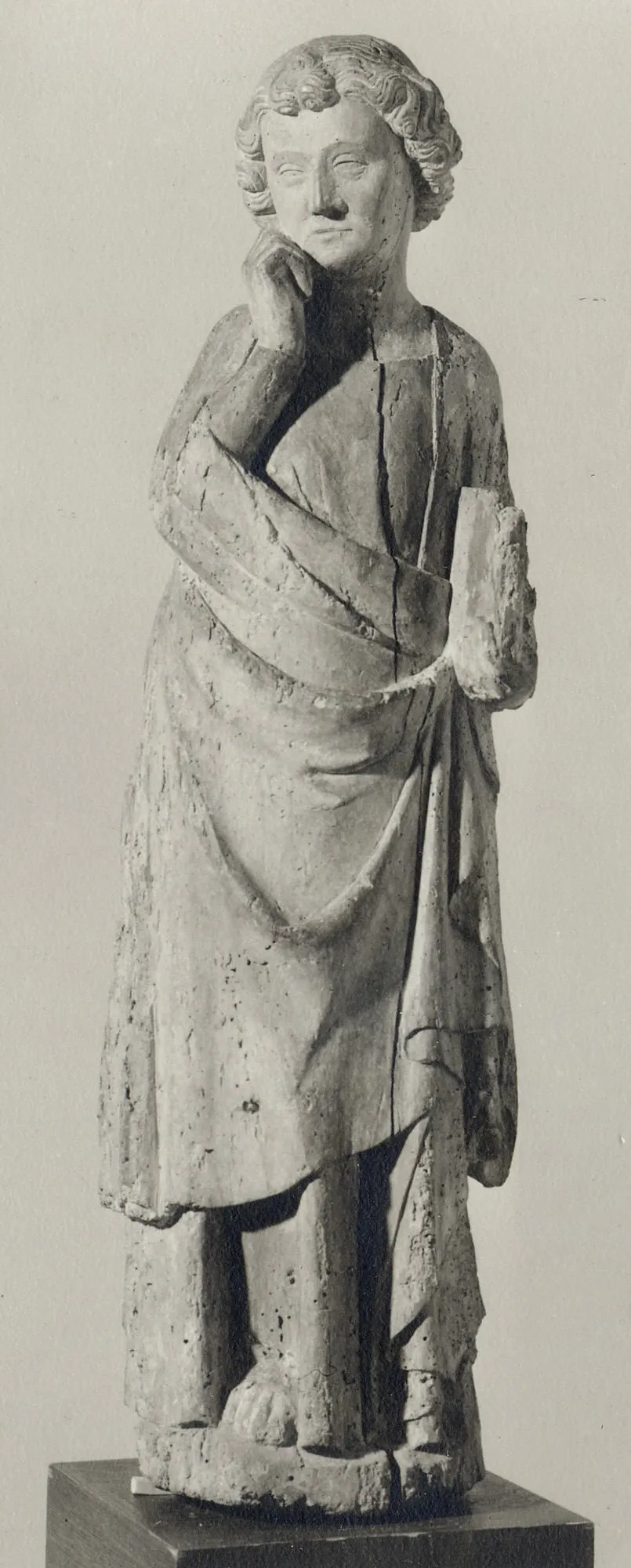
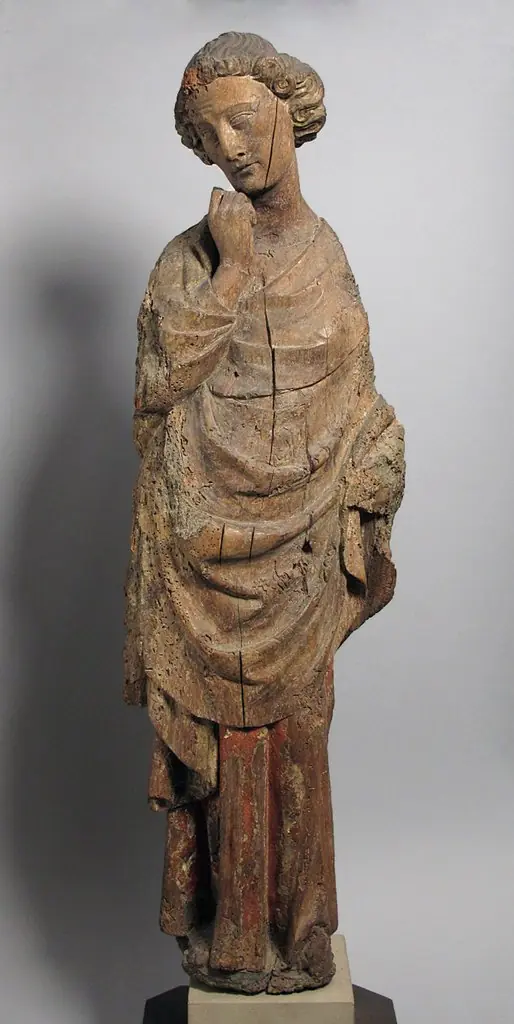
Saint John is an unspecified painting. It dates from 1350 and is held in the collection of the Metropolitan Museum of Art.
About this work
Subject & Meaning
The work portrays John the Evangelist, one of the four evangelists in Christian tradition, emphasizing its religious purpose. As a religious painting from the mid-14th century, the image serves to venerate the saint and convey the theological significance of his role as the author of the Gospel of John.
History & Provenance
It depicts John the Evangelist and belongs to the religious genre, consistent with fourteenth-century devotional imagery.
The painting Saint John is dated to circa 1350 and is recorded as an anonymous work in the collection of the Metropolitan Museum of Art, New York, where it is classified under European painting. It depicts John the Evangelist and belongs to the religious genre, consistent with fourteenth-century devotional imagery. The work entered the museum's holdings as part of a collection accession, though specific acquisition details are not documented in the available sources, and no exhibition history specific to the work is recorded.
Overview
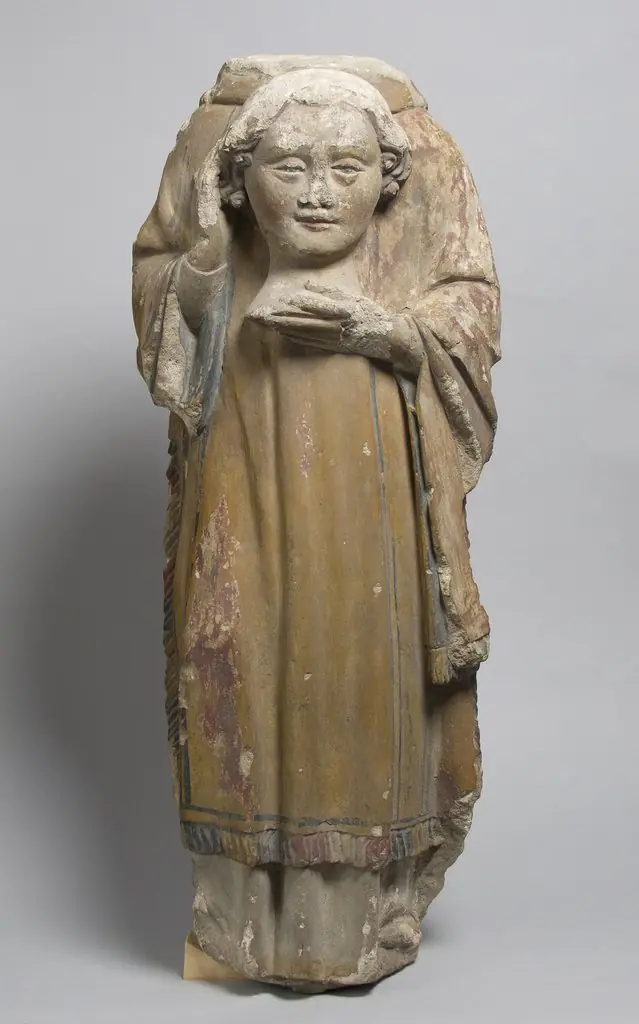
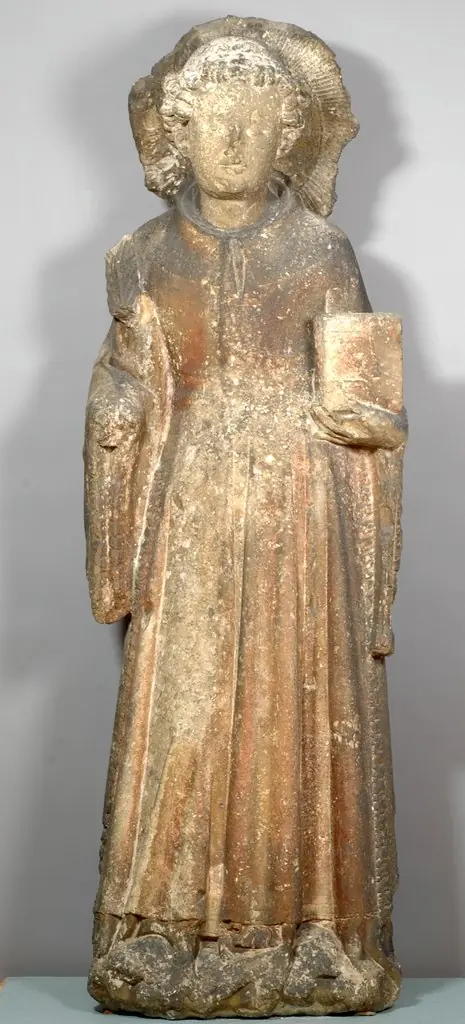
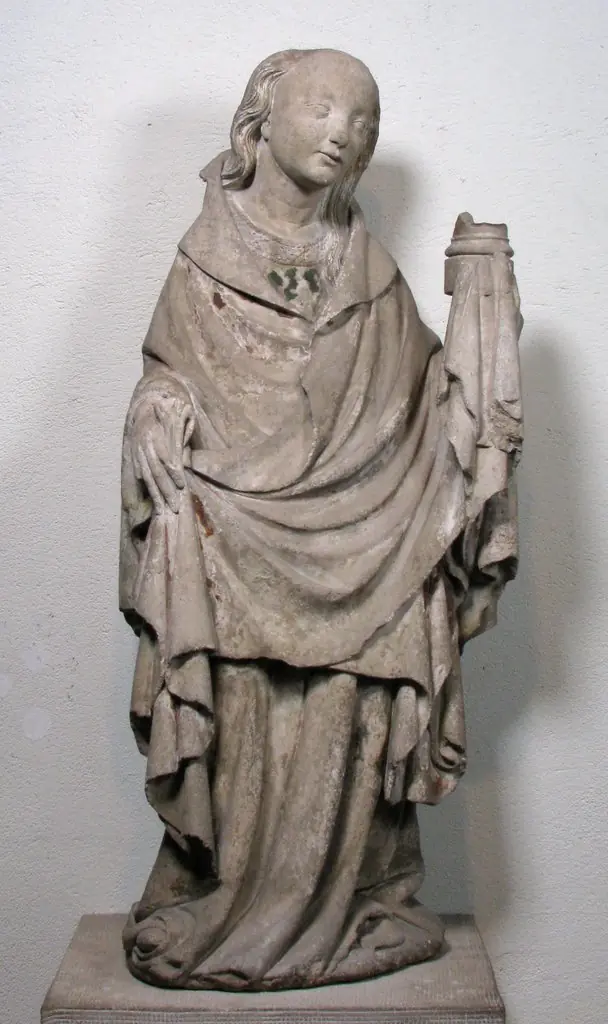
This painting presents a solitary figure identified as Saint John, depicted in a formal, upright posture. The subject is rendered with a serene expression and holds a book, elements commonly associated with early Christian iconography. The artwork's simple yet robust form suggests an ancient style, emphasizing spiritual presence over naturalistic detail, characteristic of devotional art from earlier periods.
Technique & Style
The artist rendered the figure with a distinct stiffness, its long robe draped to reveal the body's contours. Deeply incised folds create pronounced shadows, lending a sense of weight and substance to the fabric. The face remains largely unadorned, featuring a smooth, almost featureless quality, a calm demeanor, and a subtle smile, characteristic of early artistic conventions.
Artist & collection