Artwork
Barber extracting a tooth
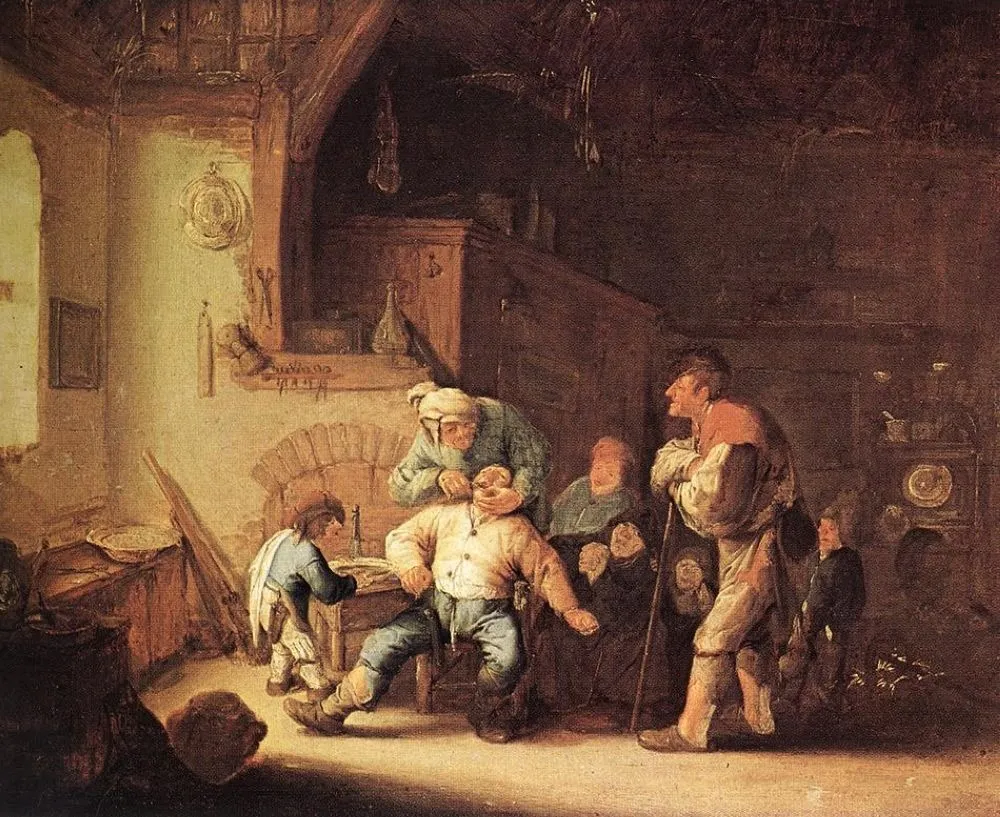
Barber extracting a tooth is an oil painting by the Dutch Golden Age artist Adriaen van Ostade. It dates from 1637 and is held in the collection of the Kunsthistorisches Museum.
About this work
The picture is a genre piece, meaning it depicts a common activity rather than a myth or portrait.
Barber extracting a tooth is a small oil painting from 1637. It was made by the Dutch artist known as Q352438. The work shows a everyday scene in a simple style.
The picture is a genre piece, meaning it depicts a common activity rather than a myth or portrait. It dates to around the early 1630s and now lives in the Kunsthistorisches Museum in Vienna. The museum holds many similar Dutch works.
You might also explore more about the Kunsthistorisches Museum.
Subject & Meaning
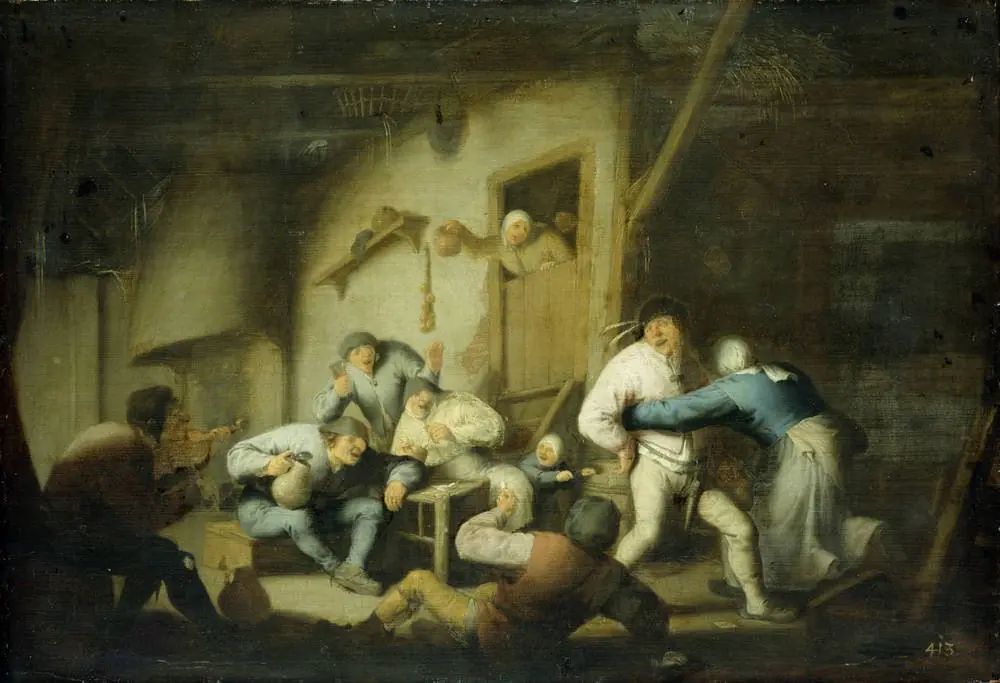
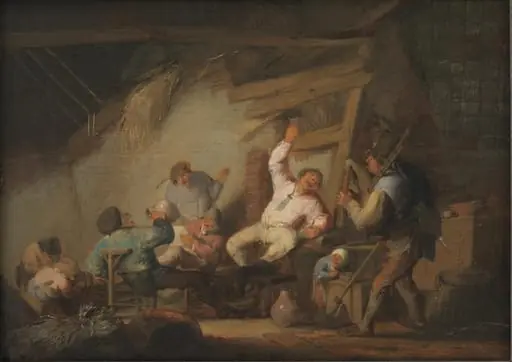
The painting presents a humble genre scene set inside a village barbershop, where a barber-surgeon pulls a tooth from a villager while several onlookers watch, some of their faces rendered slightly blurred. The subject of dental extraction by a barber-surgeon reflects the historical overlap between the trades of barbering and minor surgery in seventeenth-century daily life, a popular theme the artist approached with marked realism. A shaft of light from the window illuminates the left side of the composition, leaving the right in partial shadow, and a row of scissors hanging on the wall serves as an iconographic marker of the barbershop’s function. Together these details frame the work as an observation of ordinary rural life rather than an allegorical or moralizing image.
The painting has been read as a sympathetic depiction of a common, unglamorous procedure, drawing on the artist’s preference for everyday subjects treated with documentary attention. The blurred faces of the bystanders lend the scene a candid, almost furtive quality, while the scissors on the wall anchor the setting unmistakably in the barbershop trade.
Technique & Style
The work is an oil-on-panel genre painting. Van Ostade applies chiaroscuro to model forms, with strong light entering from the left and leaving the right side in partial shadow. The brushwork renders fine detail in the barber’s tools and the patient’s expression, while surrounding figures are rendered with softer focus. These stylistic choices emphasize realism and narrative clarity typical of Dutch genre scenes of the 1630s.
History & Provenance
Adriaen van Ostade created the oil-on-panel painting *Barber Extracting a Tooth* in Haarlem. Sources provide conflicting dates for its inception, with some attributing the work to the period between 1630 and 1635, while others specify the single year 1637. The work was originally owned by Archduke Leopold Wilhelm of Austria. It is currently held in the collection of the Kunsthistorisches Museum in Vienna.
The painting Barber Extracting a Tooth is held in the collection of the Kunsthistorisches Museum in Vienna. Also known as the Museum of Art History, this institution preserves the oil-on-panel work which depicts a barber surgeon performing a dental extraction. Historical records indicate the piece was once owned by Archduke Leopold Wilhelm of Austria. While the work is firmly established within the museum's holdings, the provided sources do not list specific inventory numbers or detail a history of public exhibitions for this particular artwork.
Artist & collection

Artist
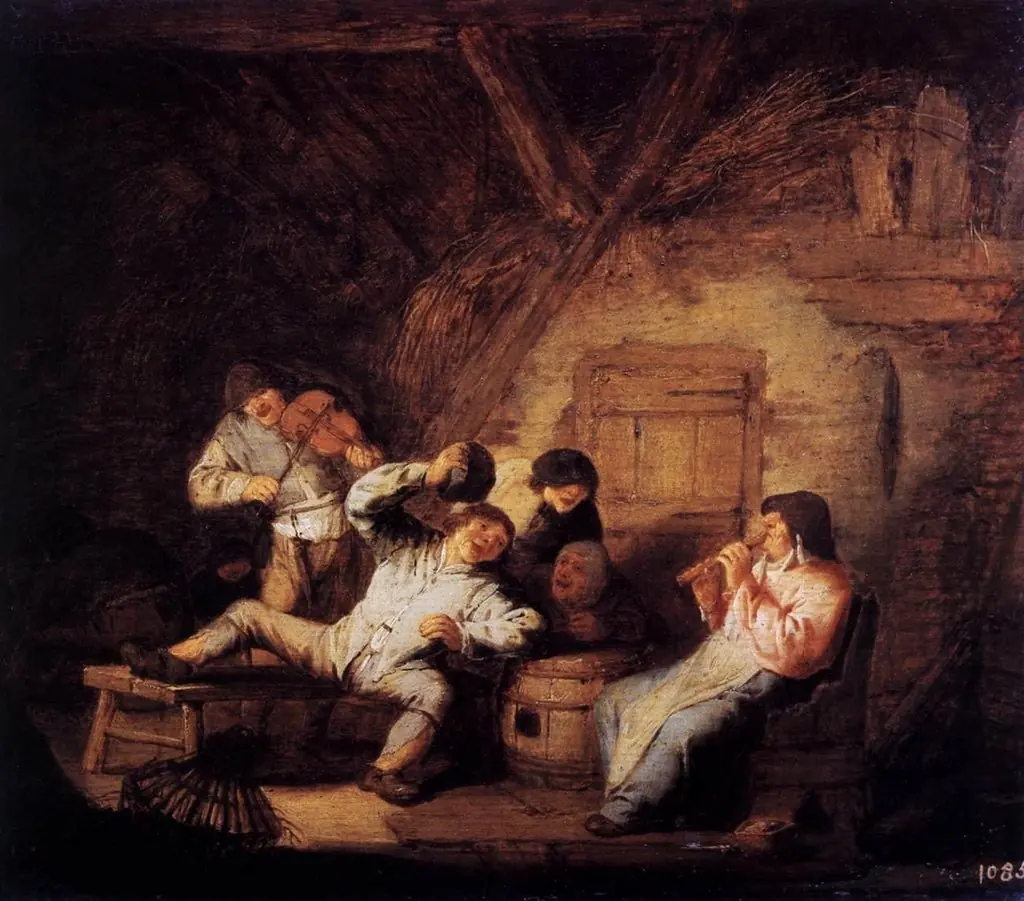
Adriaen van Ostade (baptized as Adriaen Jansz Hendricx 10 December 1610 – buried 2 May 1685) was a Dutch Golden Age painter of genre works, showing the everyday life of ordinary men and women.