Artwork
The fishwife
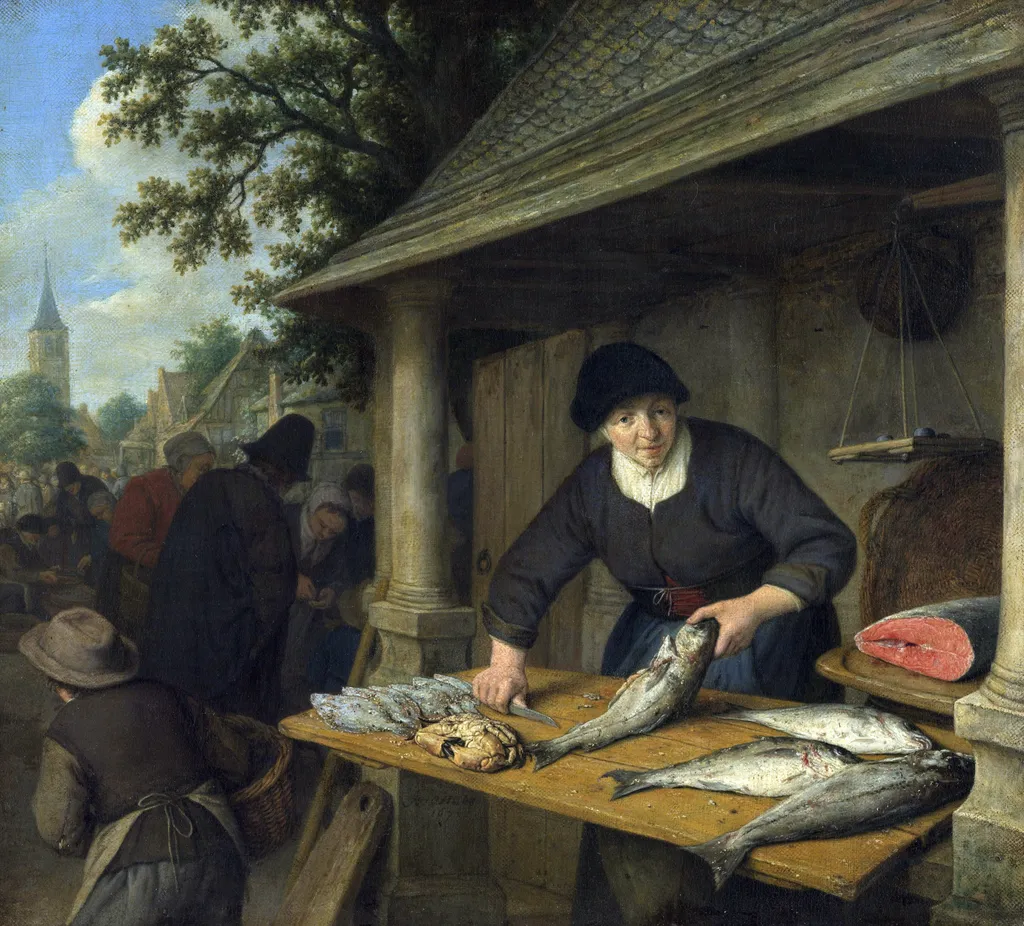
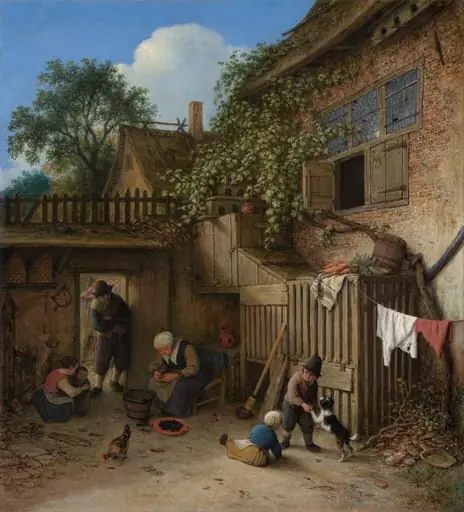
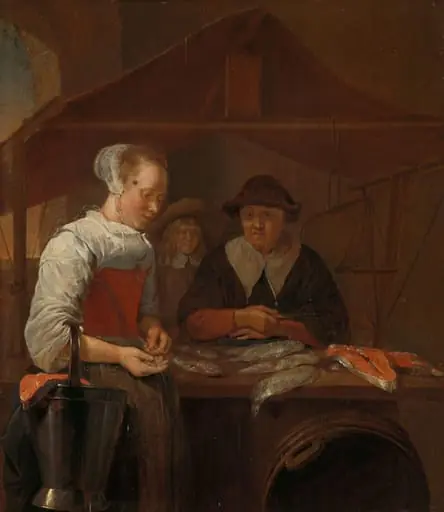
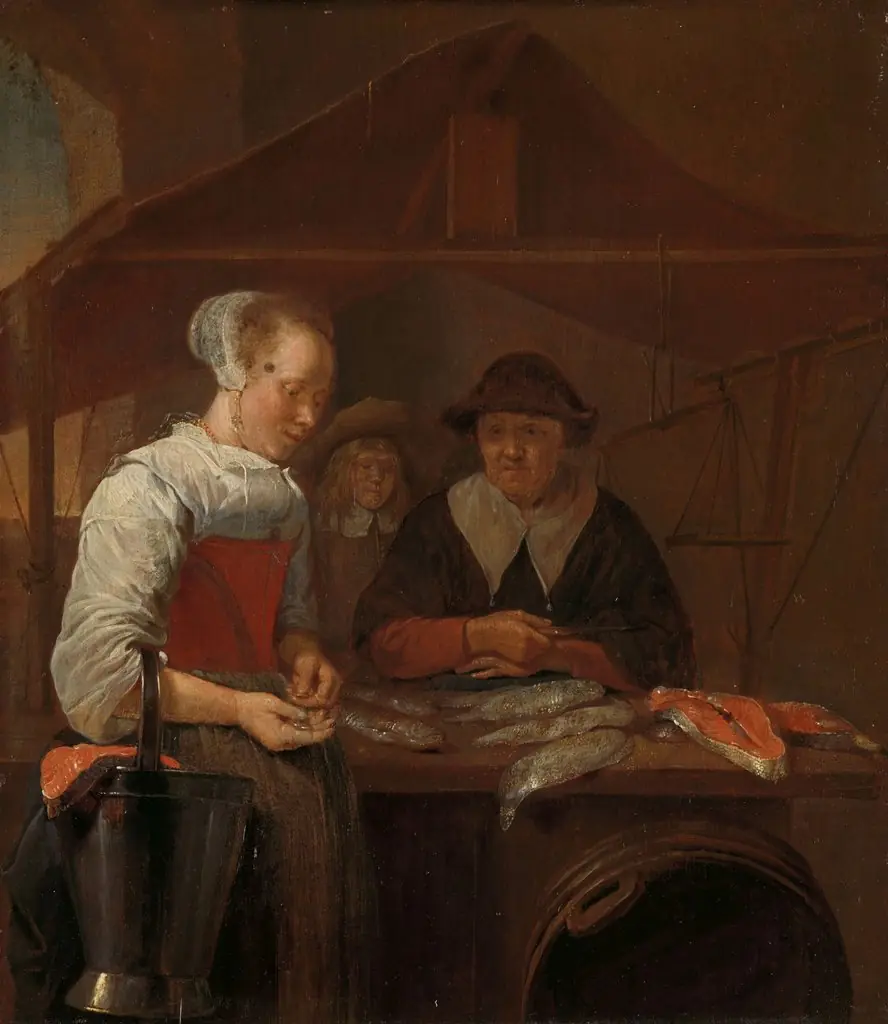
The fishwife is an oil painting by the Dutch Golden Age artist Adriaen van Ostade. It dates from 1672 and is held in the collection of the Rijksmuseum.
About this work
Subject & Meaning
The work is part of the Rijksmuseum collection and was previously owned by several notable Dutch families, including Gerrit Braamcamp and the Six dynasty.
The painting shows a working woman at a fish stall, a common genre scene of 17th‑century Haarlem. The figure embodies the everyday labor of women in the fish trade, reflecting social and economic conditions of the Dutch Republic. Symbolic elements include the modest attire and the modest stall, underscoring themes of modest prosperity and the value of honest work.
The composition captures a moment of commerce that highlights the importance of the fish market in Dutch urban life.
The work is part of the Rijksmuseum collection and was previously owned by several notable Dutch families, including Gerrit Braamcamp and the Six dynasty.
Its dimensions are 36.5 cm by 39.5 cm, painted in oil on canvas in 1672 in Haarlem.
Technique & Style
Executed in 1672, this genre scene is an oil painting on canvas measuring 36.5 by 39.5 cm. Created in Haarlem, the work depicts a fishwife within a fish market setting, utilizing oil paint as its primary medium. The composition focuses on the central figure of the fishwife alongside fish, characteristic of the artist's approach to everyday subjects. The piece is currently held in the collection of the Rijksmuseum.
History & Provenance
Adriaen van Ostade created the oil painting The Fishwife in 1672 in Haarlem. The work is executed on canvas and depicts a fishwife alongside fish, characteristic of the artist's genre scenes.
The documented ownership chain begins with Gerrit Braamcamp, followed by Pieter de Smeth. The painting later entered the collection of Lucretia Johanna van Winter and subsequently passed to Hendrik Six van Hillegom. It remained within the Six family, being held by Jan Pieter Six VI, Jan Six VII, and Jan Six (VIII) van Hillegom in succession.
The work was later owned by Henri Deterding before arriving at the Rijksmuseum, where it is currently held.
The painting is held in the collection of the Rijksmuseum. Its dimensions are recorded as 36.5 cm in height and 39.5 cm in width. The work was created in Haarlem in 1672.
Historical ownership includes Gerrit Braamcamp, Pieter de Smeth, and Lucretia Johanna van Winter. It subsequently passed through the Six family, specifically to Hendrik Six van Hillegom, Jan Pieter Six VI, Jan Six VII, and Jan Six (VIII) van Hillegom, before being owned by Henri Deterding.
Context
The painting The fishwife by Adriaen van Ostade was created in 1672 and exemplifies the genre scene tradition of Dutch Golden Age realism. It depicts a fishwife at a fish market, rendered in oil on canvas measuring 36.5 cm by 39.5 cm. The work has been part of the Rijksmuseum collection since being owned by successive members of the Six family and later acquired by Henri Deterding. Its subject matter and composition reflect the everyday life themes characteristic of Ostade's oeuvre.
Legacy
The painting The fishwife by Adriaen van Ostade was acquired by several prominent Dutch collectors, including Gerrit Braamcamp, Pieter de Smeth, and members of the Six family, before entering the Rijksmuseum collection.
Its status as a genre painting of a fish market scene contributed to the development of midday market scenes in Dutch art, influencing later genre painters who depicted everyday commercial activities.
Overview
Adriaen van Ostade’s oil painting The Fishwife, executed in 1672, presents a bustling market scene centered on a woman selling fish. The work is part of the Rijksmuseum’s collection and exemplifies the Dutch genre tradition of depicting everyday life with modest realism.
Own this work as a print
Artist & collection

Artist
Adriaen van Ostade (baptized as Adriaen Jansz Hendricx 10 December 1610 – buried 2 May 1685) was a Dutch Golden Age painter of genre works, showing the everyday life of ordinary men and women.