Artwork
Peasants Merrymaking
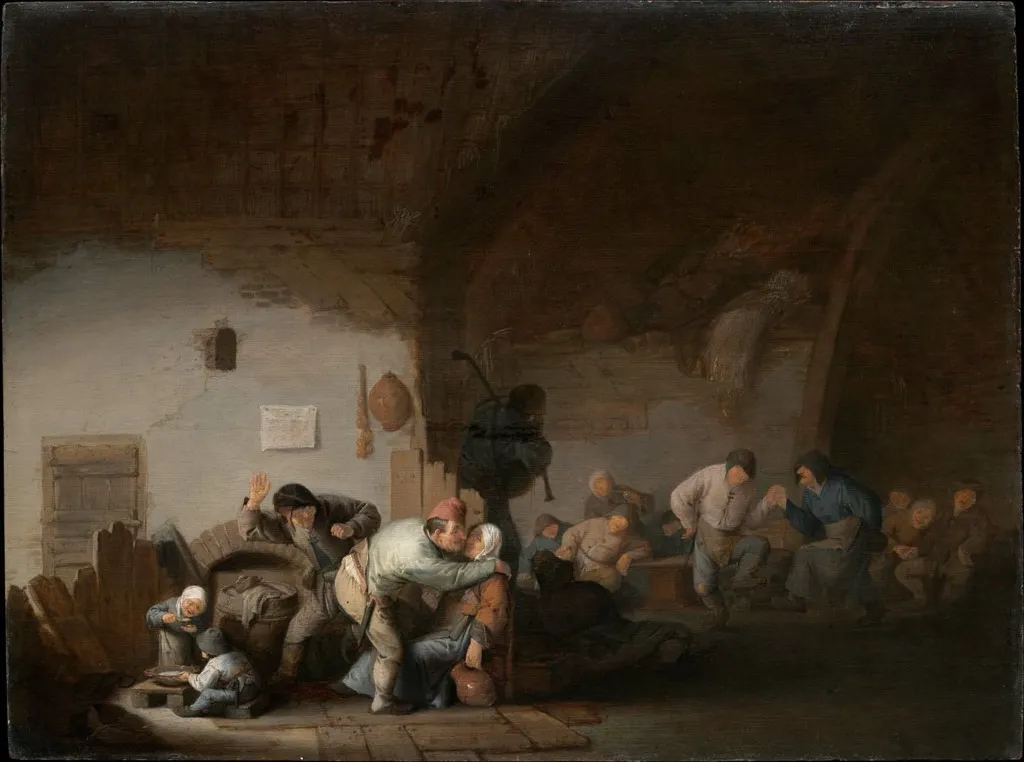
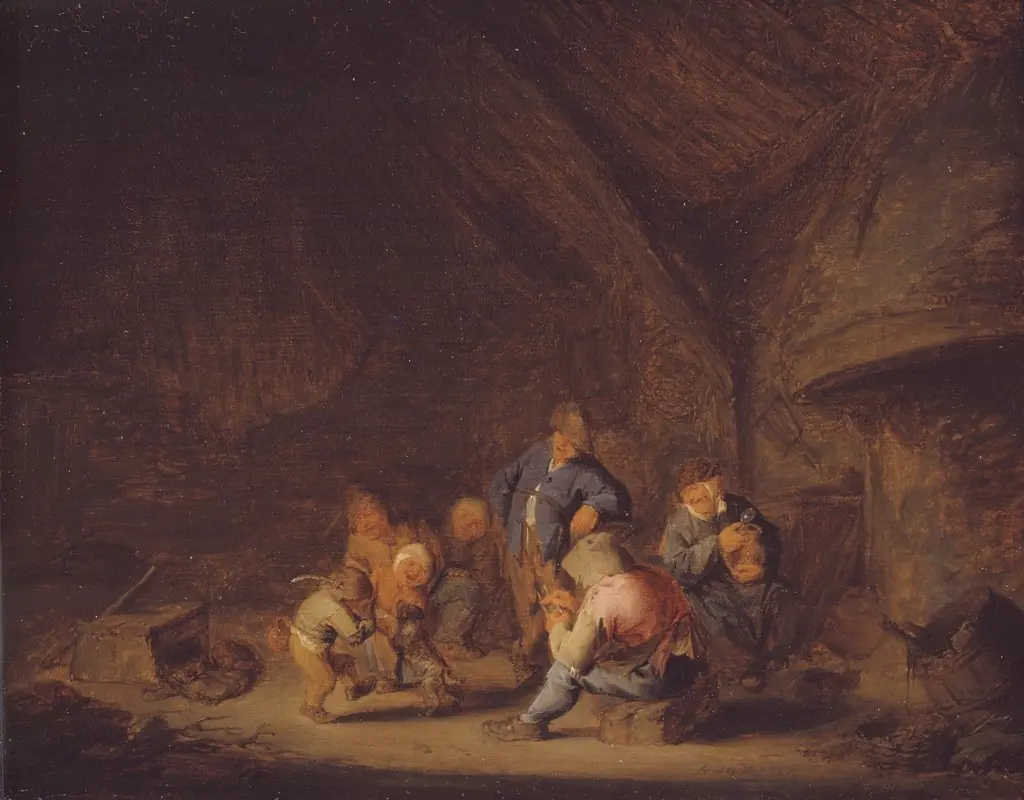
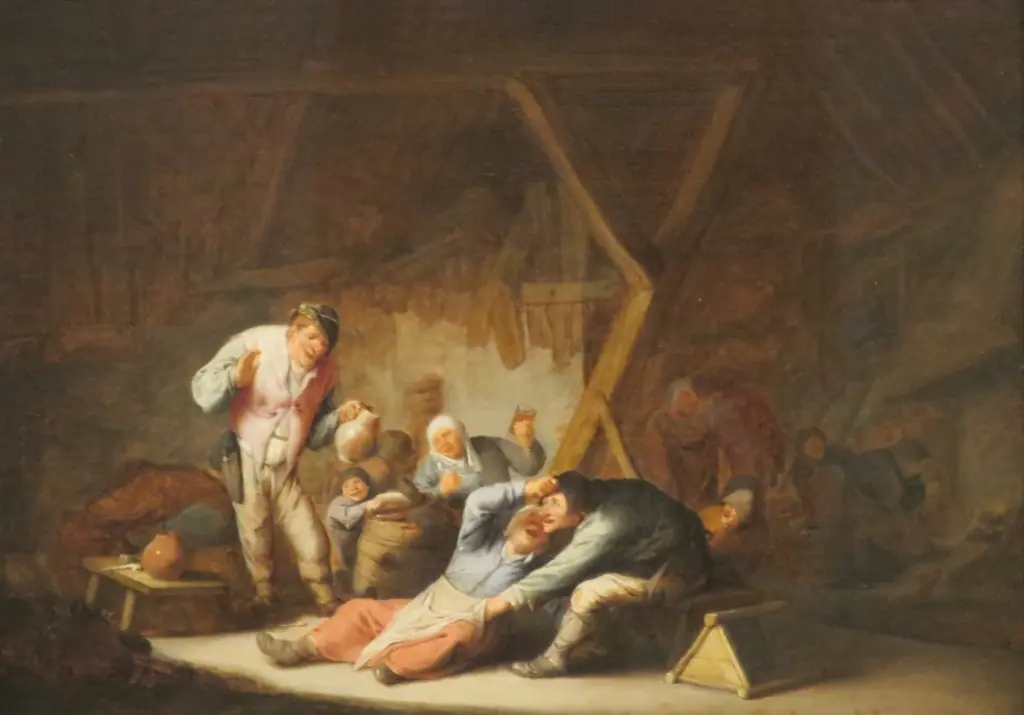
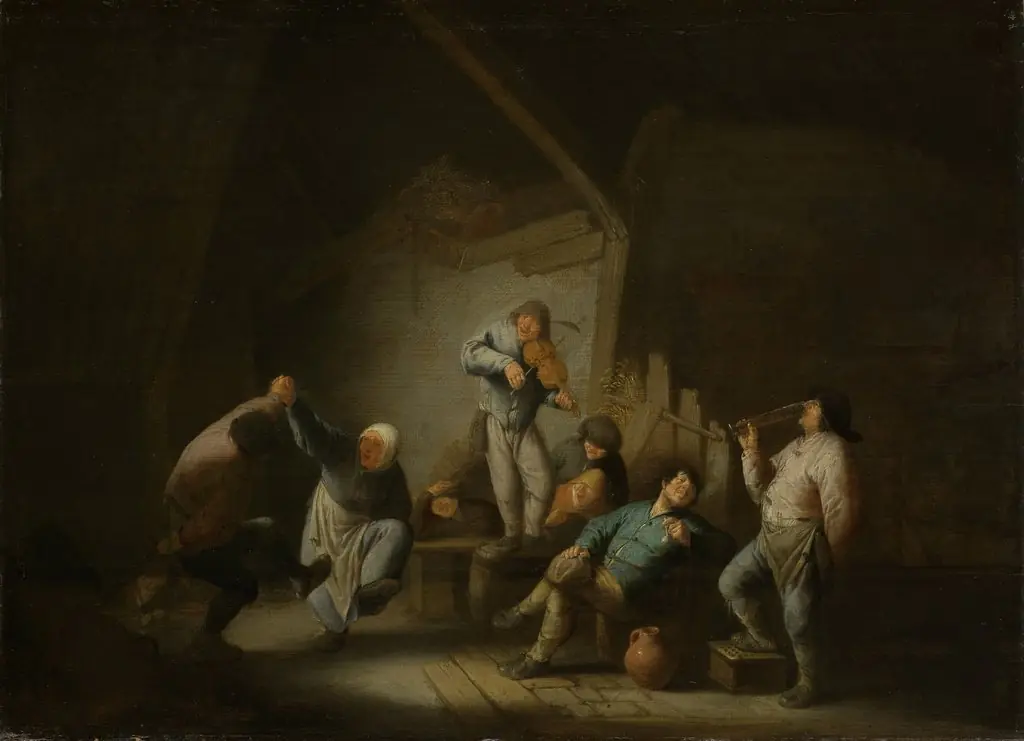
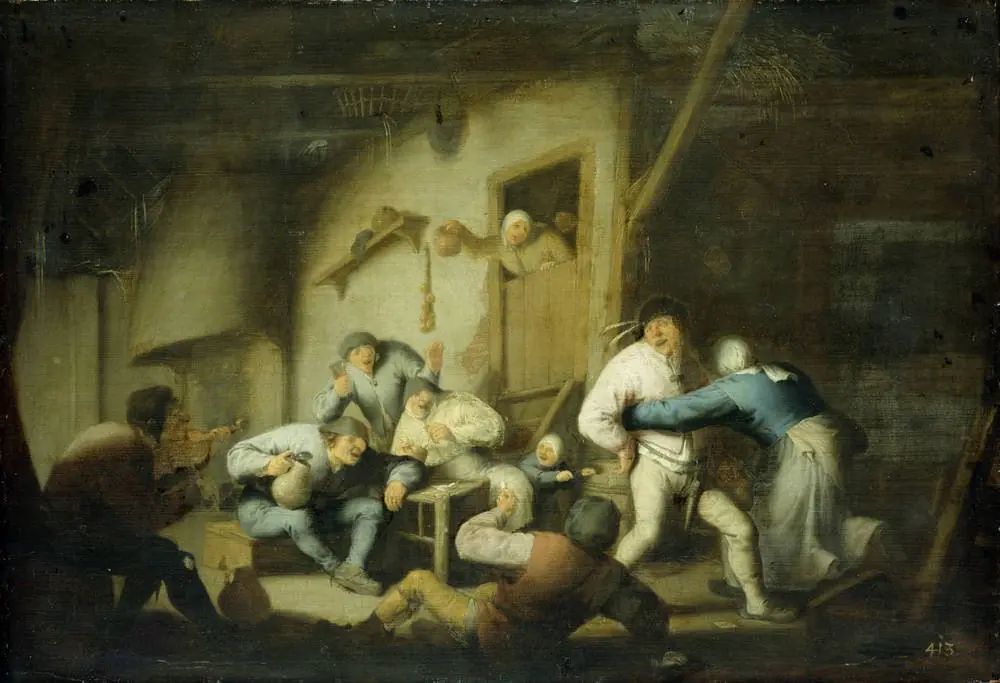
Peasants Merrymaking is an oil painting by the Dutch Golden Age artist Adriaen van Ostade. It dates from 1660 and is held in the collection of the Museum of Fine Arts Boston.
About this work
Subject & Meaning
The combination of figures, barn setting, and party motif frames the scene as a study of popular amusement and social interaction among the rural poor.
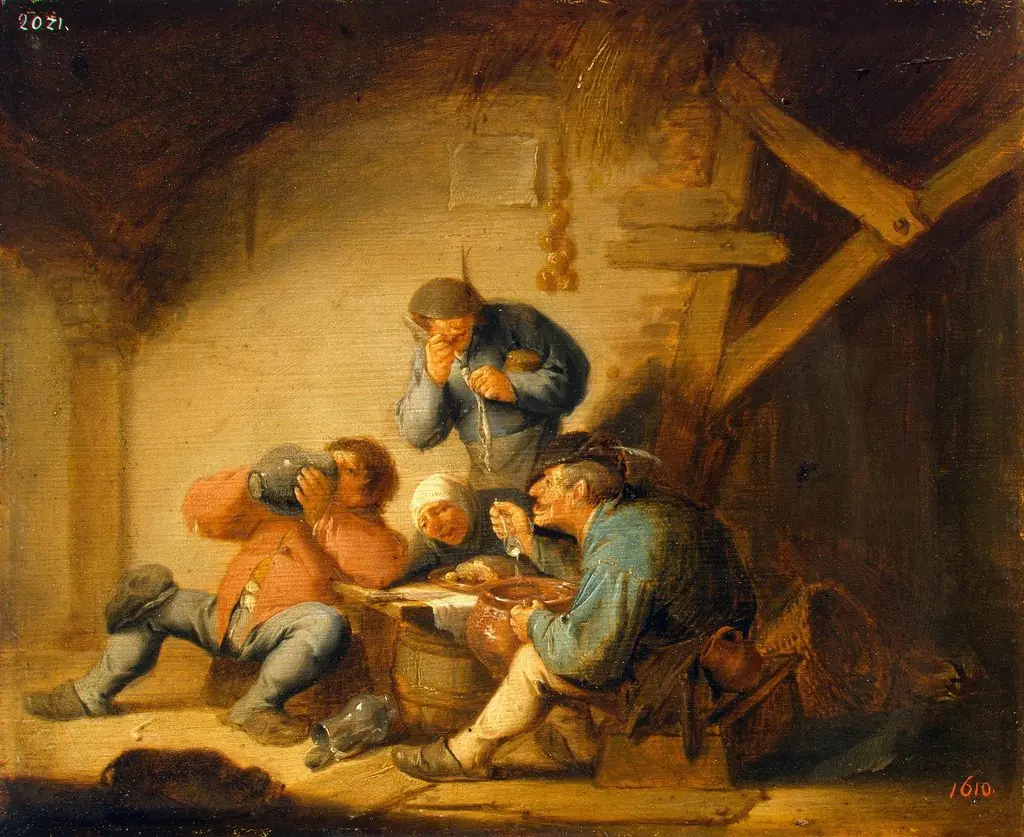
Adriaen van Ostade's Peasants Merrymaking is a Dutch genre scene set inside a barn, where peasants gather for a party. The painting belongs to the tradition of genre art, depicting everyday rural life rather than historical, religious, or mythological events. By placing the festivities within a barn and focusing on peasants at leisure, the work participates in the seventeenth-century Dutch interest in rustic subjects, presenting communal celebration as a window into ordinary country existence.
The combination of figures, barn setting, and party motif frames the scene as a study of popular amusement and social interaction among the rural poor.
The work carries no overt allegorical or symbolic program; its meaning lies in its observational portrayal of peasant merrymaking as a recognizable cultural activity. As a genre painting, it represents the everyday pleasures of rural communities rather than serving as a moralizing or emblematic image.
History & Provenance
The work was created in 1660 by Adriaen van Ostade, who signed and dated it in the year of execution. It entered the collection of Philip Sears and was subsequently sold to French and Company before being acquired by the Museum of Fine Arts Boston, where it has remained since acquisition.
The painting is housed in the Museum of Fine Arts Boston. Its accession number is not specified in the sources. It has been part of the collections of Philip Sears and French and Company before entering the museum's holdings.
The work has not been documented in major exhibition histories, and no exhibition records are provided in the sources.
Overview
Adriaen van Ostade’s oil painting Peasants Merrymaking, executed in 1660, captures a lively interior scene of rural folk gathered in a modest barn. The work is part of the collection of the Museum of Fine Arts in Boston, where it is displayed as an example of Dutch genre painting from the mid‑seventeenth century.
Technique & Style
Van Ostade employs a restrained palette of earth tones, using pronounced chiaroscuro to model forms and draw attention to facial expressions. Dark shadows dominate the periphery, while a soft, warm light illuminates select faces and gestures, creating a sense of intimacy within the gritty setting. The brushwork balances detailed rendering of clothing with looser treatment of background elements.
Context
The work belongs to the Dutch Golden Age tradition of genre scenes that celebrated ordinary domestic moments. Ostade, a pupil of Frans Hals, often focused on tavern and countryside interiors, reflecting contemporary interest in moralizing narratives that portrayed the virtues and vices of common folk.
Artist & collection

Artist
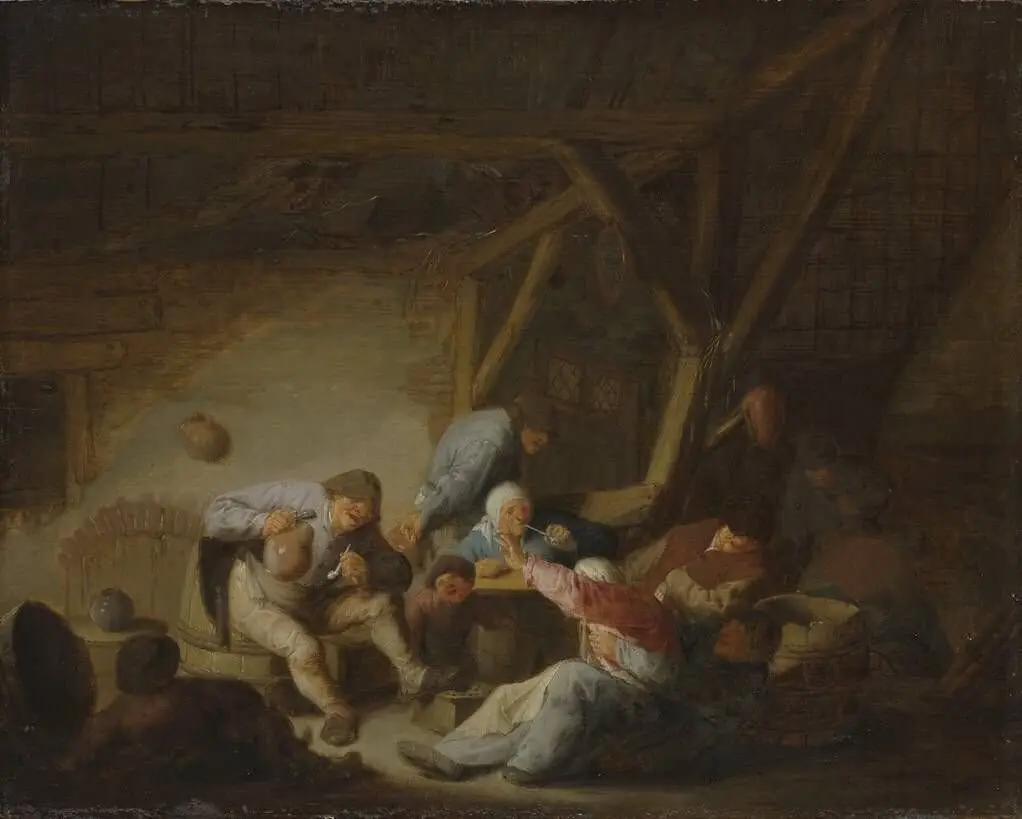
Adriaen van Ostade (baptized as Adriaen Jansz Hendricx 10 December 1610 – buried 2 May 1685) was a Dutch Golden Age painter of genre works, showing the everyday life of ordinary men and women.