Artwork
Business
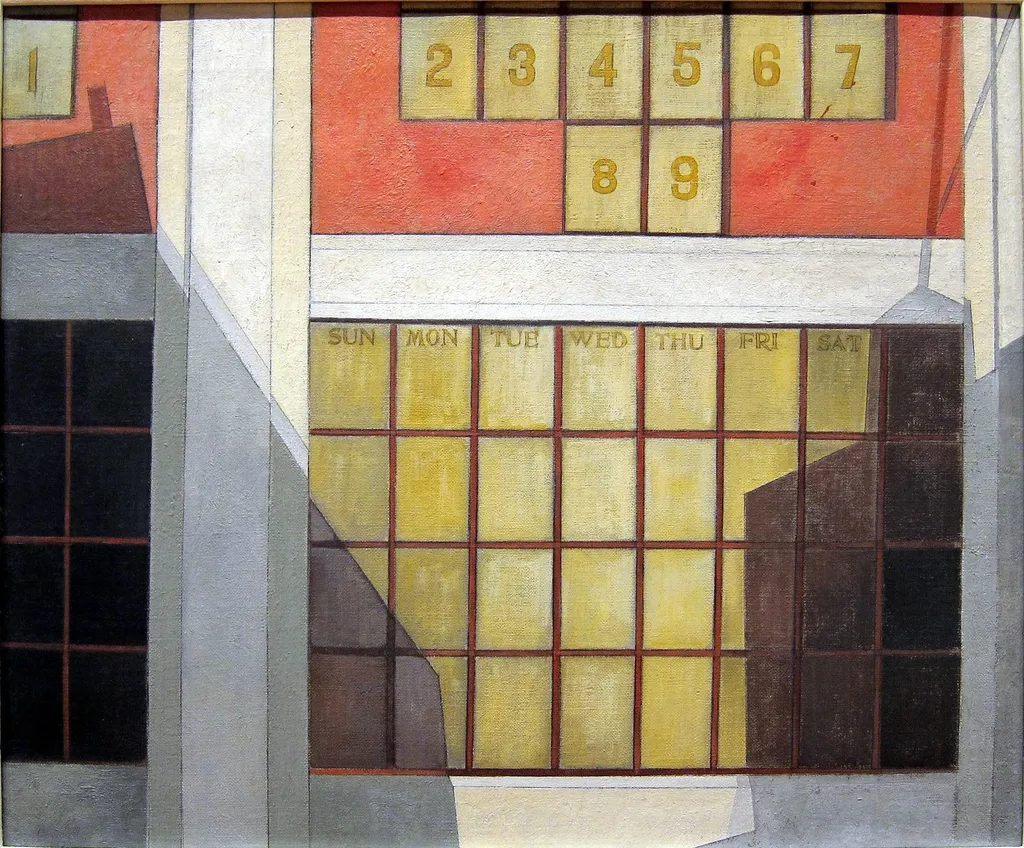
Business is an unspecified painting by Charles Demuth. It dates from 1921 and is held in the collection of the Art Institute of Chicago.
About this work
Overview
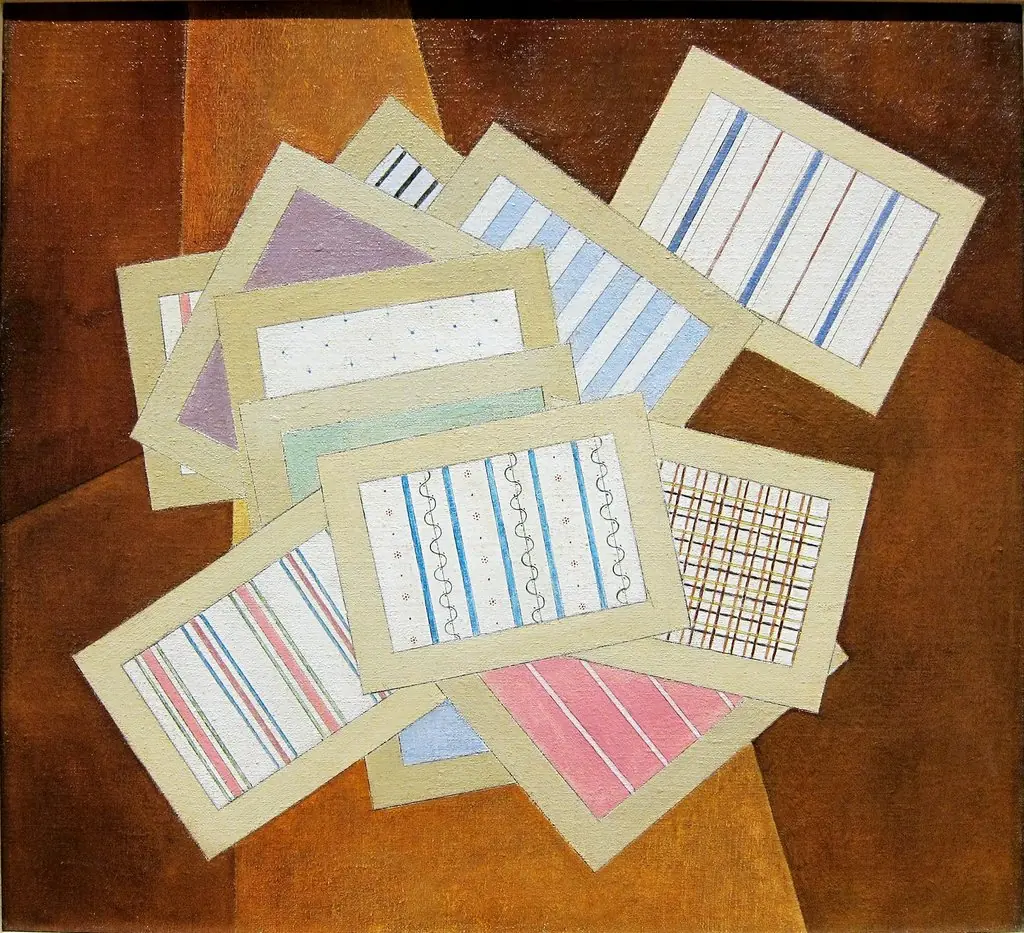
Rendered in muted tones of red, gray, brown, and white, the composition suggests a bureaucratic or commercial environment without literal representation.
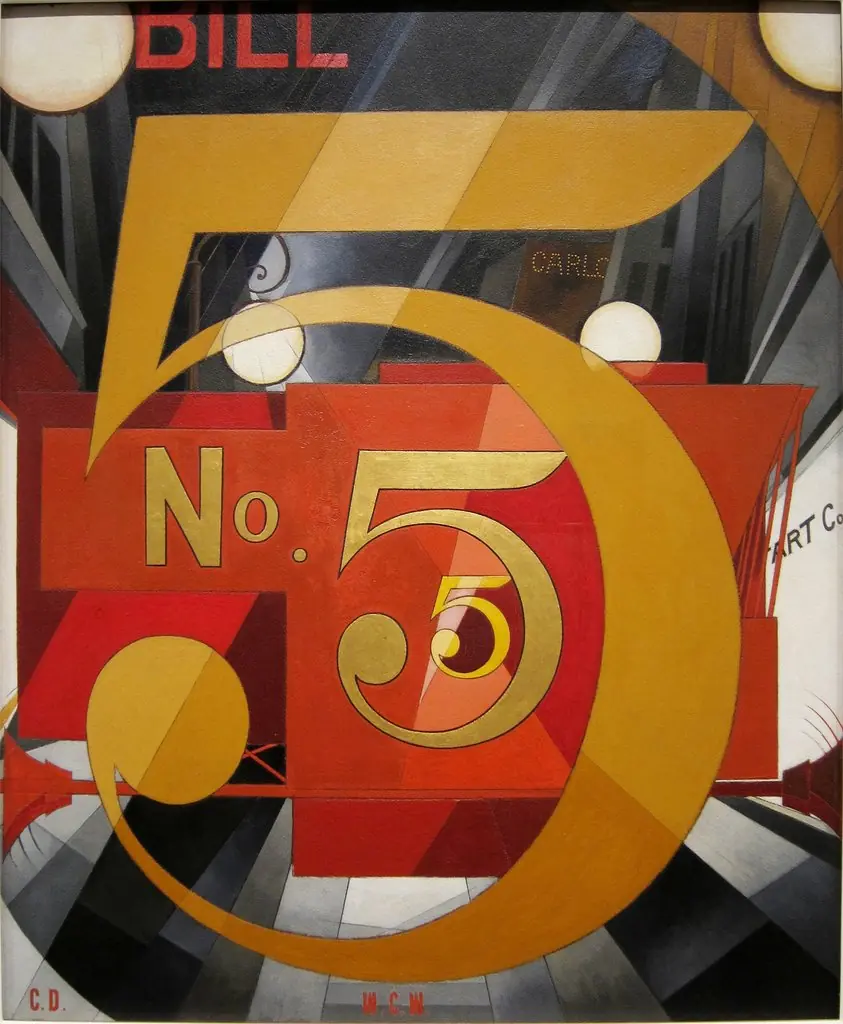
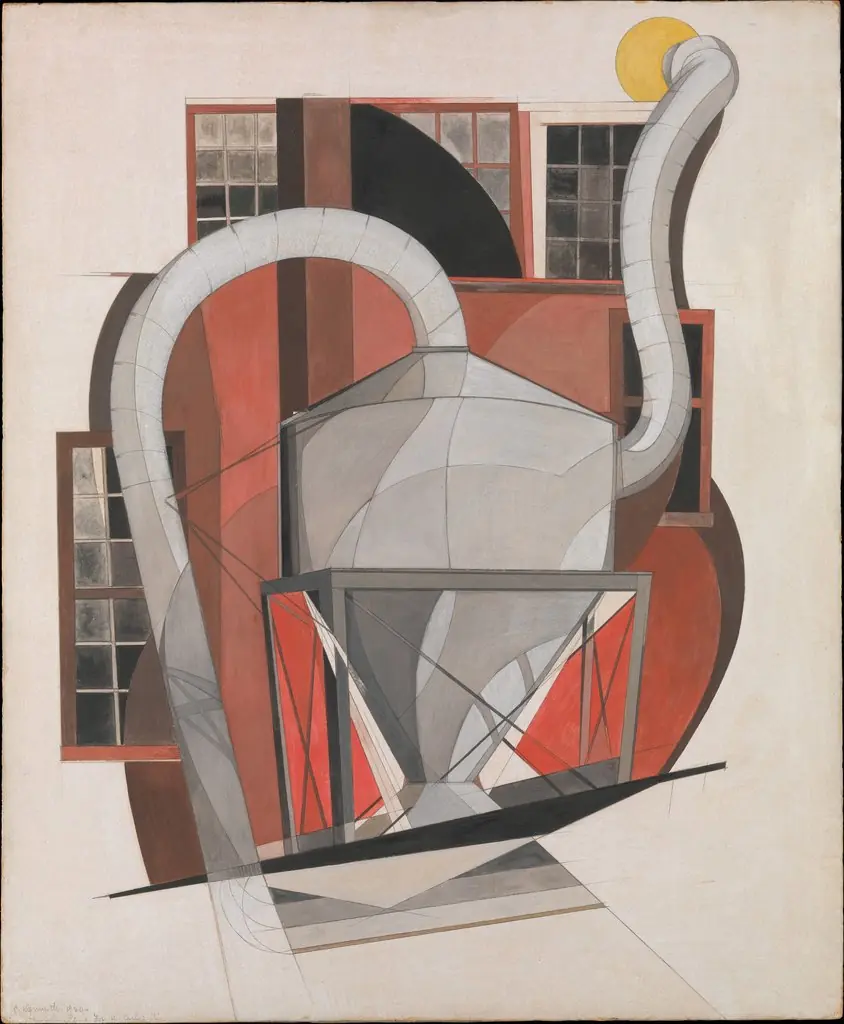
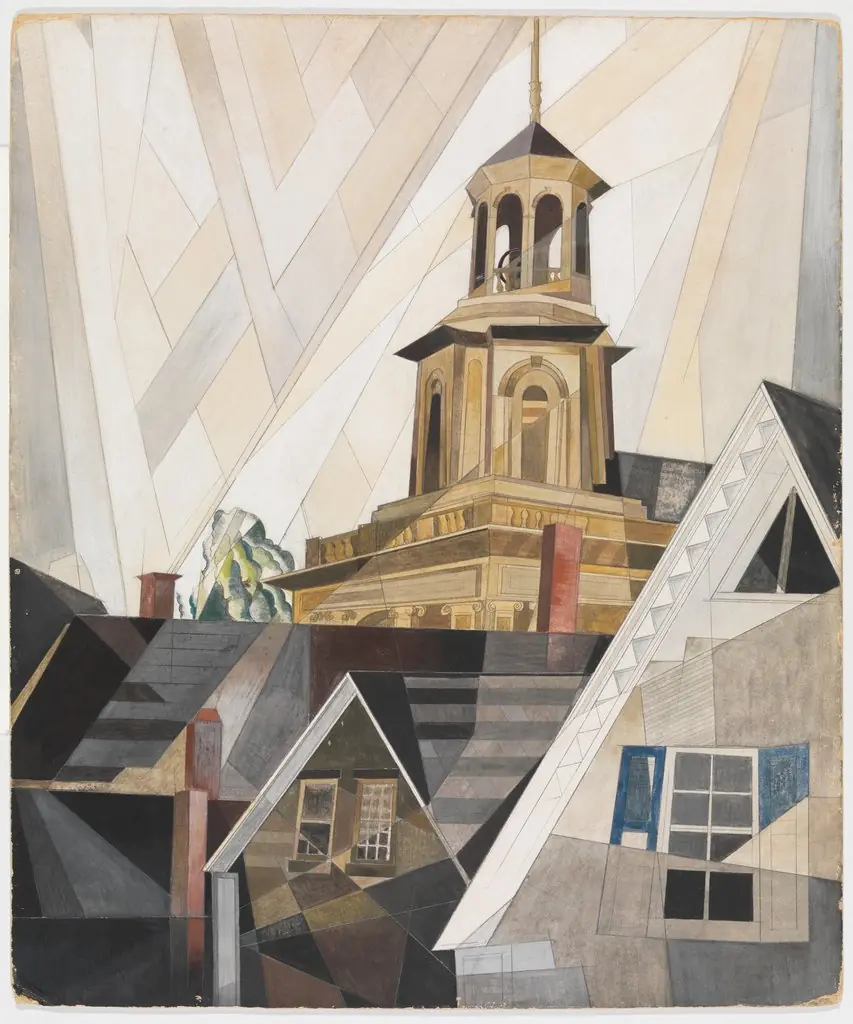
Charles Demuth's 1921 painting Business depicts an abstracted interior space dominated by a grid of yellow squares labeled with days of the week. Rendered in muted tones of red, gray, brown, and white, the composition suggests a bureaucratic or commercial environment without literal representation. The work balances structure and subtlety, using geometric forms to evoke the rhythm of daily administrative life.
Subject & Meaning
The painting alludes to the routines of modern work culture through its systematic arrangement of dates and numbers. The labeled squares imply a calendar or scheduling system, while the sparse visual elements reflect the impersonal nature of office environments. Demuth avoids narrative detail, instead inviting contemplation of time, order, and the quiet repetition inherent in professional life.
Technique & Style
Demuth employs sharp, clean lines and flat planes of color to construct a spatial illusion within a shallow pictorial field. The contrast between the bright yellow grid and the subdued background creates visual tension without overt drama. Brushwork is controlled and precise, aligning with Precisionist tendencies that favored clarity and geometric reduction over expressive brushstrokes.
History & Provenance
Completed in 1921, Business entered the collection of the Art Institute of Chicago in 1923, shortly after its creation. It was among the early works by Demuth to be acquired by a major American museum, reflecting growing institutional interest in modernist American art during the 1920s. The painting has remained in the museum’s holdings since its acquisition.
Context
Created during the rise of American Precisionism, Business responds to the era’s fascination with industrial and architectural forms. Demuth, influenced by European modernism and American urbanization, translated the rhythms of daily commerce into visual structure. The work stands apart from literal depictions of industry, focusing instead on the abstracted systems that underpin modern labor.
Legacy
Business is recognized as a key example of Demuth’s ability to merge abstraction with everyday subject matter. Its restrained palette and formal discipline influenced later generations of American artists exploring minimalism and institutional critique. The painting remains a quiet but significant contribution to early 20th-century American modernism.
Own this work as a print
Artist & collection

Artist
Charles Henry Buckius Demuth (November 8, 1883 – October 23, 1935) was an American painter who specialized in watercolors and turned to oils late in his career, developing a style of painting known as Precisionism.