Artwork
Tancred and Erminia
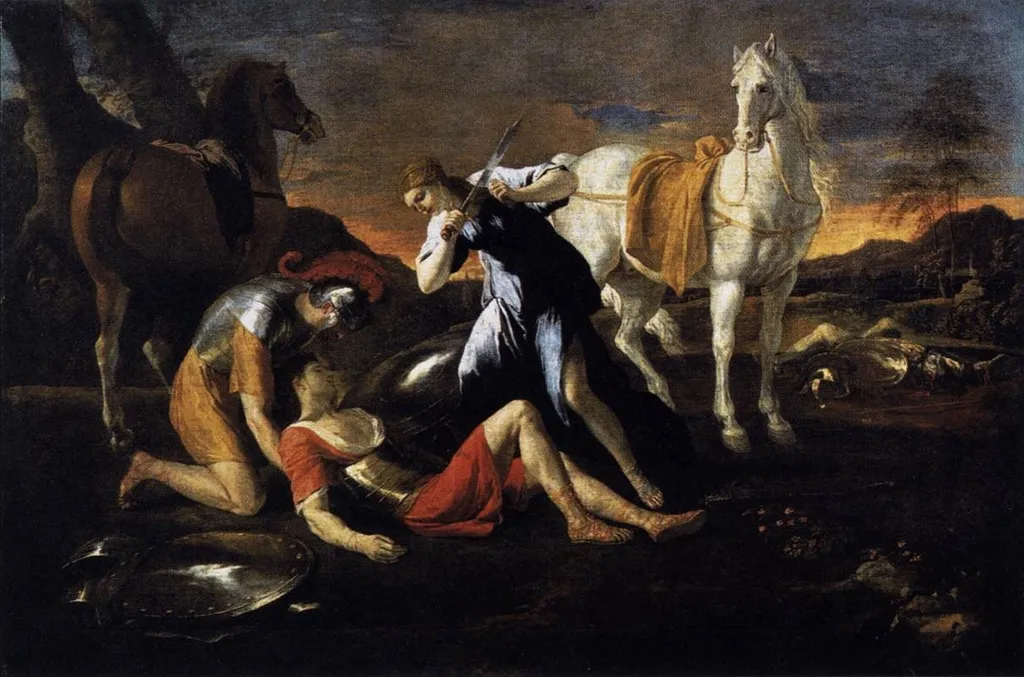
Tancred and Erminia is an oil painting by Nicolas Poussin. It dates from 1649 and is held in the collection of the Hermitage Museum.
About this work
Technique & Style
The work belongs to the painter's classicizing tradition, treating a narrative subject drawn from Torquato Tasso's epic poem Jerusalem Delivered (1581).
Tancred and Erminia is an oil painting on canvas, executed by Nicolas Poussin in 1649. The support measures 98.5 cm in height by 146.4 cm in width. The work belongs to the painter's classicizing tradition, treating a narrative subject drawn from Torquato Tasso's epic poem Jerusalem Delivered (1581). A variant of the composition is held at the Barber Institute of Fine Arts in Birmingham, England.
The sources do not provide further detail on Poussin's specific handling of paint, brushwork, palette, condition of the canvas, or stylistic analysis beyond the broad identification of the work as a classicizing painting on canvas.
History & Provenance
The painting was first recorded in the posthumous sale of painter Joseph Aved in Paris on 24 November 1766 under the erroneous title Angélique trouvant Médor. It was purchased by Catherine II of Russia and entered the Imperial Hermitage collection in Saint Petersburg, where it has remained.
Early scholarship proposed a dating of 1630–1631, aligning it with Poussin’s Kingdom of Flora of 1631 for Prince Valguarnera in Dresden. This chronology is now widely accepted. The work depicts an episode from Torquato Tasso’s 1581 epic Jerusalem Delivered.
Nicolas Poussin's Tancred and Erminia is held in the Hermitage Museum in Saint Petersburg, Russia. The work was first recorded in the 1766 sale catalogue of the collection of painter Joseph Aved, where it was mistakenly titled Angélique trouvant Médor, before being acquired by Catherine II. The painting has a documented exhibition history beginning in Paris in 1937 for the Chefs-d'œuvre de l'art français exhibition.
It subsequently appeared in Moscow in 1955 and Leningrad in 1956 as part of French art surveys. Later showings include the 1960 Exposition Nicolas Poussin in Paris, followed by a 1965 presentation in Bordeaux and a 1965–1966 run in Paris featuring masterpieces from the Hermitage and Moscow museums.
Legacy
The painting has been exhibited in several major venues, including the 1937 Paris exhibition of French masterpieces, the 1955 Moscow show on French art from the 15th to the 20th century, and the 1960 Paris Nicolas Poussin retrospective. It was also shown in Bordeaux in 1965 as part of a French masterpieces exhibition featuring Hermitage and Moscow collections, and a related version resides in the Barber Institute of Fine Arts in Birmingham.
Overview
This 1649 oil painting by Nicolas Poussin captures a dramatic moment involving three figures and two horses, set against a somber, cloudy landscape with hills and trees. The scene conveys intense tension and conflict.
Subject & Meaning
The painting depicts a scene from a narrative, featuring Erminia, a woman in blue holding a sword, Tancred, a kneeling armored man, and a prostrate figure in red. Their interactions suggest a narrative of confrontation or surrender, though the specific moment is not explicitly stated.
Context
Part of Poussin's oeuvre, this work reflects his interest in depicting dramatic, often classical or literary, scenes with emotional depth, characteristic of 17th-century European painting's engagement with narrative and psychological complexity.
Artist & collection
Artist
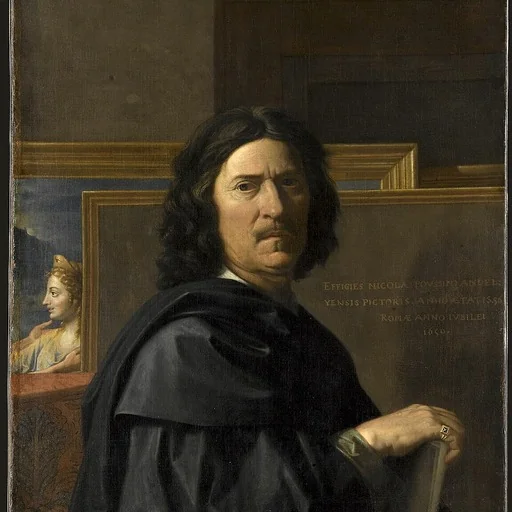
Nicolas Poussin (UK: US: French:; June 1594 – 19 November 1665) was a leading painter of the classical French Baroque style, although he spent most of his working life in Rome.

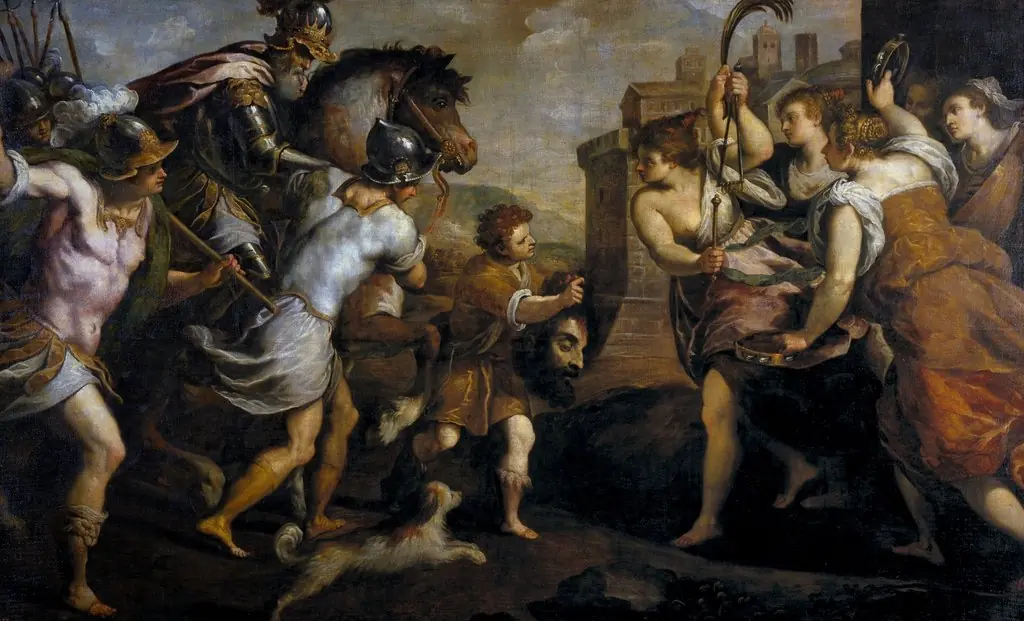 David with Goliath's Head
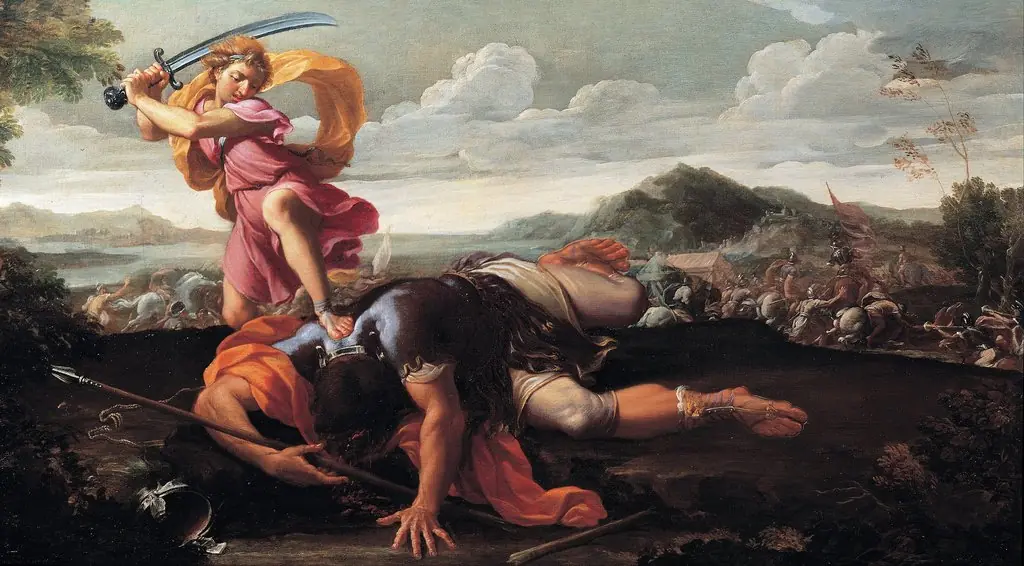 David and Goliath
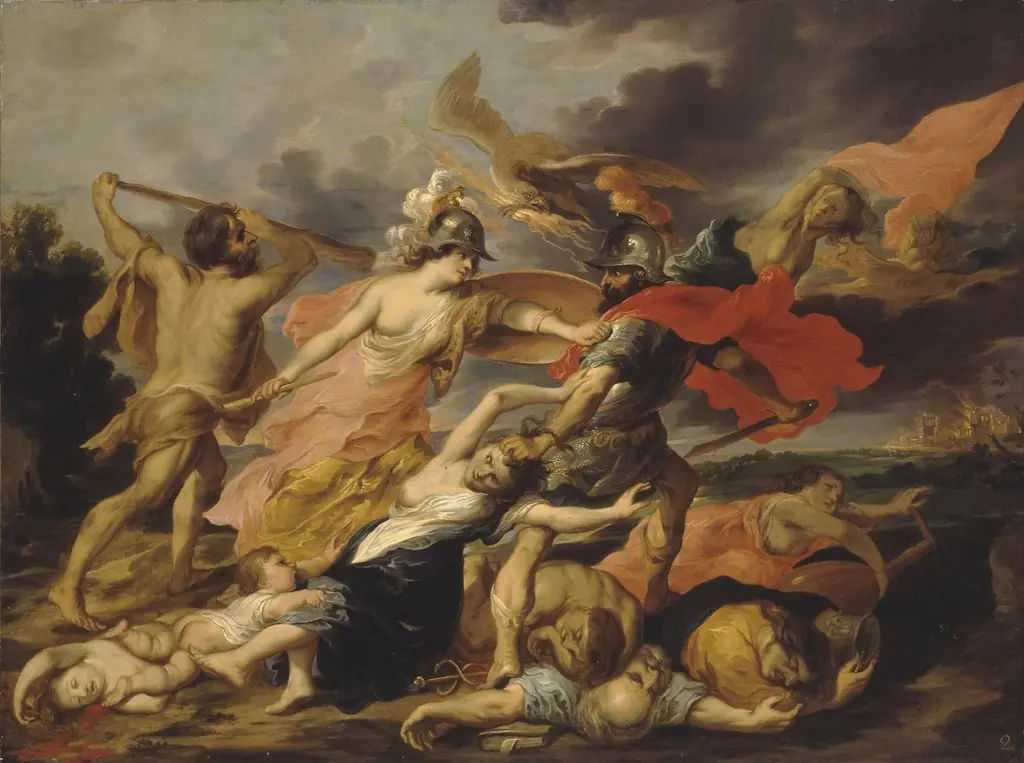 Hercules and Minerva Expelling Mars
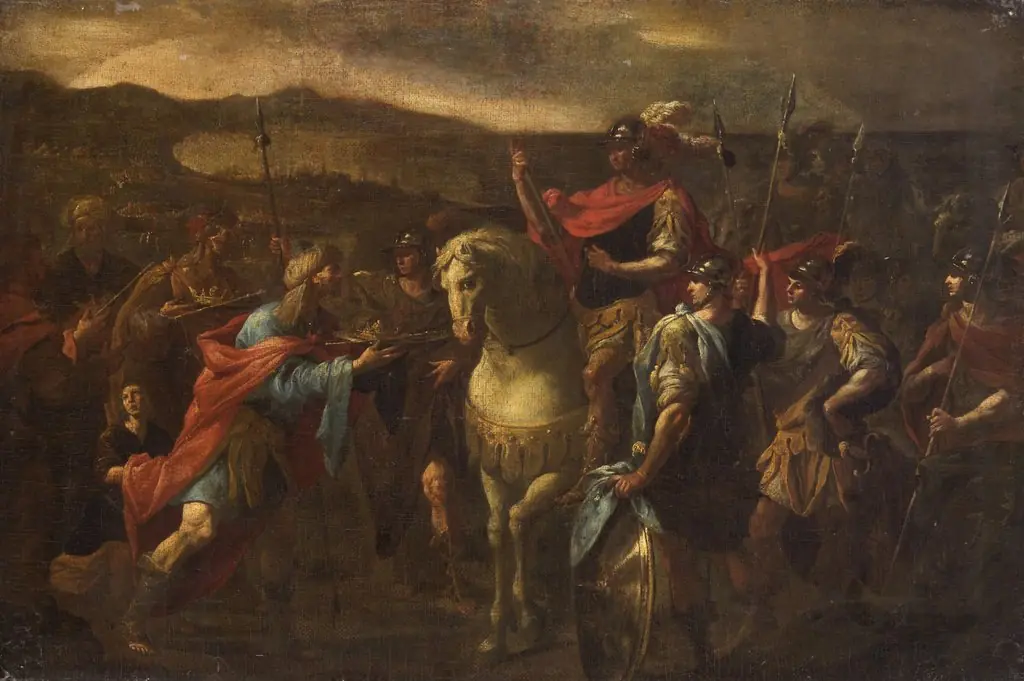 Indische Könige huldigen Alexander dem Großen
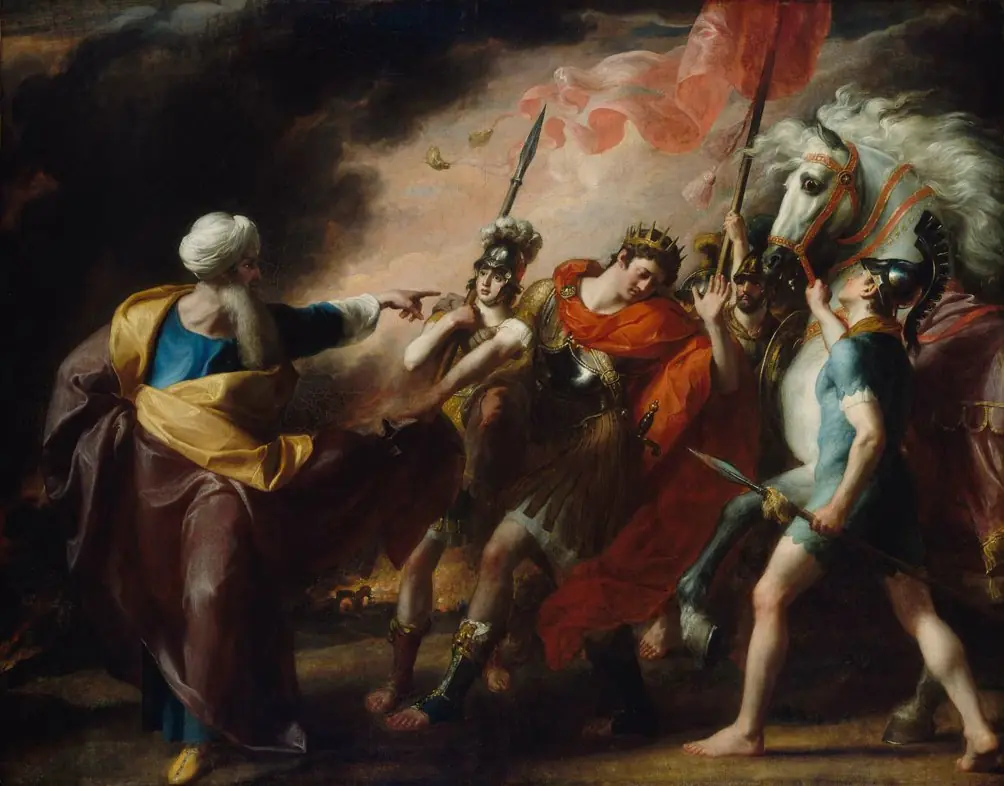 Saul Reproved by Samuel
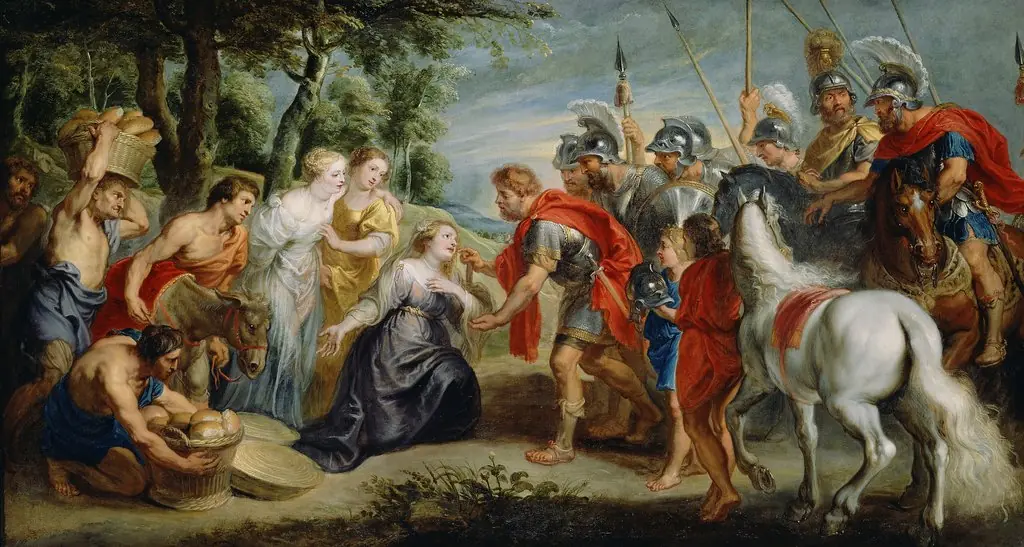 David Meeting Abigail
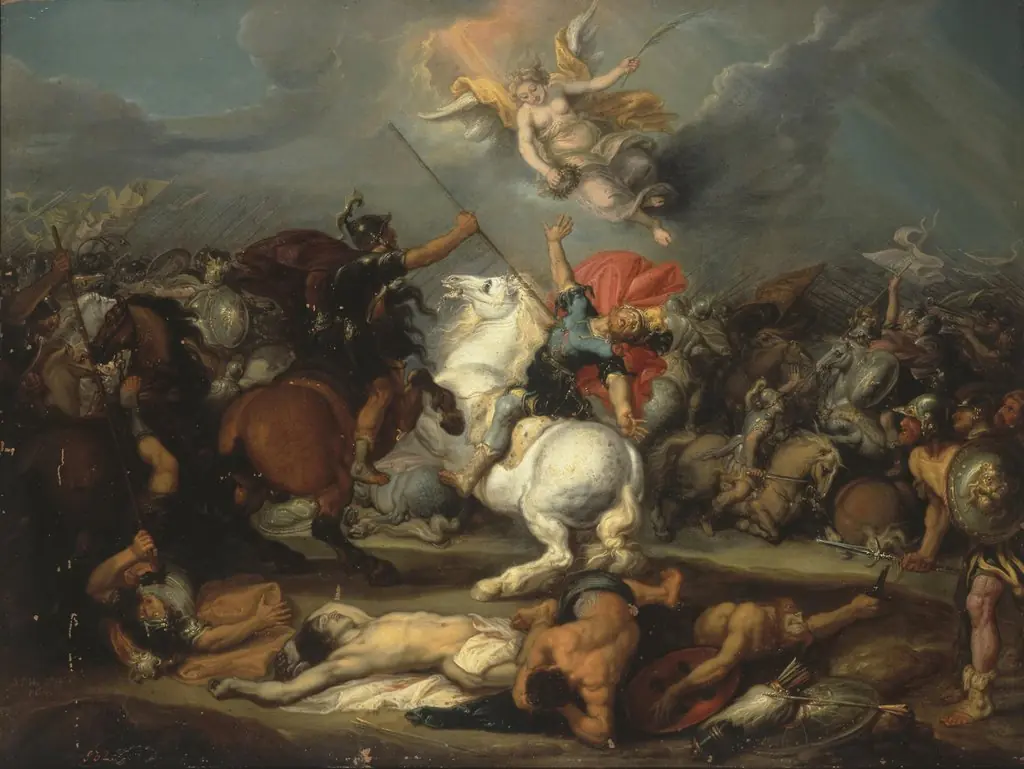 Death of Decius Mus
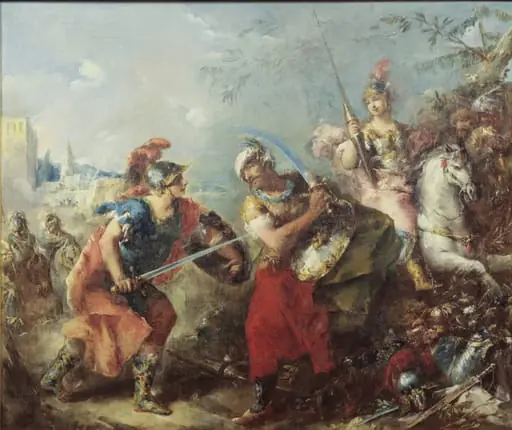 The Fight between Tancred and Argante With Clorinda in the Background
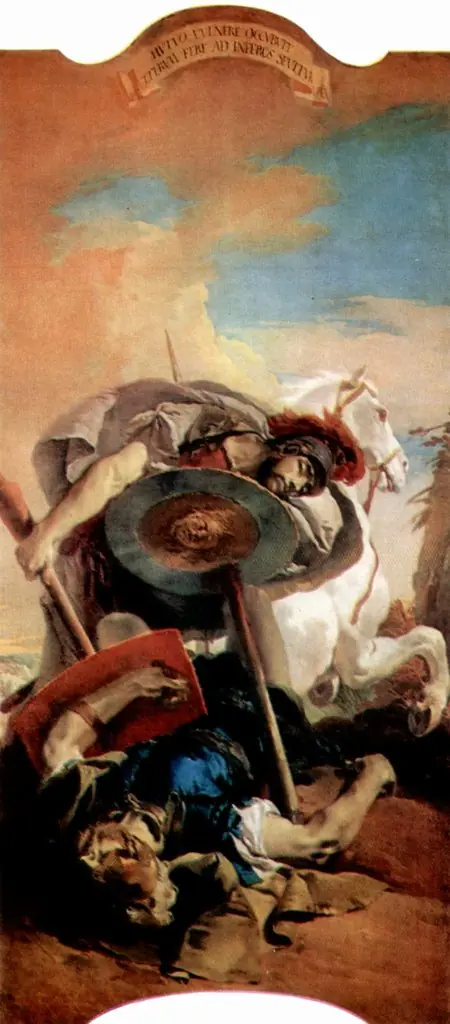 Death of Consul L. J. Brutus in a duel with Aruns
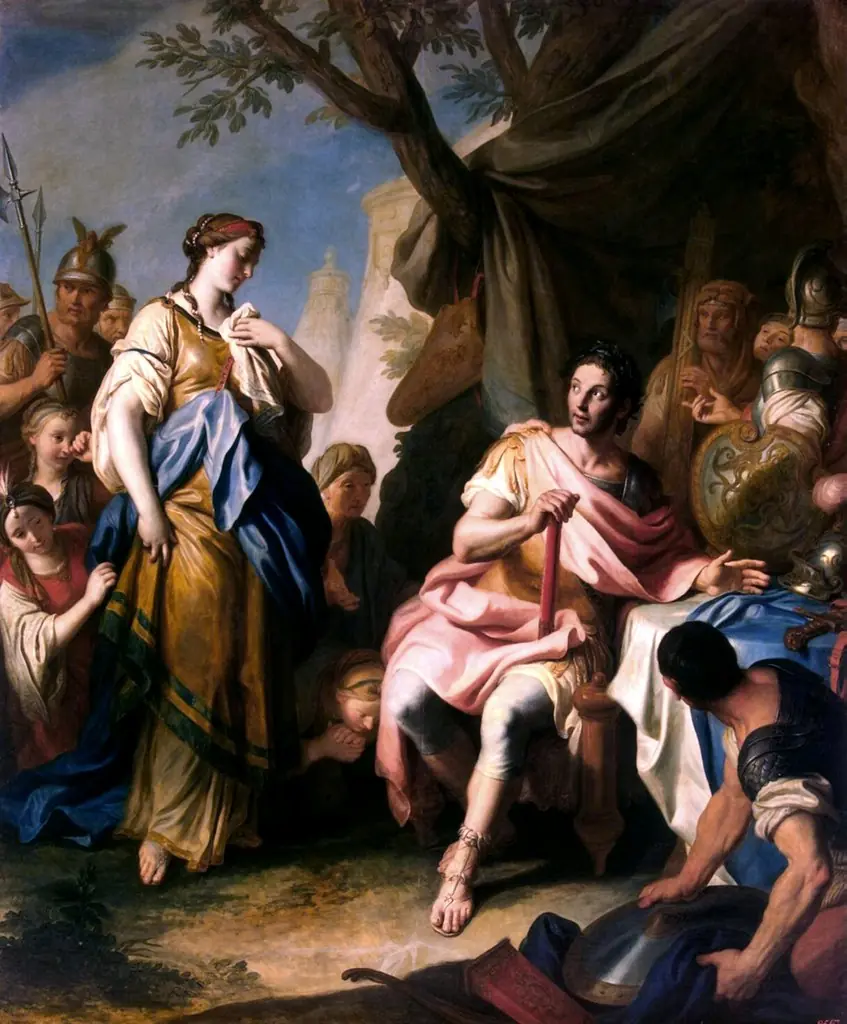 Alexander the Great and Roxana
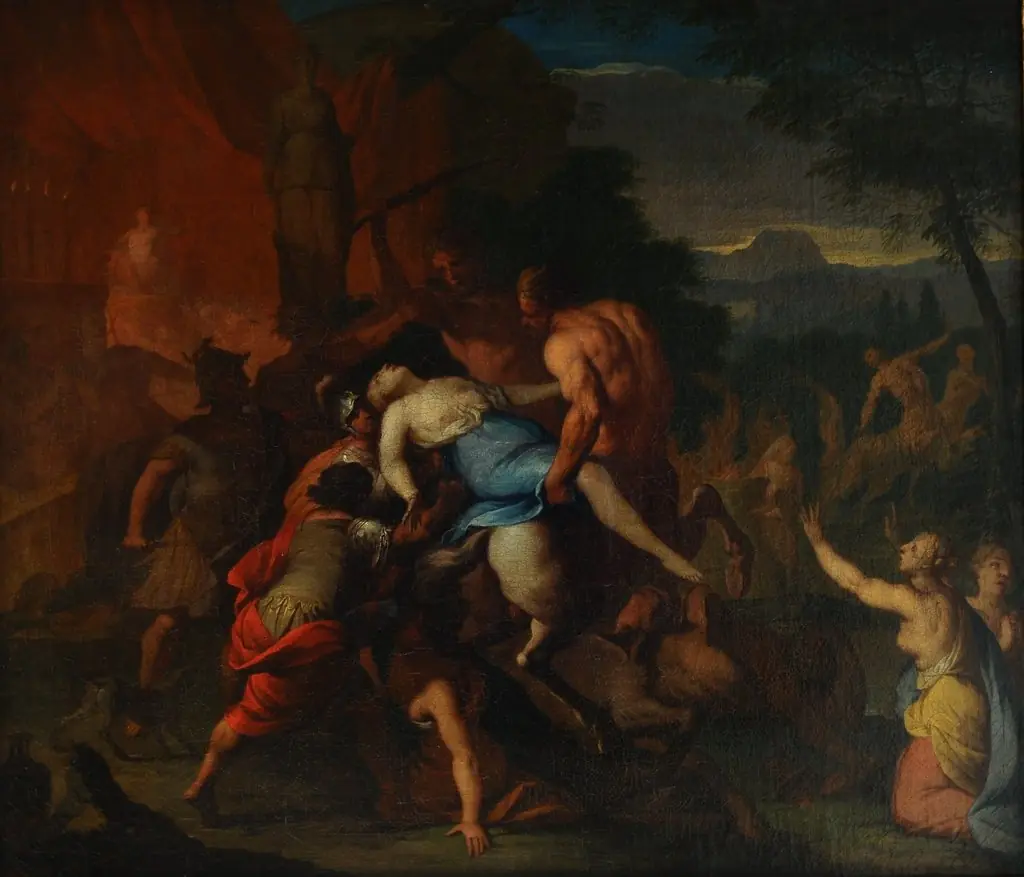 Combate de centauros y lapitas. (Tit. Ant.: Centauros e ilotas)
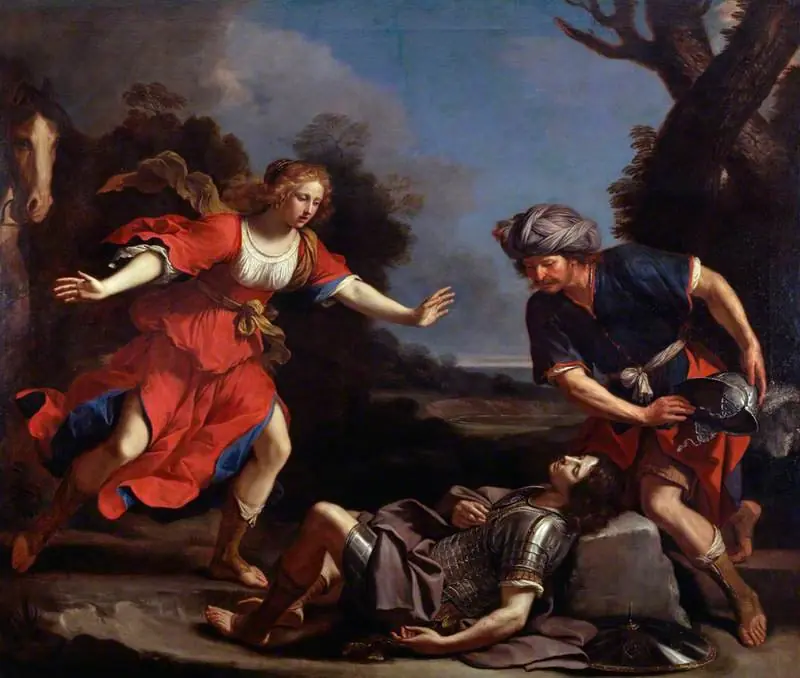
- Erminia Finding the Wounded Tancred