Artwork
David with Goliath's Head
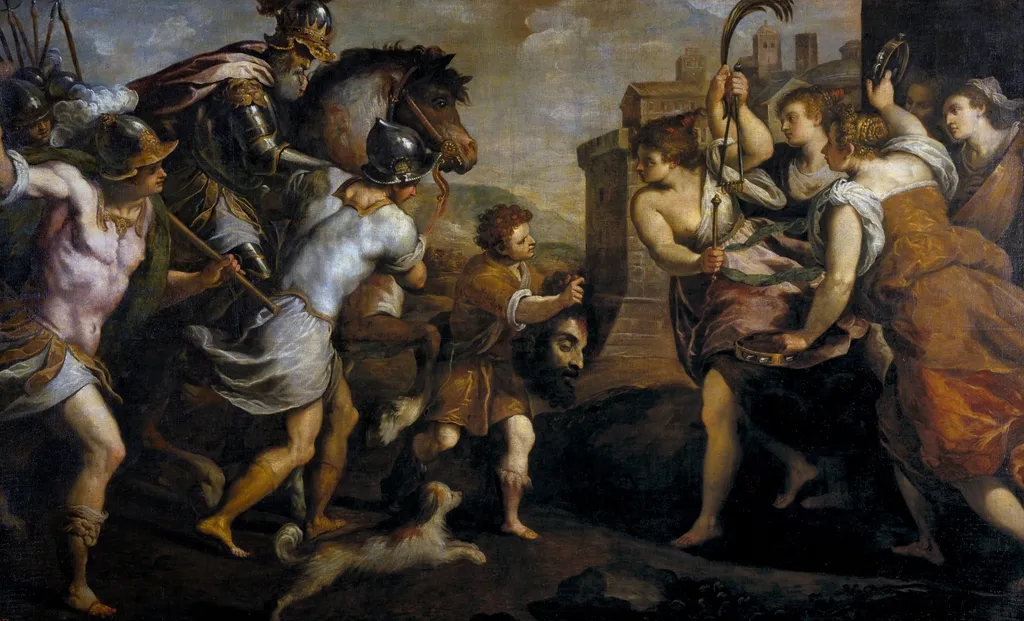
David with Goliath's Head is an oil painting by the Early Baroque Italian artist Palma il Giovane. It dates from 1596 and is held in the collection of the Museo del Prado.
About this work
Subject & Meaning
By focusing on the moment of beheading, the work underscores the narrative of courage and the decisive intervention of faith in human affairs.
The canvas illustrates the biblical episode in which David presents the severed head of Goliath as proof of his victory. David is shown in contemporary armor, wearing a combat helmet, and gripping a spear, while a rattle hangs from his belt, attributes noted in the iconographic record. The composition emphasizes the triumph of the youthful hero over a formidable adversary, a theme frequently employed in Counter‑Reformation art to convey divine favor and martial prowess.
By focusing on the moment of beheading, the work underscores the narrative of courage and the decisive intervention of faith in human affairs.
Technique & Style
David with Goliath's Head is an oil-on-canvas painting executed by Palma il Giovane in 1590. The work depicts the biblical narrative of David and Goliath, featuring specific iconographic elements such as body armor, a combat helmet, a spear, and a rattle. The composition is substantial in scale, measuring 337 cm in height and 207 cm in width.
As a religious painting, the artist utilized oil paint to render the dramatic confrontation between the two figures on the canvas support.
History & Provenance
David with Goliath's Head is an oil painting on canvas executed in 1590 by Palma il Giovane, also known as Jacopo Palma the Younger. The work portrays the biblical hero David holding the severed head of Goliath, a subject drawn from the Old Testament narrative. According to the available records, the painting entered the collection of the Museo del Prado, where it remains on display.
Its dimensions measure 337 cm in height by 207 cm in width, and it is classified within the religious genre of 16th‑century Venetian art. The dating is based on contemporary documentation that places the artist’s activity in this period, and the composition reflects the mature style of the Venetian school.
David with Goliath's Head, painted by Palma il Giovane in 1590, is held in the collection of the Museo del Prado. The work is catalogued as part of the museum's holdings, with no specific accession number provided in the available records. No exhibition history beyond its current location at the Museo del Prado is documented in the sources consulted.
Overview
Palma il Giovane's 1596 oil painting, "David with Goliath's Head," exemplifies early Italian Baroque art. This work depicts the biblical hero David after his victory, holding the severed head of the giant Goliath. As a prominent Venetian painter, Palma succeeded Tintoretto, establishing himself as a leading figure in the city's artistic tradition. The painting is housed in the Museo del Prado.
Context
Iacopo Negretti, known as Palma il Giovane, was a significant figure in late 16th-century Venetian painting. Following the death of Tintoretto in 1594, Palma assumed a dominant role within the Venetian school, continuing its rich tradition while incorporating elements of the nascent Baroque style. This work reflects his position as a leading exponent of the period's artistic developments in Venice.
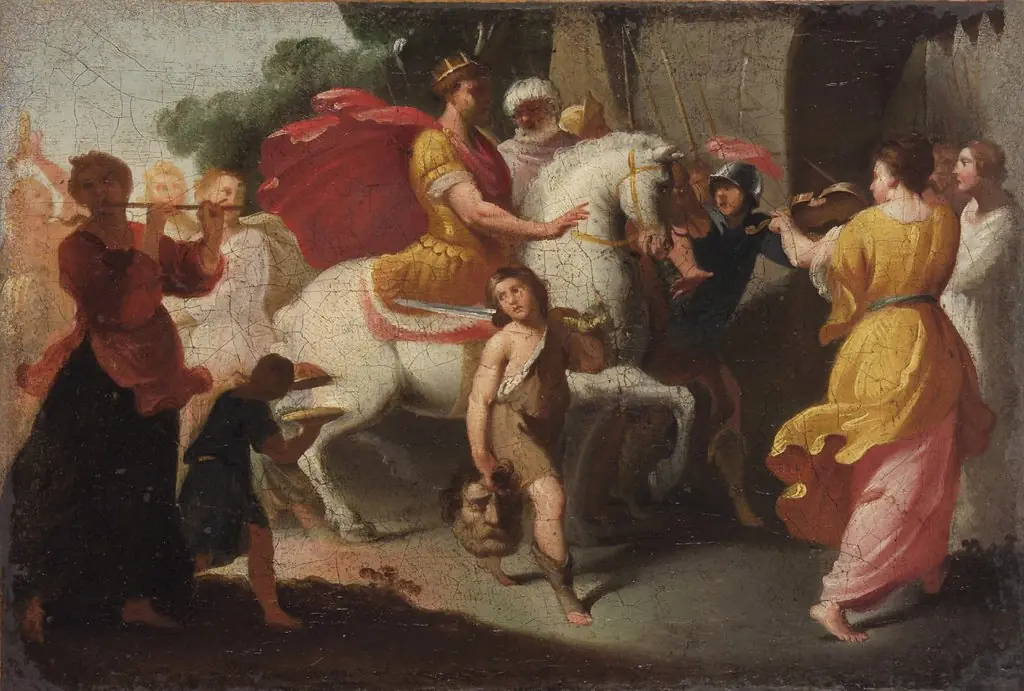
Artist & collection
Artist
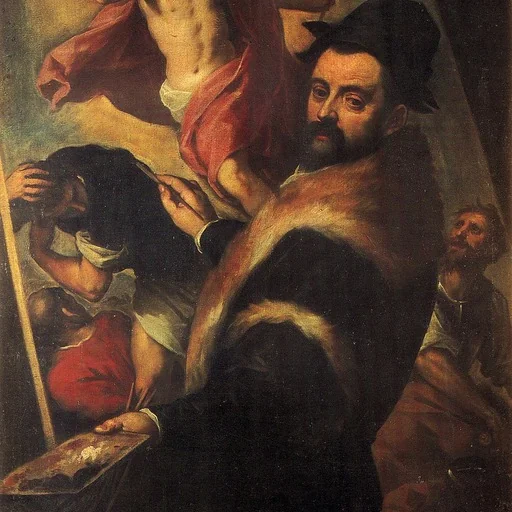
Iacopo Negretti (1548/50 – 14 October 1628), best known as Jacopo or Giacomo Palma il Giovane or simply Palma Giovane ('Young Palma'), was an Italian painter from Venice and a notable exponent of the Venetian school.

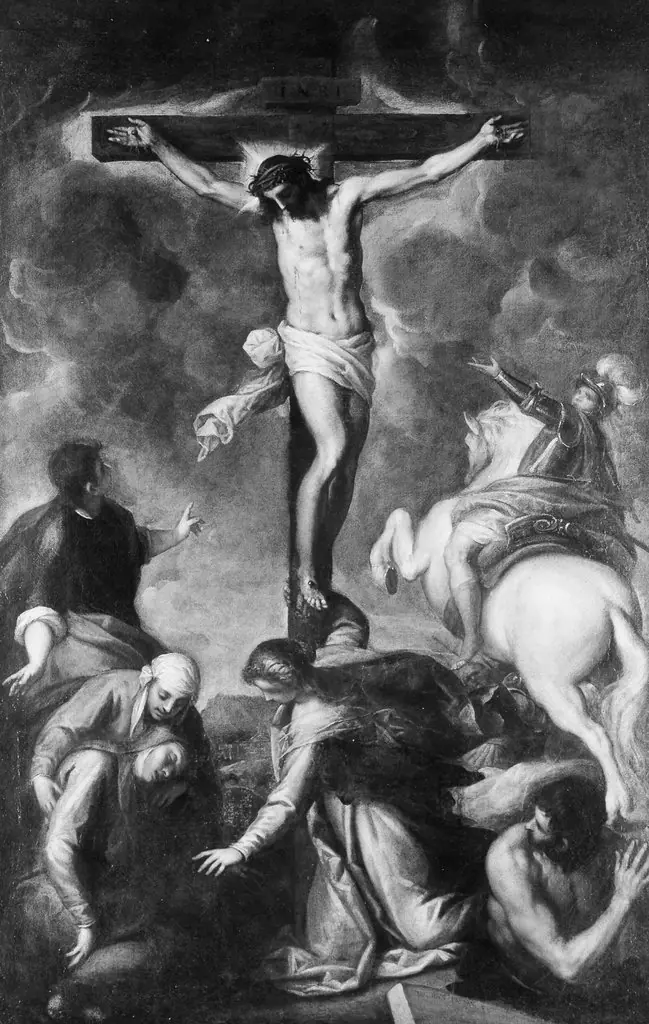
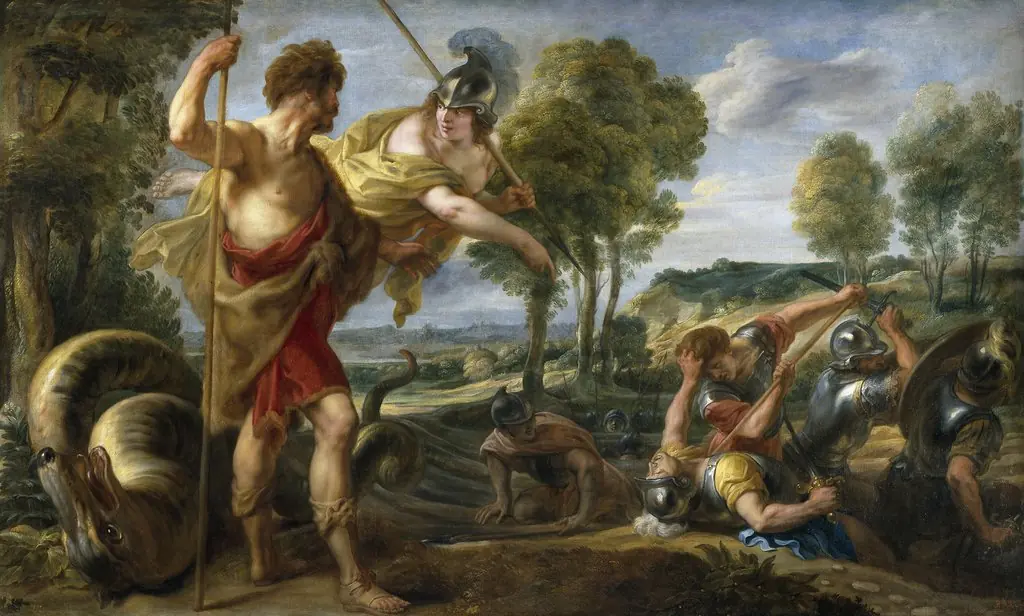 Cadmus and Minerva
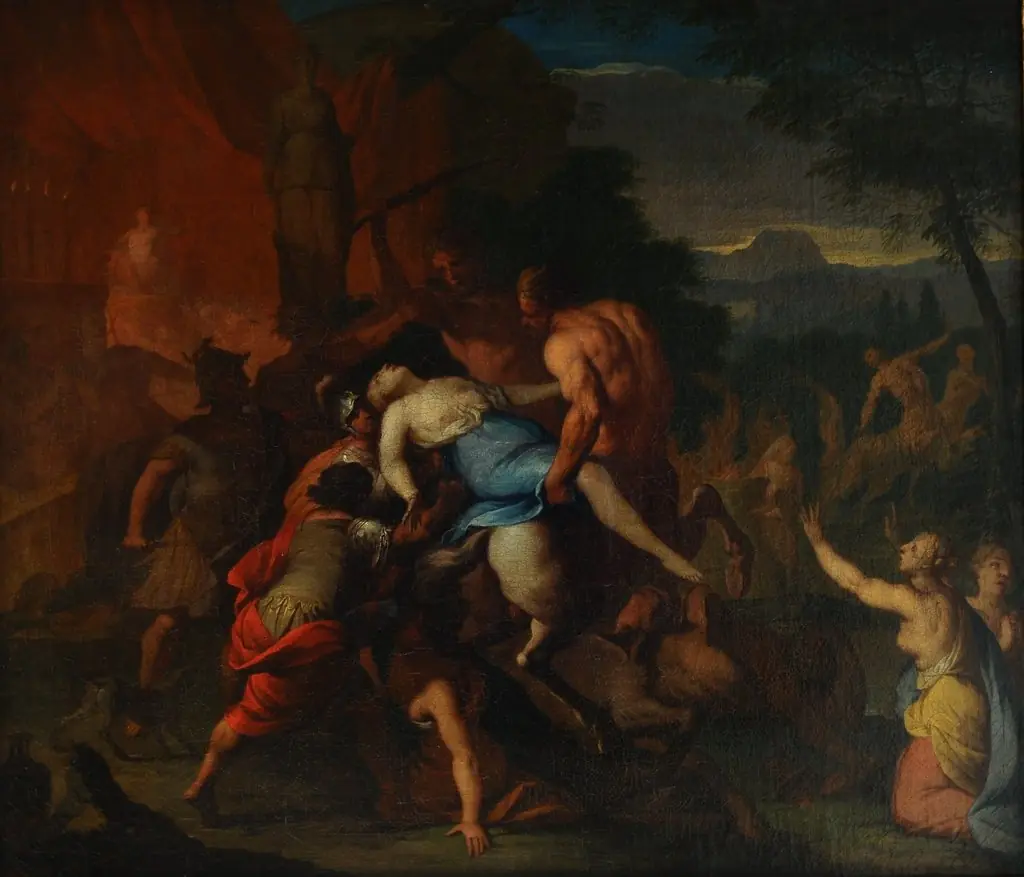 Combate de centauros y lapitas. (Tit. Ant.: Centauros e ilotas)
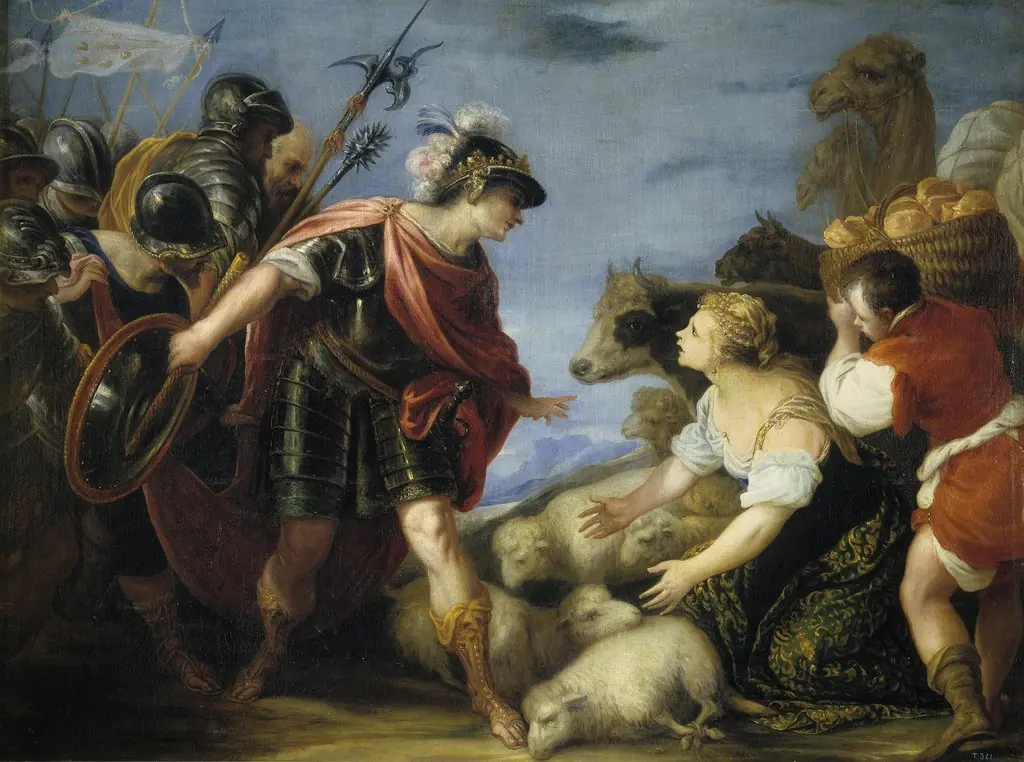 David and Abigail
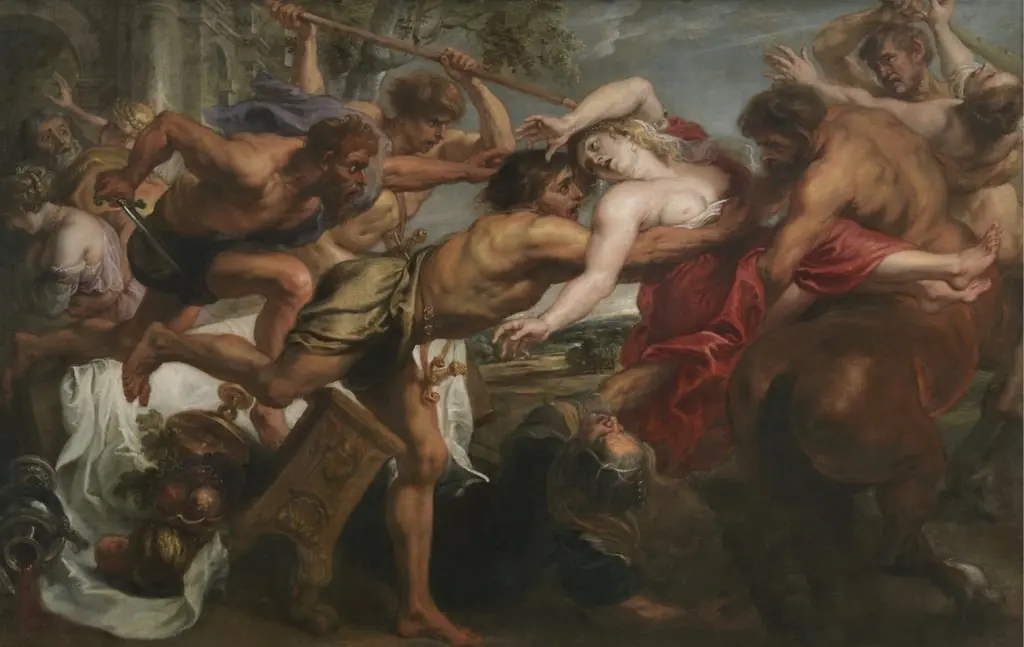 Rape of Hippodamia
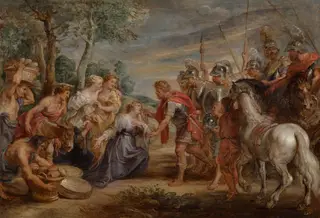
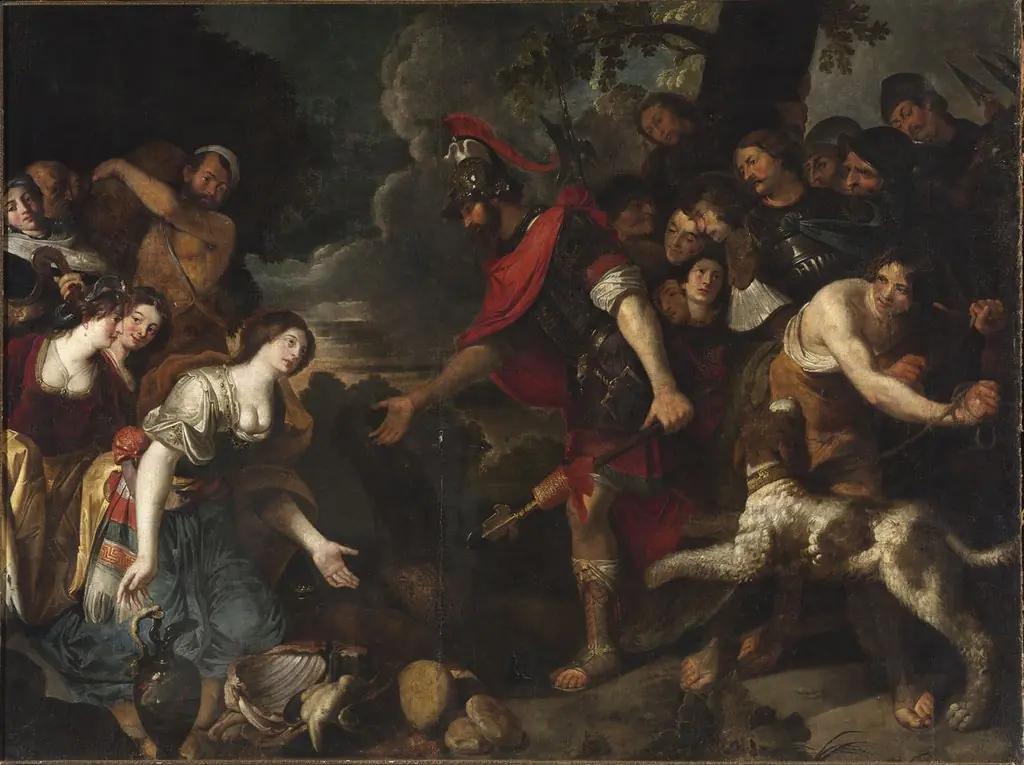 The Meeting of David and Abigail
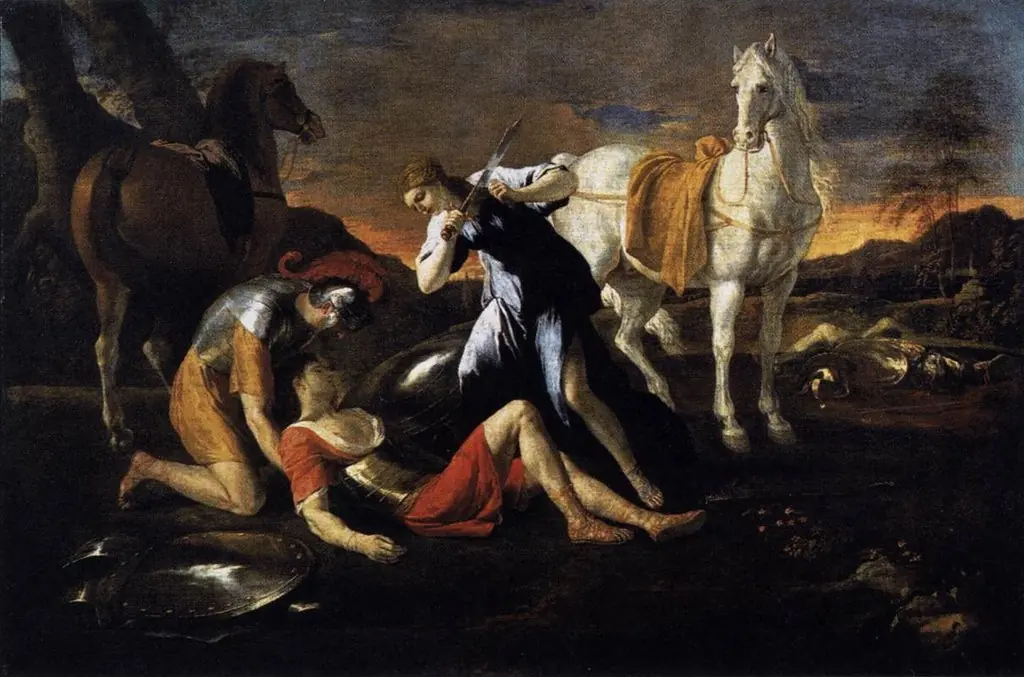 Tancred and Erminia
 The Meeting of David and Abigail
 The Triumph of Truth
 The Triumph of Truth
 Meeting of King Ferdinand and Cardinal-infante Ferdinand at Nördlingen