Artwork
Midas Washing at the Source of the Pactolus
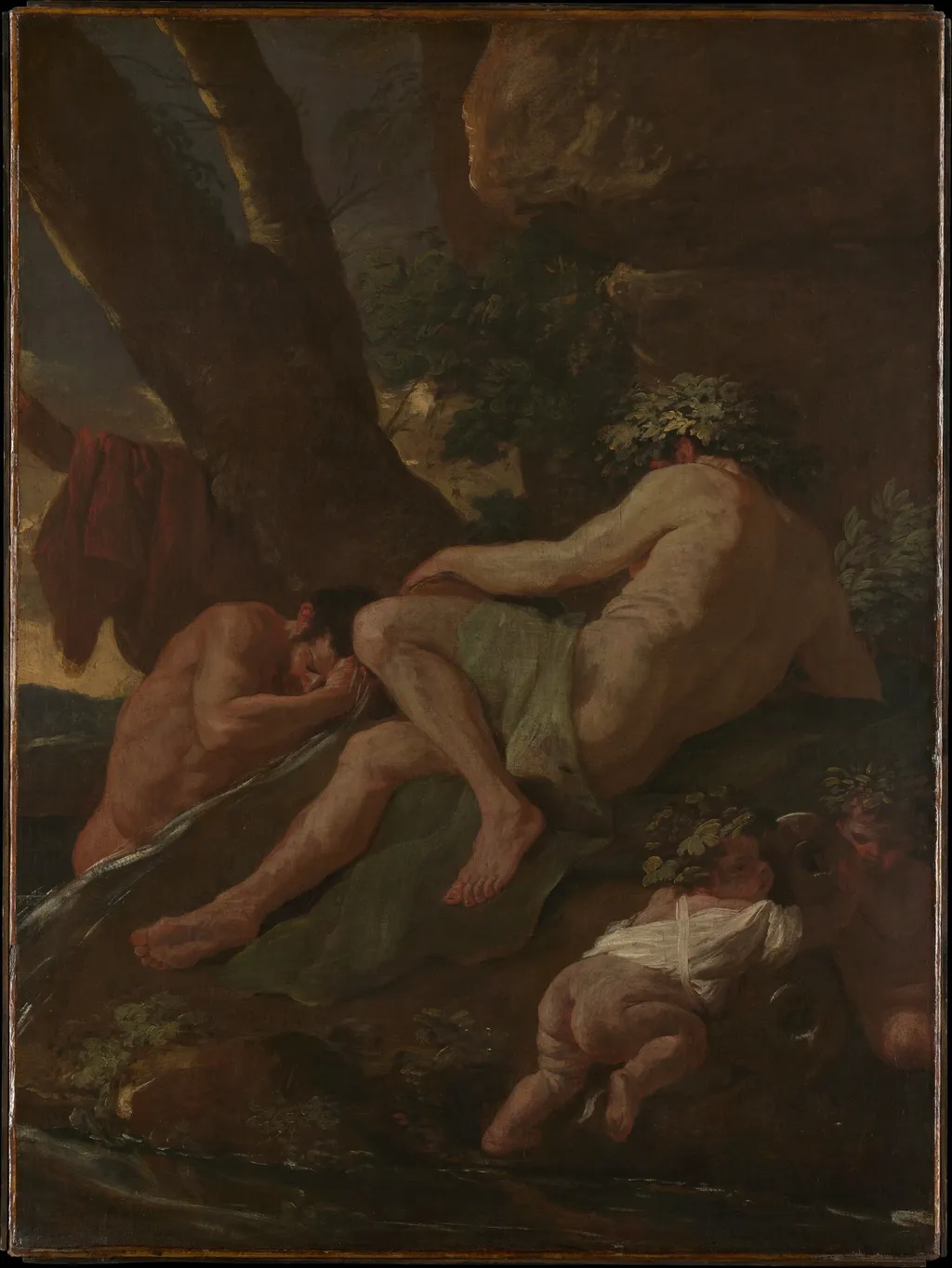
Midas Washing at the Source of the Pactolus is an oil painting by the Flemish Baroque painting artist Nicolas Poussin. It dates from 1627 and is held in the collection of the Metropolitan Museum of Art.
About this work
Subject & Meaning
Scholars interpret the composition as an allegory of the fleeting nature of desire and happiness, contrasting Midas's opulence with the surrounding poverty.
The painting shows the legendary king Midas and a child beside the river Pactolus, a scene drawn from Greek myth in which Midas seeks to cleanse his golden touch. Poussin renders the figures in a mythological setting that also references the Arcadian motif of Et in Arcadia ego, linking wealth and the pastoral ideal. Scholars interpret the composition as an allegory of the fleeting nature of desire and happiness, contrasting Midas's opulence with the surrounding poverty. The oil-on-canvas painting, dated 1627, is part of the Metropolitan Museum of Art collection.
Technique & Style
Executed in 1627, this work is an oil painting on canvas measuring 97.5 by 72.5 centimeters. The composition depicts the legendary King Midas alongside the river god Pactolus, rendered within the mythological genre. Stylistically, the piece exhibits significant compositional similarities to Nicolas Poussin's first version of Et in Arcadia ego, a parallel that led scholar Anthony Blunt to propose the two works were originally conceived as pendants.
The formal arrangement supports an allegorical interpretation contrasting absolute wealth with extreme poverty, utilizing figures drawn from Ovidian tradition to explore themes regarding the vanity of desire and the fragility of happiness.
History & Provenance
The work titled Midas Washing at the Source of the Pactolus was painted by Nicolas Poussin in 1627 as an oil on canvas measuring 97.5 × 72.5 cm. It depicts the mythological scene of King Midas and the river god Pactolus and is classified as a mythological painting. According to the catalog entry, the composition was originally conceived as a pendant to Poussin's first version of Et in Arcadia ego, a relationship noted by Anthony Blunt. The painting entered the collection of William T. Blodgett before being acquired by the Metropolitan Museum of Art, where it remains.
Earlier treatments of the same subject were executed circa 1617 by Bartolomeo Manfredi. While the specific accession number is not detailed in the provided sources, the work is documented as part of the museum's holdings, and the sources cite no specific exhibition or loan records for the painting.
Context
Poussin's 1627 Midas Washing at the Source of the Pactolus has been read as part of a broader Arcadian meditation on desire's vanity. Anthony Blunt's 1966 catalogue situates the work as the pendant to Poussin's first Et in Arcadia ego, emphasizing parallel compositions and shared allegorical intent. Earlier, Bartolomeo Manfredi had treated the same subject around 1617, yet Poussin's rendering transposes Ovid's Phrygian tale into a classical landscape that also evokes the Arcadian Alpheus, merging regional myth with broader meditations on wealth and transience.
Subsequent scholarship, such as Oskar Bätschmann's dialectical reading of Poussin's practice, frames the painting within a seventeenth-century reconsideration of classical exempla, while William Marx interprets both works as twin allegories of absolute wealth and abject poverty.
Overview
This oil painting, titled "Midas Washing at the Source of the Pactolus," presents a scene from classical mythology. It depicts a man, identified as Midas, seated on a rock and cradling a sleeping child wrapped in cloth. Another child observes from behind, leaning against a tree.
The composition employs strong contrasts of light and shadow, which give the figures a tangible presence against a dark, natural setting, accented by a red drapery on the left.
Own this work as a print
Artist & collection
Artist
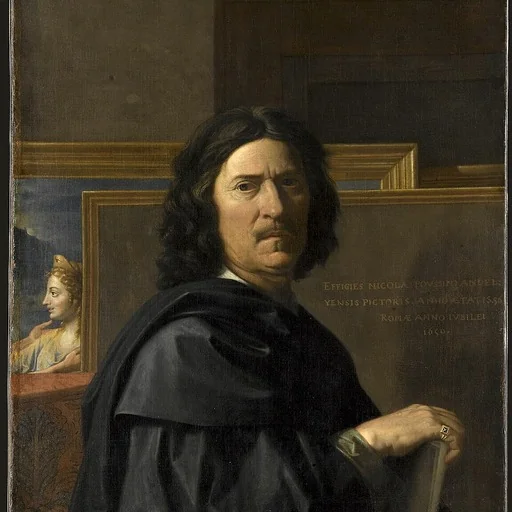
Nicolas Poussin (UK: US: French:; June 1594 – 19 November 1665) was a leading painter of the classical French Baroque style, although he spent most of his working life in Rome.

- The Death of Abel
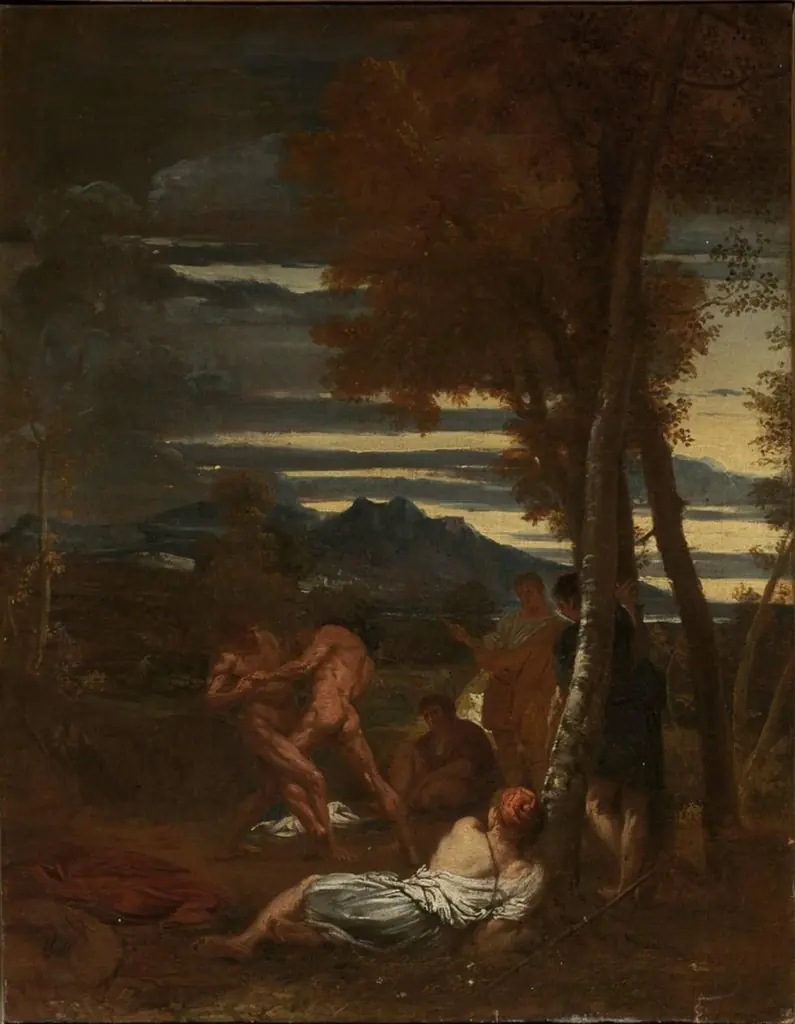 Wrestlers in a Landscape
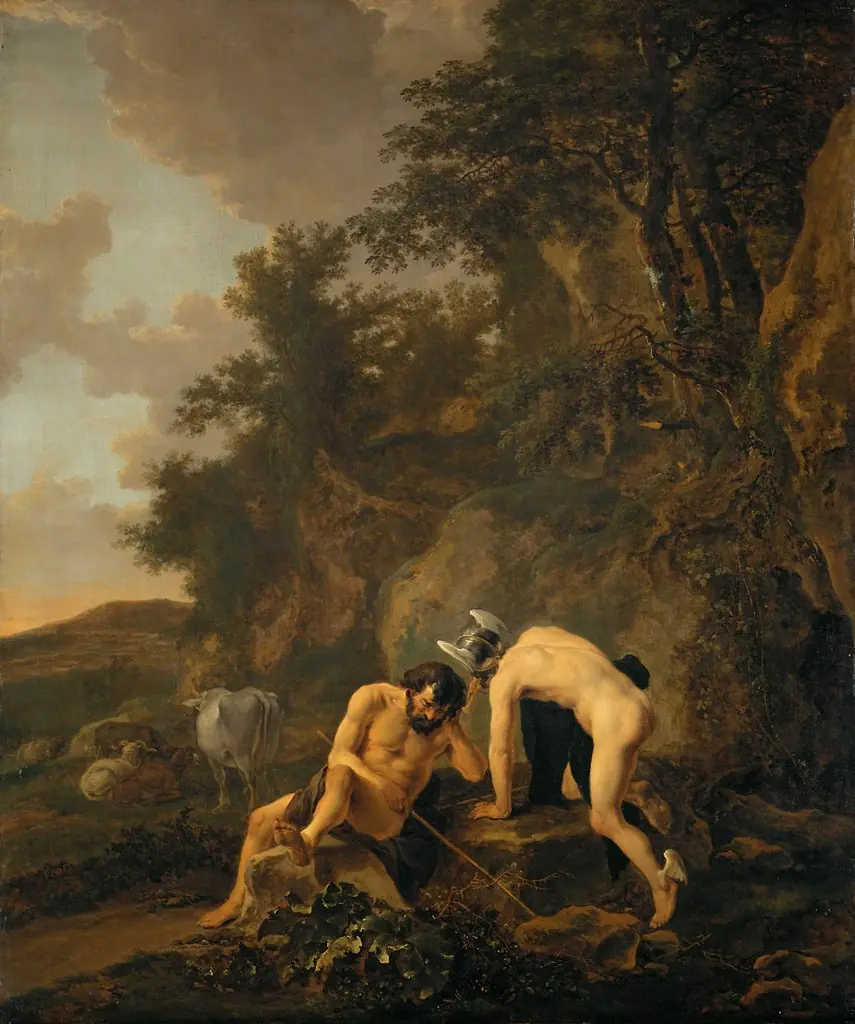 Southern rocky landscape with Mercury and Argus
 Sleeping Nymph
 Drunkenness of Noah
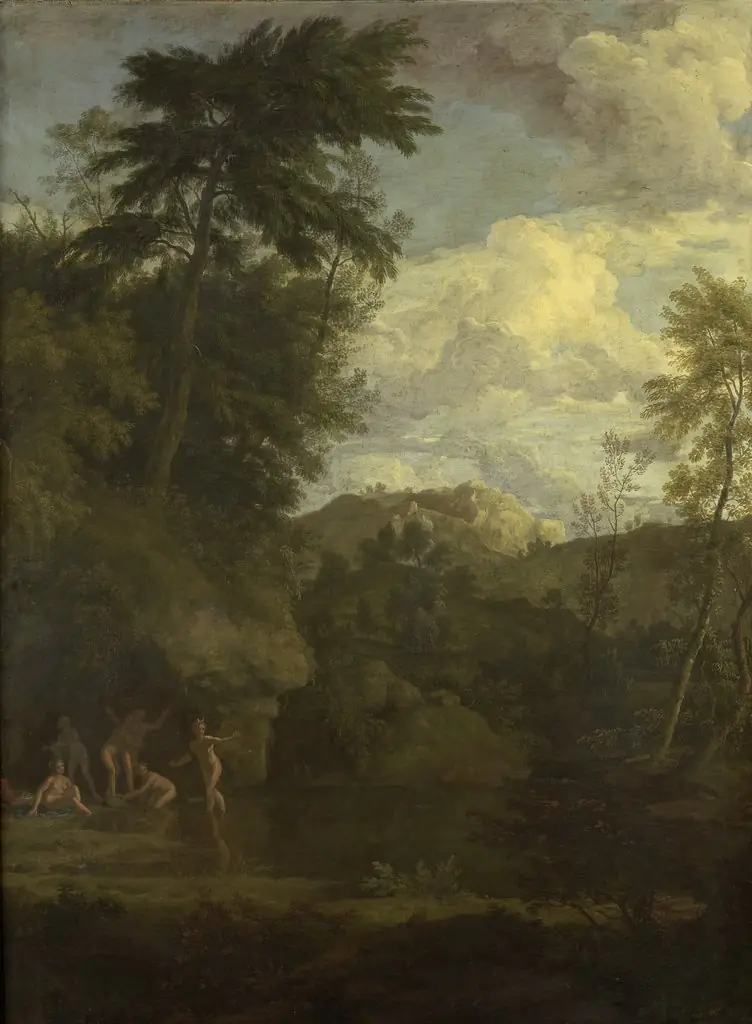 Arcadian landscape with bathing Diana
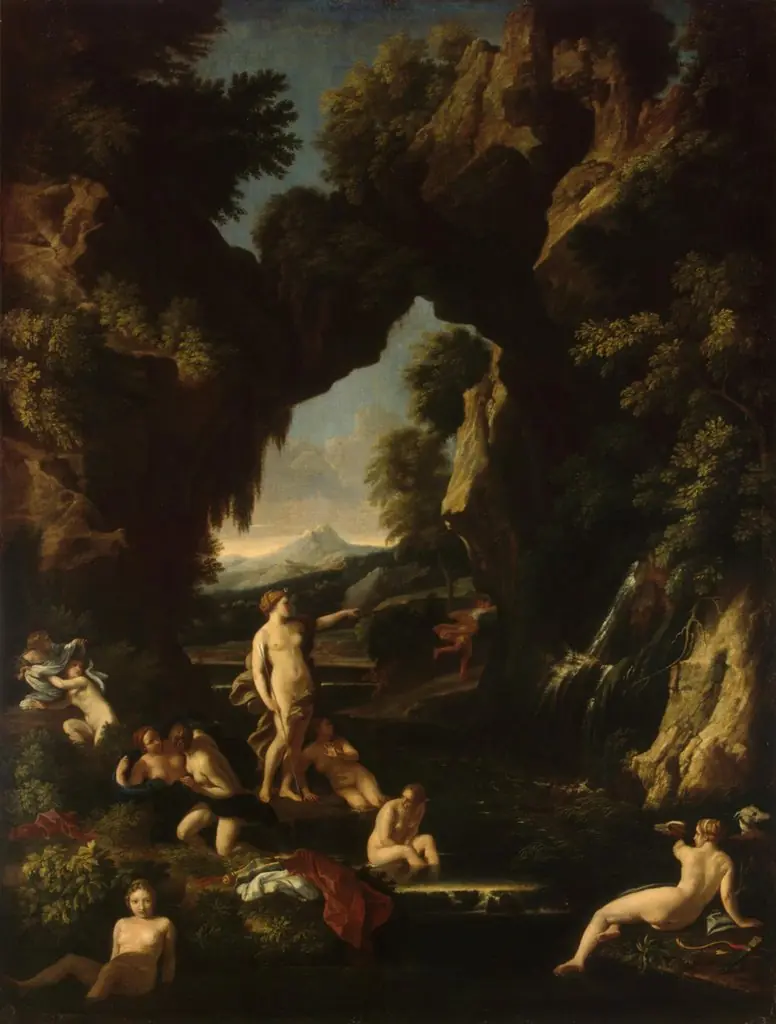 Landscape with Diana and Actaeon
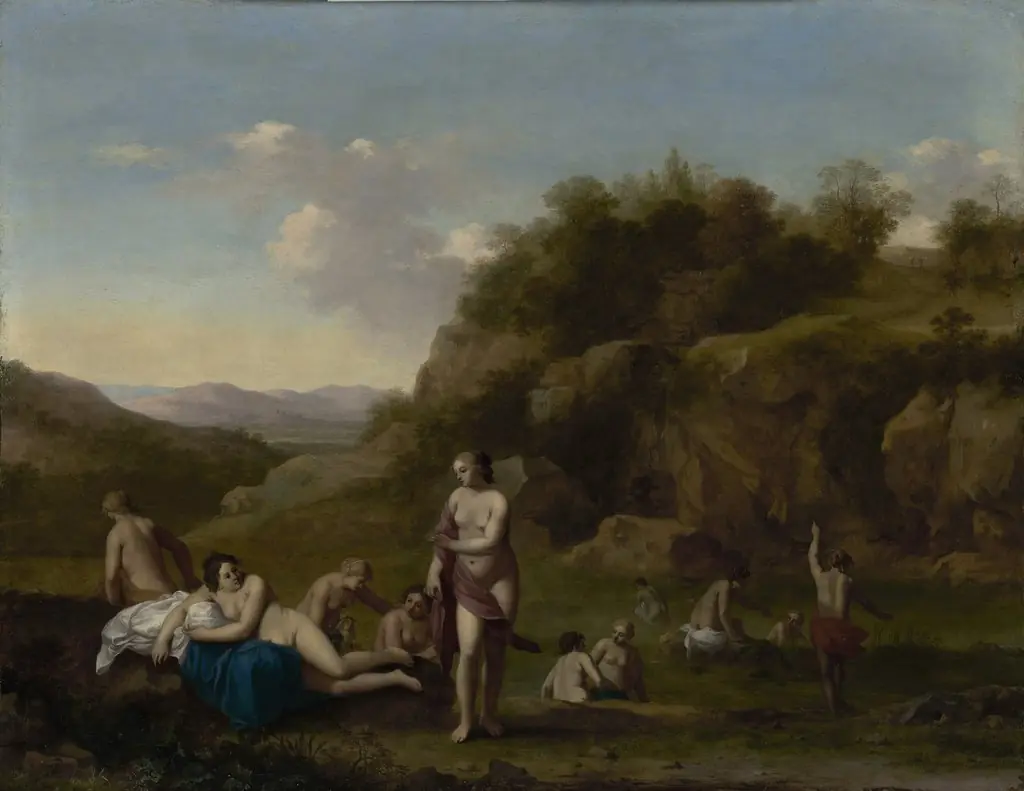 Landscape with Bathing Nudes
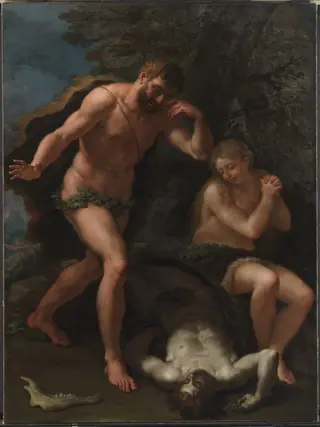 Adam and Eve Lamenting over the Body of Abel
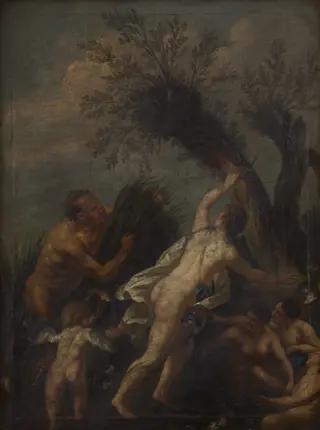 Diana and Her Nymphs Surprised by Satyr
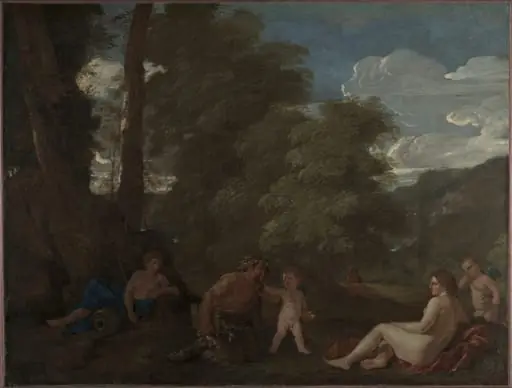 Nymphs and a Satyr (Amor Vincit Omnia)
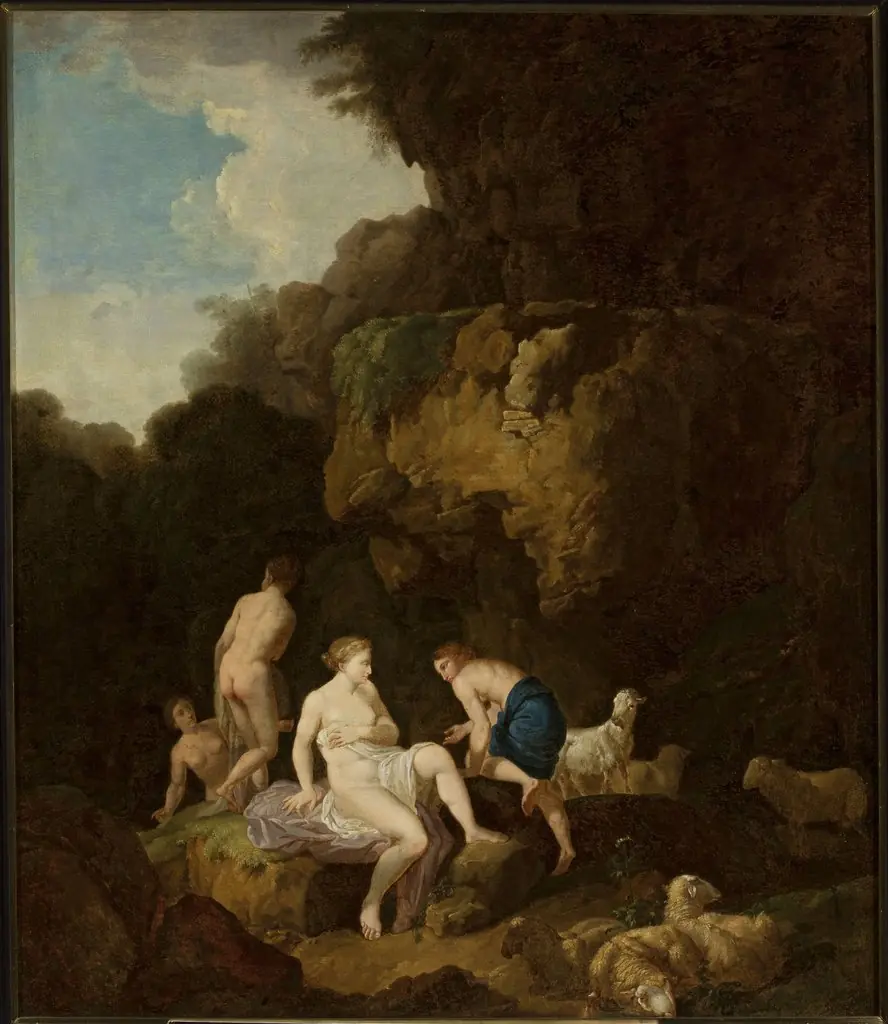 Nymphs in a grotto