Artwork
The Flight into Egypt
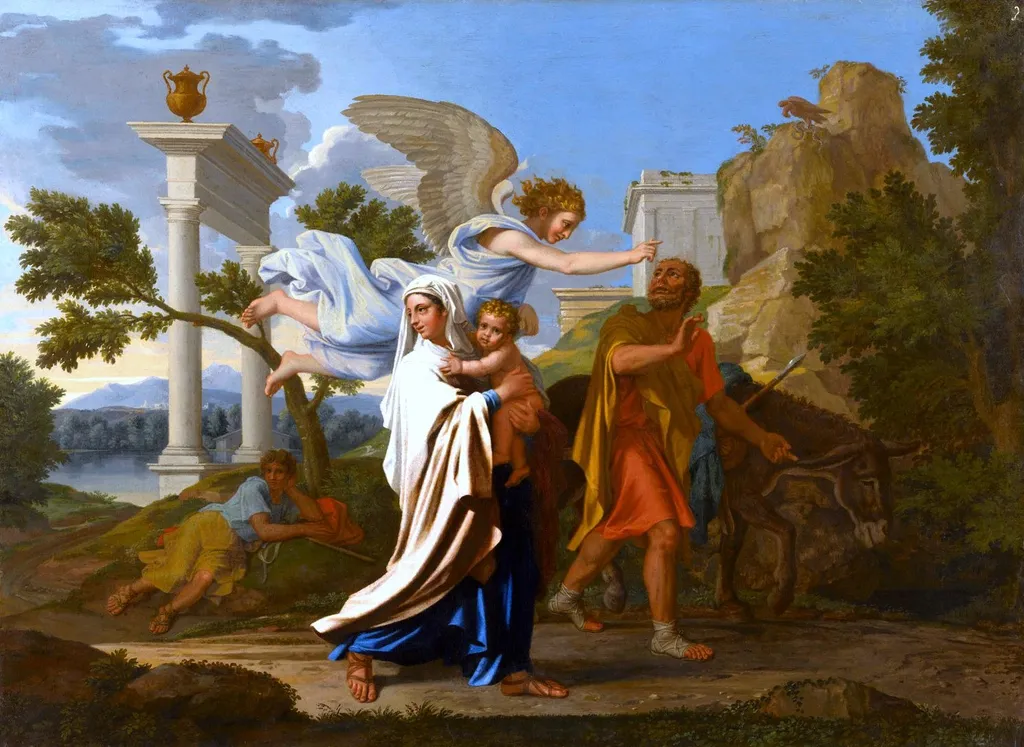
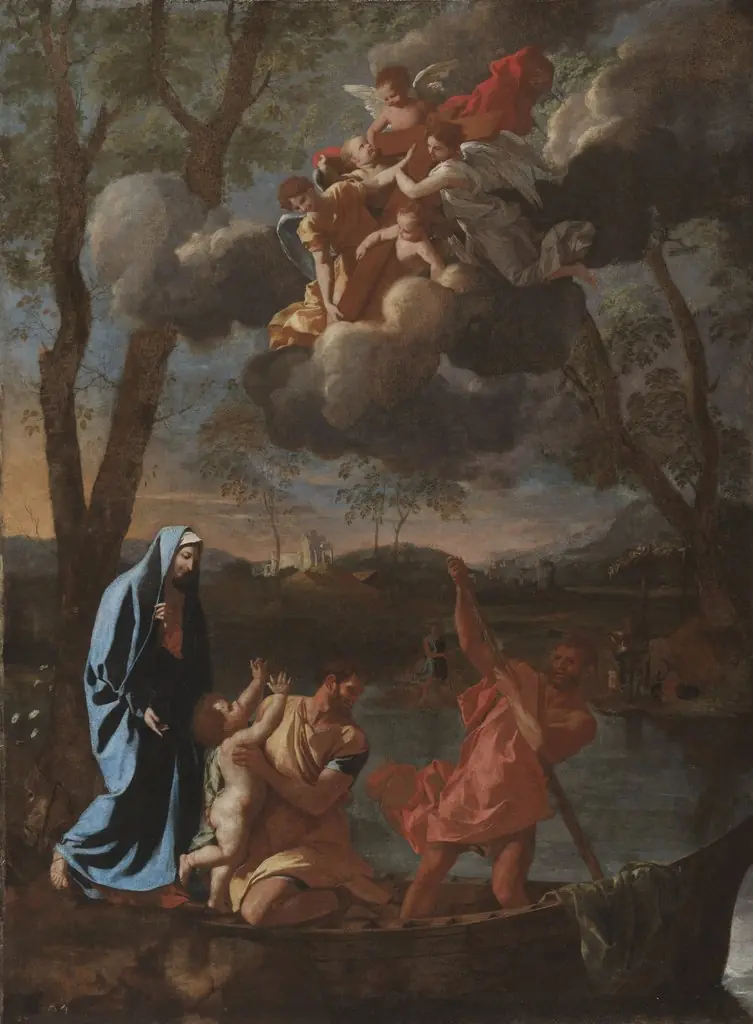
The Flight into Egypt is an oil painting by the Classicist painting artist Nicolas Poussin. It dates from 1658 and is held in the collection of the Museum of Fine Arts of Lyon.
About this work
Subject & Meaning
By rendering the narrative in a balanced, classical composition, Poussin emphasizes the sacred order and the journey’s spiritual significance.
The painting shows the biblical episode known as the Flight into Egypt, portraying the Holy Family, Mary holding the infant Jesus, Joseph, and the young Christ, accompanied by a donkey and an angel. Joseph looks toward the angel that guides them, while Mary glances back, a composition described in. The scene includes additional symbols such as a shepherd, a tree, and a classical landscape with architectural elements, all noted in. This iconography reflects the Gospel of Matthew’s account of the family’s escape from King Herod’s slaughter of the innocents, a theme traditionally used to symbolize divine protection and the fulfillment of prophecy. By rendering the narrative in a balanced, classical composition, Poussin emphasizes the sacred order and the journey’s spiritual significance.
Technique & Style
Executed in oil on canvas, this mature work measures 97 by 133 centimeters. The composition employs aerial perspective to create depth, featuring a receding portico on the left that leads the eye toward distant blue mountains and a riparian forest. The central figures are rendered in distinct hues, with Joseph clad in red and orange garments while Mary wears blue and white.
Architectural elements, including columns and an entablature, anchor the foreground, contrasting with the naturalistic depiction of an oak tree and rocky outcrops that obscure the horizon on the right. The sky transitions from clear blue to gray clouds above the architectural structures, enhancing the atmospheric quality of the landscape.
History & Provenance
The Flight into Egypt is an oil‑on‑canvas work by Nicolas Poussin dated 1658. Executed in Rome while Poussin was 63, the painting measures 97 × 133 cm. It was commissioned by the Lyon silk merchant Jacques Sérisier, who died in 1667, and remained in his family until the work was rediscovered at a Versailles auction in 1986. After a contested sale to Richard and Robert Pardo and a subsequent legal battle, the French state acquired the piece for about 17 million euros, a sum raised by the Louvre and the Musée des Beaux‑Arts de Lyon.
The Louvre became the legal owner and, in February 2008, deposited the painting at the Musée des Beaux‑Arts de Lyon, its hometown of the original patron. The work is classified as a national treasure.
The painting was originally kept in the Musée du Louvre before being transferred to the Musée des Beaux-Arts de Lyon, where it has been held since February 2008. Juridically it remains part of the collections of the Department of Paintings of the Louvre, deposited at the Lyon museum, the hometown of its original commissioner Jacques Sérisier.
The work was classified as a trésor national by the Commission consultative des trésors nationaux, and in July 2007 the Louvre and the Musée des Beaux-Arts de Lyon jointly raised approximately 17 million euros to acquire it, drawing on the City of Lyon, the Rhône-Alpes region, the Louvre's own funds, and more than eighteen patrons including Gaz de France, Total SA, and AXA. It had resurfaced at a Versailles auction in 1986, initially presented as a work from Poussin's studio and sold to dealers Richard and Robert Pardo for 1,600,000 francs before being authenticated.
In 2008 the Musée des Beaux-Arts de Lyon organized an exhibition centered on the painting in the context of seventeenth-century art. In April 2016 it was selected among ten major French works by the Europeana 280 project.
Legacy
The painting's modern legacy is defined by its dramatic rediscovery and the scholarly controversy surrounding its attribution. After reappearing at auction in 1986, the work sparked a significant debate between British experts Anthony Blunt and Denis Mahon, who disputed the attribution, and French specialists Jacques Thuillier and Pierre Rosenberg, who defended it. This academic conflict persisted until the deaths of the British critics, effectively settling the matter in favor of Poussin's authorship.
In 2007, the work achieved status as a National Treasure of France, prompting a record-breaking fundraising campaign that gathered approximately 17 million euros from public institutions and private patrons to prevent its export. Acquired jointly by the Louvre and the Musée des Beaux-Arts de Lyon, the purchase represented one of the most expensive acquisitions ever facilitated by patronage in France. Its cultural significance was further recognized in 2016 when the Europeana 280 project selected it as one of the ten greatest artistic works of France.
Overview
Nicolas Poussin's painting, The Flight into Egypt, executed in oil around 1657 or 1658, depicts a pivotal biblical narrative. This work, characteristic of the French Baroque master's classical approach, captures a moment of sacred journey within a carefully composed landscape. It is a significant example of his mature period, illustrating his command of both narrative and pictorial structure.
Artist & collection
Artist
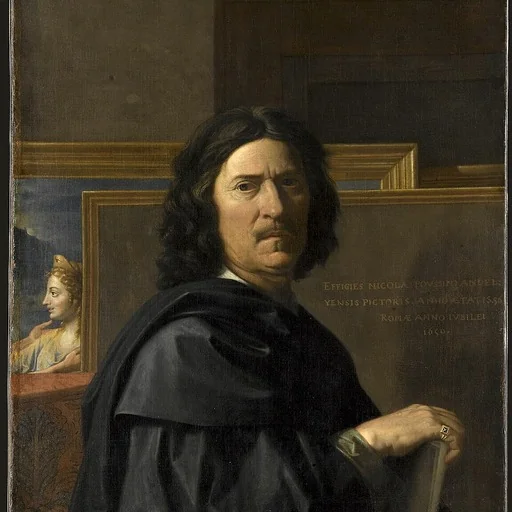
Nicolas Poussin (UK: US: French:; June 1594 – 19 November 1665) was a leading painter of the classical French Baroque style, although he spent most of his working life in Rome.

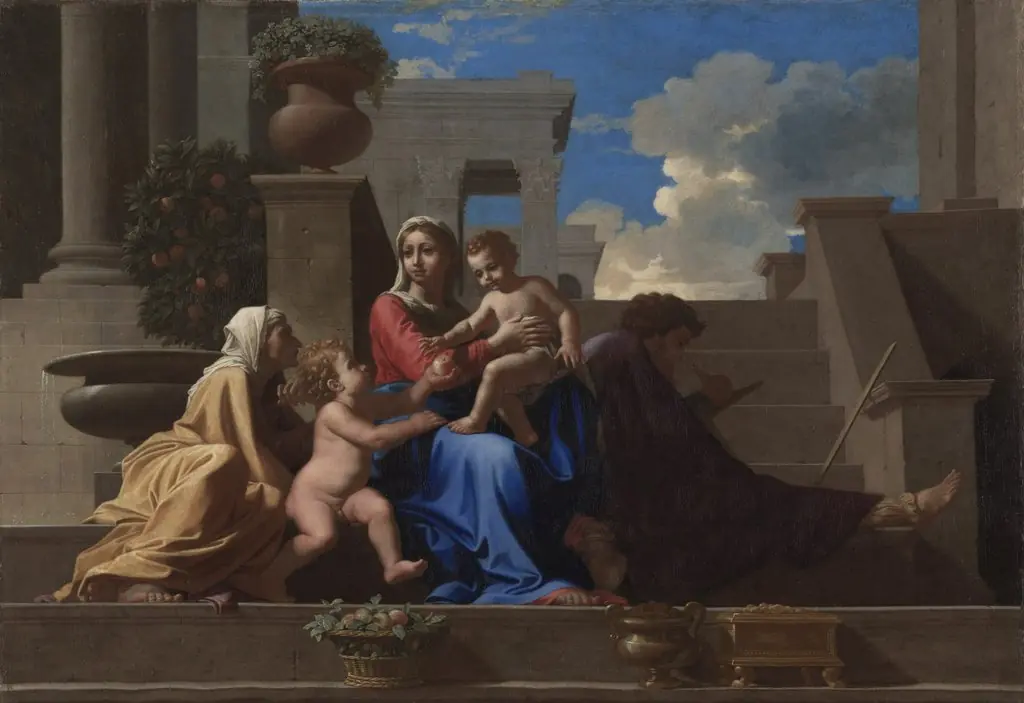
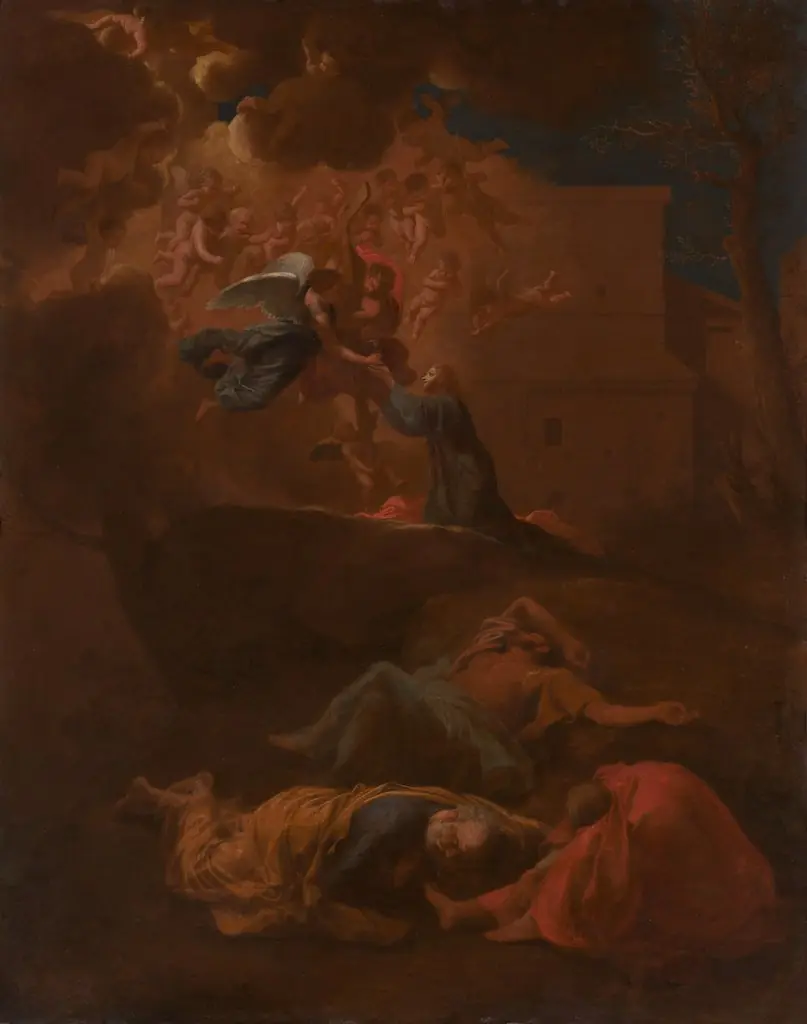
- The Flight into Egypt
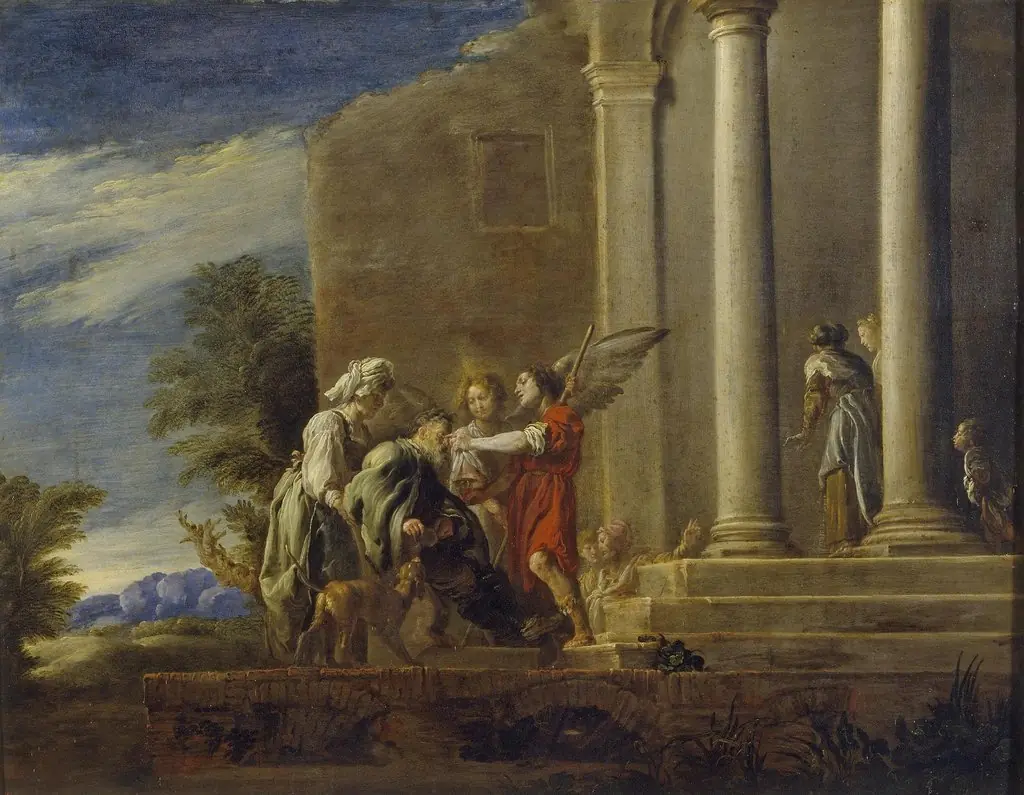 Healing of Tobit
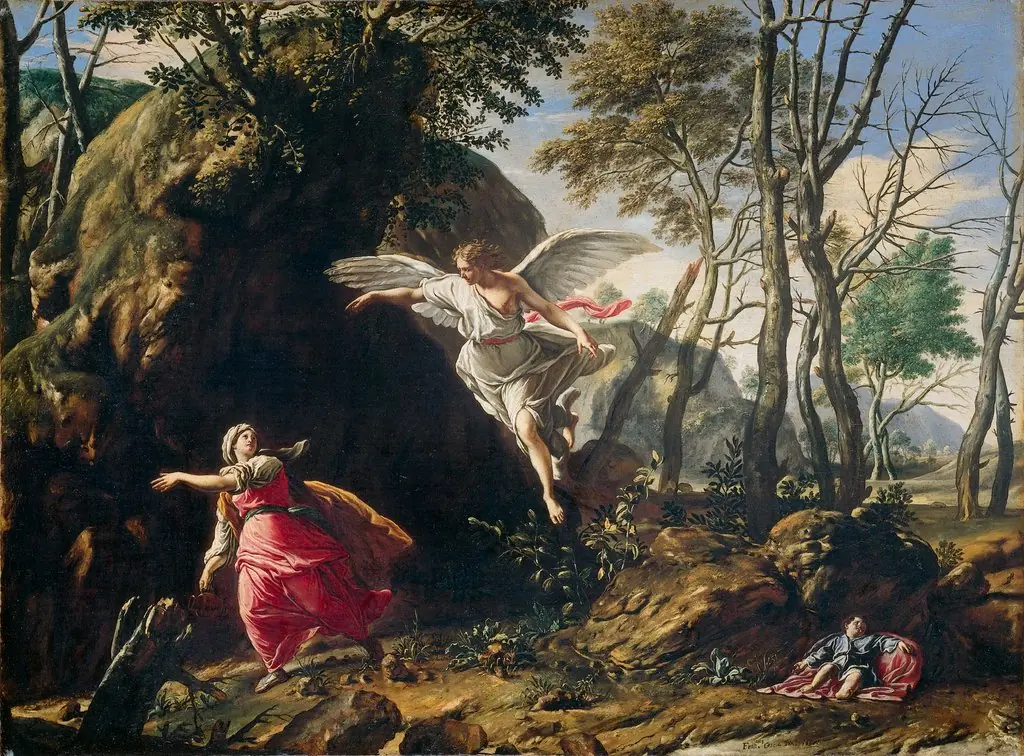 Hagar and Ishmael in the Desert
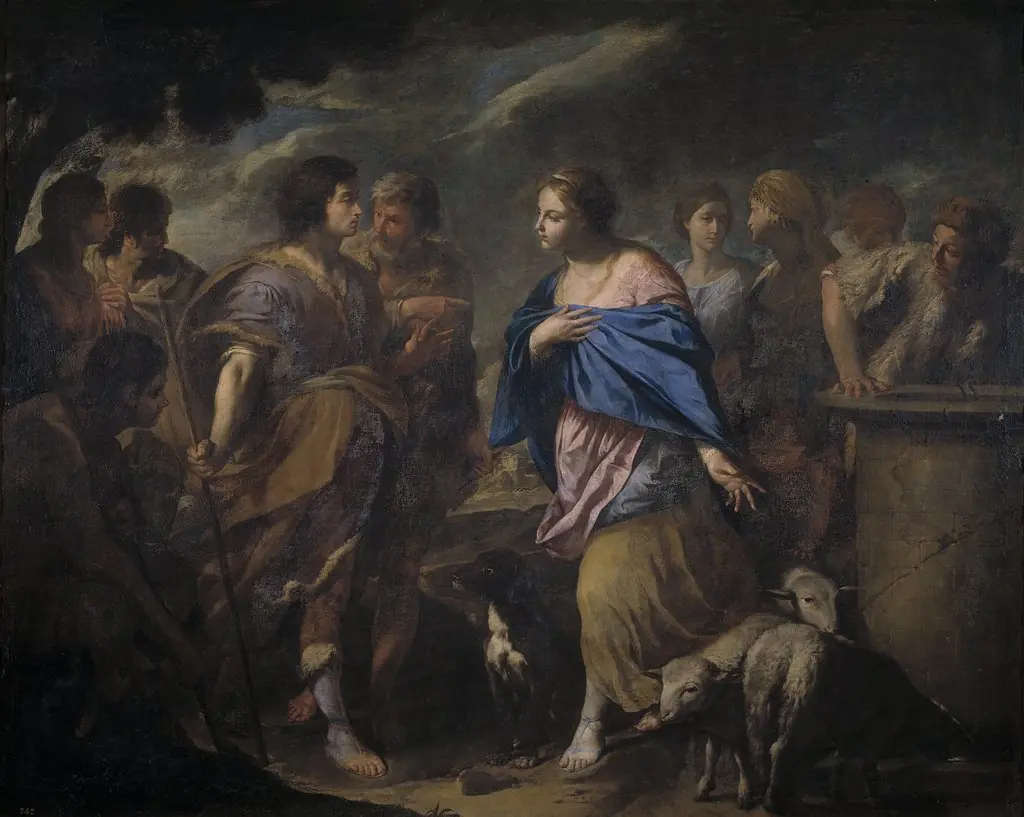 Meeting of Isaac and Rebeca
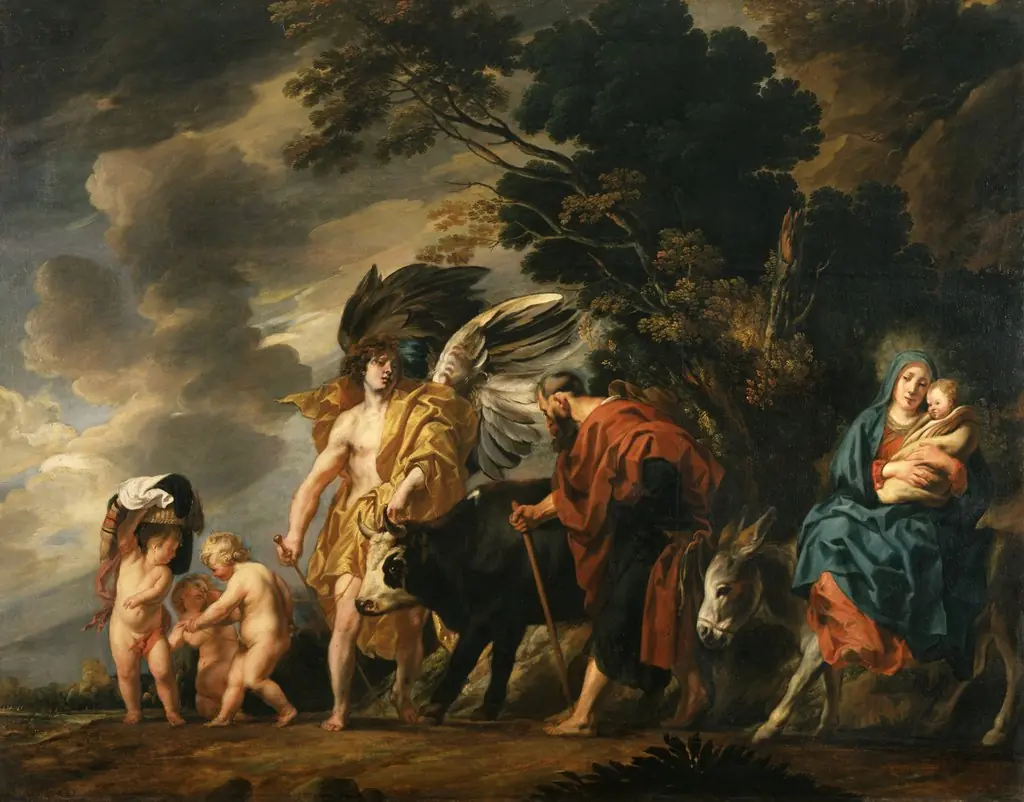 Flight of the Holy Family into Egypt
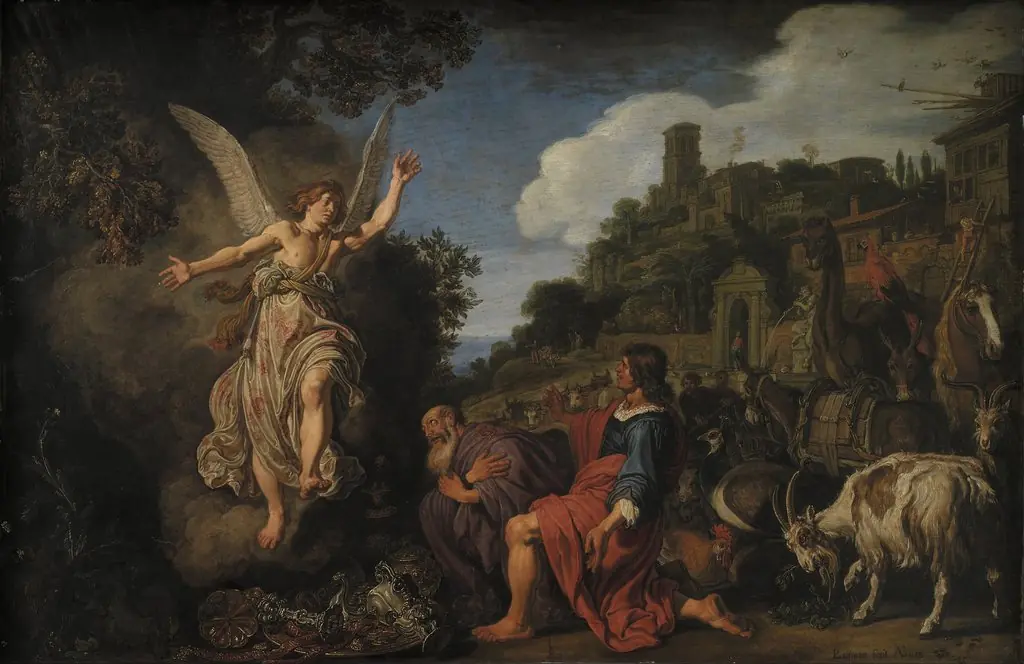 The Angel Raphael Takes Leave of Old Tobit and his Son Tobias
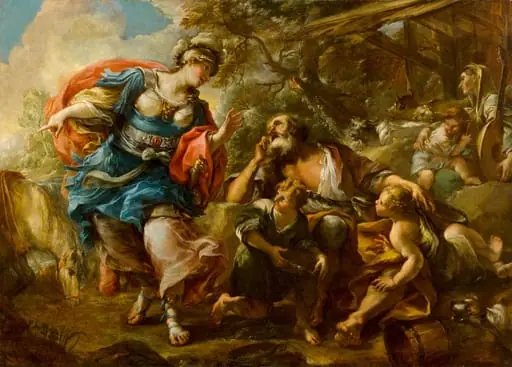 Erminia ja paimenet
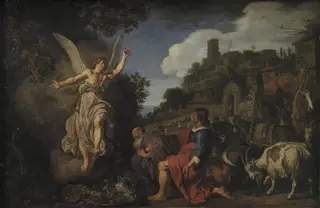 The Angel Raphael Takes Leave of Old Tobit and his Son Tobias
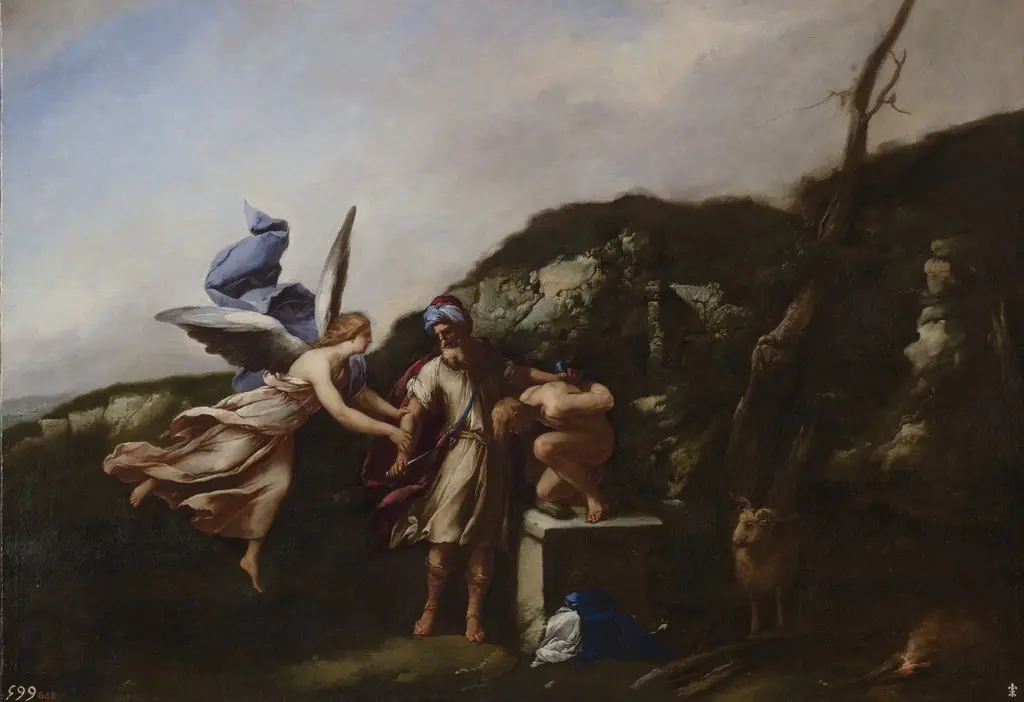 The Sacrifice of Isaac
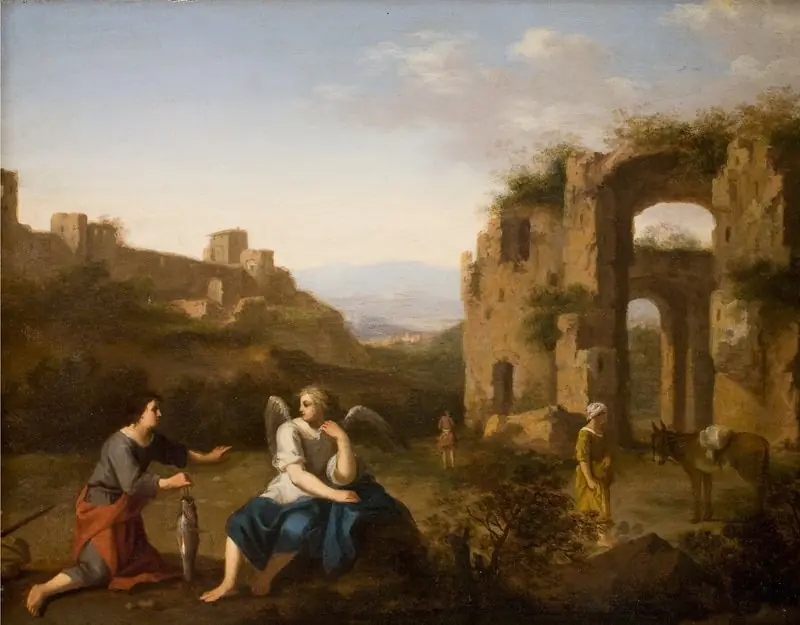 Tobiah and the Angel
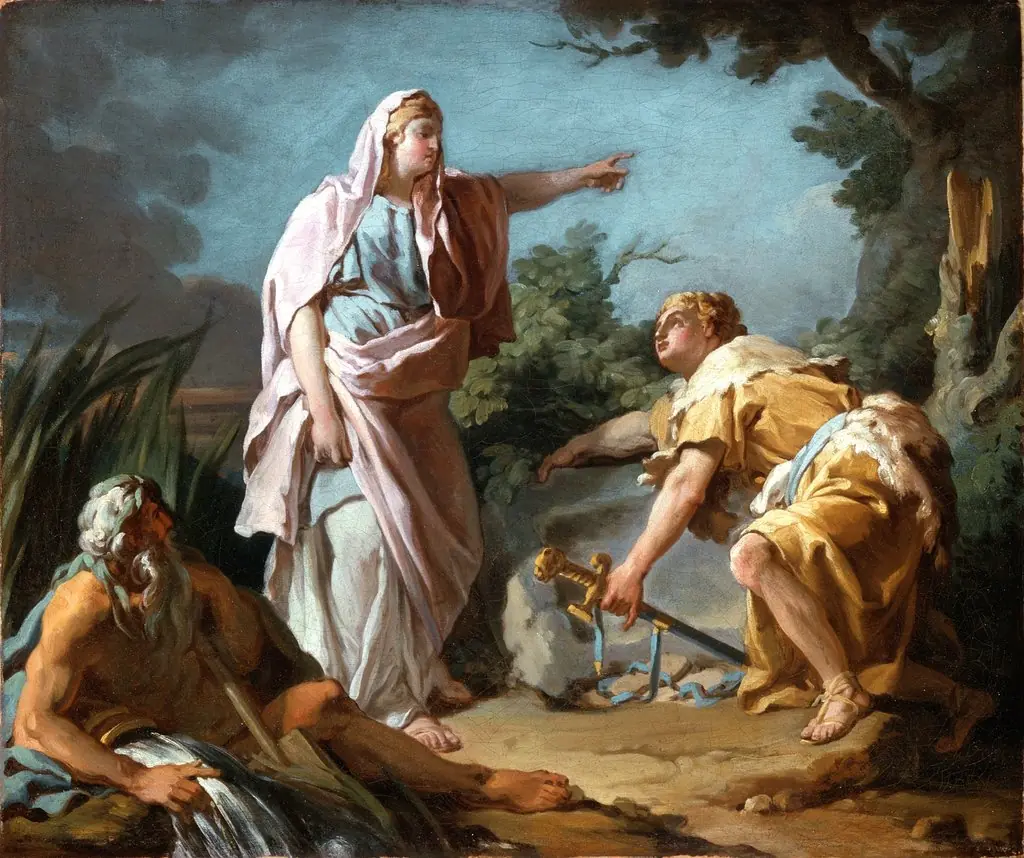 Aethra Showing her Son Theseus the Place Where his Father had Hidden his Arms
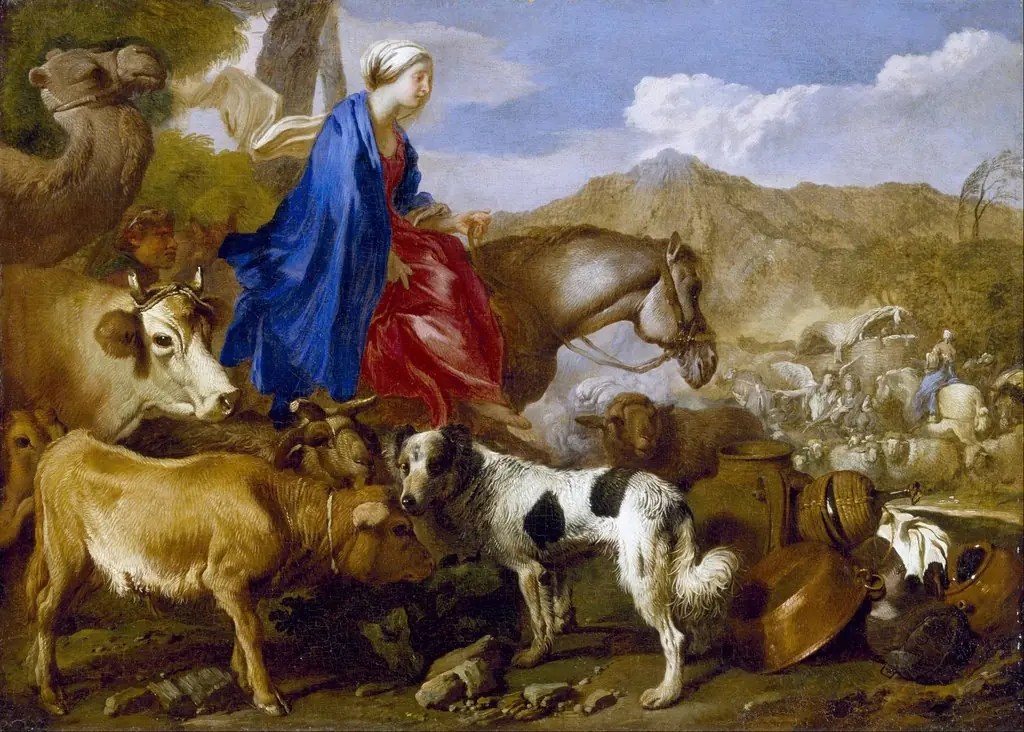 Journey of Rebecca