Artwork
The Kiss of the Sphinx
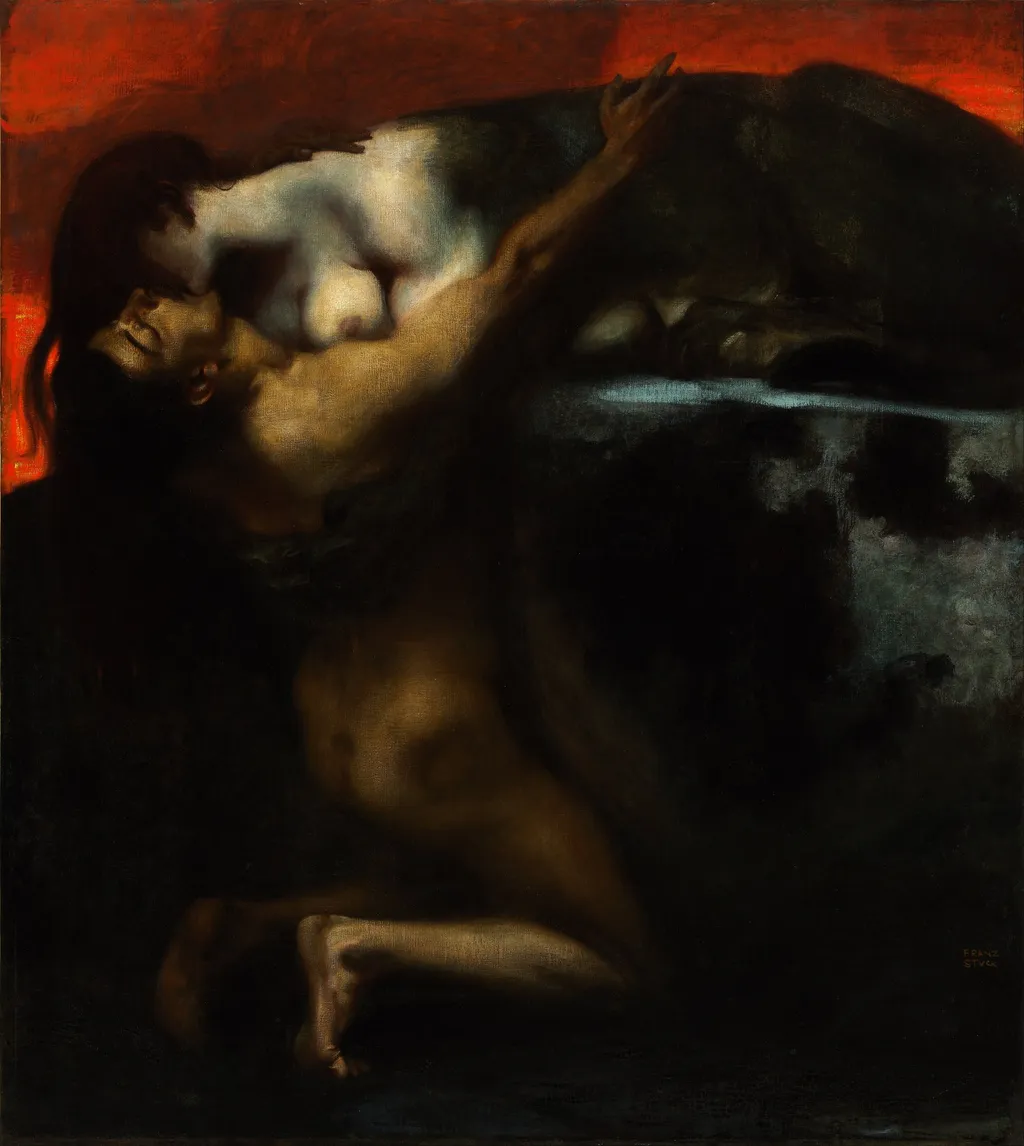
The Kiss of the Sphinx is an oil painting by the Symbolist artist Franz von Stuck. It dates from 1898 and is held in the collection of the Hungarian National Gallery. Painted in 1895 by Franz Stuck, this oil on canvas work depicts a nude man and a sphinx locked in an intimate embrace.
About this work
Overview
Created the same year Stuck was appointed professor at the Munich Academy, the painting reflects his engagement with Symbolist themes.
Painted in 1895 by Franz Stuck, this oil on canvas work depicts a nude man and a sphinx locked in an intimate embrace. Created the same year Stuck was appointed professor at the Munich Academy, the painting reflects his engagement with Symbolist themes. Its dark, warm background and sculptural figures emphasize emotional tension over narrative clarity, aligning with the era’s interest in mythic and psychological archetypes.
Subject & Meaning
The painting presents a sphinx, a mythic hybrid of woman and lion, entwined with a human male. The posture suggests mutual surrender, yet the sphinx’s predatory form implies danger. Stuck draws on ancient symbolism to explore themes of desire, power, and mortality.
The figure embodies the femme fatale motif common in late 19th-century art, a seductive force both alluring and destructive.
Technique & Style
Stuck employs chiaroscuro to model the figures with strong contrasts between light and shadow, enhancing their three-dimensionality. The smooth, polished skin of the bodies contrasts with the rough, textured background of deep reds and oranges. Lines are deliberate and stylized, favoring sculptural form over naturalism. The composition is tightly framed, focusing attention on the physical and psychological intimacy between the two figures.
History & Provenance
Completed in 1895, the painting entered the collection of the Museum of Fine Arts in Budapest, where it remains today. Its creation coincided with Stuck’s rise in the German art world, following his appointment to the Munich Academy. Though not widely exhibited internationally at the time, it became a key example of his Symbolist output and was later recognized for its synthesis of classical myth and modern psychological tension.
Context
In fin-de-siècle Europe, artists turned to myth and allegory to express anxieties about gender, sexuality, and modernity. Stuck’s work resonated with broader cultural currents, including Nietzschean philosophy and the fascination with ancient Egypt. The sphinx, as a symbol of riddles and hidden truths, offered a potent vehicle for exploring the unconscious, making this painting part of a wider artistic dialogue across Europe.
Legacy
The painting endures as a defining image of German Symbolism, illustrating Stuck’s ability to merge classical forms with psychological depth. While less known than some contemporaries, his use of mythic archetypes influenced later expressionist and surrealist artists. The work continues to be studied for its formal precision and its evocation of desire as both intimate and perilous.
Own this work as a print
Artist & collection
Artist
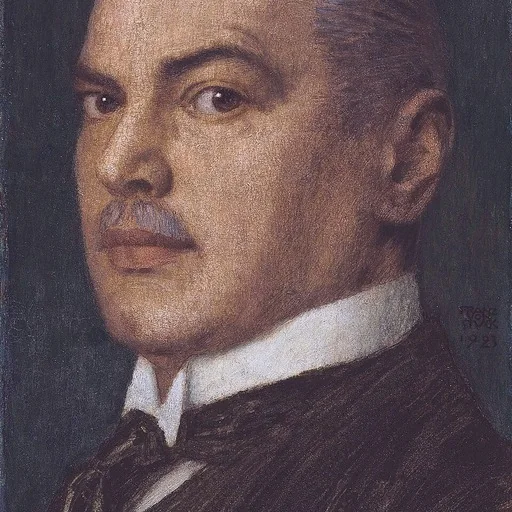
Franz Ritter von Stuck (February 23, 1863 – August 30, 1928), born Franz Stuck, was a German painter, sculptor, printmaker, and architect.