Artwork
Bathsheba
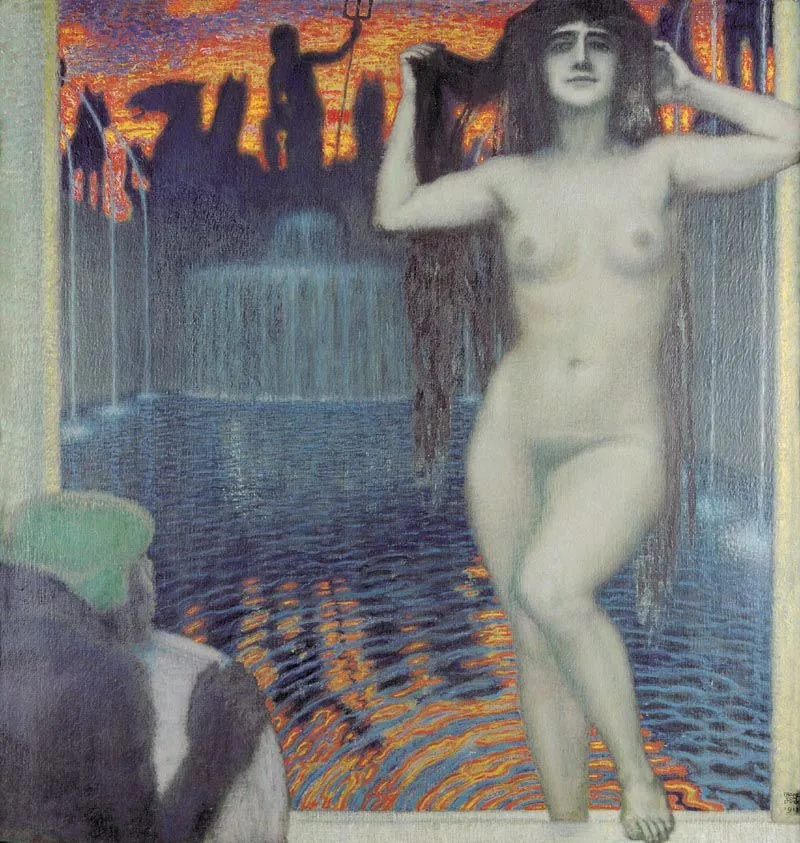
Bathsheba is an oil painting by the Symbolist artist Franz von Stuck. It dates from 1912 and is held in the collection of the National Museum of Fine Arts, Argentina.
About this work
Subject & Meaning
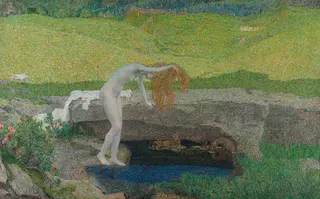
Von Stuck depicts Bathsheba nude, seated by a fountain, her body oriented toward the viewer with a direct gaze that underscores both vulnerability and agency.
In Franz von Stuck’s 1912 painting Bathsheba, the subject is the biblical figure Bathsheba at her bath, a motif traditionally associated with themes of beauty, temptation, and moral scrutiny. Von Stuck depicts Bathsheba nude, seated by a fountain, her body oriented toward the viewer with a direct gaze that underscores both vulnerability and agency. The inclusion of symbolic elements such as flowing water, her exposed breast, and the surrounding natural setting evokes purity and sensuality, reflecting the duality often ascribed to Bathsheba in religious iconography.
The painting’s composition and iconography emphasize Bathsheba’s pivotal role in the biblical narrative, where her beauty leads to King David’s desire, a moment charged with narrative and moral consequence.
Technique & Style
Executed in 1912, Franz von Stuck's Bathsheba is an oil painting applied to a canvas support. The work measures 95 centimeters in height and 91 centimeters in width. Stylistically, the piece functions as a religious genre painting that prominently features a nude female figure.
The composition depicts the biblical subject washing near a fountain under an open sky, incorporating detailed naturalistic elements such as specular reflections on the water. Stuck renders the figure with specific anatomical precision, capturing features ranging from waist-length black hair to bare feet treading on the ground, while the subject engages the viewer with a direct gaze and a subtle smile.
History & Provenance
Bathsheba, an oil-on-canvas work by Franz von Stuck, was created in 1912. According to the available records, the painting measures 95 by 91 centimeters and depicts the biblical figure Bathsheba at her bath. The work is held in the collection of the National Museum of Fine Arts in Argentina, where it is currently located.
The sources do not provide further details regarding the original commission, the circumstances of its creation, or any intermediate ownerships between its completion in 1912 and its accession by the Argentine national museum. No exhibition history, pricing records, or prior collectors are documented in the available material.
Franz von Stuck's 1912 oil painting Bathsheba is held in the collection of the National Museum of Fine Arts in Argentina. The work measures 95 cm in height and 91 cm in width. While the specific inventory or accession number is not detailed in the provided sources, the museum's location and the artwork's inclusion in its holdings are confirmed.
The painting has been identified in public records as part of the institution's collection, which features religious art and nudes, though a detailed exhibition history for this specific piece is not documented in the available sources.
Overview
Franz von Stuck's oil painting, Bathsheba, dates from 1912. This religious work centers on the biblical figure of Bathsheba, presented within a dramatic and visually striking composition. The artwork is part of the collection at the National Museum of Fine Arts in Buenos Aires, where it offers an example of early 20th-century Symbolist art.
Artist & collection
Artist
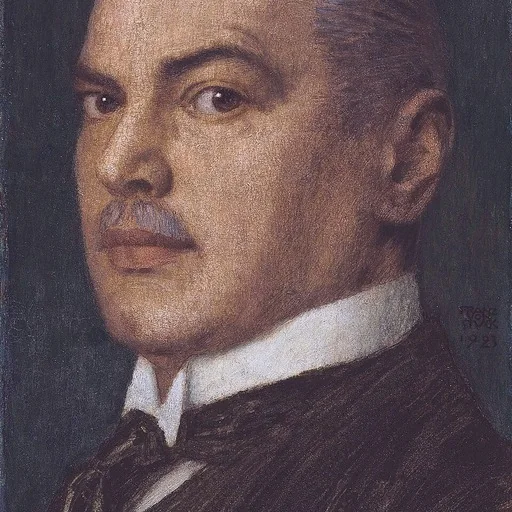
Franz Ritter von Stuck (February 23, 1863 – August 30, 1928), born Franz Stuck, was a German painter, sculptor, printmaker, and architect.

Museum
National Museum of Fine Arts, Argentina
Continue through works from the same source collection.