Artwork
Portrait of Marguerite Khnopff
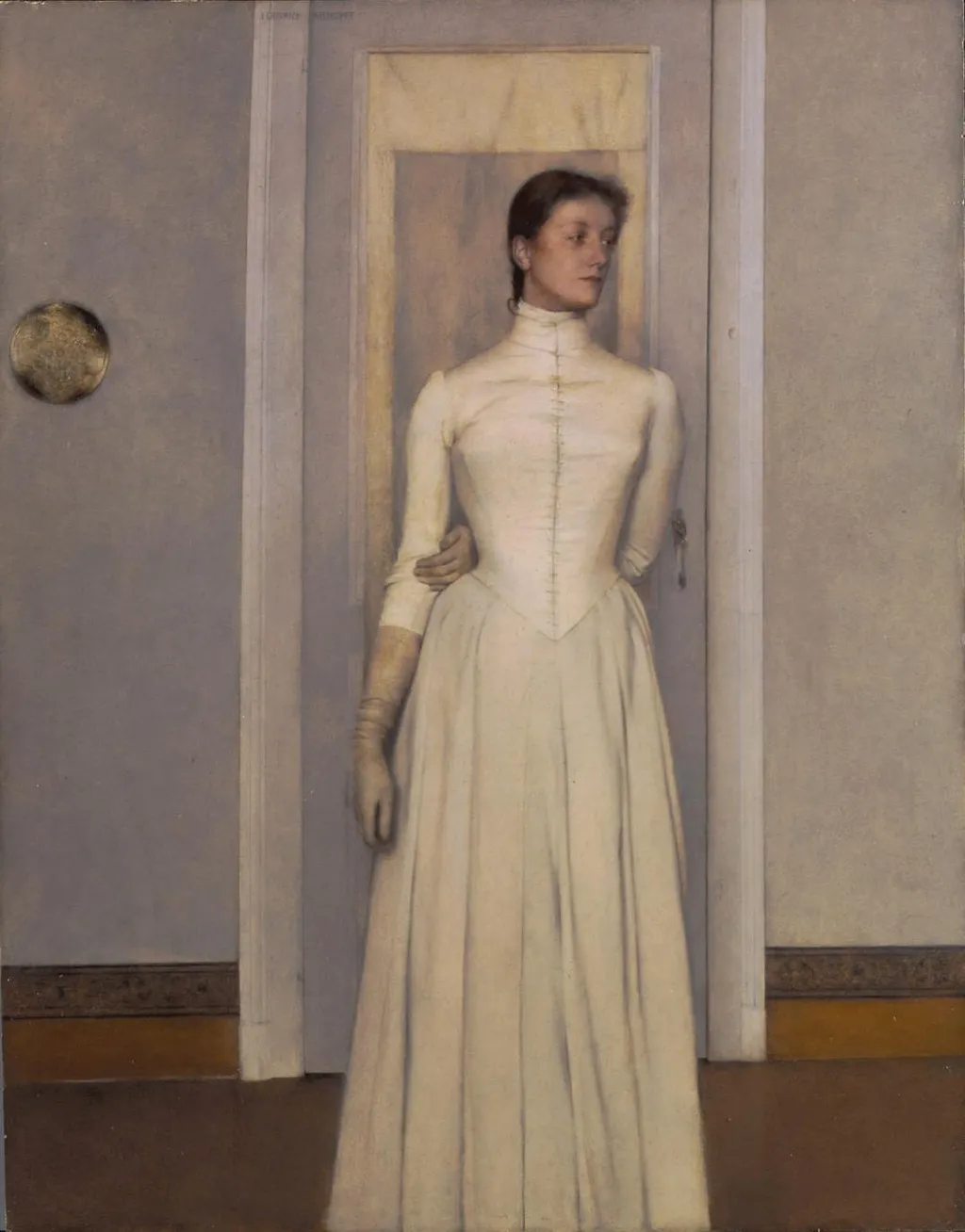
Portrait of Marguerite Khnopff is an oil painting by the Impressionist artist Fernand Khnopff. It dates from 1894 and is held in the collection of the King Baudouin Foundation.
About this work
Overview
Portrait of Marguerite Khnopff is an 1887 oil painting by the Belgian artist Fernand Khnopff, depicting his sister Marguerite.
Portrait of Marguerite Khnopff is an 1887 oil painting by the Belgian artist Fernand Khnopff, depicting his sister Marguerite. Created using oil paint on canvas that has been marouflaged onto a wood panel, the artwork measures 96 by 74.5 centimeters. The painting is currently owned by the Heritage Fund of the King Baudouin Foundation and is on deposit at the Royal Museums of Fine Arts of Belgium in Brussels, where it is exhibited. The portrait stands as a significant work from the late 1880s, capturing the artist's transition toward Symbolism while remaining heavily influenced by Impressionism and the aesthetics of James McNeill Whistler.
Subject & Meaning
The painting portrays Marguerite Khnopff standing in a spare interior, centered before a closed door with a small keyhole. She wears a fitted, high-necked white dress buttoned to the collar, concealing her skin entirely, and dons a single long glove on her right hand. The color white traditionally signifies innocence, positioning Marguerite as an icon of the ideal, mysterious, and virginal woman who simultaneously acts as a seductress. The long gloves symbolize a rejection of physical contact, while the sterile, empty white space of the room enhances an atmosphere of inviolability. Her averted gaze and reserved posture suggest irritation and guardedness. Some art historians suggest this strange reserve acts as a facade for a forbidden erotic desire between the siblings, reflecting Khnopff's obsessive, intimate connection with his sister. However, true to his philosophy, Khnopff leaves the ultimate meaning ambiguous, believing that naming an object limits the poetry of discovering its mystery.
Technique & Style
Khnopff executed the portrait with a highly restrained palette dominated by whites, grays, muted browns, and soft ochres. Light falls evenly from the left, creating only subtle shadows across the pale gray walls, warm brown wooden floor, and simple baseboard molding. The surface is smooth with minimal visible brushwork, resulting in a matte, refined finish. The composition is vertical and symmetrical, emphasizing the slender form of the subject against the flat architectural backdrop. A round golden object hangs on the wall to her left, and her left arm is bent behind her back, with only the hand visible at her waist. Stylistically, the work remains clearly under the influence of Impressionism, particularly the tonal harmonies and compositional arrangements of James McNeill Whistler, whom Khnopff greatly admired.
History & Provenance
The portrait was one of Khnopff's favorite works and served as the central element of the blue room in his Brussels villa, a sanctuary where he kept his most cherished pieces. Upon the artist's death, the painting rightfully passed to Marguerite, who guarded it just as zealously. In memory of her brother, she created her own blue room, keeping the canvas hidden from public view. The work remained within the family until 1984. In 1991, the painting was put up for sale at Christie's in New York. The Heritage Fund of the King Baudouin Foundation acquired it with support from the National Lottery and placed it on loan at the Royal Museums of Fine Arts of Belgium in Brussels, where it remains on display today.
Context
Fernand Khnopff remained a bachelor for most of his life, marrying Marthe Worms, who was sixteen years his junior, only at age fifty, a marriage that dissolved less than three years later. This isolation reflected his personal motto, On n'a que soi (one has only oneself), which he inscribed above his Brussels villa. He maintained a passionate, intimate relationship with his sister Marguerite, painting her numerous times. In his 1889 work Memories (Lawn Tennis), he depicted her seven times in an idealized, dreamlike vision detached from space and time, marking his definitive shift toward Symbolism and foreshadowing Surrealism. The 1887 portrait of Marguerite, however, captures an earlier stylistic moment, bridging his Impressionist influences and his emerging Symbolist iconography of the seraphic, inaccessible woman.
Legacy
The Portrait of Marguerite Khnopff has maintained a prominent place in the study of Belgian Symbolism, evidenced by its inclusion in numerous major international exhibitions. Its exhibition history includes shows such as Der Kuss der Sphinx, Fernand Khnopff: Untiefen der Seele, Gustav Klimt und das europäische Frauenbildnis, and La Belgique Dévoilée. The painting's exploration of psychological isolation, ambiguous desire, and enigmatic female iconography has cemented its reputation as a precursor to Surrealist concerns. The eventual acquisition by the King Baudouin Foundation ensured its preservation and public accessibility, securing its status as a cultural treasure and a focal point for scholarly debate regarding Khnopff's complex personal and artistic legacy.
Artist & collection
Artist
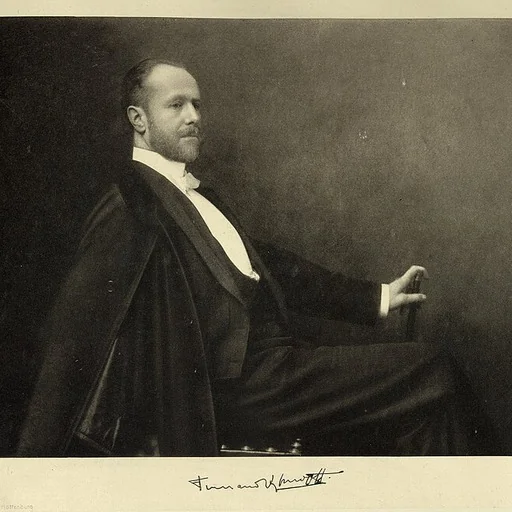
Fernand Edmond Jean Marie Khnopff (12 September 1858 – 12 November 1921) was a Belgian symbolist painter and one of the founding members of the avant-garde group Les XX in 1883.

 Portret van Augustinus Gerardus Hubertus van Rijckevorsel (1828 - ’s-Hertogenbosch - 1891)
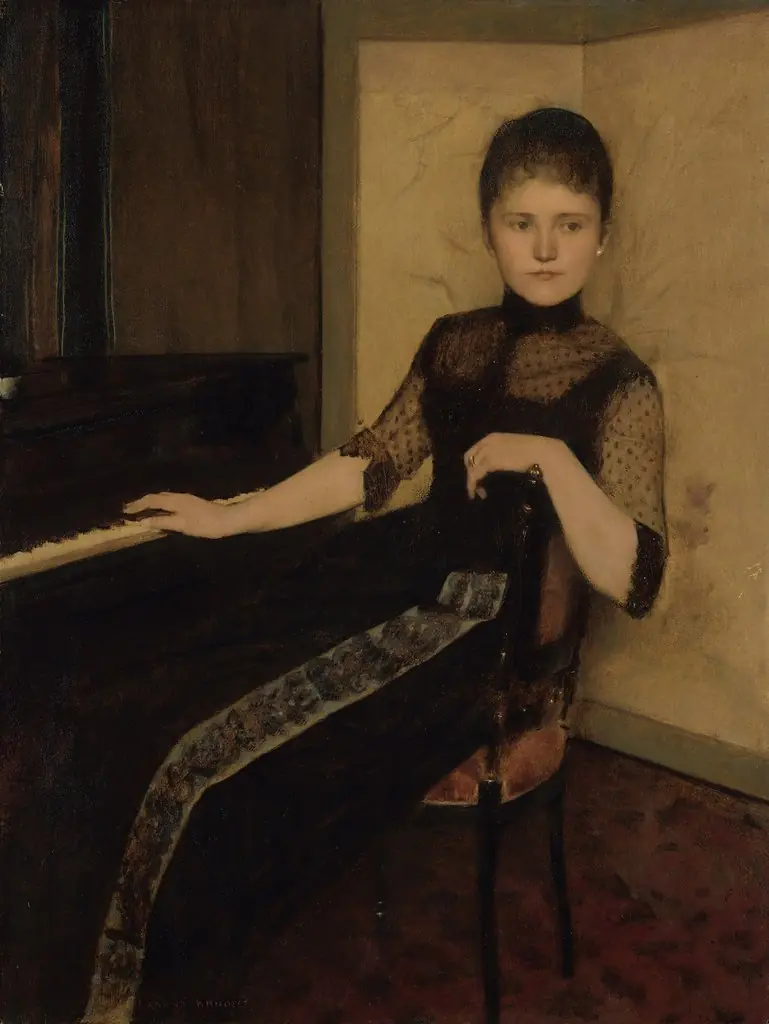 Portret van jonkvrouwe Maria Francisca Louisa Dommer van Poldersveldt (Ubbergen 1848 - 1925 ’s-Hertogenbosch)
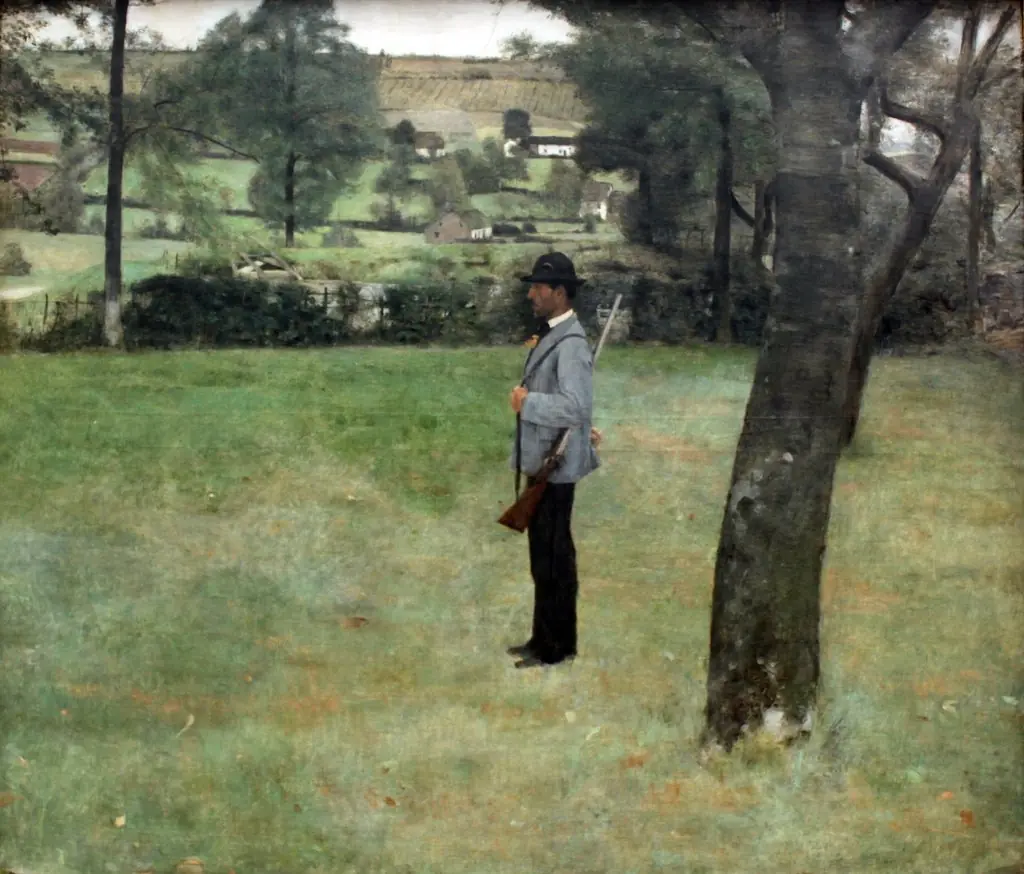 The Game Warden
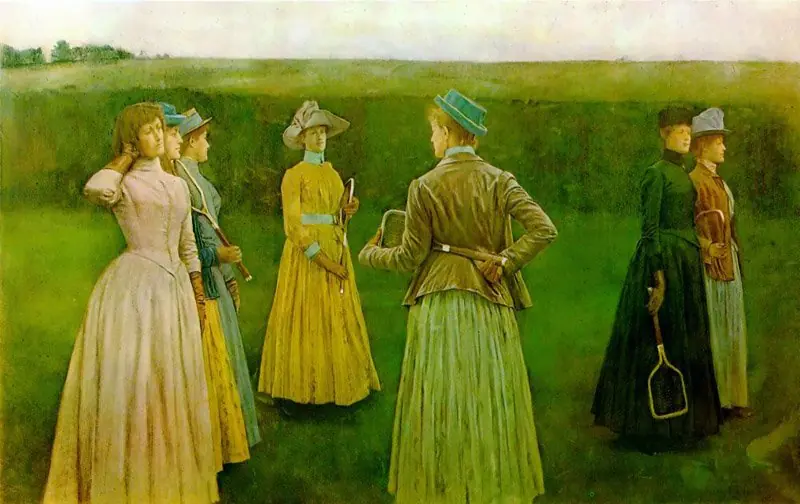 Memories
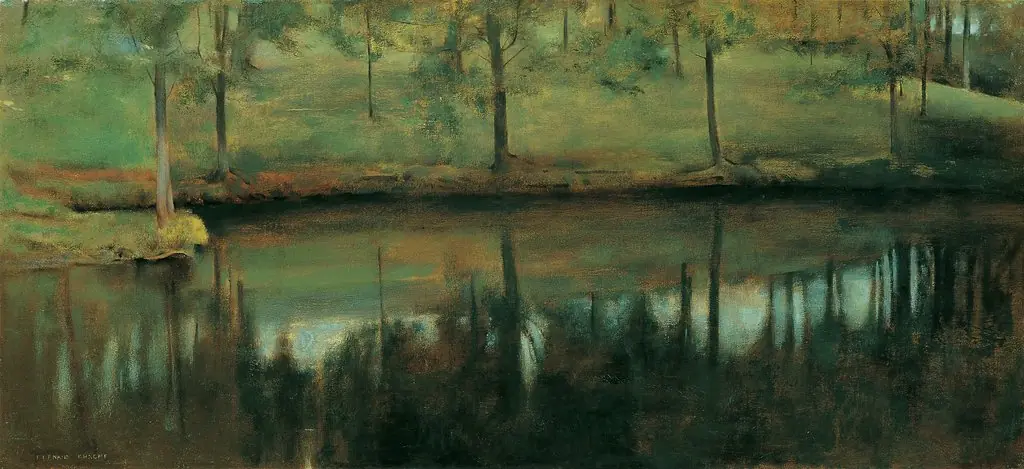 Still water
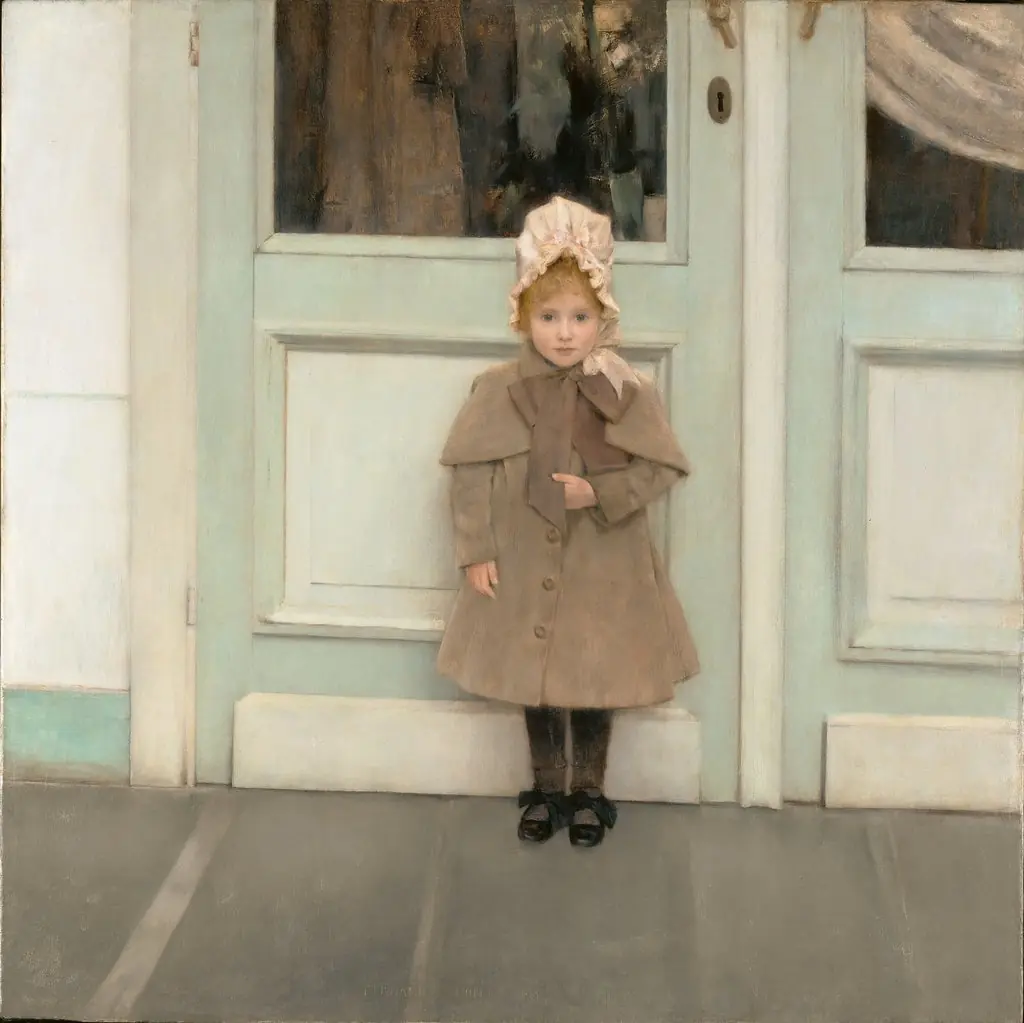 Jeanne Kéfer
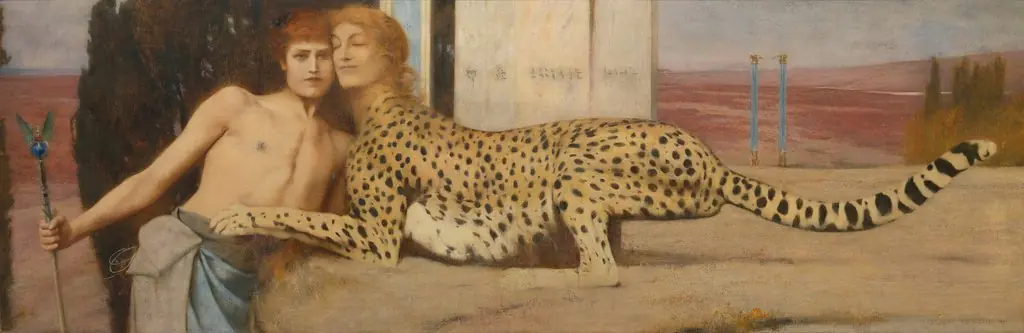 The Sphinx, or, The Caresses
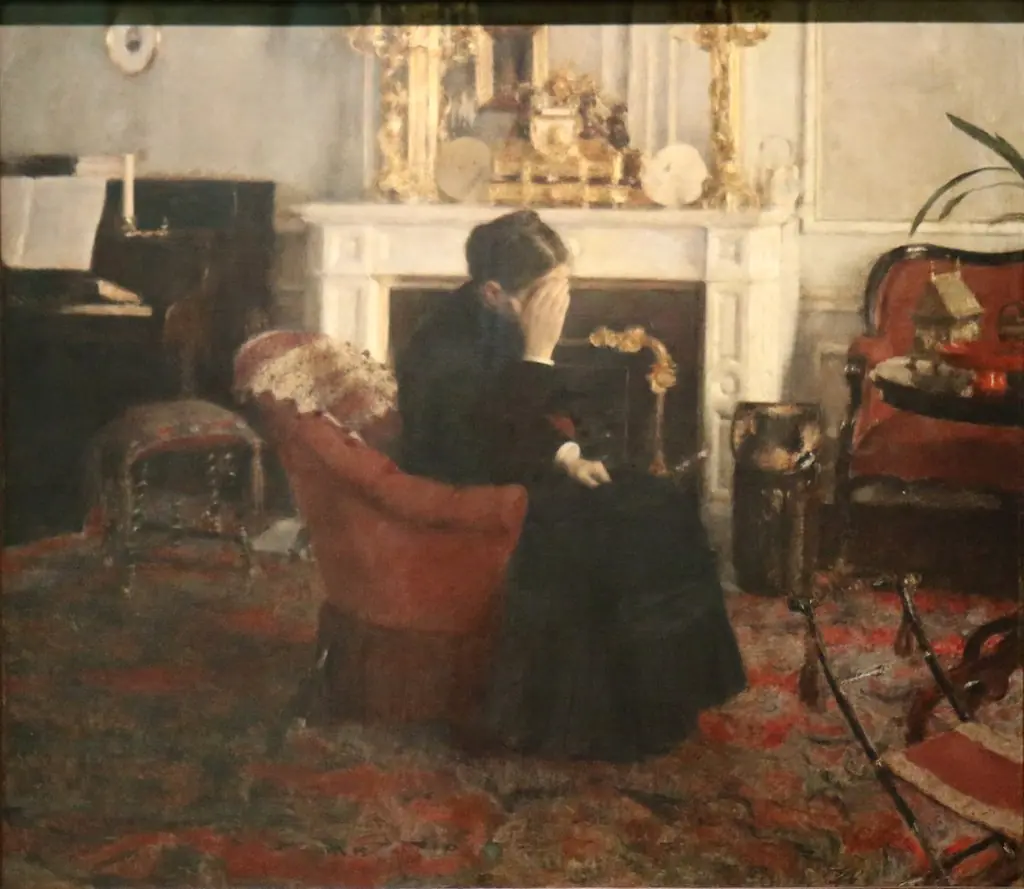 Listening to Music by Schumann
- Portrait of a Woman
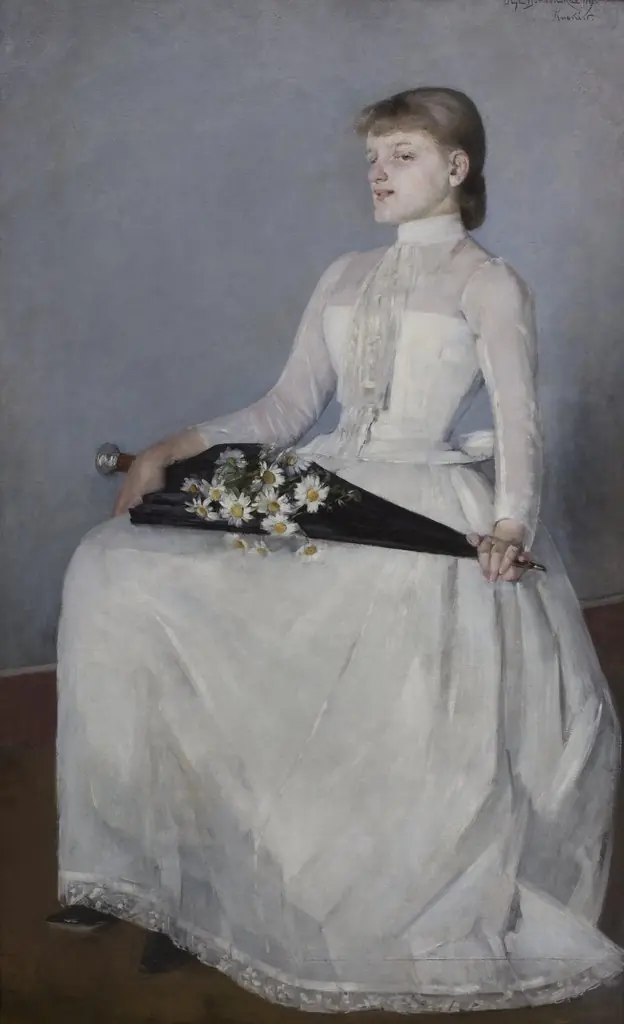 From a Walk
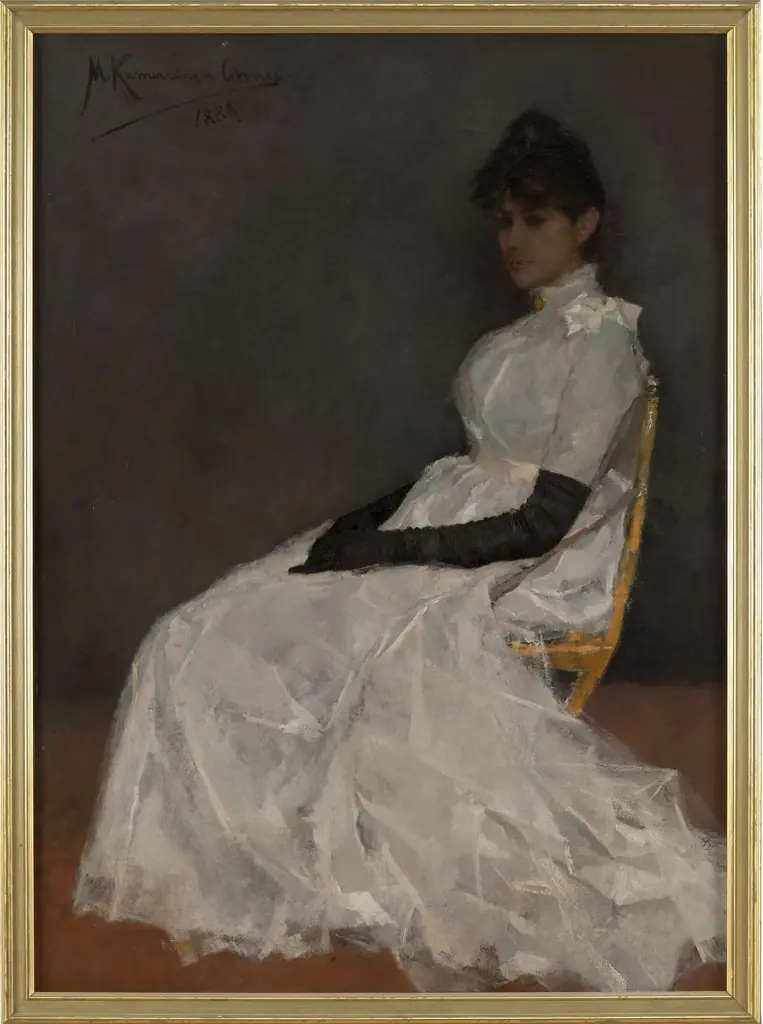 Portrait of Jenny Kamerlingh Onnes
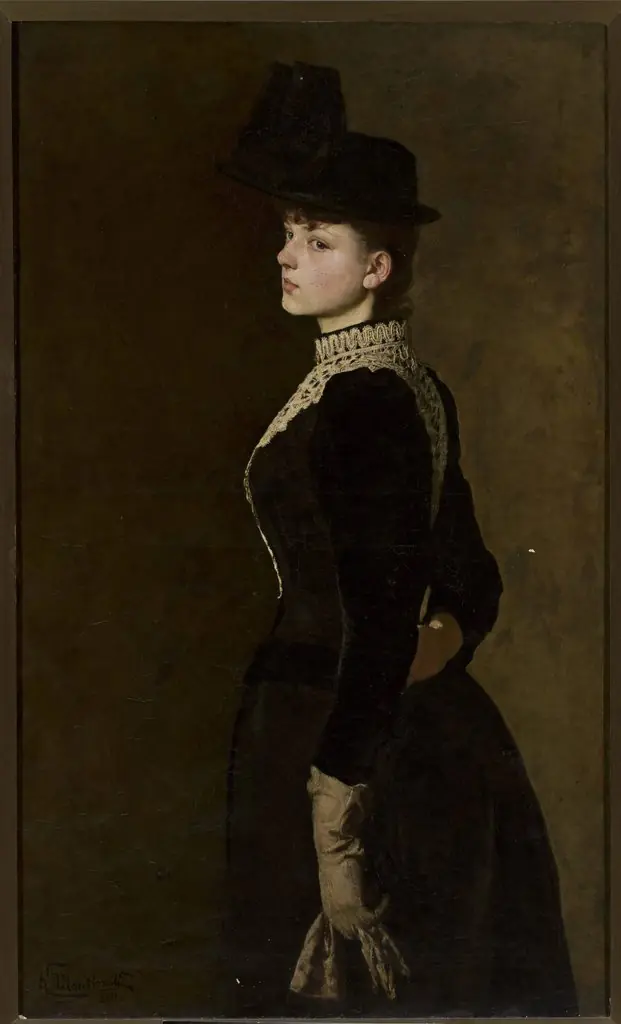 Portrait of artist’s sister
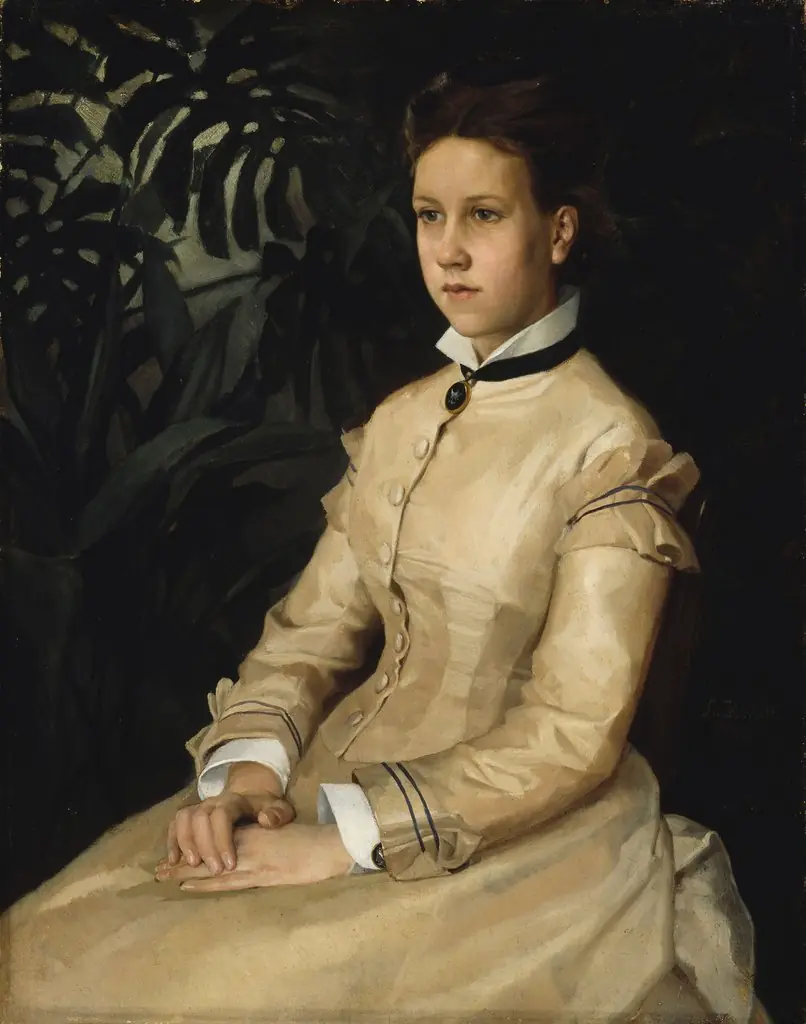 Portrait of the Artist's Sister Ellen Edelfelt
 Taiteilijan sisaren Ellen Edelfeltin muotokuva
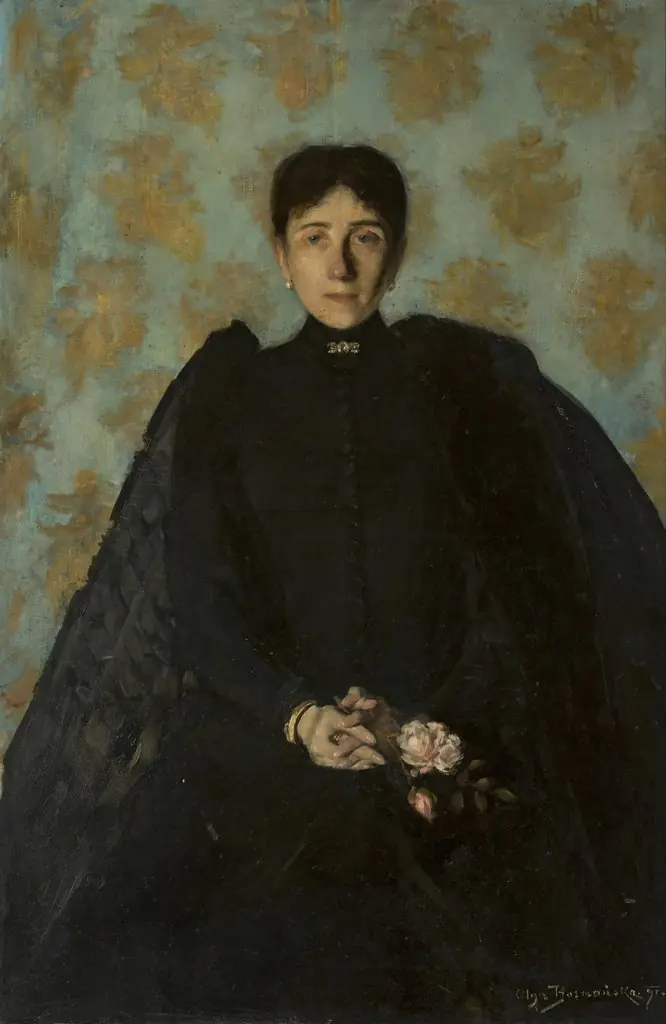 Portrait of a woman
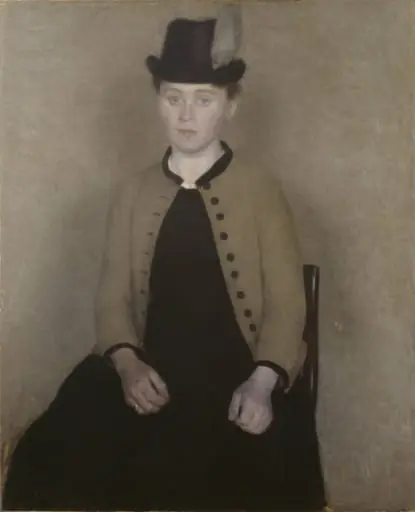 Ida Ilsted, later the Artist's Wife
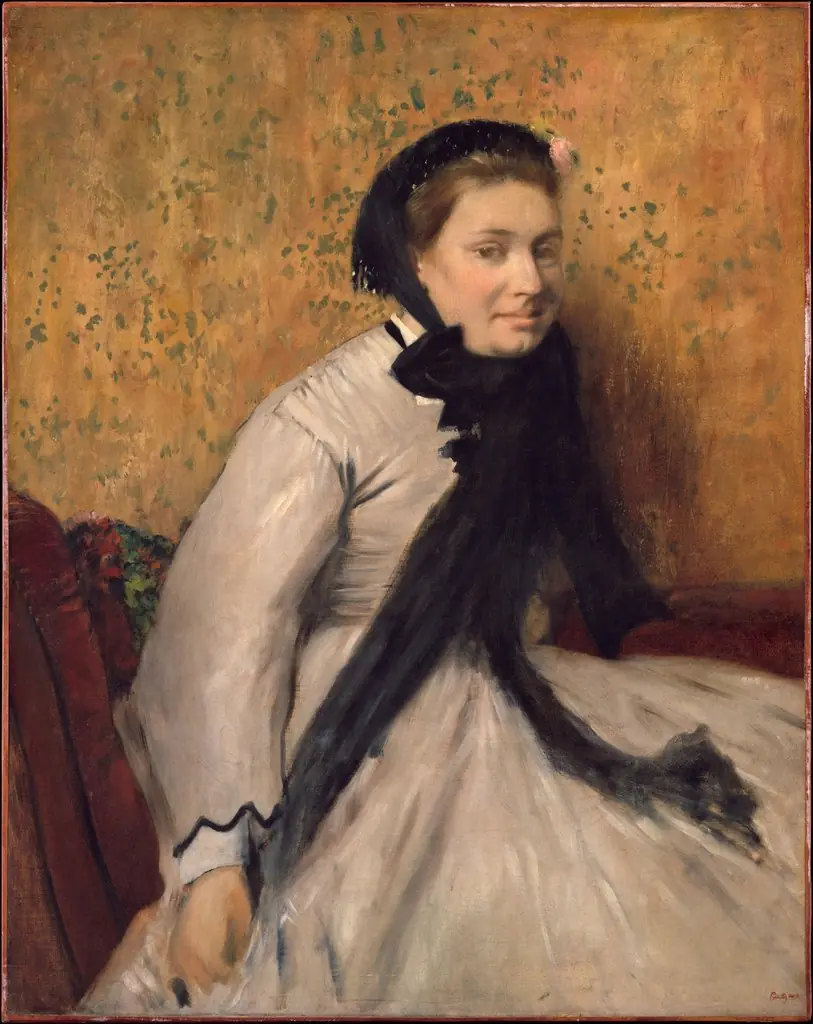 Portrait of a Woman in Gray
 Mother of Pearl and Silver: The Andalusian
 Interior
 Symphony in White, No. 1: The White Girl