Artwork
Mother of Pearl and Silver: The Andalusian
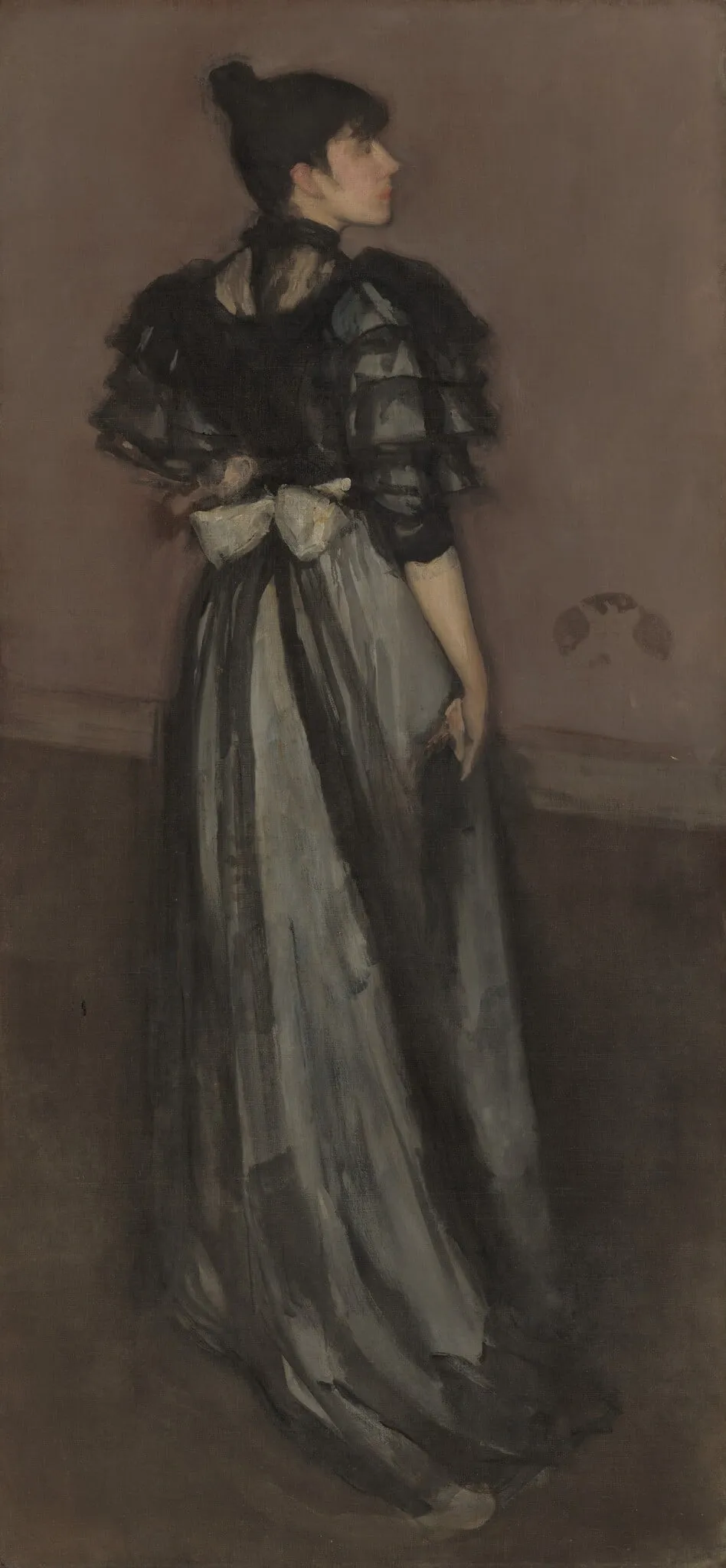
Mother of Pearl and Silver: The Andalusian is an oil painting by the American Impressionist artist James McNeill Whistler. It dates from 1888 and is held in the collection of the National Gallery of Art.
- Inscription
- Inscribed:center right with the artist's butterfly mark
About this work
Subject & Meaning
The composition emphasizes tonal harmony and the delicate layering of fabric, suggesting both realism and an idealized, almost theatrical presence.
The painting depicts Ethel Whibley, Whistler's secretary and sister-in-law, in a full-length pose seen from behind, her head turned in profile. She wears a gray silk evening gown that the title references, its black bolero trimmed with mother-of-pearl and silver threads that recall traditional Andalusian dress. The composition emphasizes tonal harmony and the delicate layering of fabric, suggesting both realism and an idealized, almost theatrical presence.
Whistler executed several portraits of Whibley, using her as a model to explore costume, posture, and the interplay of light on texture. The work therefore functions as a personal portrait that also embodies Whistler's aesthetic interest in exotic motifs and the expressive potential of color and material.
Technique & Style
The painting is executed in oil on canvas, using a stretched fabric support. Whistler's handling creates subtle tonal variations and translucent effects, especially in the black bolero's layered, transparent sleeves that suggest a glazing technique to evoke the appearance of traditional Andalusian dress. The formal composition presents a full-length portrait of Ethel Whibley seen from behind, her head in profile, clad in a gray-silk evening gown styled in the Parisian Belle Époque mode.
The colour scheme is restrained to black, mother-of-pearl and silver, reinforcing the work's titular allusion. While the sources describe the medium, materials and stylistic details, they do not provide information on the painting's current condition.
History & Provenance
Whistler commenced work on Mother of Pearl and Silver: The Andalusian in London in 1888, the year of his marriage to Beatrix Philip, and completed the painting in Paris in 1900. The artist sold the work in 1900/1901 to the New York dealer Edward G. Kennedy, whose firm H. Wunderlich & Co. (later Kennedy Galleries) handled the transaction. Correspondence from Kennedy & Co. indicates the canvas was purchased directly from Whistler in May 1901, with the invoice to John Howard Whittemore dated 6 January 1902 and payment received later that month.
In early 1902 the painting was exhibited at the Pennsylvania Academy of Fine Arts, where the artist Edward Austin Abbey recommended it to Isabella Stewart Gardner as "the property of a Mr. Whittemore of Naugatuck." Following Whittemore's death in 1910, the work was probably bequeathed to the J. H. Whittemore Company, with a life interest held by his daughter Gertrude B. Whittemore until her death in 1941. The painting was given to the National Gallery of Art in 1943.
Mother of Pearl and Silver: The Andalusian is held by the National Gallery of Art in Washington, D.C., where it entered the collection in 1943 as a gift.
The painting's provenance traces through several owners. It was sold by Whistler in 1900/1901 to Edward G. Kennedy of New York, whose firm H. Wunderlich & Co. (later Kennedy Galleries) handled the work. In January 1902 it was purchased by John Howard Whittemore of Naugatuck, Connecticut, who died in 1910.
The painting was likely bequeathed to the J. H. Whittemore Company, with a life interest held by his daughter Gertrude B. Whittemore until her death in 1941, after which it was given to the NGA in 1943.
An exhibition history is partially documented: the work was shown at the Pennsylvania Academy of Fine Arts in early 1902, where the artist Edward Austin Abbey recommended it to Isabella Stewart Gardner as "the property of a Mr. Whittemore of Naugatuck."
Context
Whistler's Mother of Pearl and Silver: The Andalusian (1888–1900) reflects the artist's mature aesthetic, aligning with his broader 'symphony' of tonal harmonies and decorative elegance. Critics of the period framed the work within his lifelong exploration of portraiture as a vehicle for refined mood and compositional balance, rather than narrative. The painting's elongated silhouette and restrained palette continued his dialogue with Japanese prints and European symbolism, positioning it as a late manifestation of Aesthetic Movement ideals in Britain and France.
Its exhibition history, including a 1902 showing at the Pennsylvania Academy of Fine Arts, drew recommendations from peers such as Edward Austin Abbey, underscoring its recognition among contemporary tastemakers. Within Whistler's oeuvre, the portrait of Ethel Whibley, his sister-in-law and later secretary, occupies a distinct place, not only as a personal commission but as part of a series that elevated quotidian subjects through formal distillation.
The painting's later institutional trajectory, entering the National Gallery of Art, Washington, in 1943, reinforced its canonical status in American collections, though scholarship has primarily addressed it as an exemplar of Whistler's late style rather than a pivotal intervention in broader art-historical narratives.
Overview
James McNeill Whistler's oil on canvas, "Mother of Pearl and Silver: The Andalusian," presents a full-length portrait. The artwork features Ethel Whibley, the artist's secretary and sister-in-law, positioned with her back to the viewer, her head turned in profile. Characterized by a restrained palette of black, mother-of-pearl, and silver, the painting exemplifies Whistler's pursuit of harmonious color arrangements and evocative titles, creating a refined and subtle aesthetic.
Artist & collection
Artist
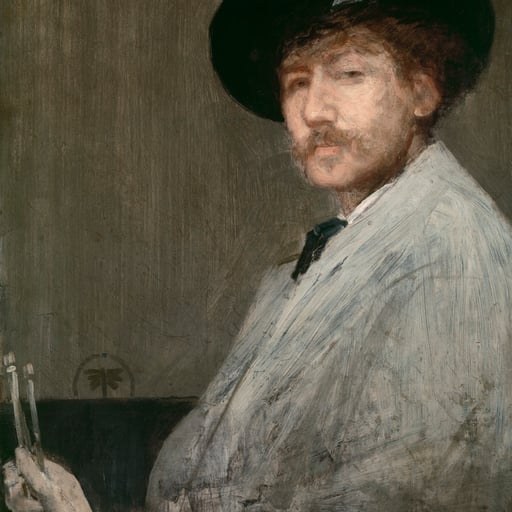
James Abbott McNeill Whistler (; July 10, 1834 – July 17, 1903) was an American painter in oils and watercolor, and printmaker, active during the American Gilded Age and based primarily in the United Kingdom.

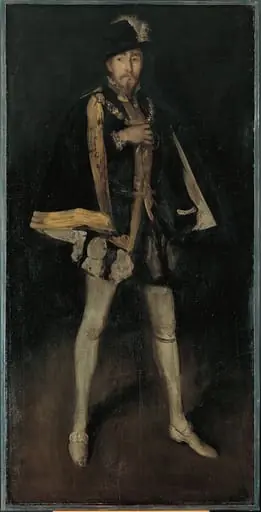 Arrangement in Black, No. 3: Sir Henry Irving as Philip II of Spain
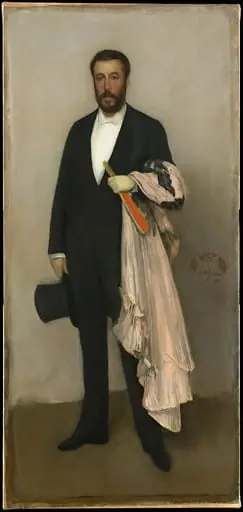 Arrangement in Flesh Colour and Black: Portrait of Theodore Duret
 Gold and Brown: Self-Portrait
 Edward Guthrie Kennedy
 Harmony in Yellow and Gold: The Gold Girl—Connie Gilchrist
 George W. Vanderbilt
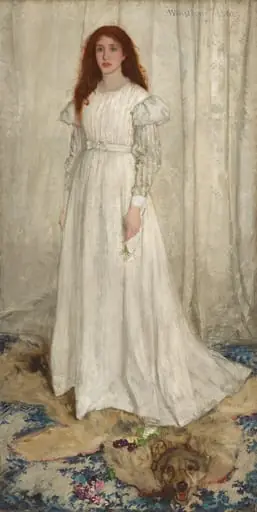 Symphony in White, No. 1: The White Girl
 Henry Irving as Philip II of Spain
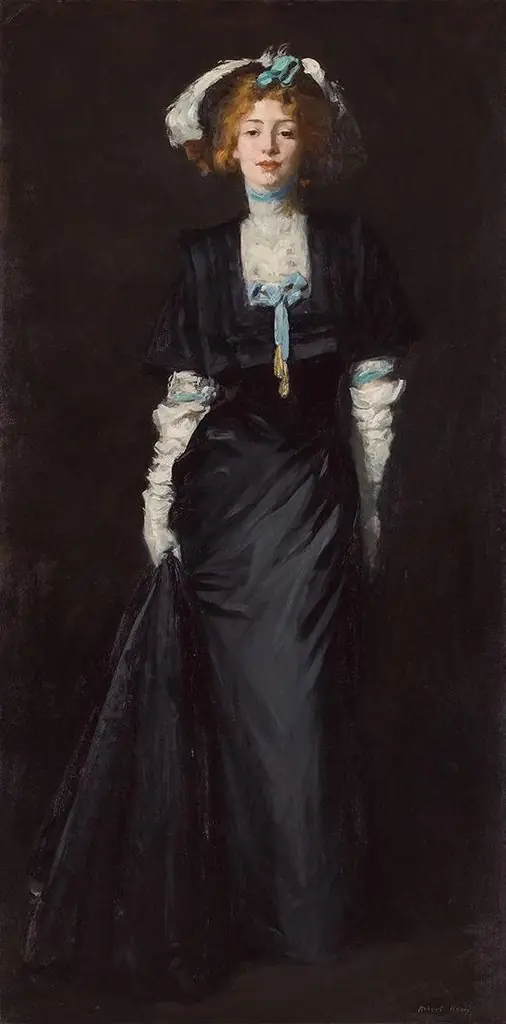
- Jessica Penn in Black with White Plumes
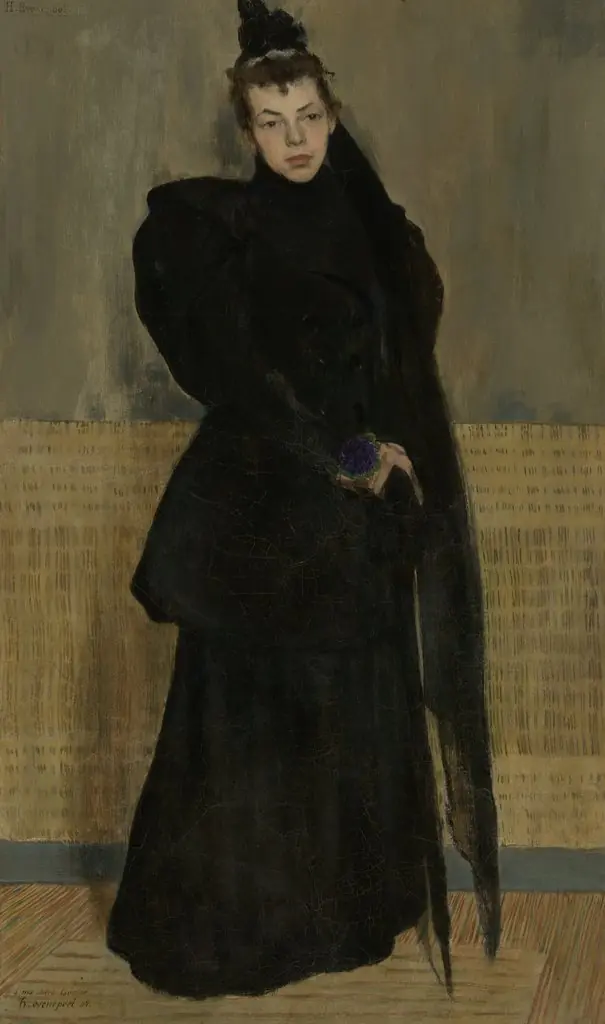 Louise in Mourning
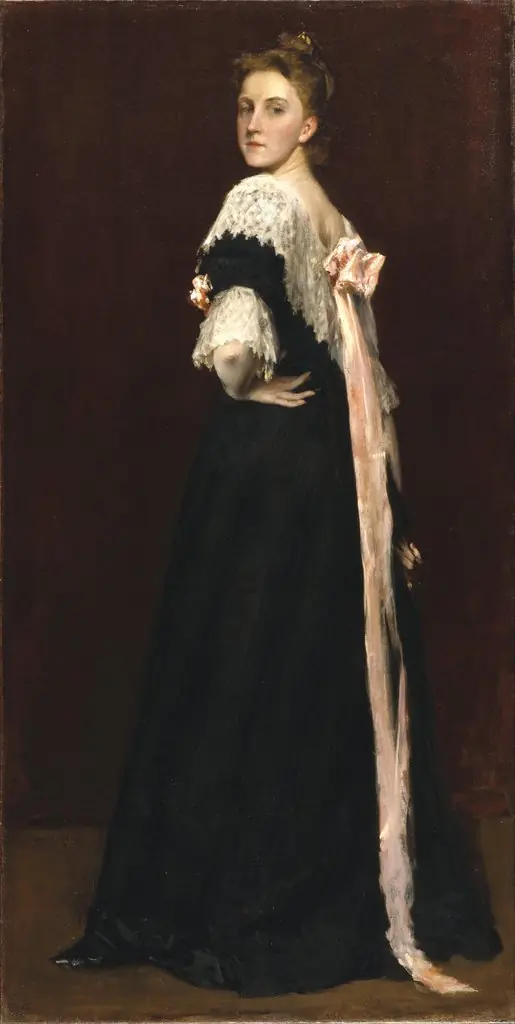 Lydia Field Emmet
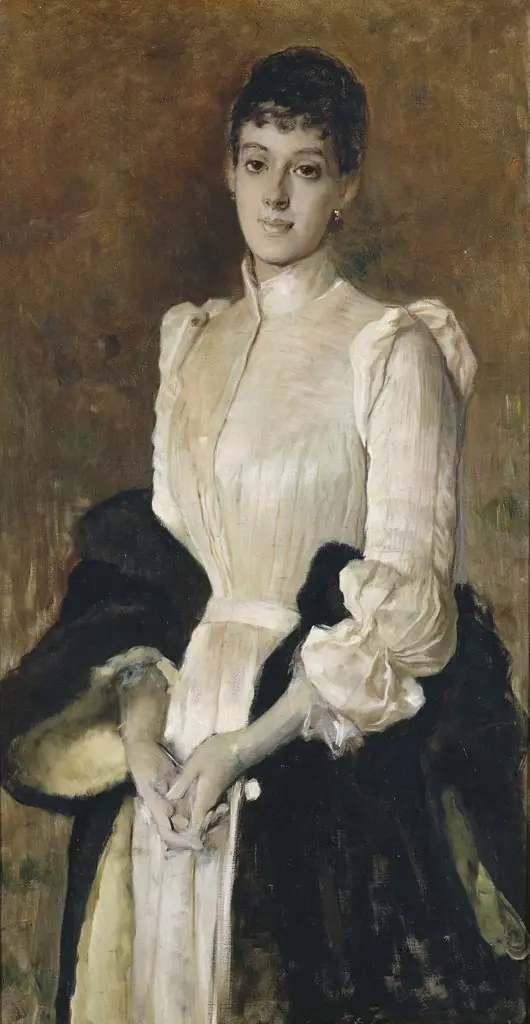 Concepción Miramón
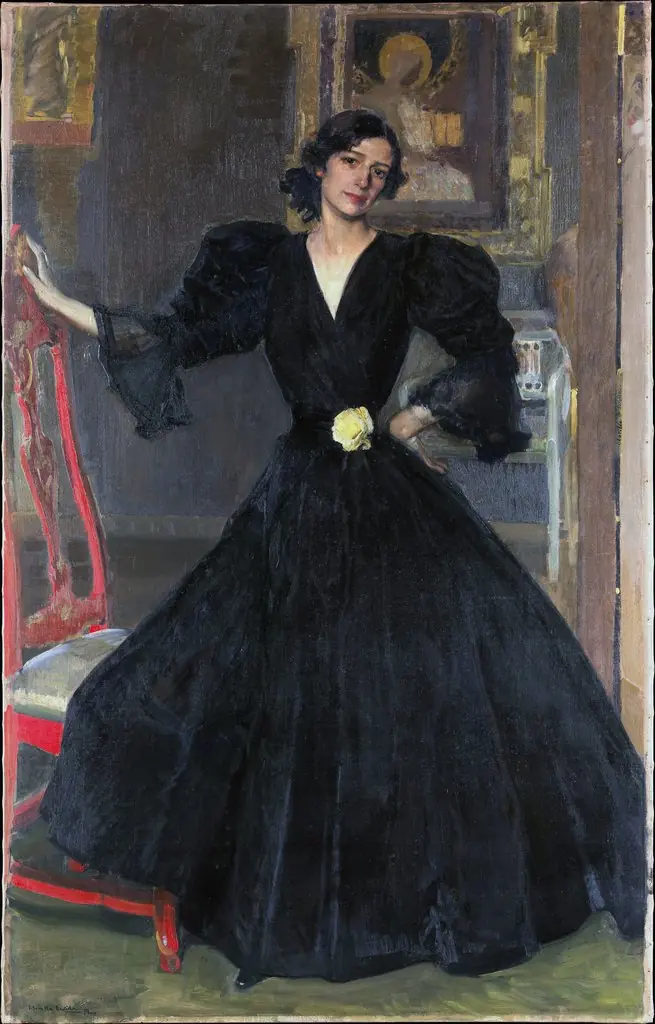 Señora de Sorolla (Clotilde García del Castillo, 1865–1929) in Black
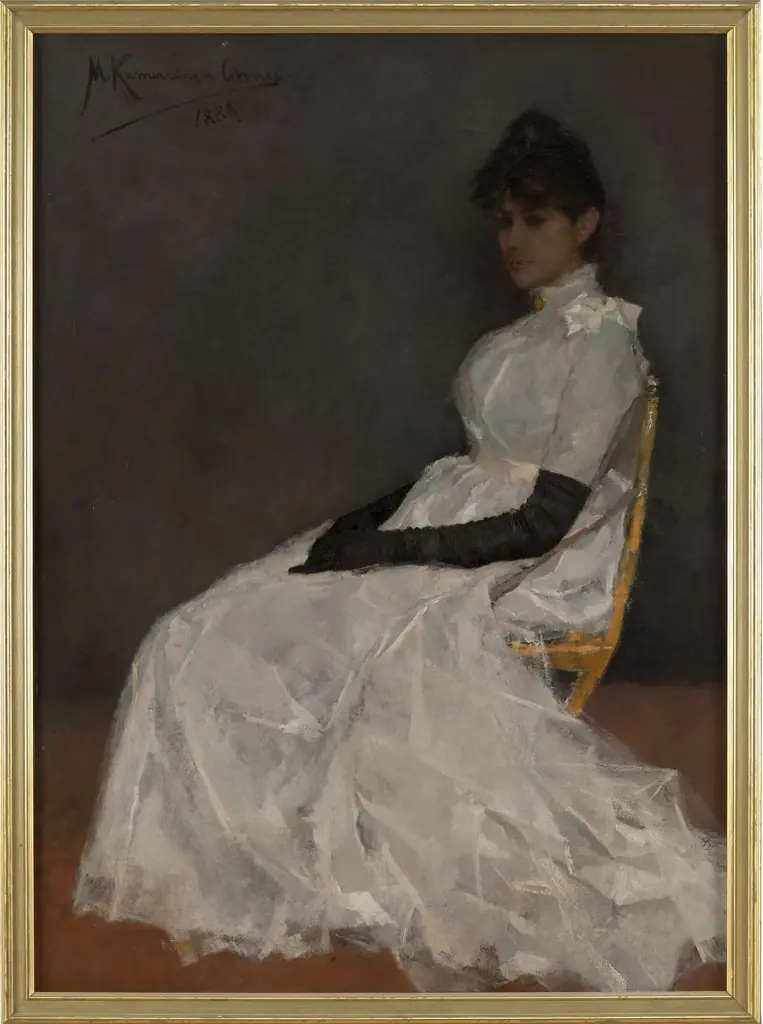 Portrait of Jenny Kamerlingh Onnes
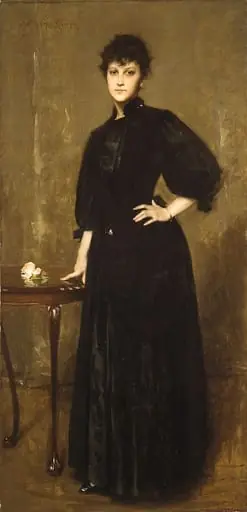 Lady in Black
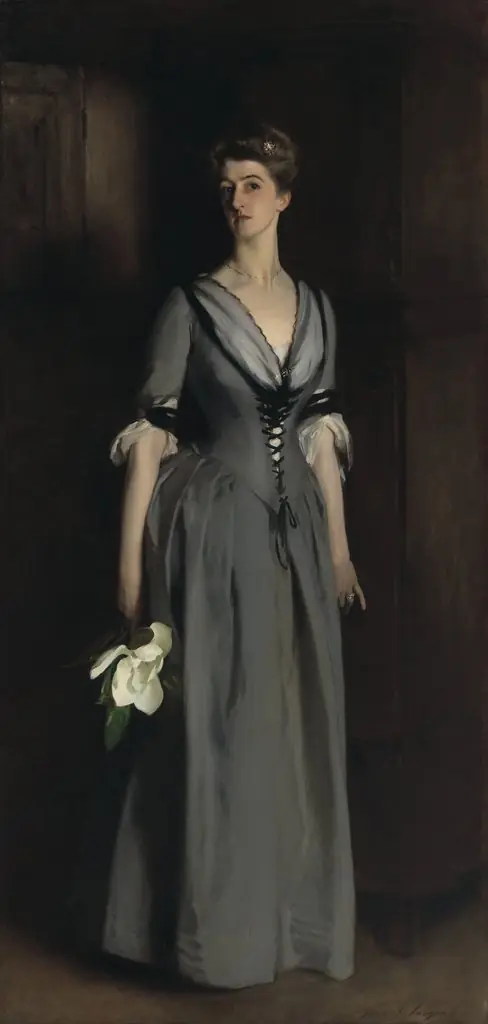 Mrs Albert Vickers (Edith Foster)
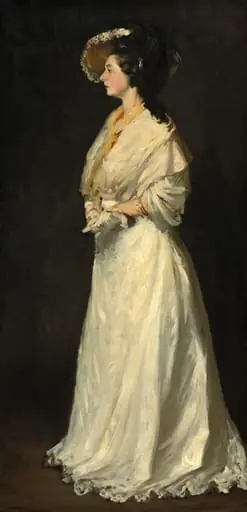 Young Woman in White
 ‘Arrangement in Yellow and Gray’: Effie Deans
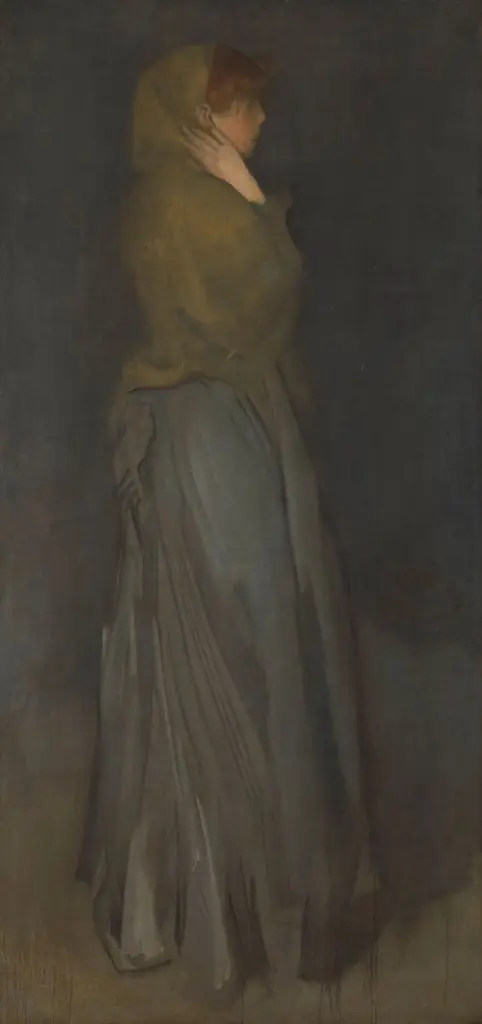 Arrangement in Yellow and Gray: Effie Deans
 Portrait of Lisa Colt Curtis