Artwork
Symphony in White, No. 1: The White Girl
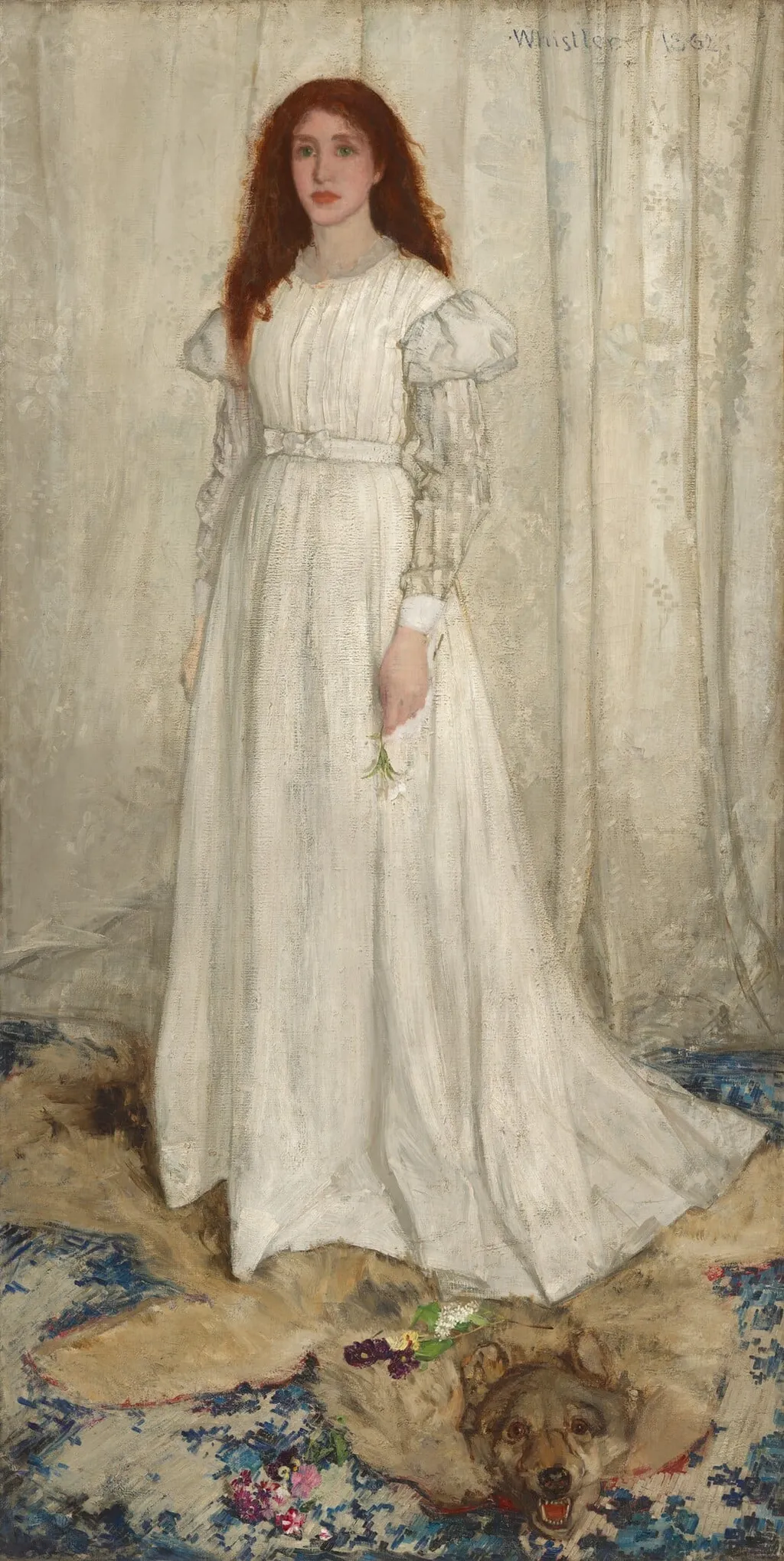
Symphony in White, No. 1: The White Girl is an oil painting by the American Impressionist artist James McNeill Whistler. It dates from 1862 and is held in the collection of the National Gallery of Art.
- Inscription
- Inscribed:upper right: Whistler. 1862
About this work
Subject & Meaning
1 to emphasize his 'art for art's sake' philosophy, framing the composition as an abstract study of color harmonies rather than a symbolic story.
The painting depicts Joanna Hiffernan, Whistler's mistress, standing full-length in a white cambric dress against a sheer white curtain. She holds a white lily in her left hand while standing upon a wolf-skin rug, with the animal's head staring toward the viewer and additional flowers scattered on the floor. Although initially exhibited as The Woman in White, linking it to Wilkie Collins's novel, Whistler explicitly denied any narrative intent, stating the work simply represented a girl in white before a white curtain.
Critics nonetheless interpreted the imagery variously: the lily and white tones suggested innocence or religious allusions to the Virgin Mary, while the wolf skin symbolized masculinity and lust, leading to readings of the work as an allegory of a bride's lost innocence. Whistler later retitled the piece Symphony in White, No. 1 to emphasize his 'art for art's sake' philosophy, framing the composition as an abstract study of color harmonies rather than a symbolic story.
Technique & Style
Symphony in White, No. 1 is executed in oil on canvas, measuring 213 cm in height by 107.9 cm in width. Whistler began the work shortly after December 1861 and completed it by April 1862, though he later returned to make alterations. The composition is built almost entirely from varied tonalities of white, a deliberate study in which the figure of Joanna Hiffernan, dressed in white cambric, stands before a white muslin curtain that filters light from the left while a strong illumination strikes her from the right.
The painter himself described the result, apart from Hiffernan's red hair, as "one gorgeous mass of brilliant white." The chromatic harmony of whites is set against the dense brown mass of the wolf-skin rug at the figure's feet, whose glassy eyes confront the viewer. Stylistically, the painting betrays the influence of the Pre-Raphaelite Brotherhood, while Whistler's musical title and restrained palette articulate his "art for art's sake" philosophy, treating color as an autonomous expressive element akin to musical harmony.
History & Provenance
The painting Symphony in White, No. 1: The White Girl is held by the National Gallery of Art in Washington, D.C., where it entered the collection in 1943 as a gift of the Harris Whittemore family. It was first shown at the 1863 Salon des Refusés in Paris after being rejected by the official Salon, having earlier been refused by the Royal Academy and instead displayed at the Berners Street Gallery in London under the title The Woman in White. The work's exhibition record thus includes the 1862 London private gallery showing and the 1863 Paris Salon des Refusés.
Context
Symphony in White, No. 1 occupies a pivotal position in James McNeill Whistler's career and in the broader transition toward modernism. After its rejections by the Royal Academy and the official Paris Salon, the painting was shown at the 1863 Salon des Refusés alongside Édouard Manet's Déjeuner sur l'herbe, where it attracted even greater attention than Manet's work. Admirers included Gustave Courbet, Charles Baudelaire, and Théophile Thoré-Bürger, the last of whom detected continuities with Goya and Velázquez and first applied the term "Symphony" to the canvas.
The critic Jules-Antoine Castagnary interpreted the figure as an allegory of a bride's lost innocence, while later scholarship has additionally read the lily and wolf-skin motifs as religious allusions to the Virgin Mary. The work also bears the clear imprint of the Pre-Raphaelite Brotherhood, with whom Whistler had recently come into contact through Dante Gabriel Rossetti. By renaming the canvas Symphony in White, No. 1 in the 1870s, Whistler distanced it from Wilkie Collins's novel The Woman in White and foregrounded his commitment to "art for art's sake," an aesthetic stance that would shape his subsequent career and influence later painters, including Manet himself.
Legacy
The painting's reception at the 1863 Salon des Refusés, where it hung near Manet's Déjeuner sur l'herbe, helped establish Whistler's reputation as a leading exponent of "art for art's sake." Admirers including Courbet, Baudelaire, and Théophile Thoré-Bürger praised its musical title and abstract tonalism. Critics variously interpreted the work as an allegory of innocence and as a religious reference to the Virgin Mary, themes that recurred in nineteenth-century criticism.
Its long private ownership and its 1943 donation to the National Gallery of Art ensured its continued discussion in histories of Aestheticism and in surveys of Whistler's oeuvre.
Overview
James McNeill Whistler's Symphony in White, No. 1: The White Girl is an oil on canvas painting created between 1861 and 1862, with later revisions. It depicts a woman, identified as Joanna Hiffernan, standing in a long white dress against a light background, holding a lily. The work is notable for its nearly monochromatic palette, predominantly featuring shades of white. Whistler's later title emphasized his aesthetic philosophy, moving away from a purely descriptive name.
Artist & collection
Artist
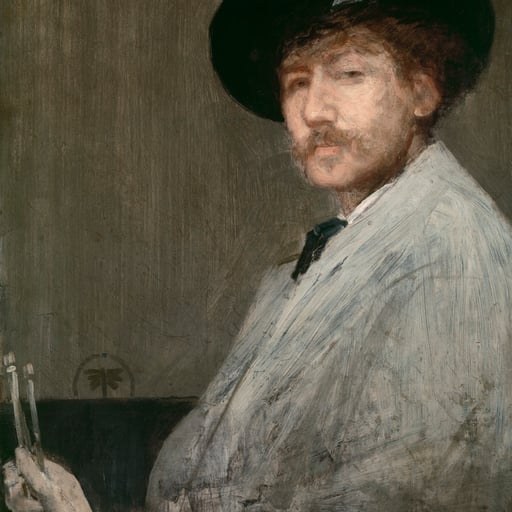
James Abbott McNeill Whistler (; July 10, 1834 – July 17, 1903) was an American painter in oils and watercolor, and printmaker, active during the American Gilded Age and based primarily in the United Kingdom.

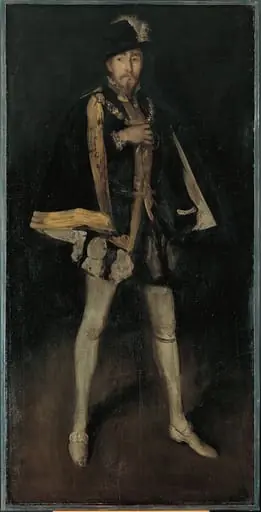 Arrangement in Black, No. 3: Sir Henry Irving as Philip II of Spain
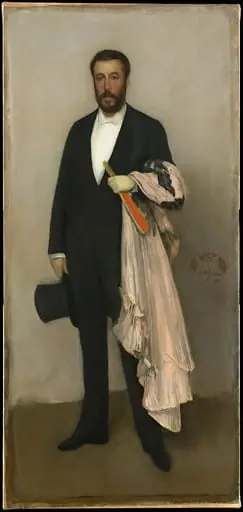 Arrangement in Flesh Colour and Black: Portrait of Theodore Duret
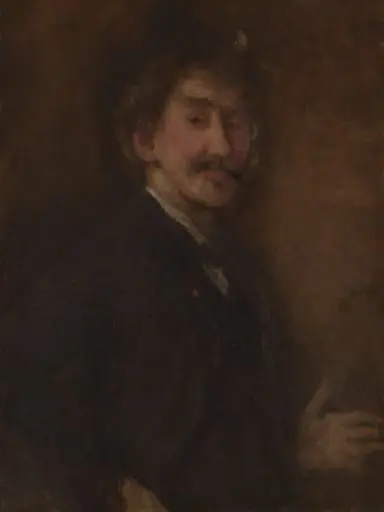 Gold and Brown: Self-Portrait
 Edward Guthrie Kennedy
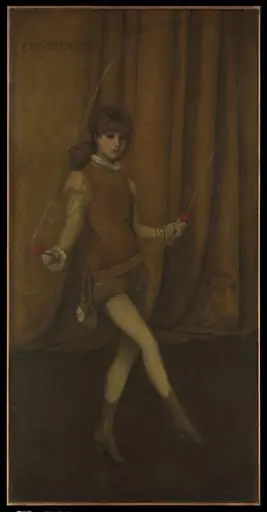 Harmony in Yellow and Gold: The Gold Girl—Connie Gilchrist
 George W. Vanderbilt
 Henry Irving as Philip II of Spain
 ‘Arrangement in Yellow and Gray’: Effie Deans
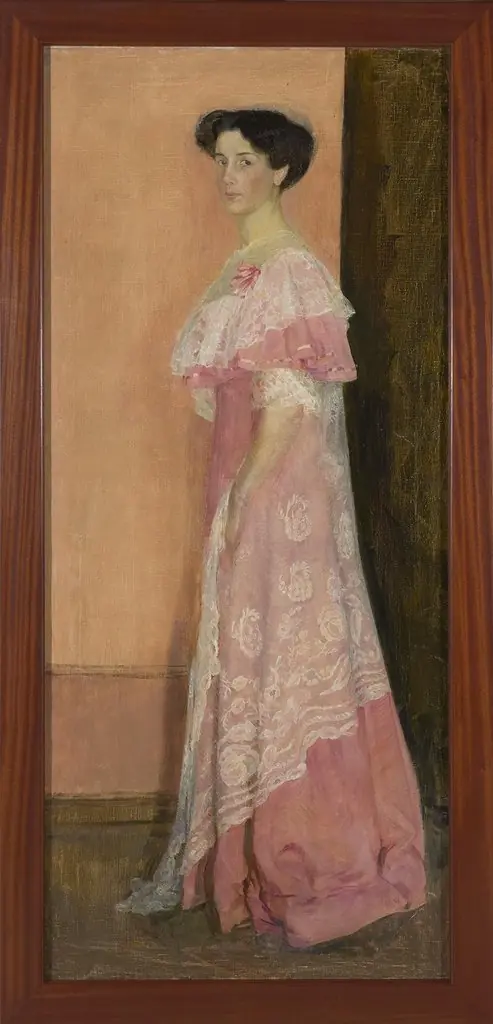 Society in the Restaurant. Revers: Study of a Lady in Pink
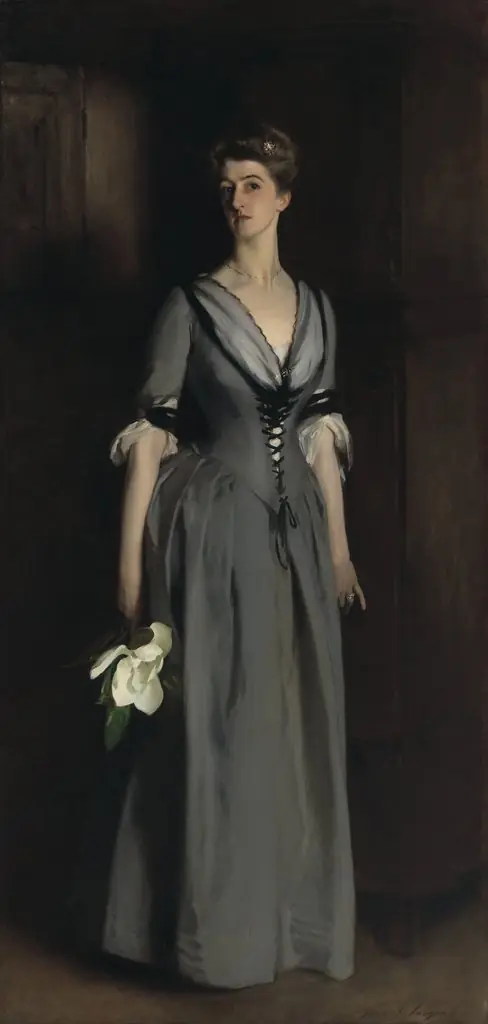 Mrs Albert Vickers (Edith Foster)
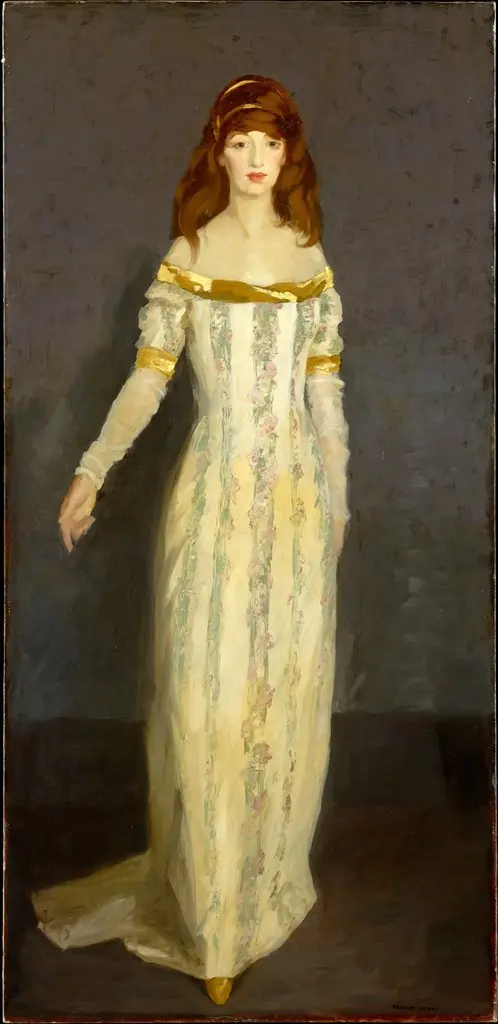 The Masquerade Dress
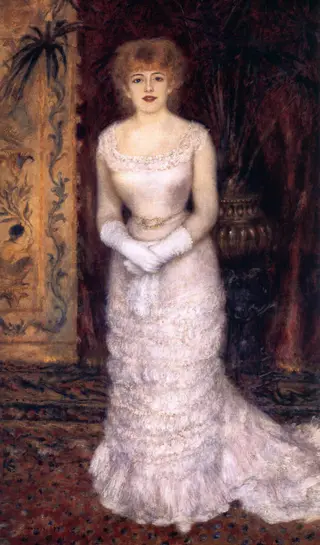 Portrait of Jeanna Samary
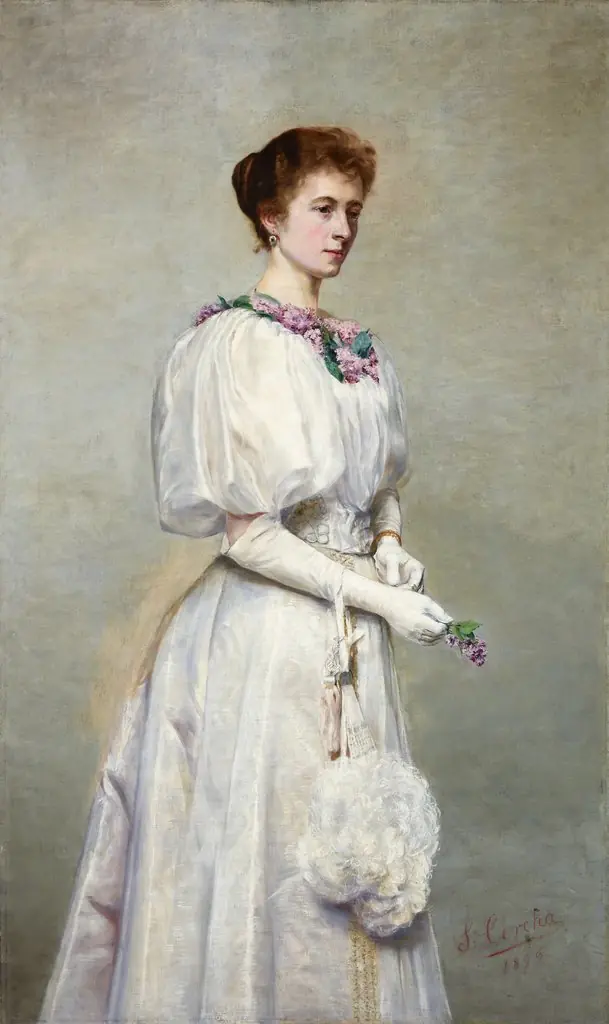 Portrait of Helena Cerchowa
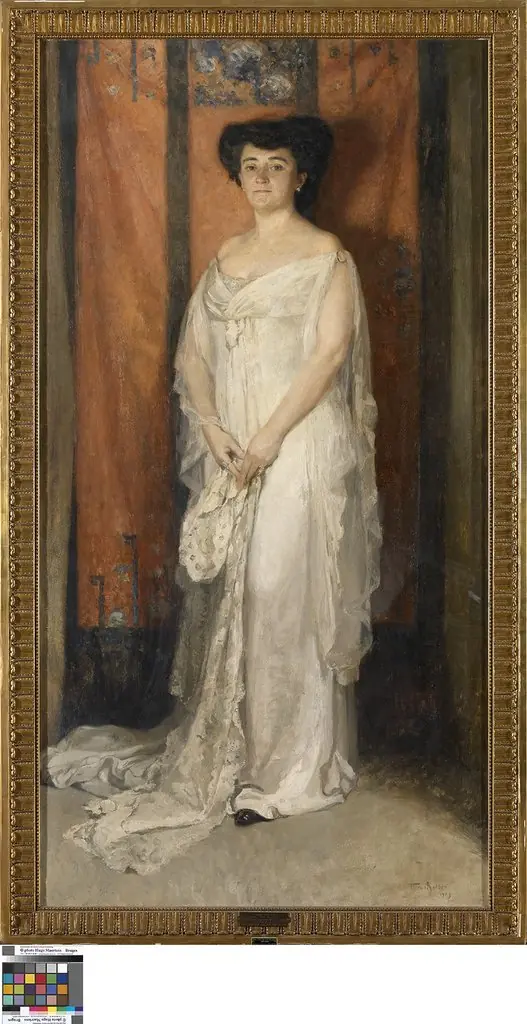 Portret van mevrouw A. Ganshof van der Meersch
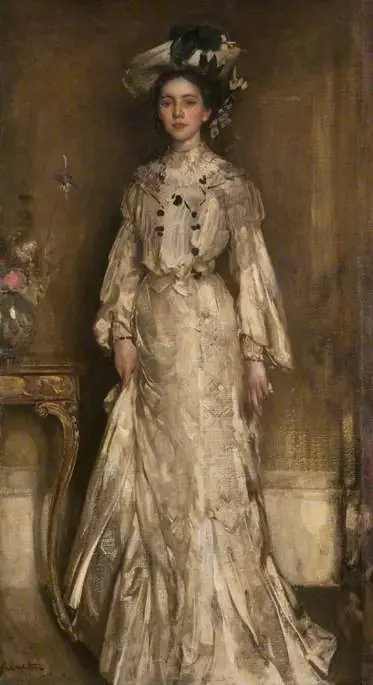 Lilian May Law (d.1882)
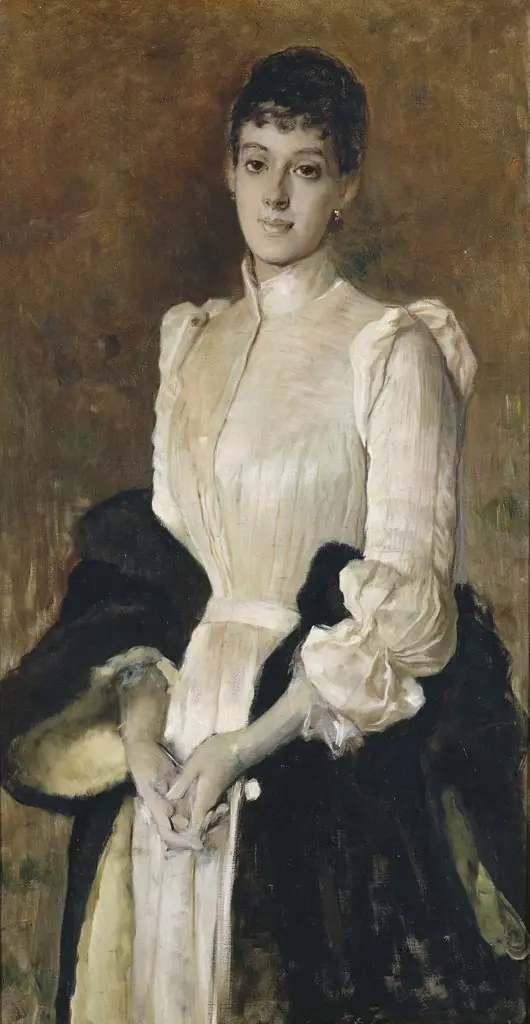 Concepción Miramón
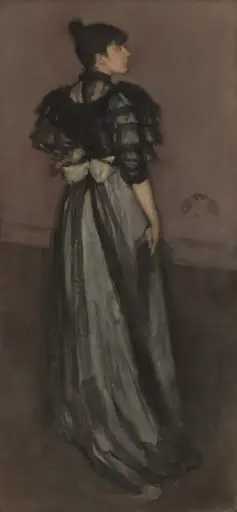 Mother of Pearl and Silver: The Andalusian
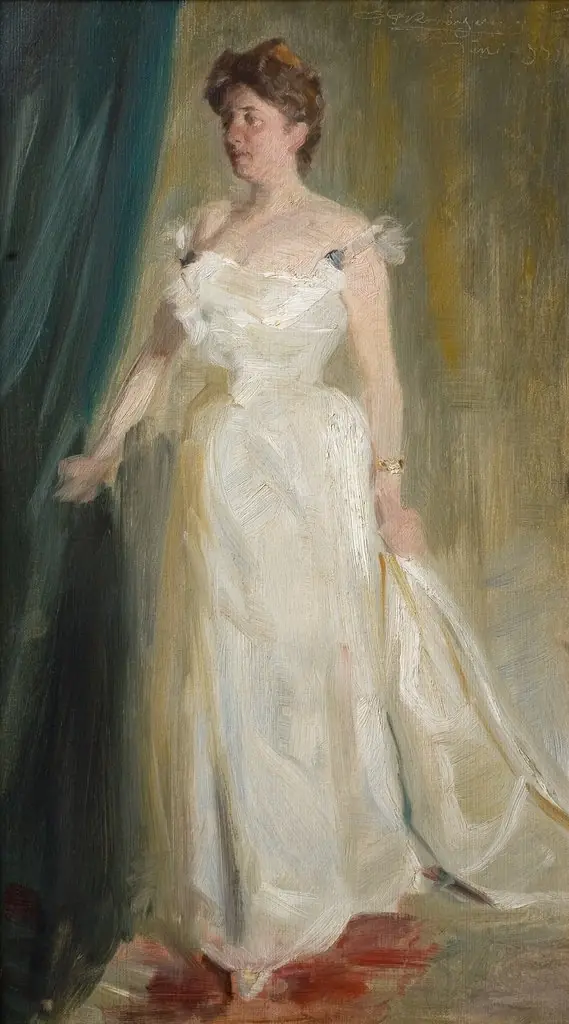 Portræt af lensgrevinde Lillie Suzanne Raben-Levetzau