Artwork
The fishwife
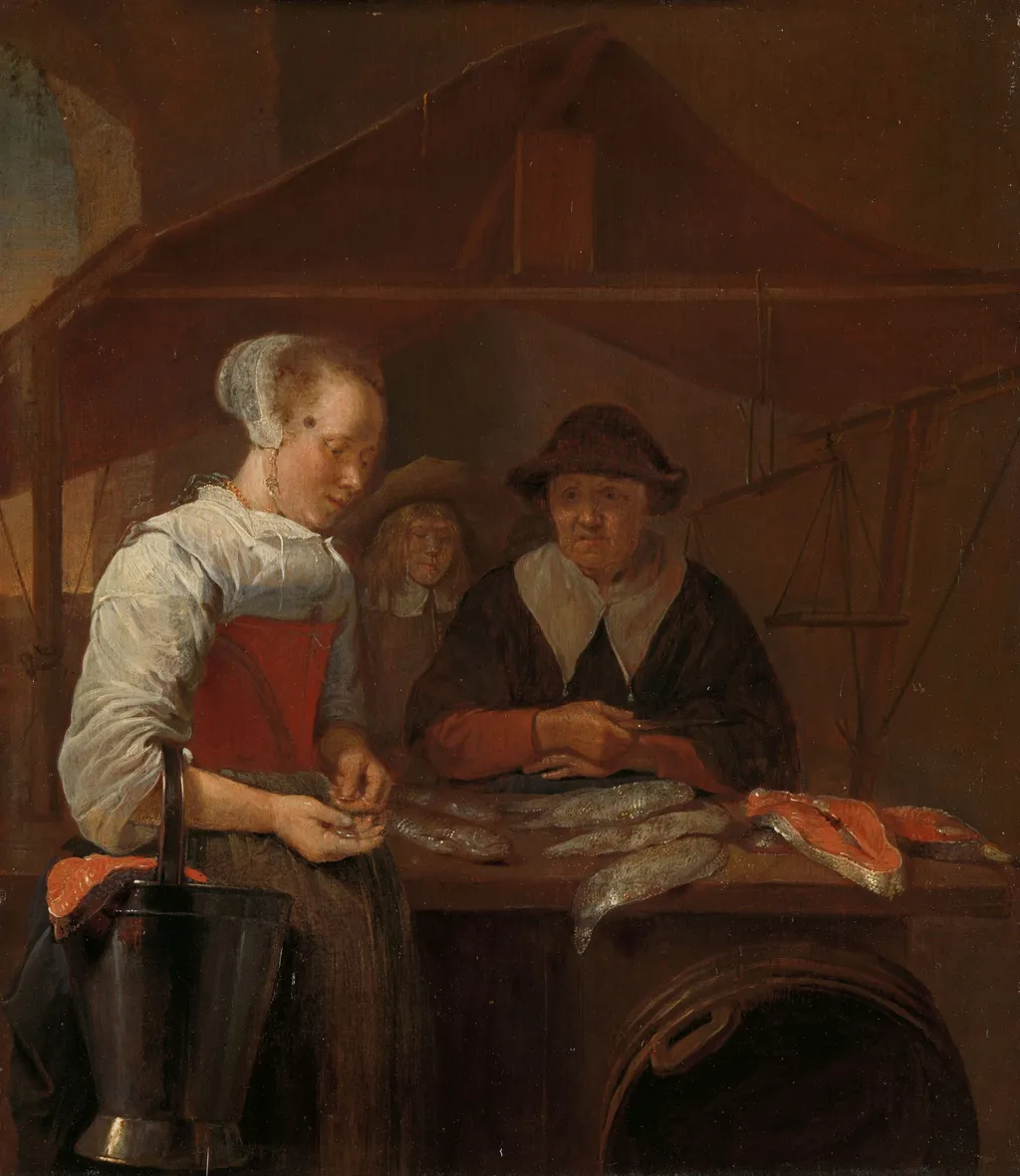
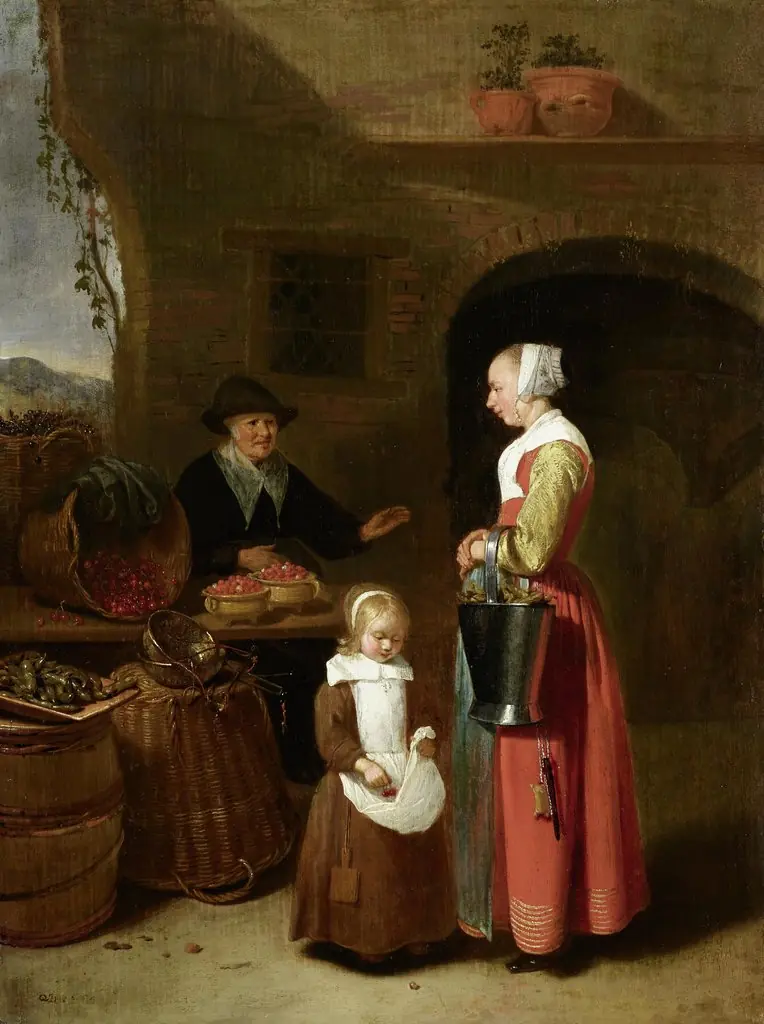
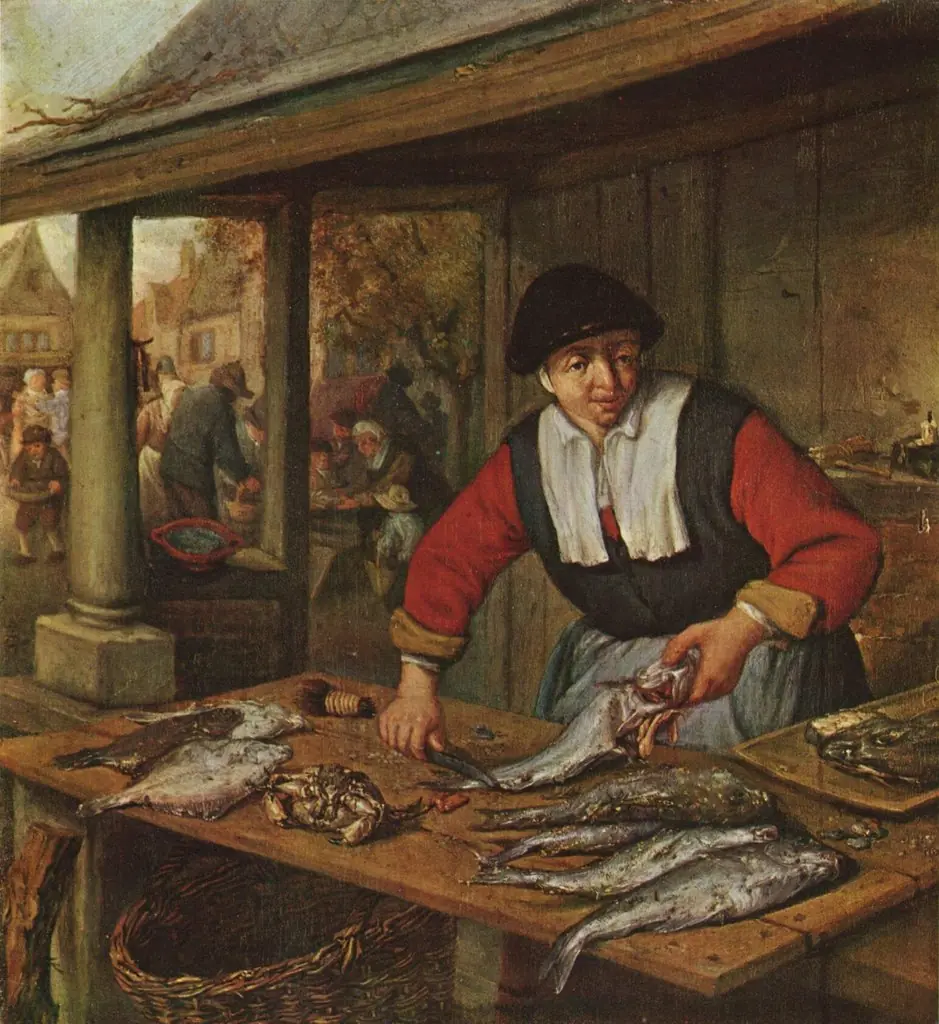
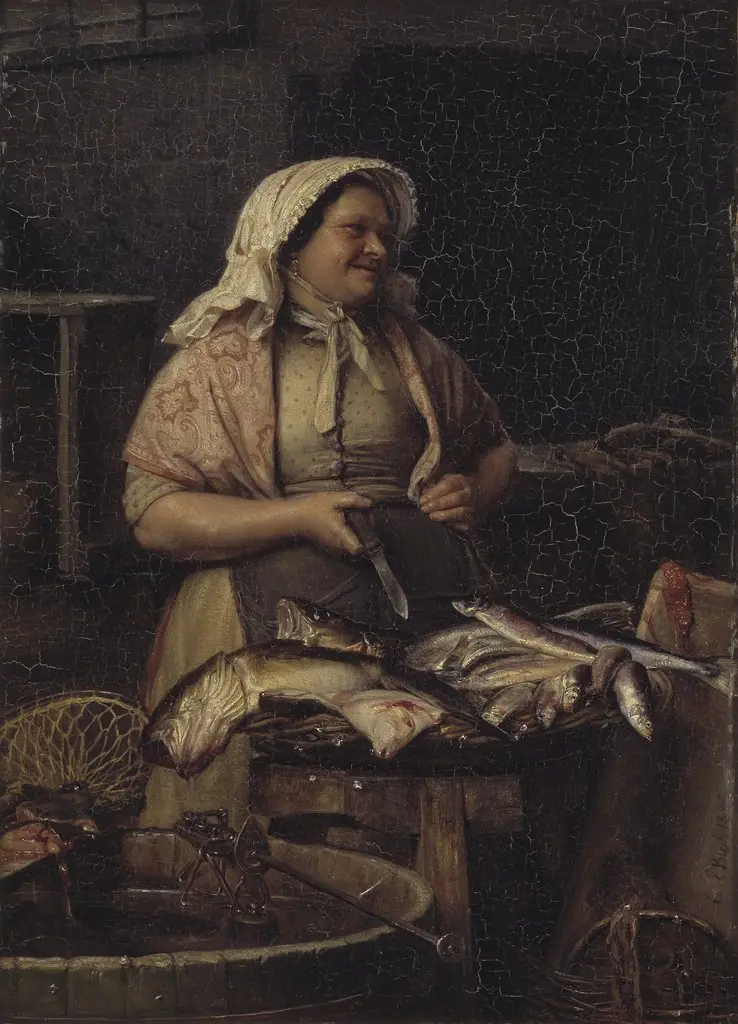
The fishwife is an oil painting by the Dutch Golden Age artist Quirijn van Brekelenkam. It dates from 1660 and is held in the collection of the Rijksmuseum.
About this work
Subject & Meaning
The composition centers on the interaction between the woman and the seafood, grounding the piece in the observable world of the Dutch Golden Age.
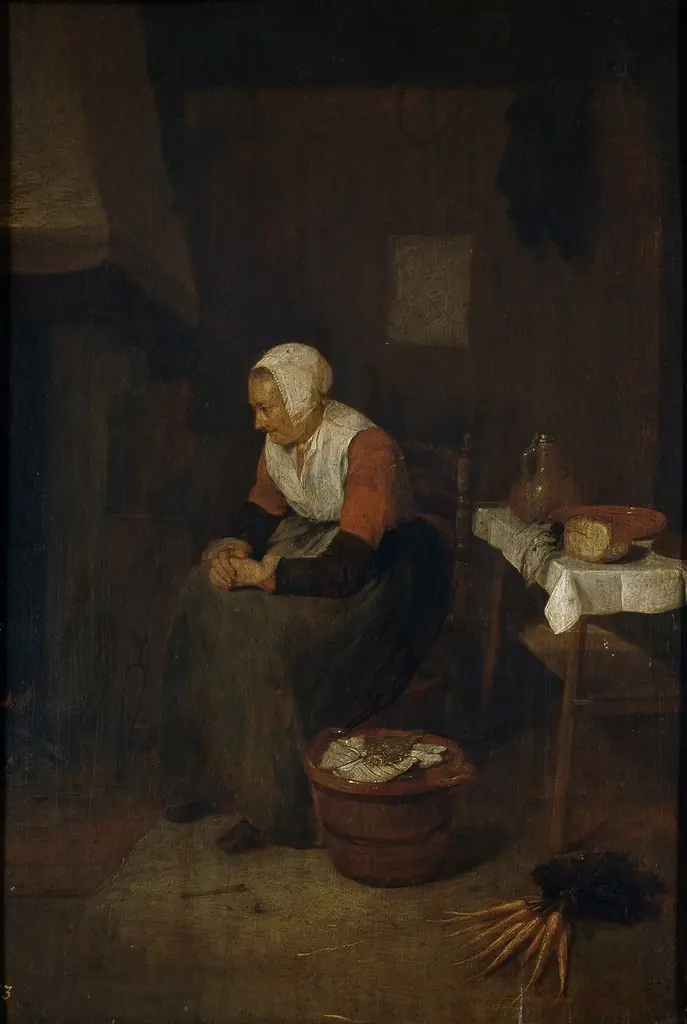
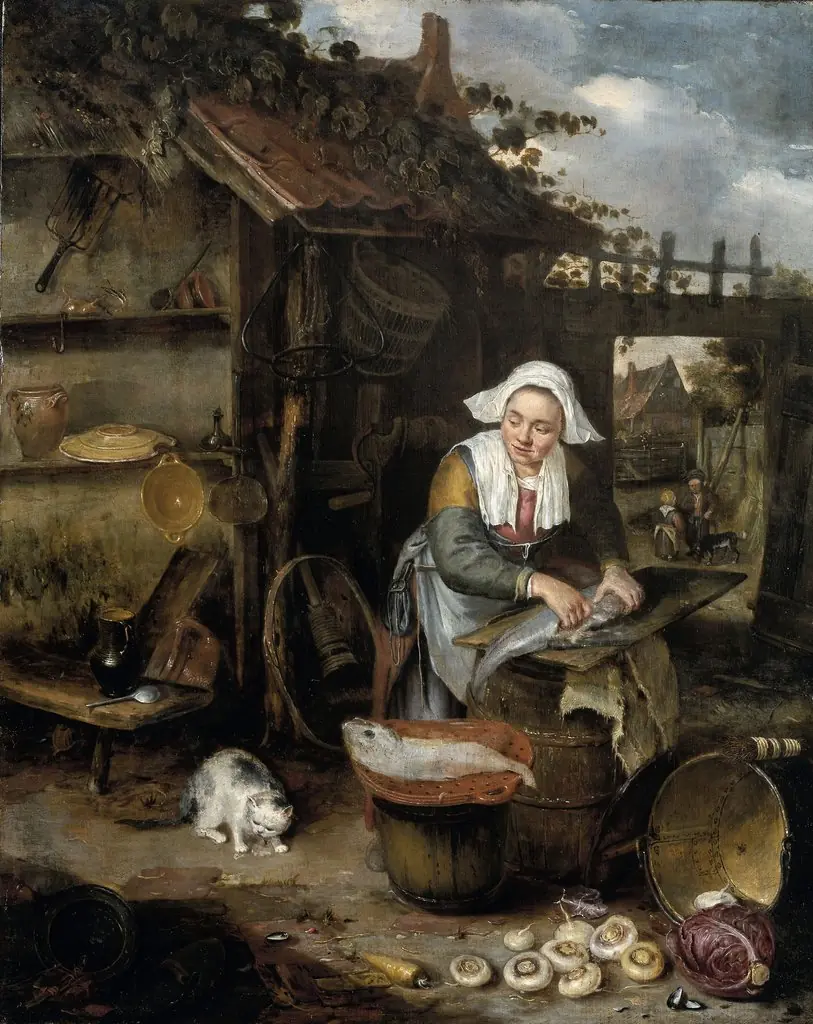
The painting depicts a woman engaged in the daily labor of handling fish, a subject characteristic of 17th-century Dutch genre art. The imagery focuses on a female figure and fish as food, presenting a realistic scene of market life rather than an allegorical narrative. Created in 1660, the work captures the mundane reality of a fishwife, emphasizing the economic and domestic roles of women during the period.
The composition centers on the interaction between the woman and the seafood, grounding the piece in the observable world of the Dutch Golden Age.
Technique & Style
The Fishwife is an oil painting executed on a panel support, created in 1660. The work is attributed to Quirijn van Brekelenkam, though some records also associate it with Hendrik Martenszoon Sorgh. As a genre scene, the piece depicts a woman accompanied by fish, rendered in the artist's characteristic style of domestic realism.
The physical dimensions of the panel measure 30 cm in height and 26 cm in width. The painting is currently held in the collections of the Rijksmuseum and the Amsterdam Museum, having originated from the Adriaan van der Hoop collection.
History & Provenance
The painting The Fishwife was created in 1660 by Quirijn van Brekelenkam. Executed in oil on panel, the work measures 30 cm by 26 cm. Historical records indicate that the piece was once part of the collection of Adriaan van der Hoop. Following Van der Hoop's ownership, the painting entered the holdings of major Dutch institutions, specifically the Rijksmuseum and the Amsterdam Museum, where it remains preserved as an example of genre art depicting a woman with fish.
Context
The painting The fishwife by Quirijn van Brekelenkam was created in 1660 using oil paint on panel, exemplifying the genre scene tradition within Dutch Golden Age art. It depicts a woman engaged in the act of selling or preparing fish, reflecting contemporary themes of everyday labor and domestic economy. The work is part of the collections of the Rijksmuseum and Amsterdam Museum, having been owned by Adriaan van der Hoop, and is classified within genre art for its representation of ordinary life.
Scholarship on the painting emphasizes its role in understanding 17th-century social customs and the artist’s contribution to genre painting, situating it within van Brekelenkam’s broader output focused on domestic interiors and occupational subjects.
Overview
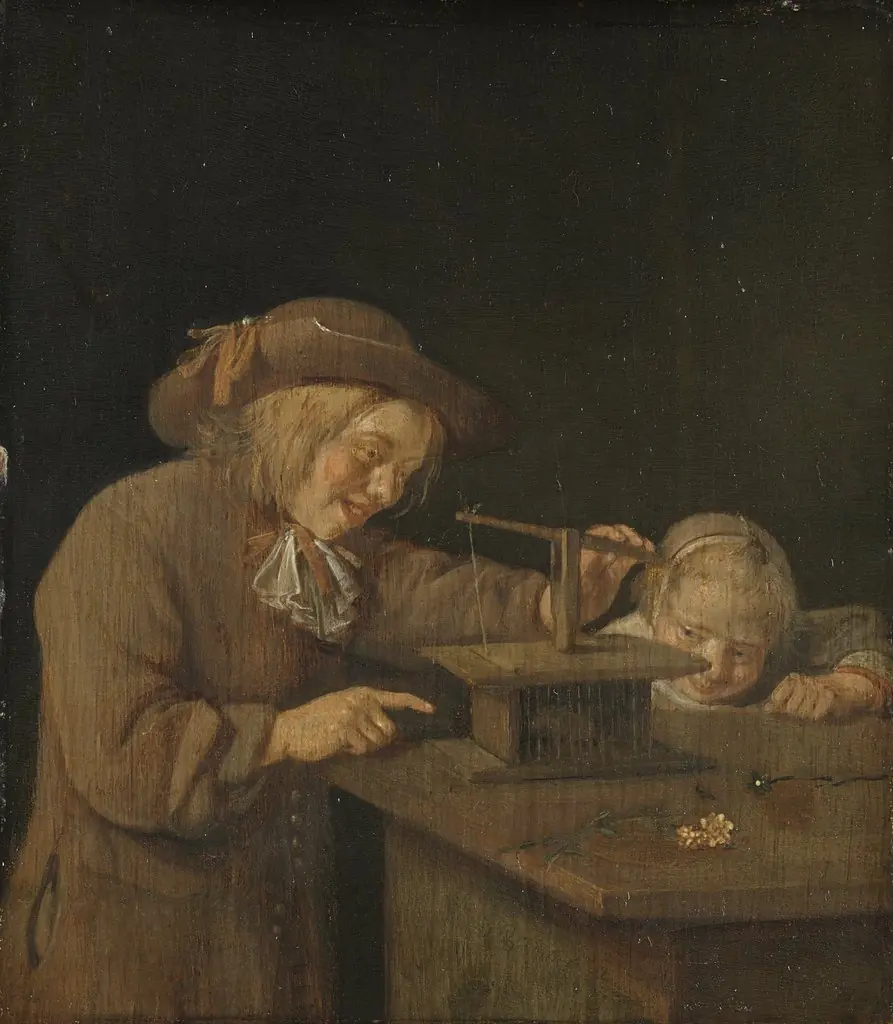
Quirijn van Brekelenkam’s oil painting The Fishwife, executed circa 1660, presents a modest interior scene typical of Dutch genre works of the Golden Age. The composition features three figures, a woman handling fish, an older woman seated nearby, and a child peeking from behind, set within a dimly lit wooden room. The work belongs to the collection of the Rijksmuseum.
Own this work as a print
Artist & collection
Artist
Quirijn or Quiringh Gerritsz van Brekelenkam (1622/29, Zwammerdam – 1669/79, Leiden) was a Dutch Baroque genre painter.