Artwork
Flowers
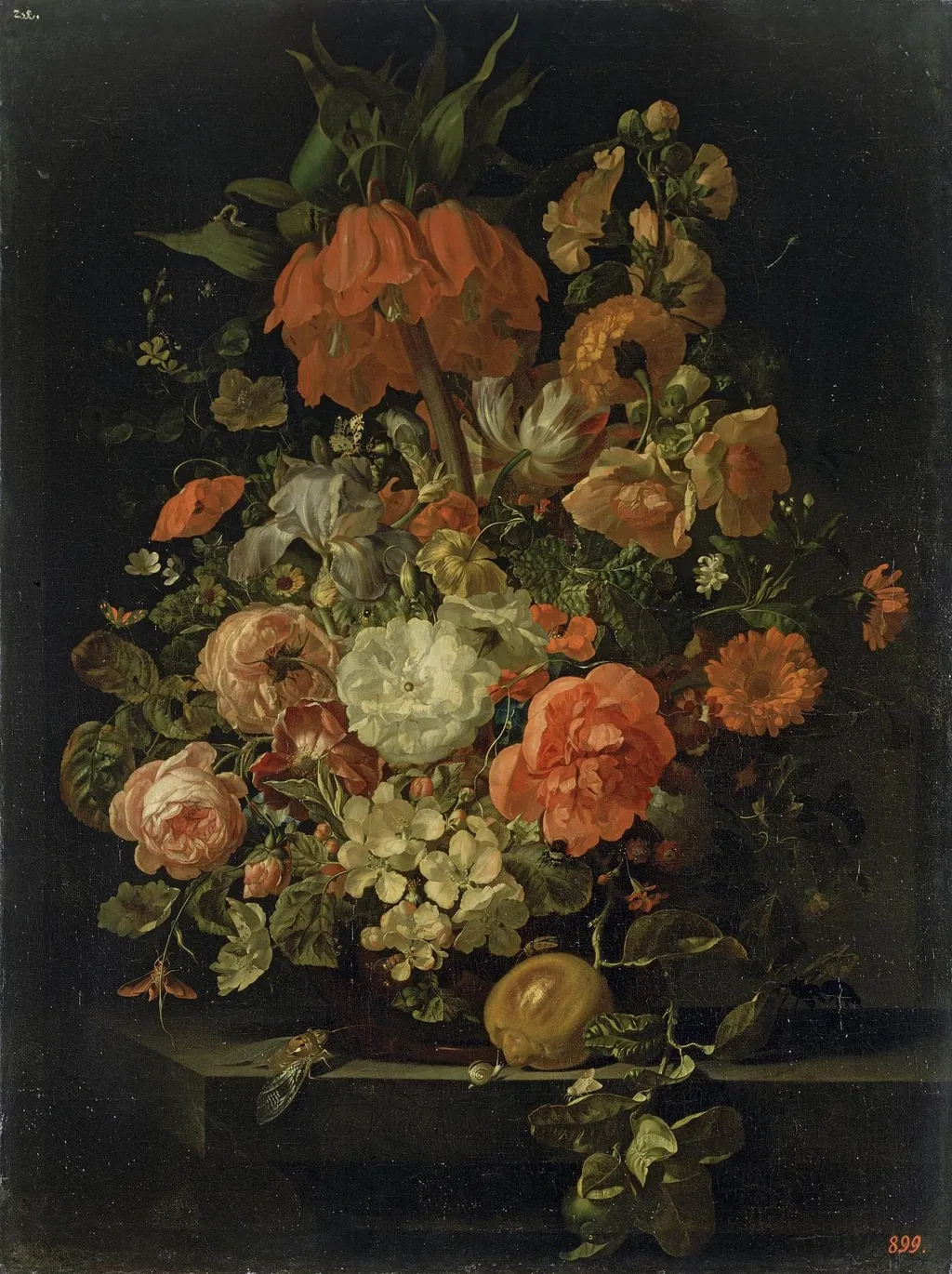
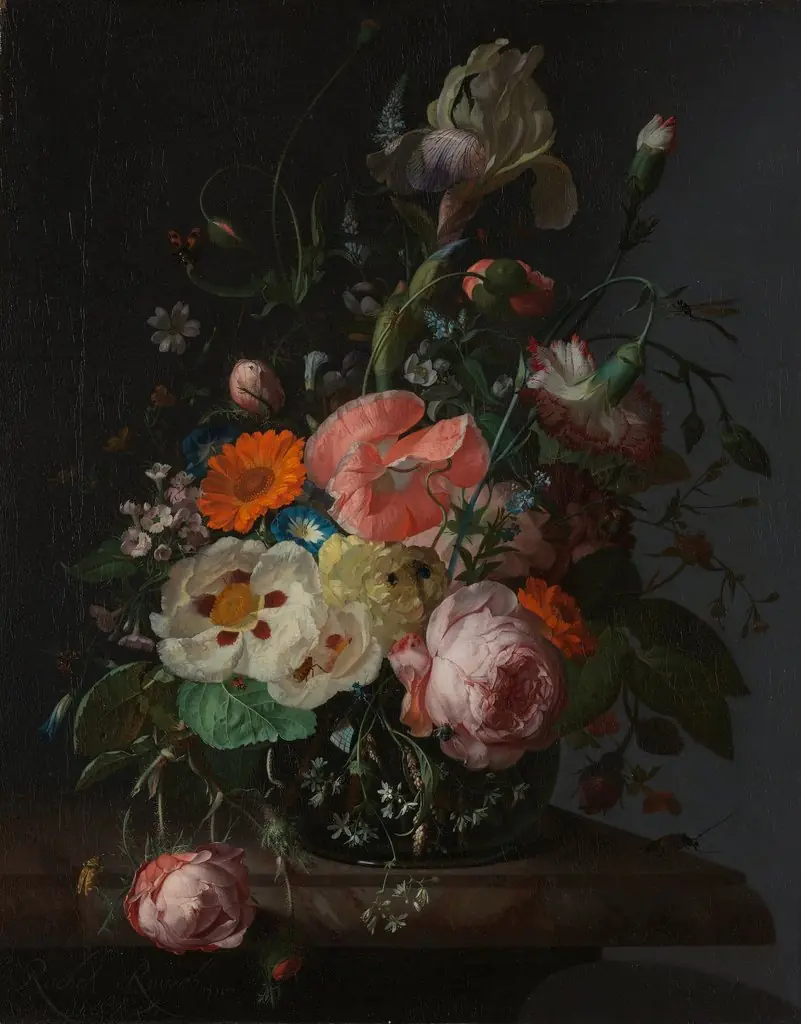
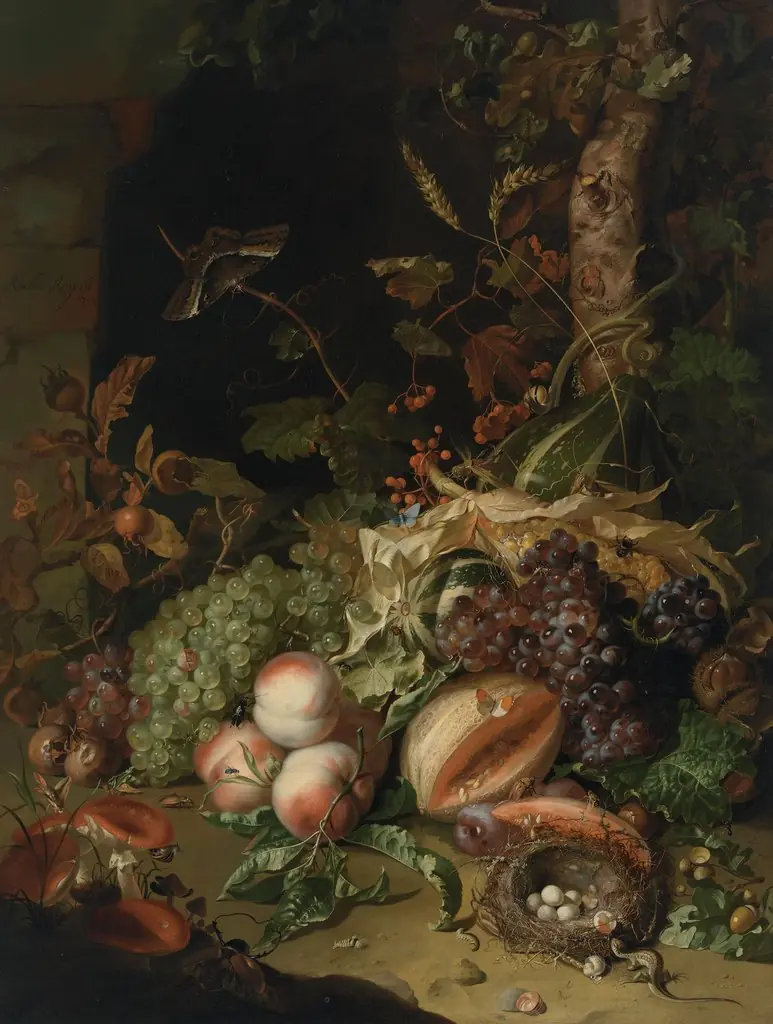
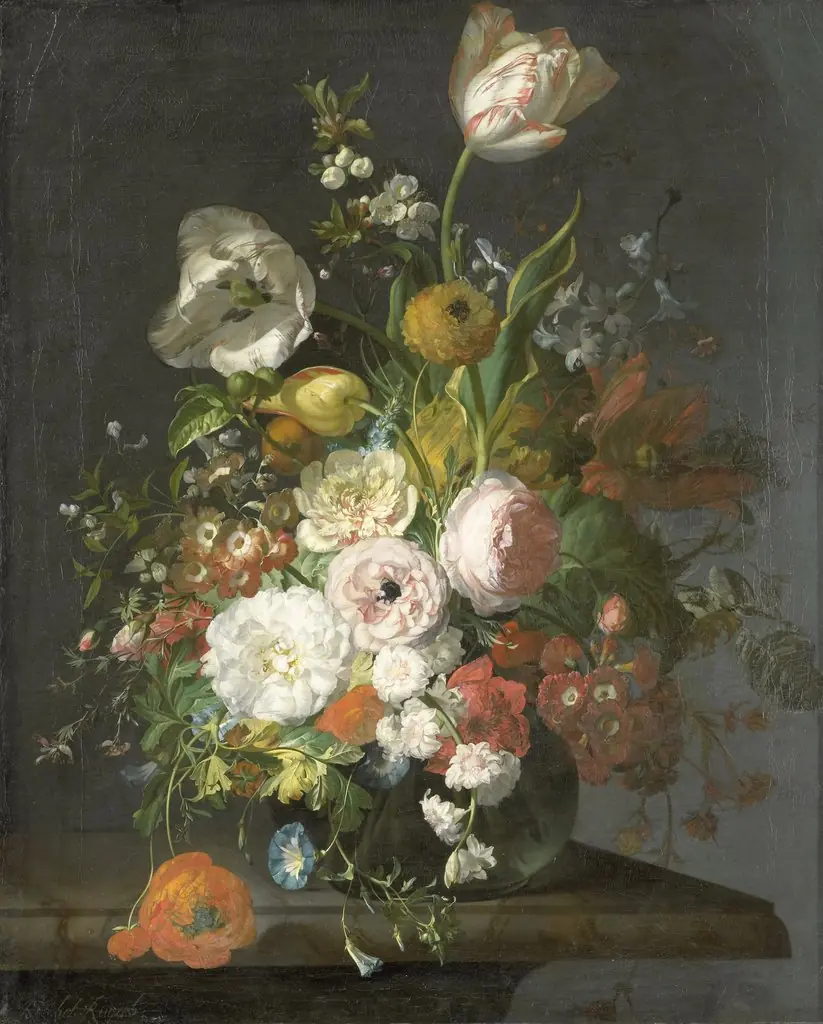
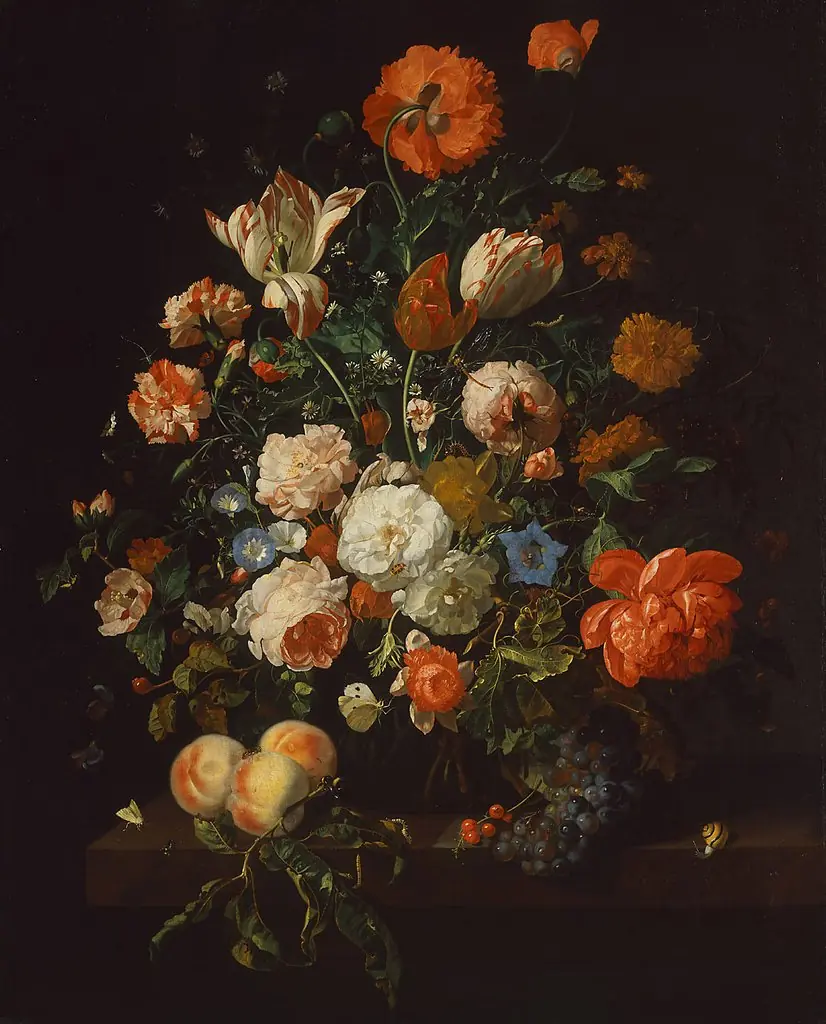
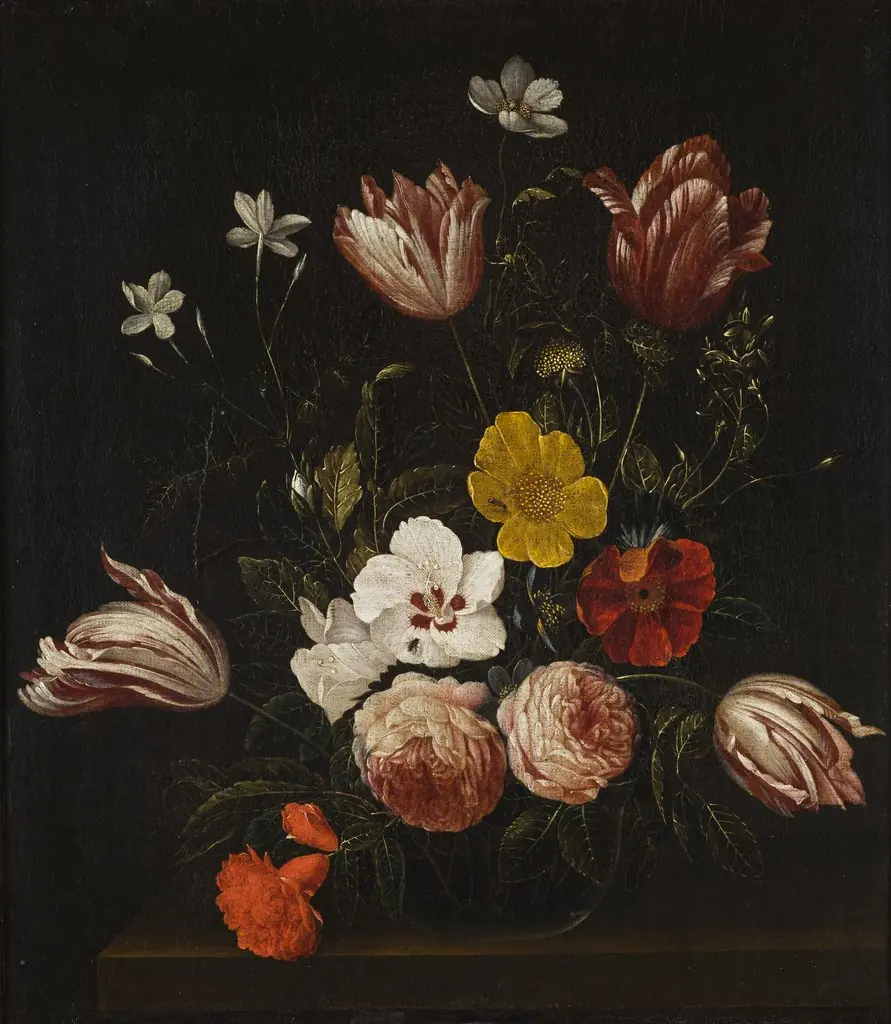
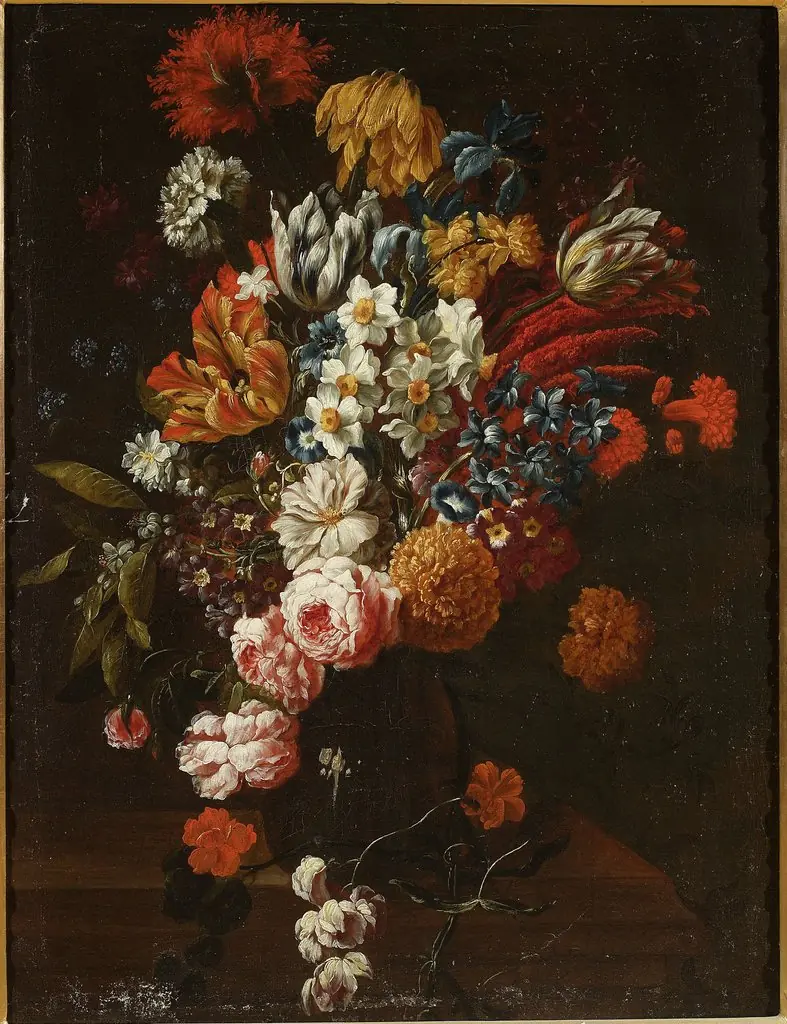
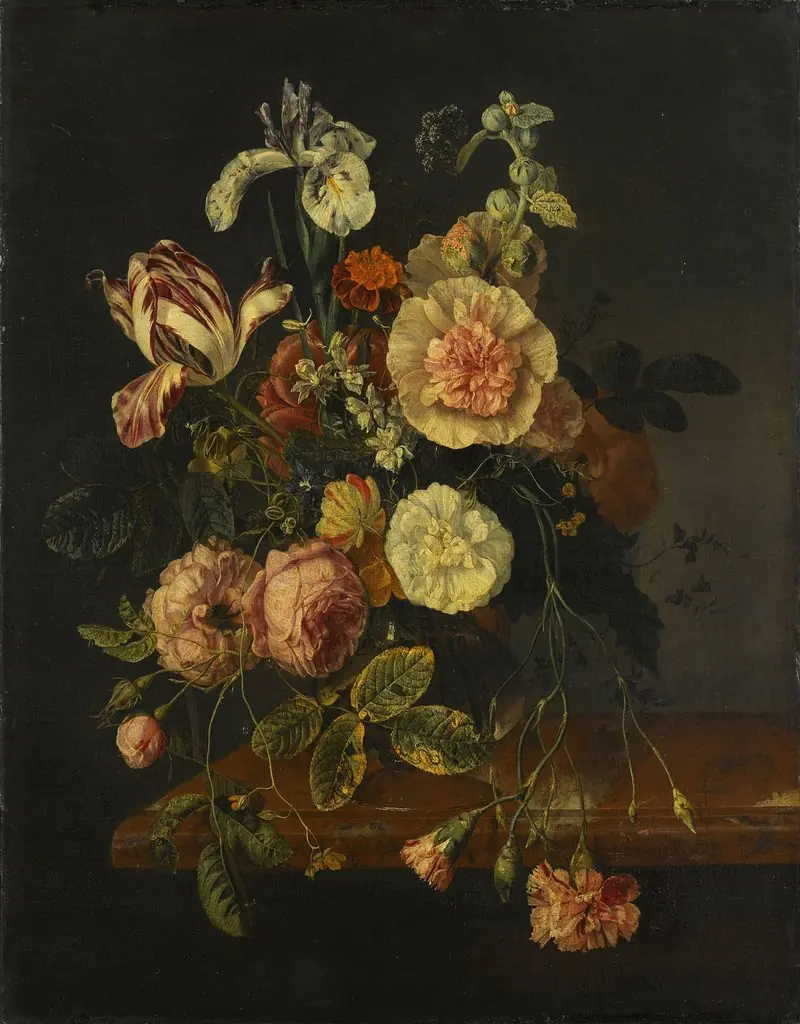
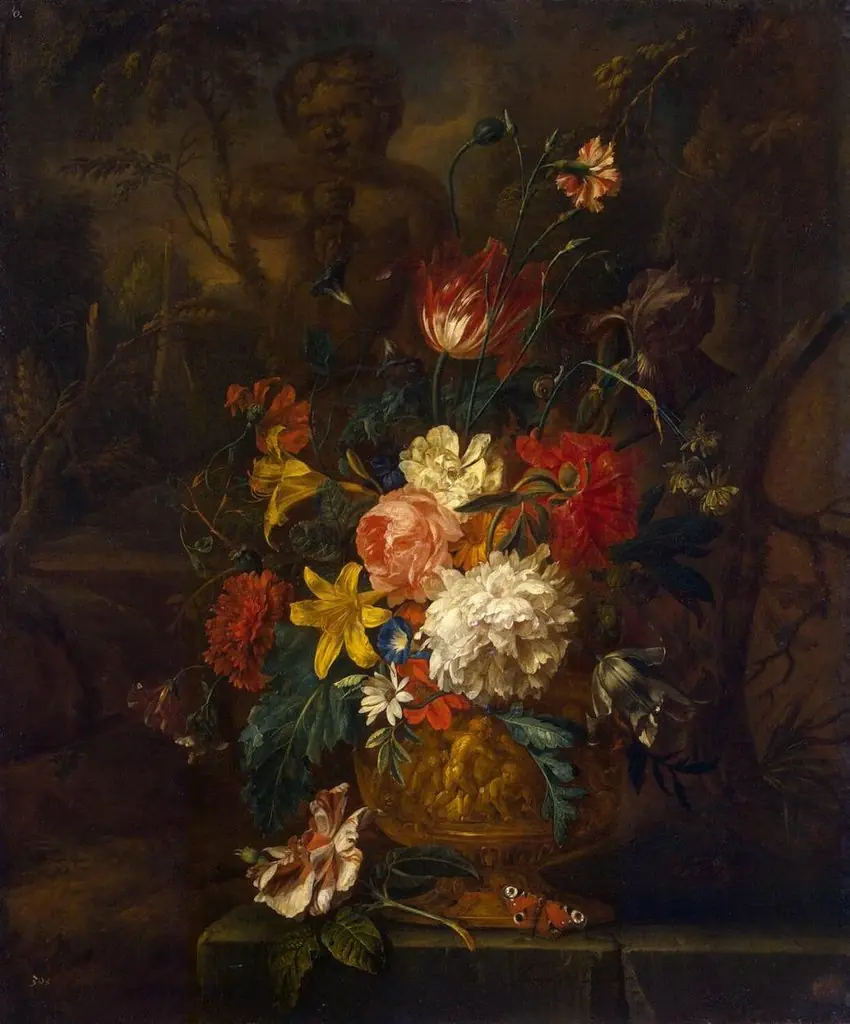
Flowers is an oil painting by the Rococo painting artist Rachel Ruysch. It dates from 1730 and is held in the collection of the Hermitage Museum.
About this work
Overview
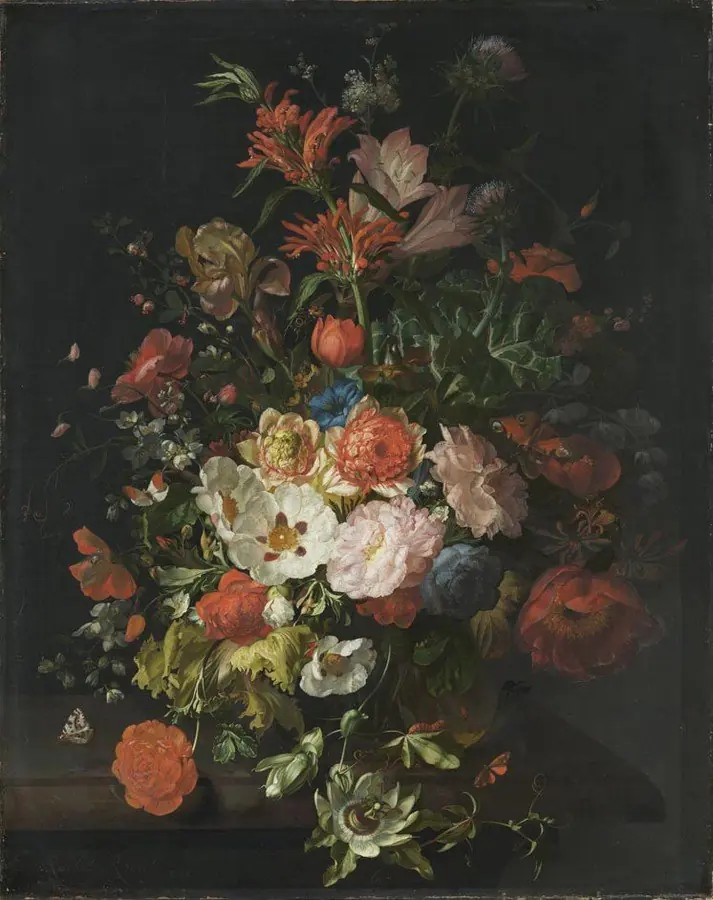
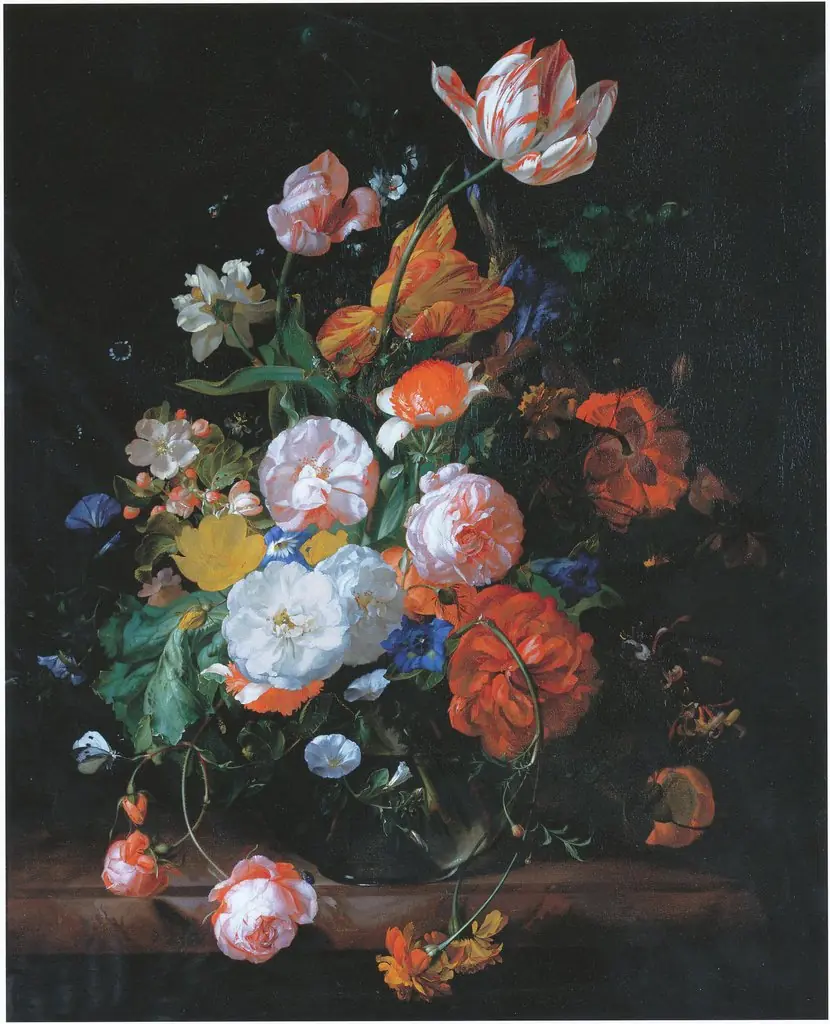
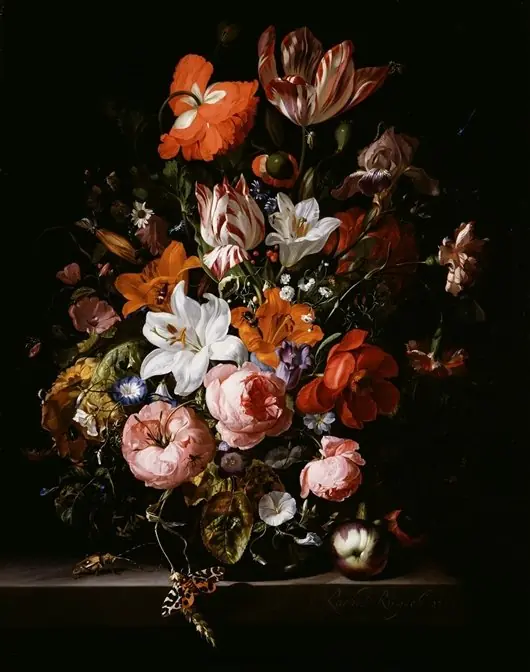
Flowers is a 1730 oil painting by Rachel Ruysch, a renowned Dutch still-life artist known for her floral compositions. Characterized by a lush, overflowing bouquet, the work exemplifies Ruysch's mastery of capturing the natural world.
Subject & Meaning
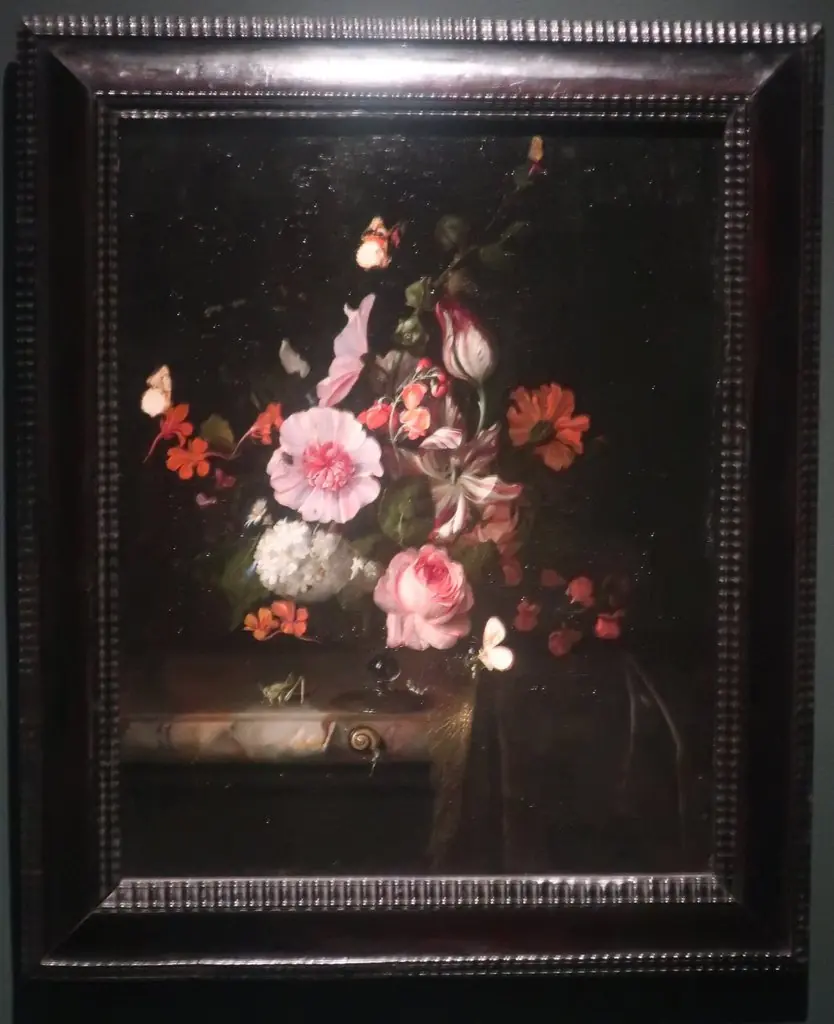
The painting depicts a vibrant, mixed bouquet spilling from a dark, narrow vase, accompanied by green leaves, a lemon, and a hovering fly. This arrangement may symbolize the fleeting nature of life, a common theme in Dutch still-life art, while also showcasing the artist's botanical precision.
Technique & Style
Ruysch employed glazing techniques to achieve remarkably lifelike, detailed petals, with some appearing slightly wrinkled. The dark background heightens the chromatic intensity of the flowers, particularly the orange roses and white blossoms, reflecting the Rococo emphasis on light and color.
History & Provenance
Created in 1730, Flowers is part of the State Hermitage Museum's collection. Ruysch's long career, spanning over six decades, earned her the distinction of being the best-documented female painter of the Dutch Golden Age.
Context
Flowers aligns with the Rococo movement, characterized by its attention to detail, use of pastel hues, and often, themes of transience. As a female artist with international acclaim during her lifetime, Ruysch's work challenges common narratives of gendered success in 18th-century art.
Legacy
Ruysch's contributions to Dutch still-life painting, as seen in Flowers, have ensured her legacy as a pioneering female artist of the Dutch Golden Age, influencing subsequent generations with her innovative floral depictions.
Own this work as a print
Artist & collection
Artist
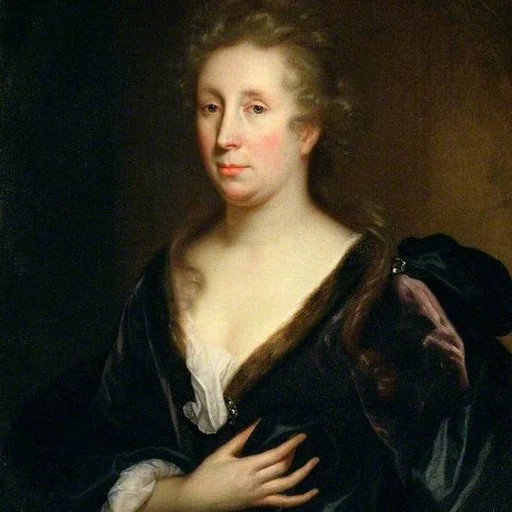
Rachel Ruysch (3 June 1664 – 12 October 1750) was a Dutch still-life painter from the Dutch Republic.