Artwork
A Hanging Bouquet of Flowers
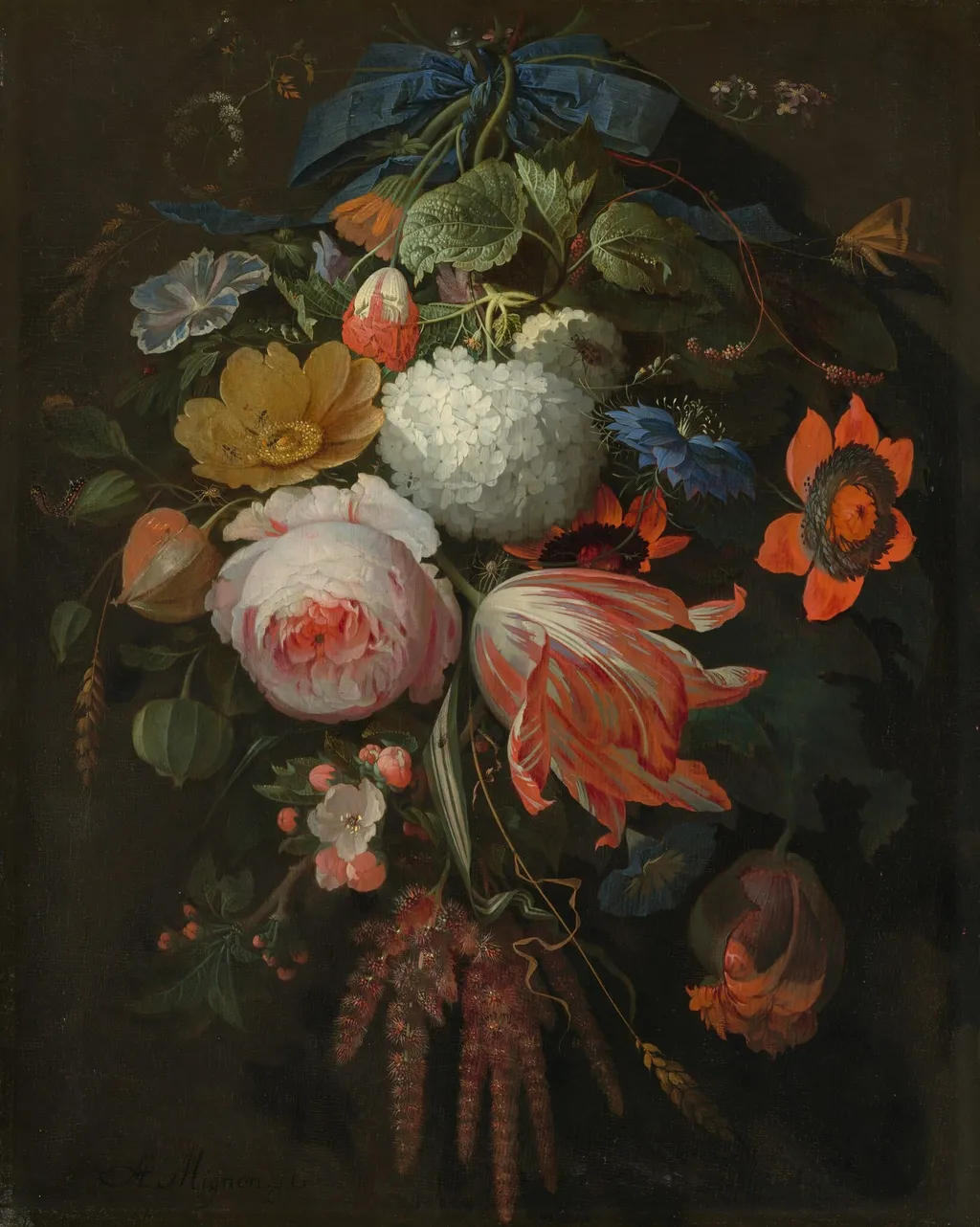
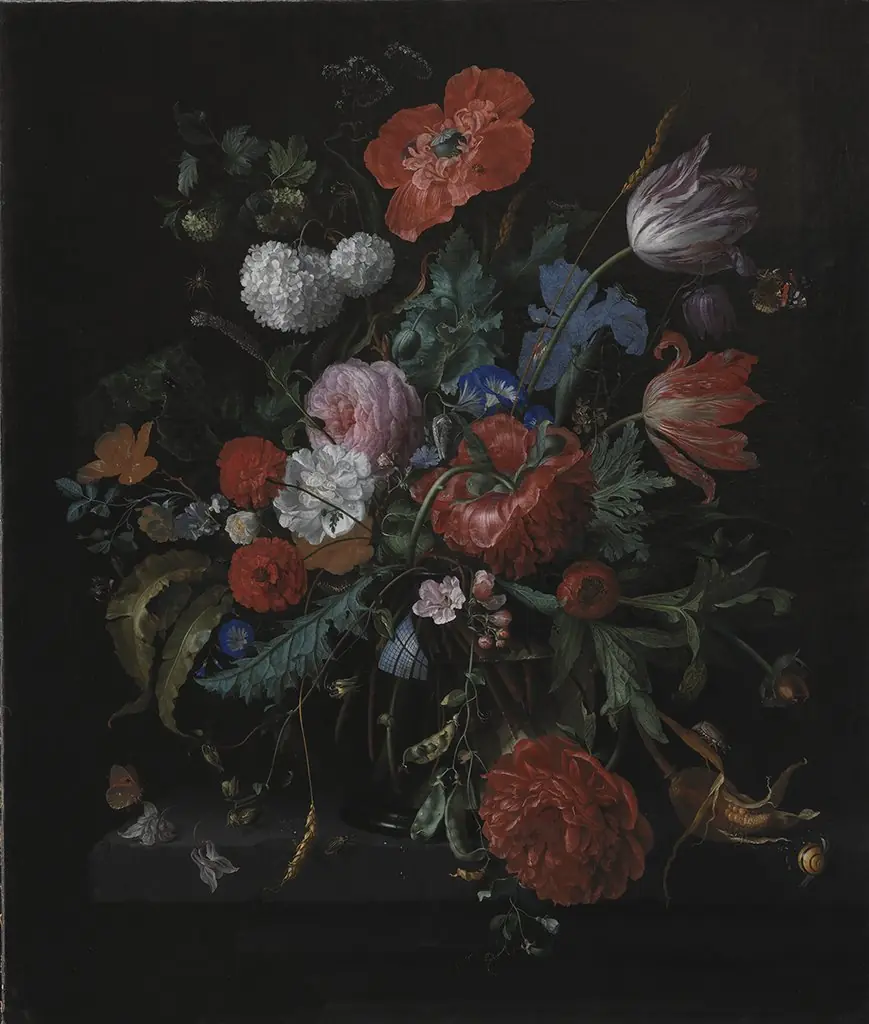
A Hanging Bouquet of Flowers is an oil painting by the Baroque artist Abraham Mignon. It dates from 1668 and is held in the collection of the National Gallery of Art.
- Inscription
- Inscribed:lower left: AB (in ligature) Mignon f.
About this work
Technique & Style
Executed in oil on panel in 1674, the work employs a tightly controlled alla prima handling to render translucent petals, delicate stamens, and dewdrop highlights that catch light across the bloom. The bouquet is suspended from a ribbon by a fine metal hook, its stems converging in a hidden point to create a spiraling rhythm that guides the viewer’s eye upward. Pigments include lead-tin yellow for luminous florets, vermilion for poppy accents, and smalt for cooler foliage shadows, applied in thin glazes over a warm imprimatura to intensify chromatic saturation.
Minute craquelure appears only in the darkest passages, indicating stable aging, while minor abrasion along the lower edge suggests historic wear rather than structural damage. The composition’s symmetrical yet dynamic arrangement, centered on a focal blossom flanked by offsetting blooms, aligns with Dutch vanitas still-life conventions, balancing naturalistic observation with idealized harmony.
History & Provenance
Its provenance traces from a private collection in England to the London dealer John Mitchell & Son.
Painted in 1674, the still-life was later in a private English collection before passing through the London dealer John Mitchell & Son, who acquired it in November 1961 for the collectors Mr. and Mrs. Paul Mellon of Upperville, Virginia. The Mellons donated the work to the National Gallery of Art, Washington, D.C., in 1992. Earlier, the painting is recorded in the inventory of Mr. Phillips of Hitchin (Antiques) Ltd., cited by Sydney H. Pavière in 1965, suggesting Phillips handled the work before its sale to the Mitchell firm.
The painting is held in the collection of the National Gallery of Art in Washington, D.C. Its provenance traces from a private collection in England to the London dealer John Mitchell & Son. In November 1961, the work was purchased by Mr. and Mrs. Paul Mellon of Upperville, Virginia, who subsequently gifted it to the museum in 1992. Historical records suggest the piece may have previously belonged to Mr. Phillips of Hitchin (Antiques) Ltd. before entering the Mitchell inventory.
While the work is documented within the National Gallery of Art's holdings, the provided sources do not list specific inventory accession numbers or detail any public exhibition history for this panel.
Overview
Abraham Mignon, a Dutch painter from Utrecht, created A Hanging Bouquet of Flowers around 1668. This oil on panel painting exemplifies the detailed still life tradition prevalent in the Netherlands during the mid-17th century. The artwork features a meticulously rendered floral arrangement, showcasing the artist's skill in capturing botanical forms with precision and a keen eye for naturalistic representation. It stands as a testament to the era's appreciation for the genre.
Subject & Meaning
The painting presents a vibrant bouquet of various blossoms, depicted as if suspended from a single point. This arrangement, common in 17th-century Dutch still life, allowed artists to display a diverse array of flora, often including flowers that would not naturally bloom simultaneously. The detailed portrayal of each petal and leaf, combined with the illusion of suspension, invites close observation of nature's transient beauty.
Context
This artwork emerged from the flourishing artistic environment of the Dutch Golden Age, a period when still life painting gained significant popularity. Artists like Mignon specialized in depicting everyday objects and natural elements, reflecting a broader cultural interest in scientific observation and the beauty of the natural world. Such paintings were highly sought after, serving both as decorative pieces and as opportunities for contemplation.
Legacy
Mignon's meticulous floral compositions, including A Hanging Bouquet of Flowers, garnered considerable acclaim during his lifetime and continued to be highly valued. Collectors throughout Europe in the 17th and 18th centuries actively acquired his works. This enduring appreciation underscores his significant contribution to the still life genre and his lasting impact on the art market of the period.
Own this work as a print
Artist & collection
Artist
Abraham Mignon or Minjon (21 June 1640 – 27 March 1679) was a Dutch still life painter.

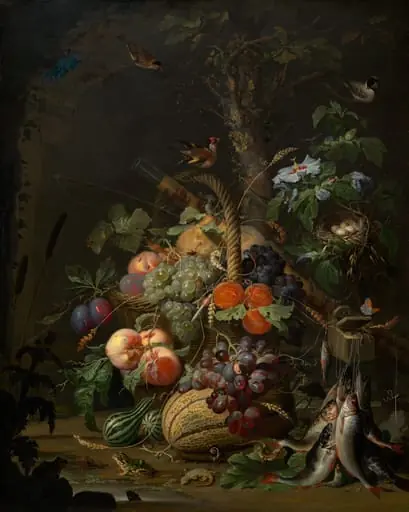 Still Life with Fruit, Fish, and a Nest
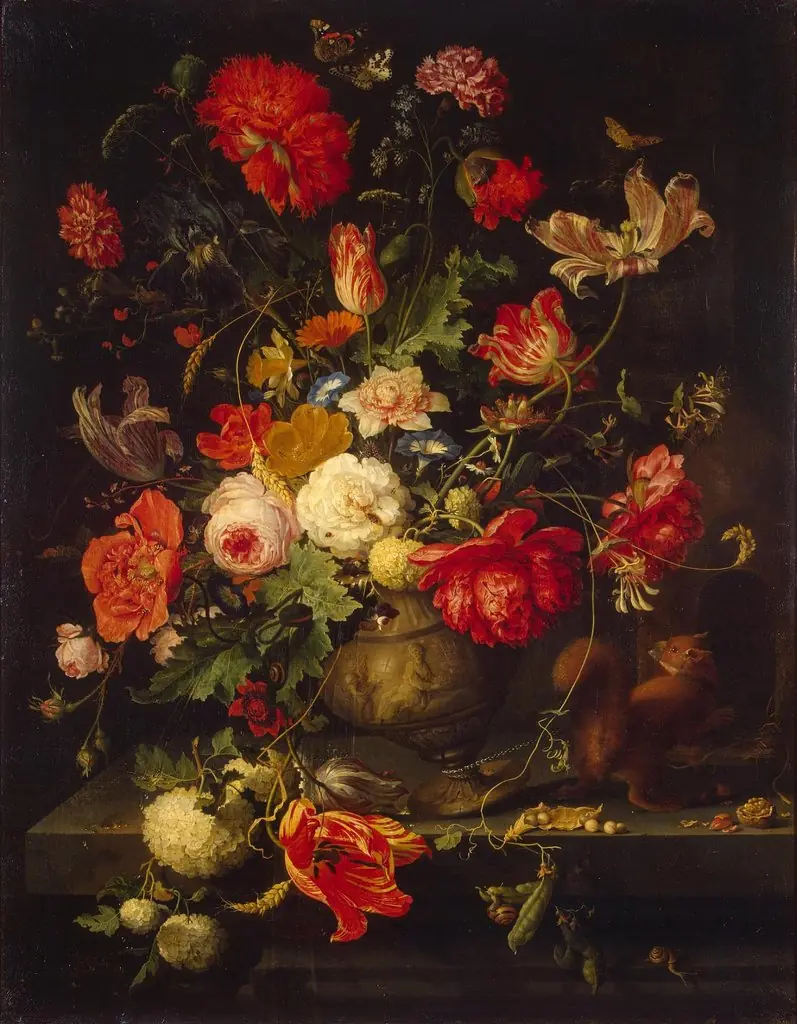 Vase of Flowers
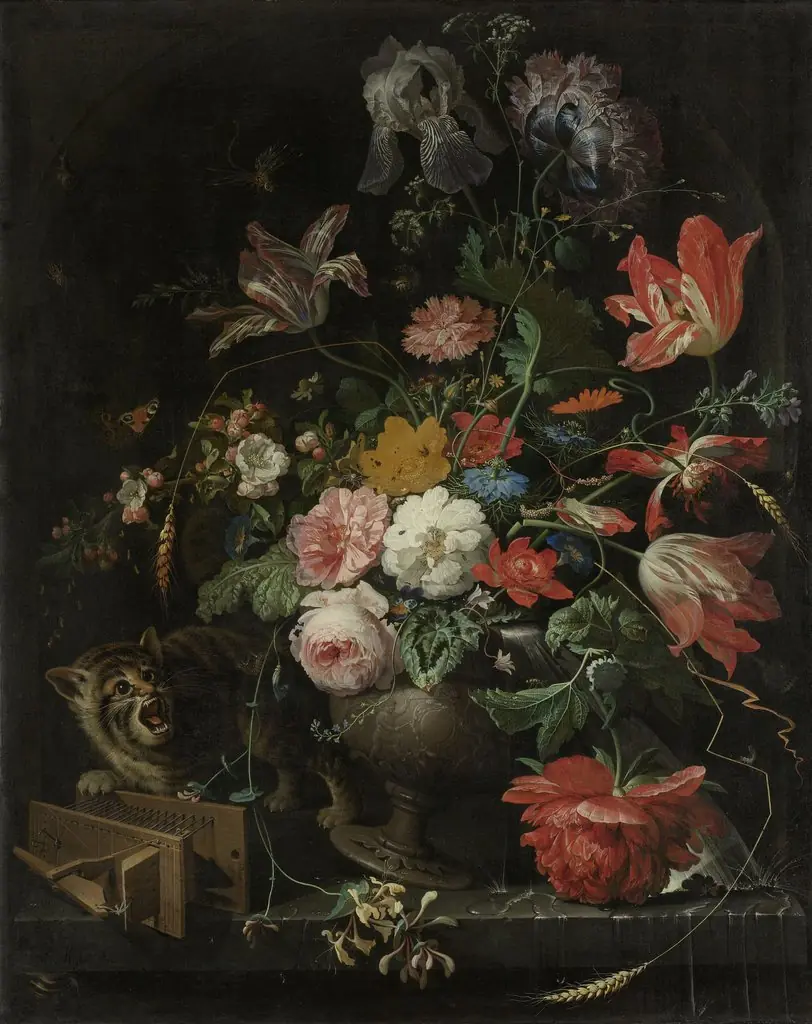 The Overturned Bouquet
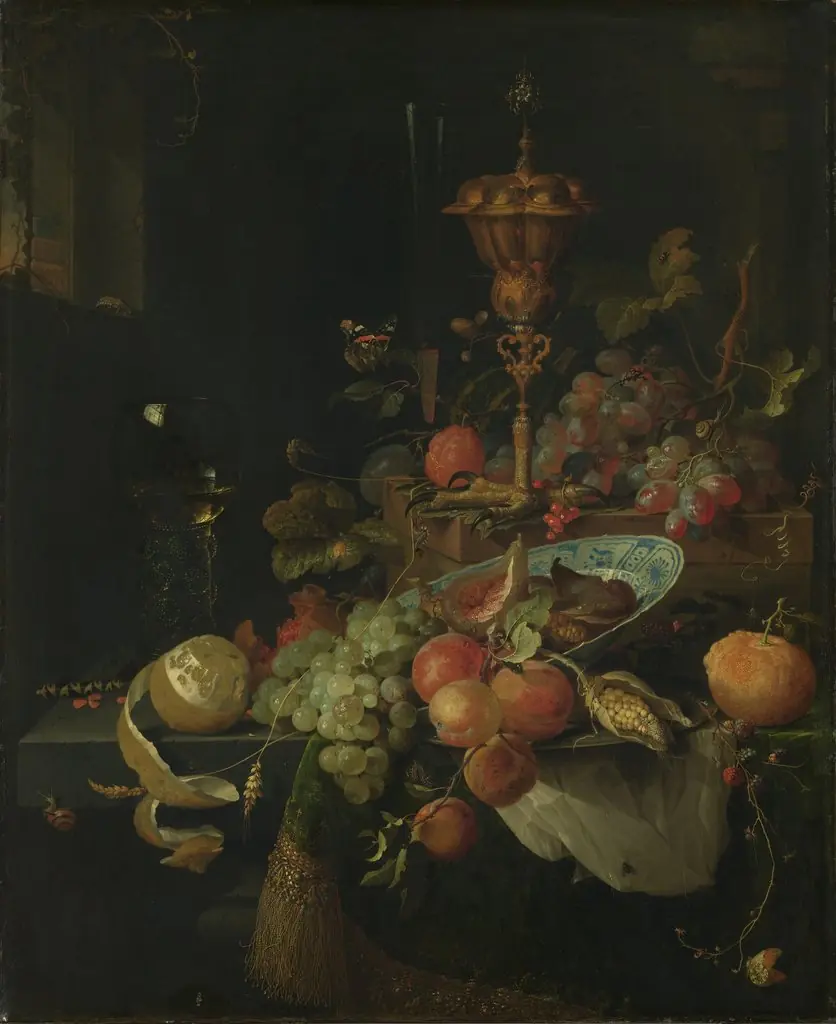 Still life with fruit and a beaker on a cock's foot
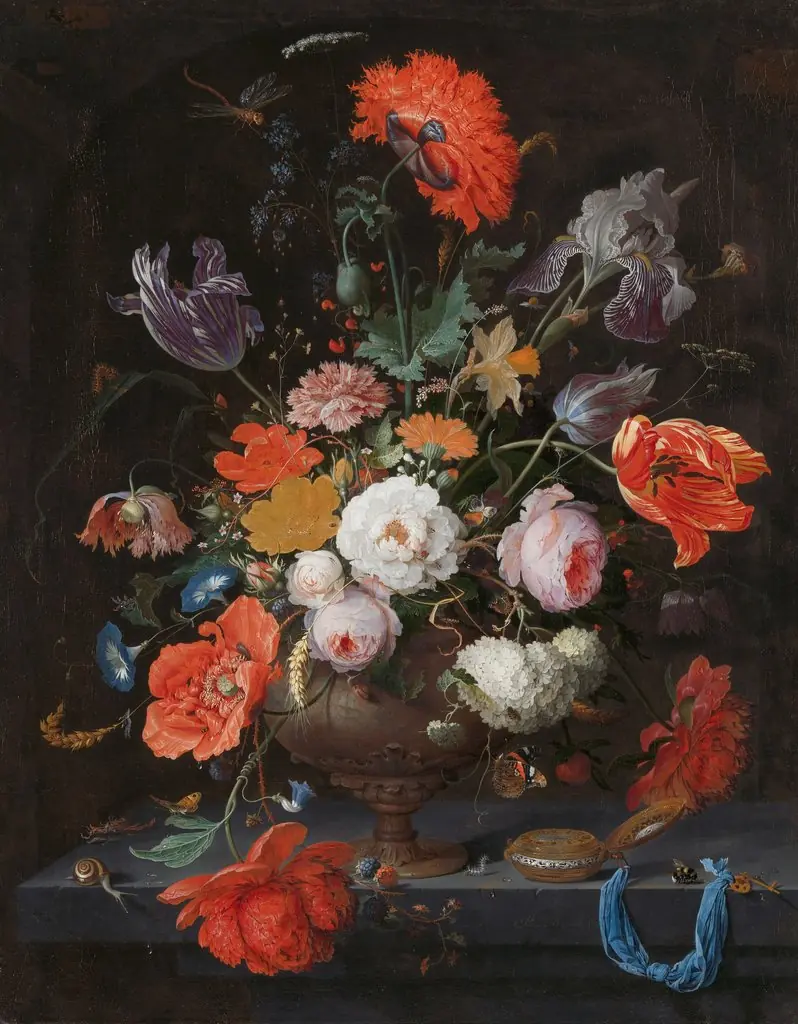 Still life with flowers and a watch
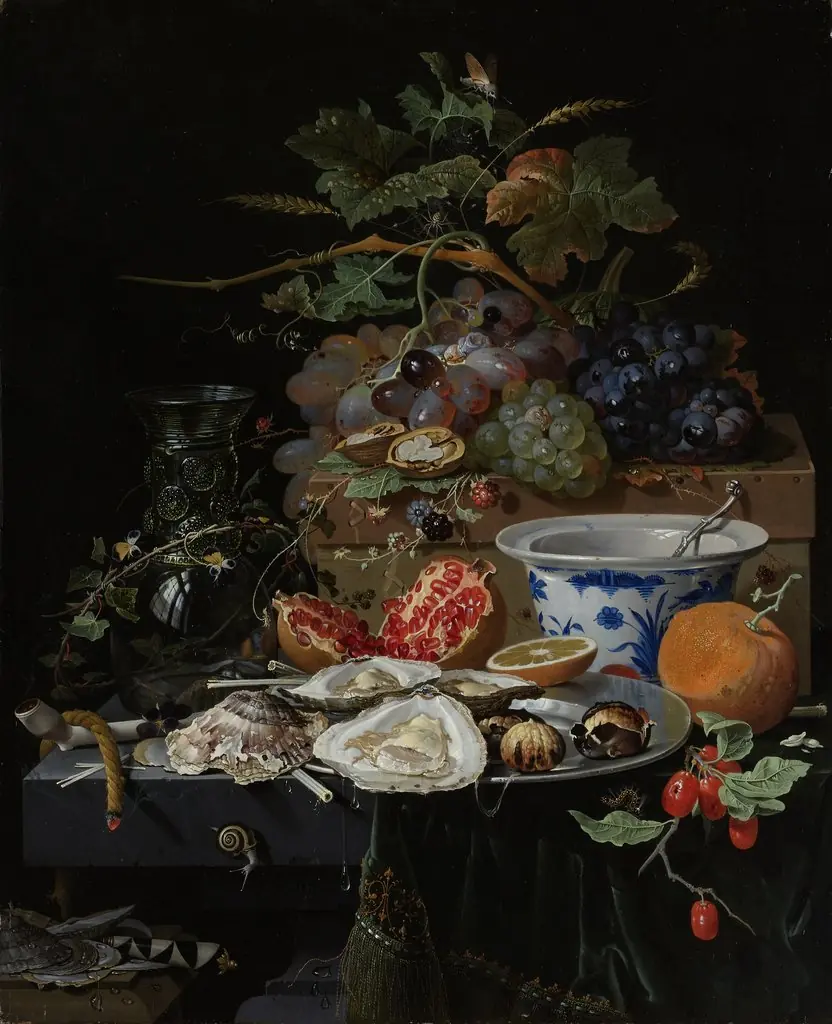 Still Life with Fruit, Oysters and a Porcelain Bowl
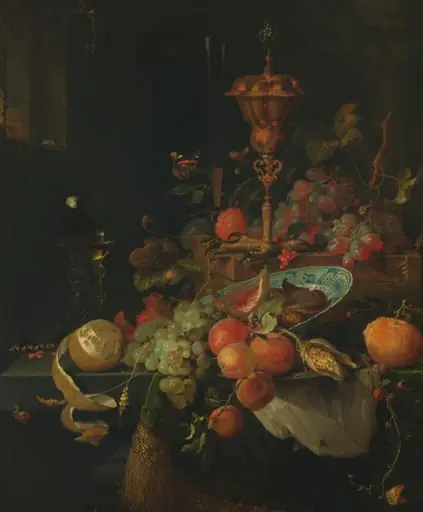 Still Life with Fruit and a Beaker on a Cock's Foot
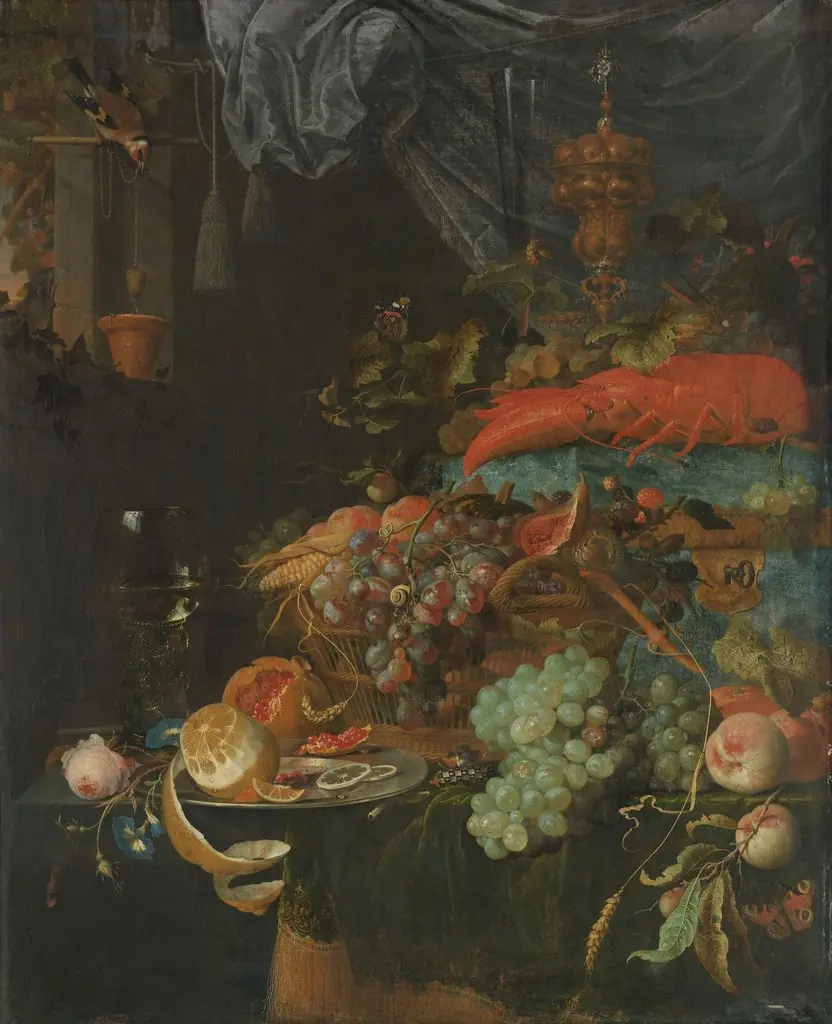 Still life with fruit and a finch drawing water