Artwork
Diques de Valparaíso
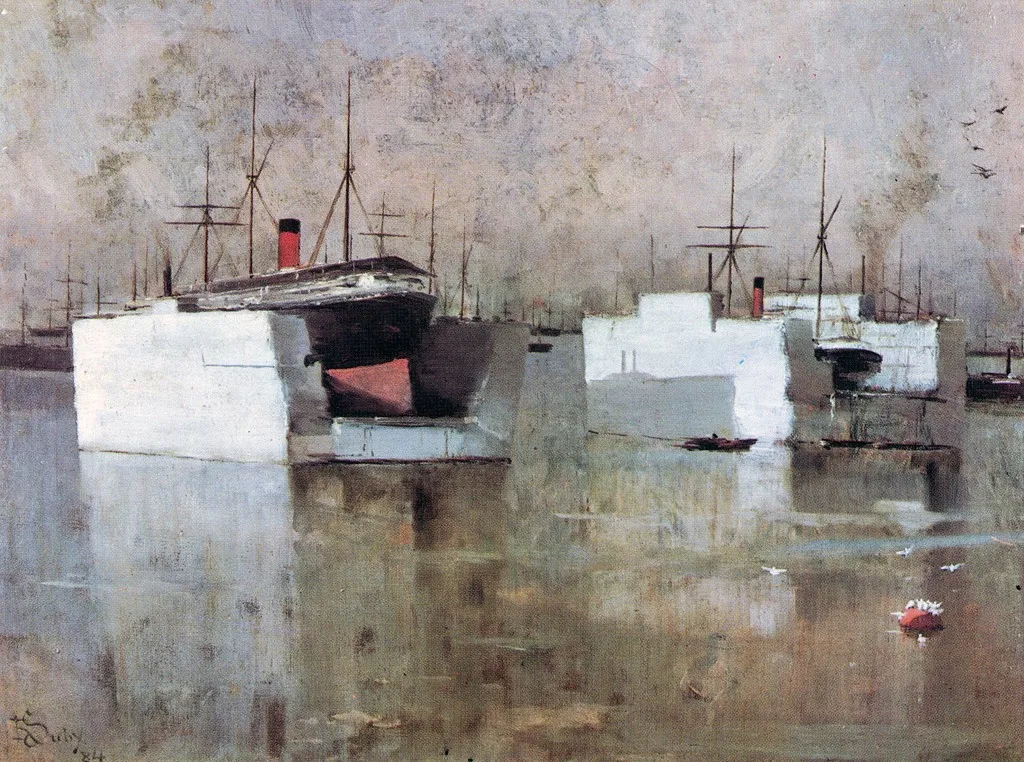
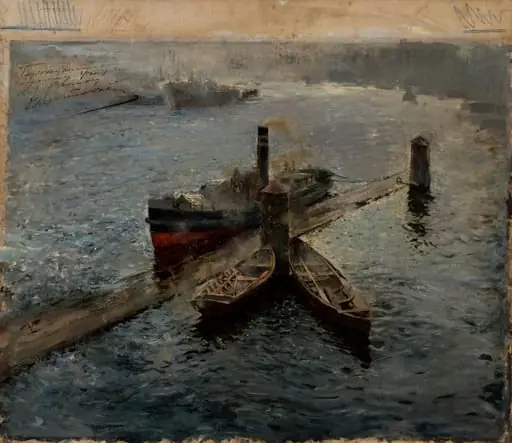
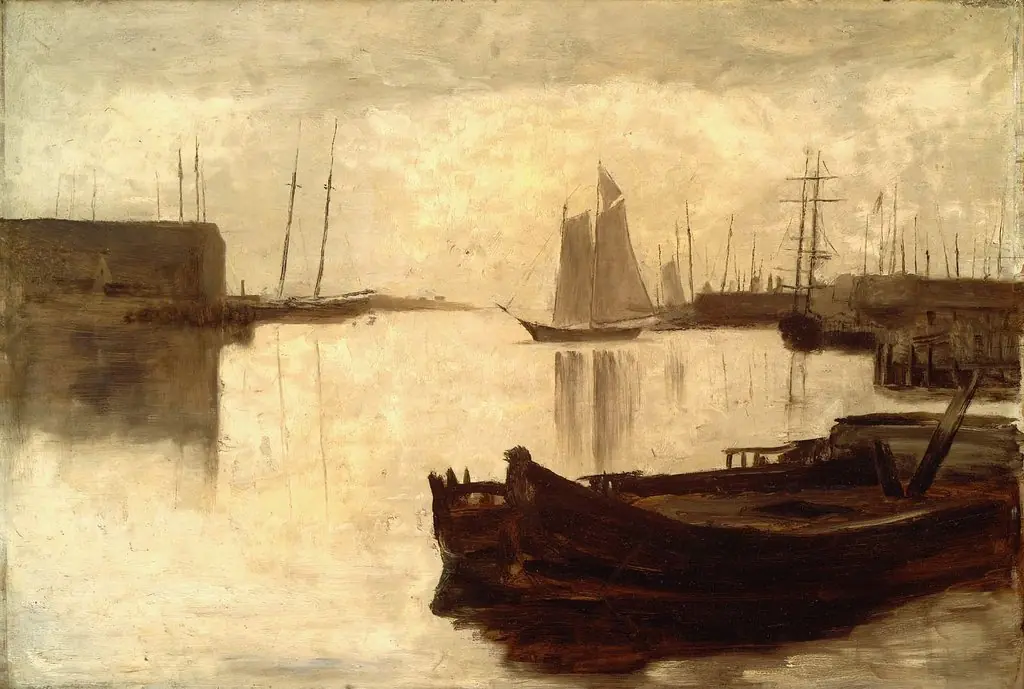
Diques de Valparaíso is an oil painting by the Impressionist artist Ramón Subercaseaux Vicuña. It dates from 1892 and is held in the collection of the Chilean National Museum of Fine Arts.
About this work
Overview
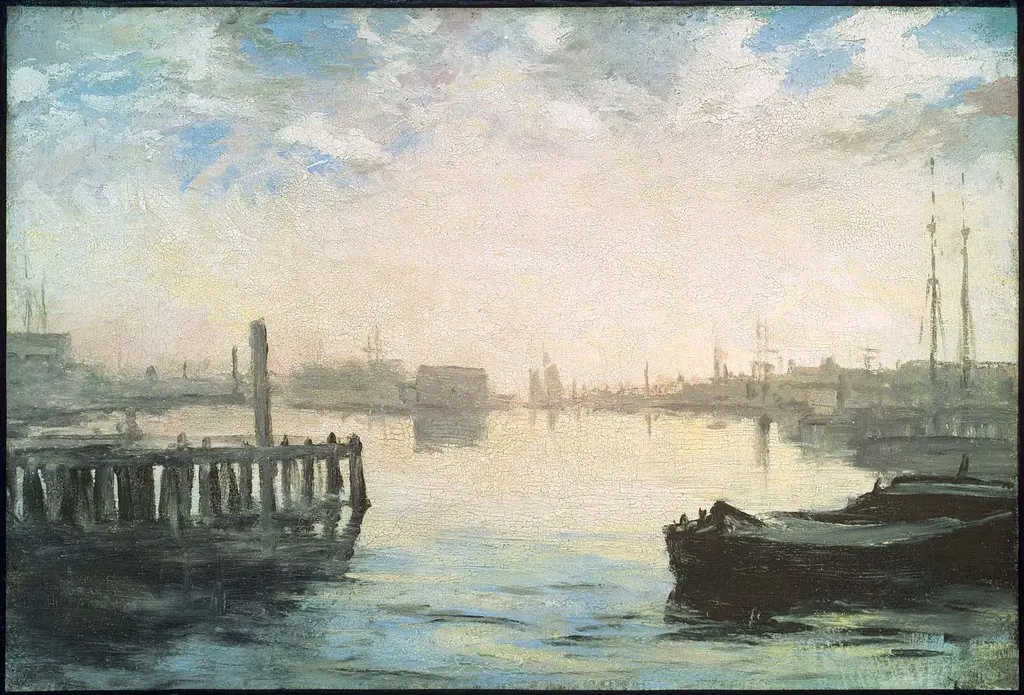
The muted palette and soft light reflect the coastal climate, offering a restrained yet evocative view of maritime activity.
Painted in 1892 by Ramón Subercaseaux Vicuña, this oil on canvas depicts the port of Valparaíso, Chile. The work is part of the permanent collection at the National Museum of Fine Arts in Santiago. It captures a quiet moment in the harbor, emphasizing atmosphere over narrative.
The muted palette and soft light reflect the coastal climate, offering a restrained yet evocative view of maritime activity.
Subject & Meaning
The scene centers on a cluster of vessels moored along the waterfront, with a large white structure rising behind them. No figures are prominent, suggesting a focus on place rather than people. The hazy sky and subdued tones convey a sense of stillness, possibly reflecting the economic or social rhythm of the port at the time. The composition invites contemplation of urban infrastructure nestled within natural conditions.
Technique & Style
Subercaseaux employed visible, deliberate brushwork to build texture across the water, hulls, and architecture. Colors are restrained, grays, off-whites, and earth browns dominate, avoiding dramatic contrast. The sky is rendered with thin, blended layers, enhancing the sense of atmospheric moisture. The technique favors observation over idealization, aligning with late 19th-century realist tendencies in Latin American art.
History & Provenance
Created in 1892, the painting entered the collection of Chile’s National Museum of Fine Arts in Santiago, where it remains today. It was produced during a period when Subercaseaux was actively documenting Chilean landscapes and urban scenes. There is no record of public exhibition prior to its acquisition by the museum, suggesting it was likely commissioned or acquired directly from the artist.
Context
Valparaíso was a key Pacific port during the late 1800s, handling international trade and immigration. Subercaseaux’s depiction avoids grandeur, focusing instead on the quiet mechanics of the harbor. This aligns with broader trends in Chilean art at the time, where artists turned from romanticized history toward everyday environments. The painting reflects a national interest in documenting regional identity through landscape and infrastructure.
Legacy
The work contributes to a body of Chilean realist paintings that prioritize place over spectacle. While not widely reproduced, it is recognized within academic circles as an example of Subercaseaux’s consistent engagement with national scenery. Its preservation in the national museum underscores its role as a historical record of Chile’s maritime culture during a period of economic transition.
Artist & collection
Artist
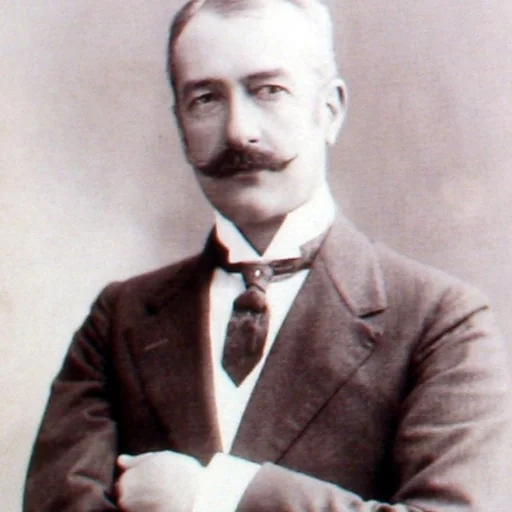
Ramón Subercaseaux Vicuña (1854–1937) was an artist, born in Valparaíso.