Artwork
Nautilus Fleet
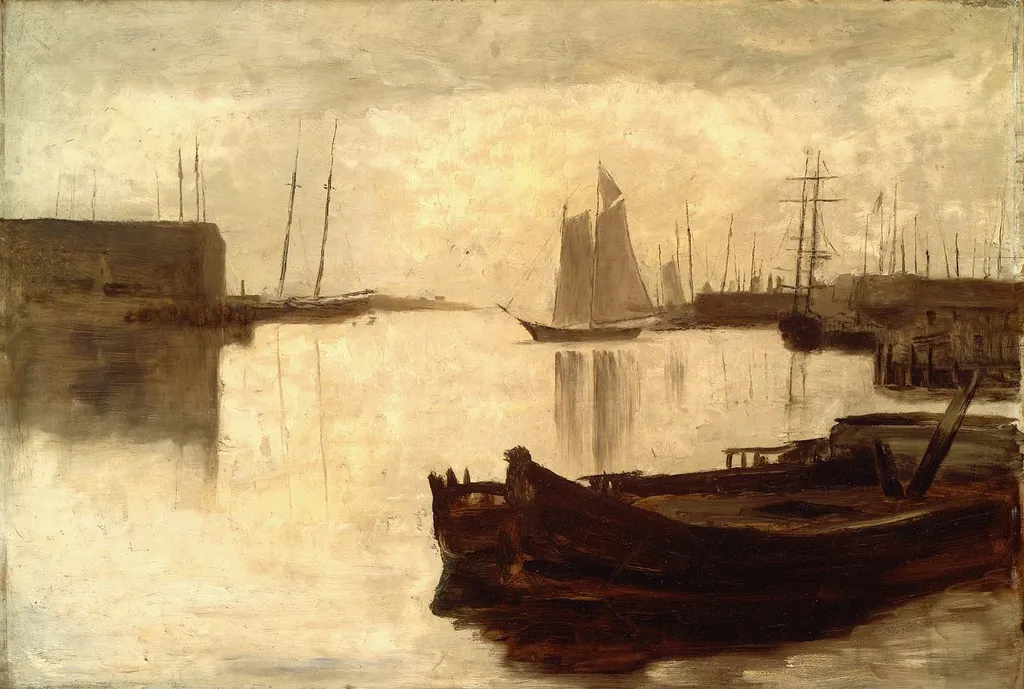
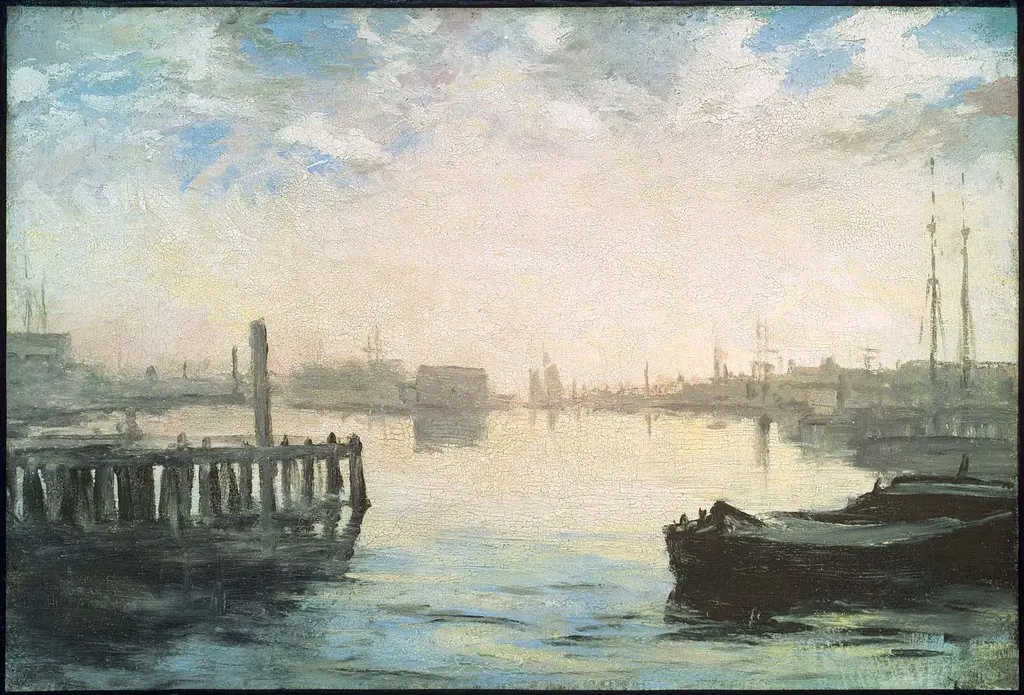
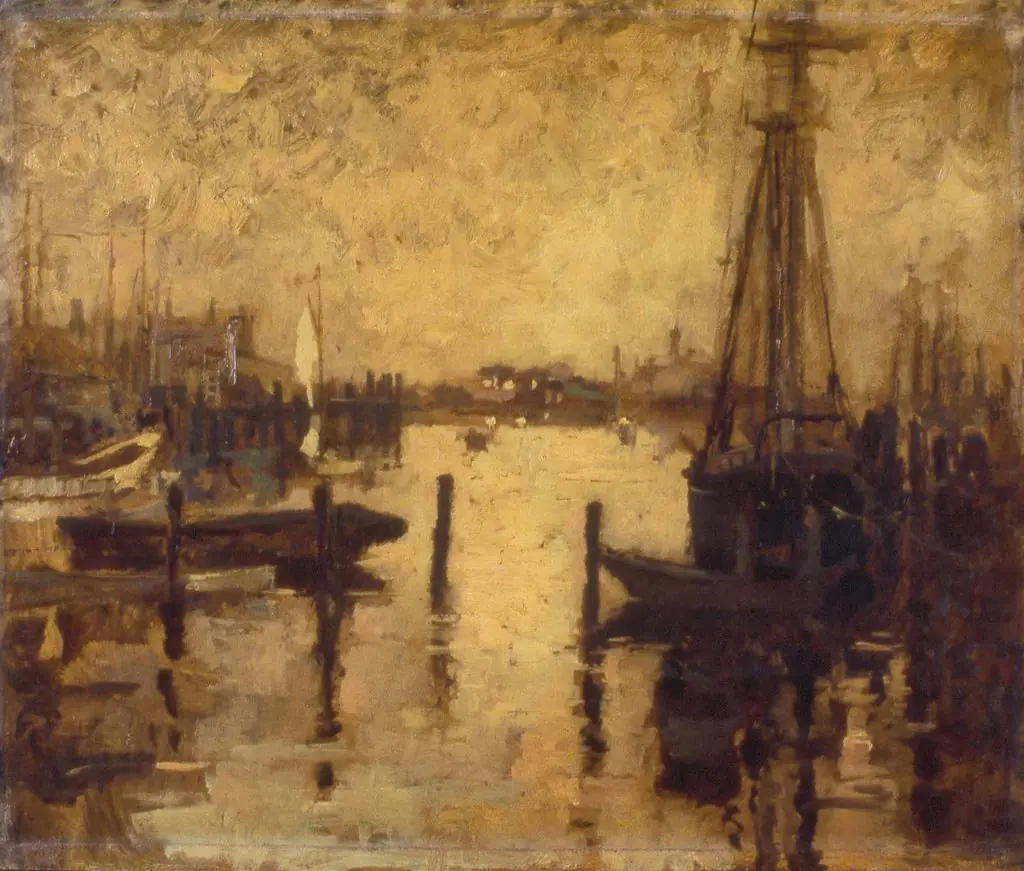
Nautilus Fleet is an unspecified painting by the Impressionist artist William Morris Hunt. It is held in the collection of the Museum of Fine Arts Boston.
About this work
Overview
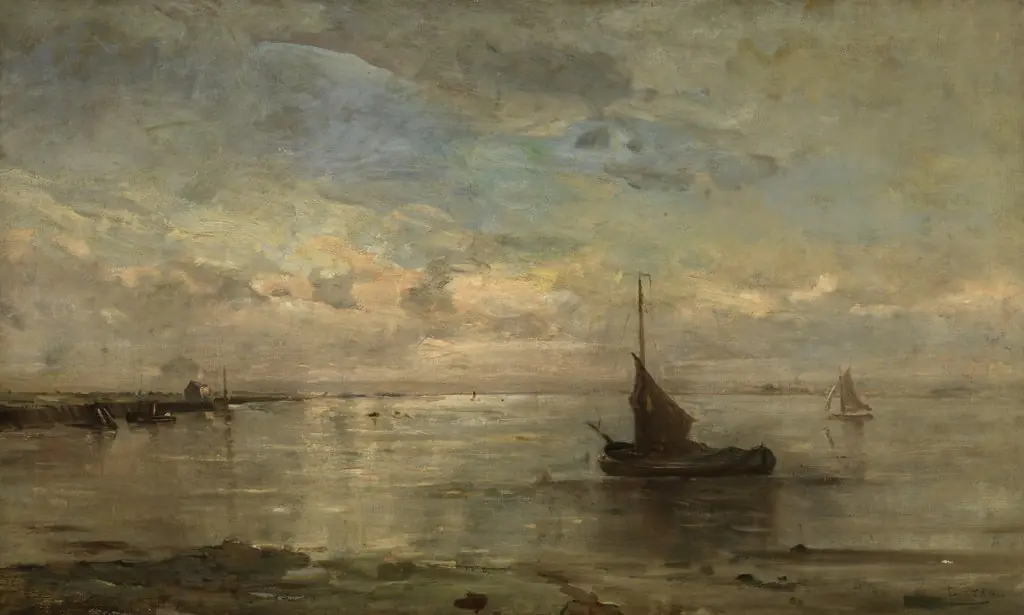
Created in 1889, Nautilus Fleet is an oil painting by American artist William Morris Hunt. The work depicts a tranquil harbor scene where a group of masted vessels rests on calm water, their reflections mirrored below. A small boat with a dark hull and white sail occupies the foreground, adding a sense of scale to the composition.
Subject & Meaning
The painting presents a serene maritime tableau, emphasizing the quiet interplay of light on water and sky. The gentle arrangement of ships and their mirrored images suggests a contemplative mood, inviting viewers to consider the stillness of a harbor at rest.
Technique & Style
Executed in an Impressionist manner, Hunt employs soft, muted hues of pale blue and green, coupled with loose brushwork that conveys atmosphere rather than precise detail. Visible strokes and subtle texture give the canvas a dreamy quality, characteristic of late‑19th‑century French‑influenced American painting.
History & Provenance
After studying under Jean‑François Millet at the Barbizon colony in France, Hunt returned to Boston, where he became a prominent portrait and landscape painter. He founded a local group inspired by Barbizon principles, and Nautilus Fleet entered the Museum of Fine Arts, Boston’s collection, where it remains on view.
Artist & collection

Artist
William Morris Hunt (March 31, 1824 – September 8, 1879) was an American painter.