Artwork
P. F. Ronbeau
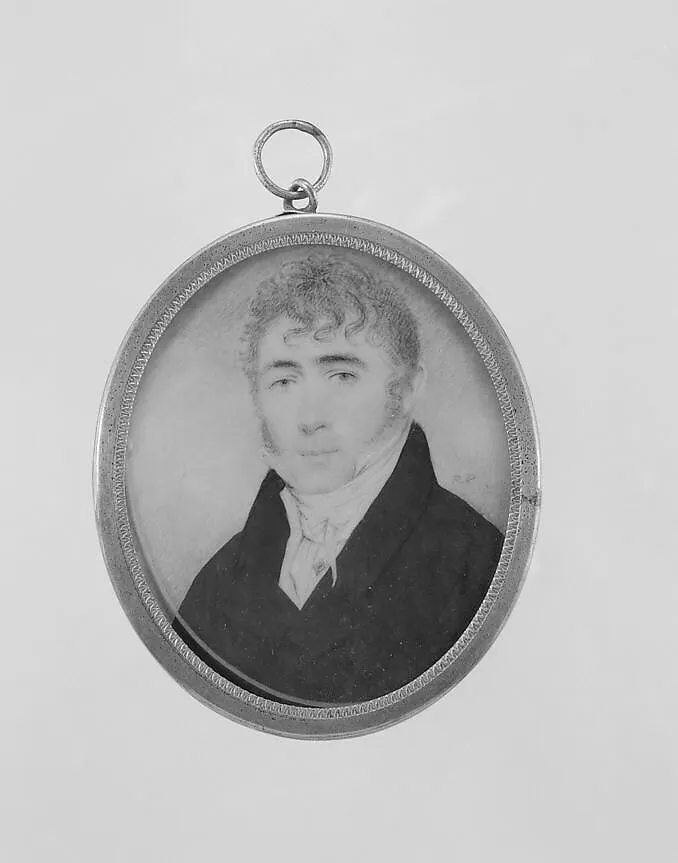
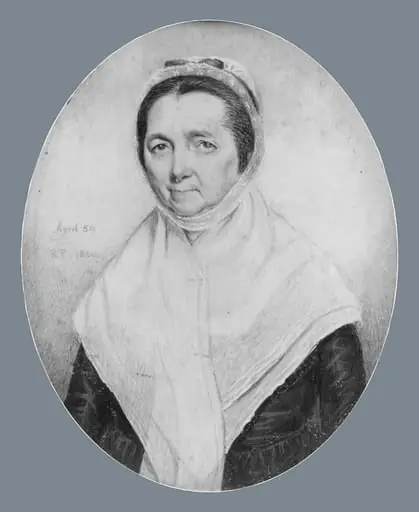
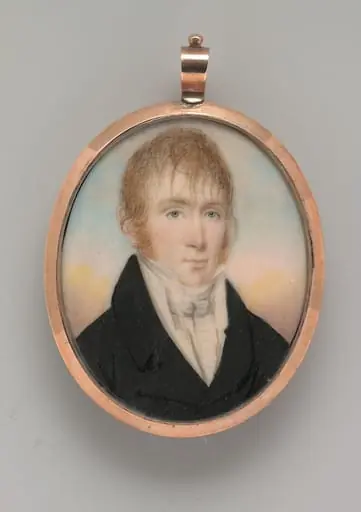
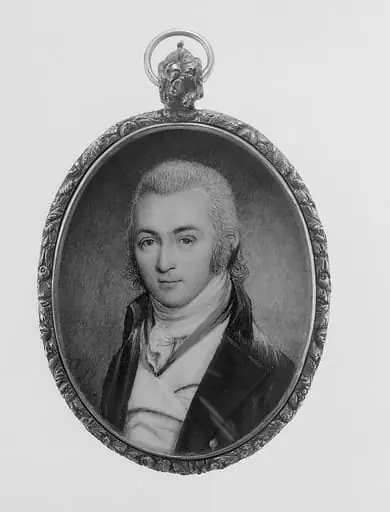
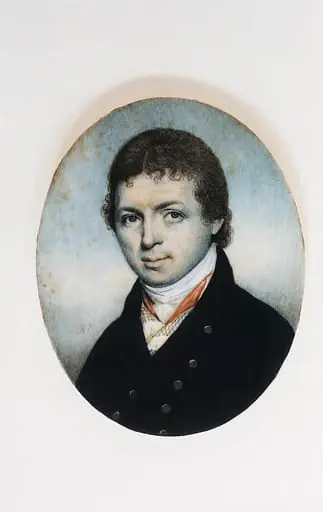
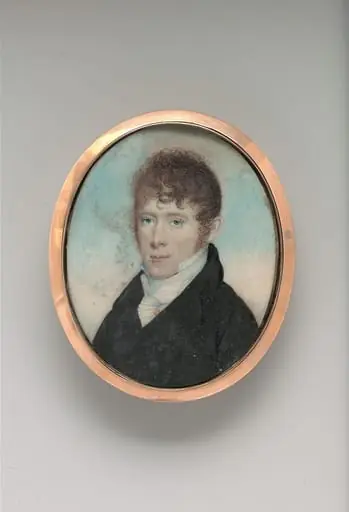
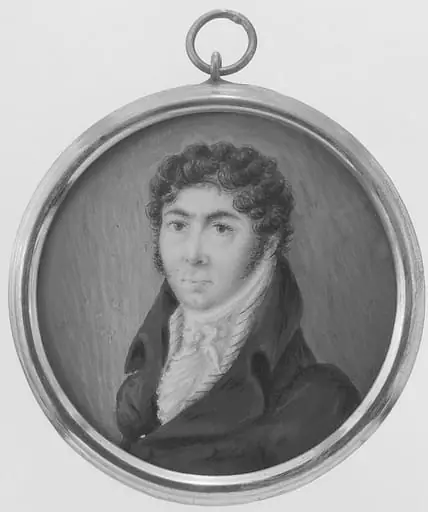
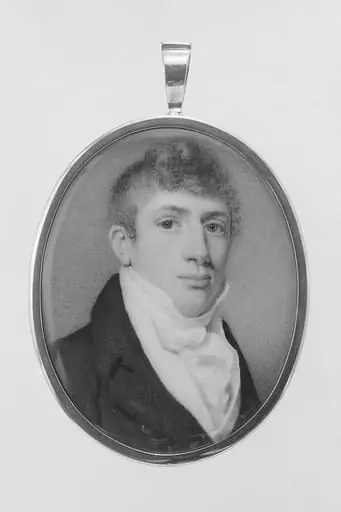
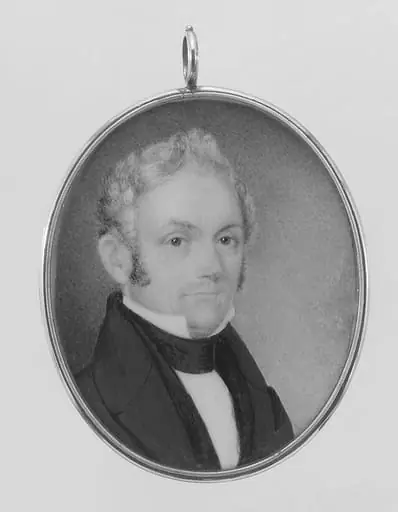
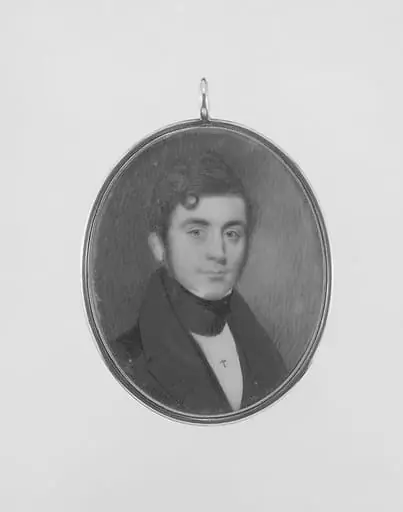
P. F. Ronbeau is a watercolor painting by the American Impressionist artist Raphaelle Peale. It dates from 1821 and is held in the collection of the Metropolitan Museum of Art.
About this work
Technique & Style
As a work by Raphaelle Peale from 1821, it reflects the refined handling and intimate scale typical of American miniature painting from this period.
P. F. Ronbeau is executed in watercolor on ivory, a miniature portrait format characteristic of early nineteenth-century American practice. Measuring 6.2 by 5.2 units, the work belongs to the portrait genre and depicts a male sitter. The use of ivory as a support provided a smooth, luminous surface that enhanced the delicate, translucent qualities of watercolor, allowing for fine detail and subtle tonal gradations.
As a work by Raphaelle Peale from 1821, it reflects the refined handling and intimate scale typical of American miniature painting from this period. The artwork is classified under The American Wing and held in the collection of the Metropolitan Museum of Art.
History & Provenance
The artwork, a portrait of a man created by Raphaelle Peale, dates to 1821. Executed in watercolor on ivory, the piece measures 6.2 by 5.2 inches. While specific commission details or a detailed ownership chain prior to its current location are not documented in the available records, the work is held in the collection of the Metropolitan Museum of Art within its American Wing.
The creation is firmly attributed to Peale and dated to the year 1821, marking it as a product of his later career. No further information regarding previous owners, the identity of the sitter's patron, or the specific circumstances of its production is provided in the source material.
The painting is held in the collection of the Metropolitan Museum of Art in New York. It is catalogued as part of the museum's holdings of early American portraiture, specifically listed under the American Wing's portrait genre. No accession or inventory number is disclosed in the available documentation.
The work was created in 1821 by Raphaelle Peale, who is identified as the artist in both the internal catalogue entry and the Wikidata entry. Exhibition records are not mentioned in the provided sources, indicating that the piece has not been publicly exhibited in the documented period.
Overview
Raphaelle Peale, recognized as America's first professional still-life painter, created this watercolor on ivory portrait of P. F. Ronbeau in 1821. While Peale is primarily known for his meticulous arrangements of inanimate objects, this work demonstrates his proficiency in capturing human likenesses. It exemplifies his early 19th-century focus on precise and personal representations, offering insight into his broader artistic capabilities beyond his signature genre.
Subject & Meaning
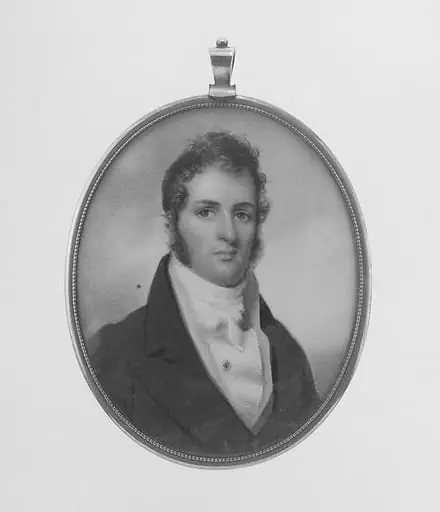
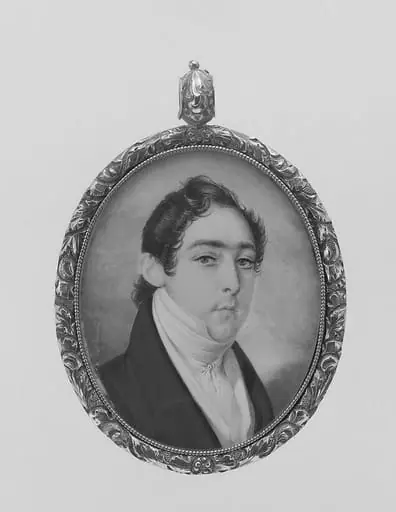
The portrait presents a man, P. F. Ronbeau, depicted in a dark coat, engaging the viewer with a direct gaze. His features are illuminated by a soft, subtle light, which contrasts with the plain, dark background. This composition emphasizes the sitter's presence and expression, creating an intimate connection.
The directness of the portrayal reflects a common approach to portraiture during the period, aiming for a clear and unembellished likeness.
Context
This piece situates within the broader landscape of early 19th-century American art, where watercolor on ivory was a favored medium for creating small, refined portraits. Such works were often treasured for their intimate scale and delicate execution. Although Raphaelle Peale established his reputation through still-life painting, this portrait of P. F. Ronbeau underscores his versatility and skill across different genres, illustrating the range of his artistic output.
Artist & collection

Artist
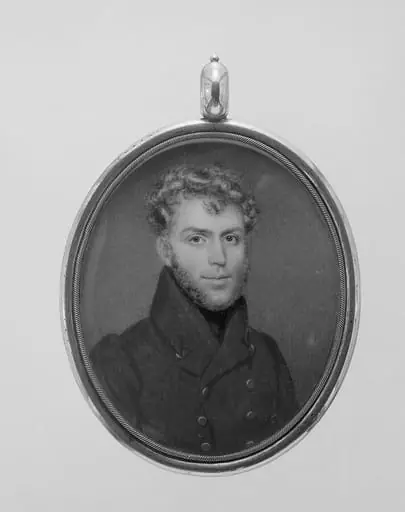
Raphaelle Peale (sometimes spelled Raphael Peale; February 17, 1774 – March 4, 1825) is considered the first professional American painter of still-life.