Artwork
The Fortune Teller
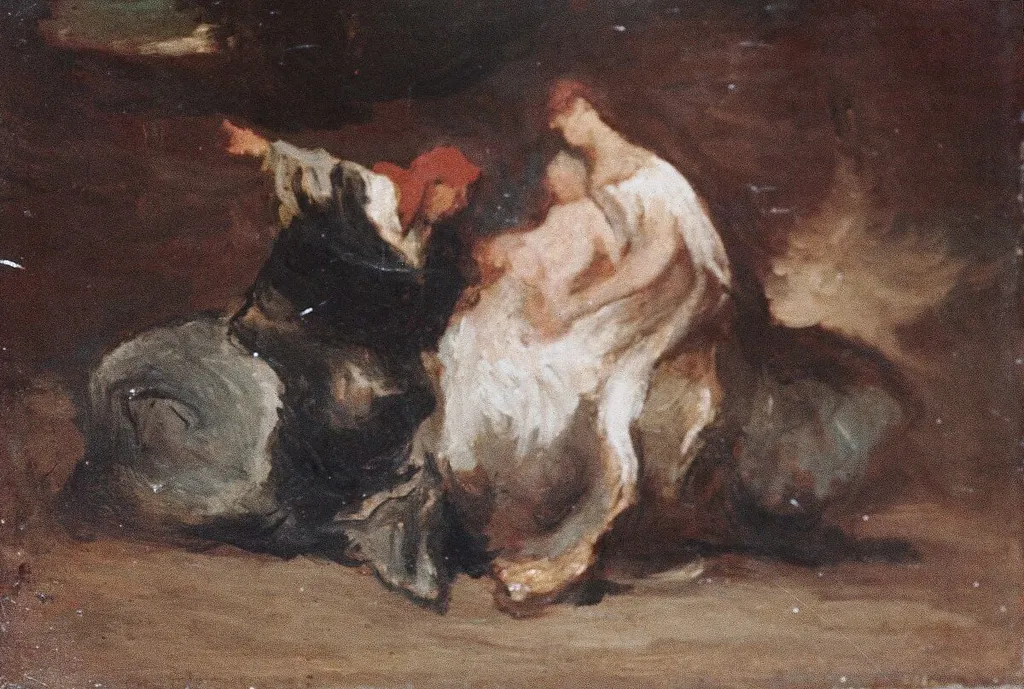
The Fortune Teller is an oil painting by the American Impressionist artist Robert Loftin Newman. It dates from 1894 and is held in the collection of the Metropolitan Museum of Art.
- Accession no.
- 21.159.1
- Credit line
- Gift of Mrs. Wallace Sawyer, 1921
About this work
Subject & Meaning
Together the figures convey the encounter between youthful wonder and the mysterious practice of foretelling destiny.
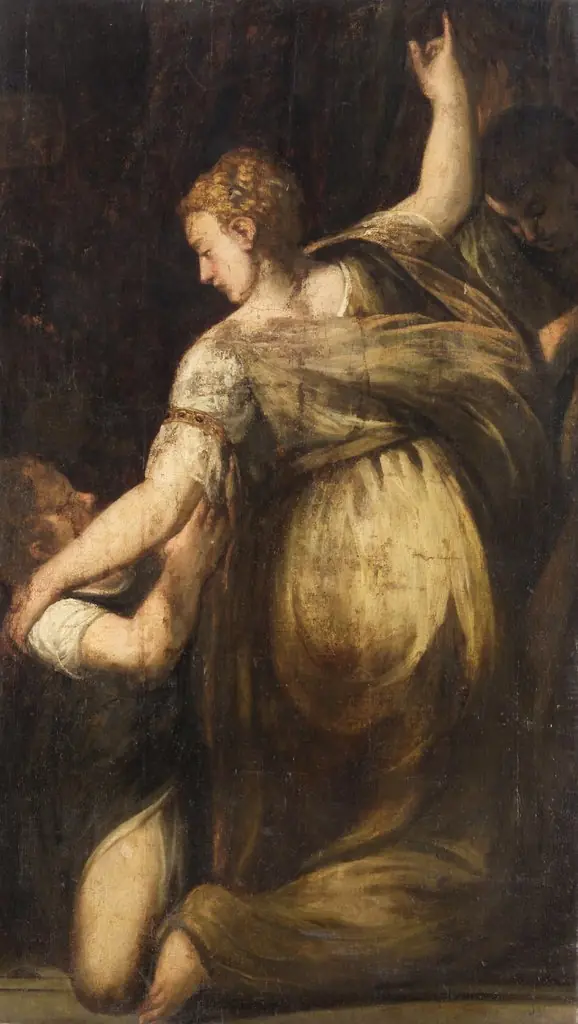
The painting portrays a young child seated opposite an older woman who is engaged in the act of fortune-telling, a genre scene that Newman titled The Fortune Teller. The child's attentive pose and the woman's gesturing hand suggest a moment of divination, with the child embodying innocence or curiosity and the woman embodying the knowledge of hidden futures. Together the figures convey the encounter between youthful wonder and the mysterious practice of foretelling destiny.
Technique & Style
Executed in 1894, Robert Loftin Newman's The Fortune Teller is an oil painting on canvas. The work measures 25.4 by 35.6 centimeters and is classified as a genre scene. Visually, the composition depicts a woman and a child engaged in the act of fortune-telling.
As part of the American Wing collection at the Metropolitan Museum of Art, the piece utilizes the traditional materials of oil paint applied to a fabric support to render its domestic subject matter.
History & Provenance
The Fortune Teller was completed in 1894 by the American genre painter Robert Loftin Newman as an independent studio work; the date and medium (oil on canvas) are recorded in the museum's documentation. The painting measures 25.4 × 35.6 cm and is held by the Metropolitan Museum of Art, where it belongs to the institution's American Wing collection. Its provenance is limited to the artist's execution in 1894 and subsequent ownership by the museum, with no evidence of a specific commission or prior private ownership. The available sources do not specify an accession number, loan record, or exhibition history.
Overview
Robert Loftin Newman's The Fortune Teller, painted in 1894, is an oil on canvas that captures an intimate genre scene. The artwork depicts a woman engaged in the act of reading a child's palm, rendered with a focus on atmosphere and understated narrative. This piece exemplifies Newman's characteristic exploration of mood and private moments within everyday American life, reflecting his artistic sensibilities during the late 19th century.
Context
Active as both a painter and a stained-glass designer, Robert Loftin Newman was a notable figure in late 19th-century American art. His oil paintings frequently explored genre scenes, prioritizing emotional depth and narrative suggestion over detailed realism. The Fortune Teller fits within his broader body of work, which often shared a stylistic kinship with artists like Albert Pinkham Ryder, who also favored atmospheric and contemplative compositions.
Artist & collection

Artist
Robert Loftin Newman (November 10, 1827 – March 31, 1912) was an American painter and stained-glass designer.

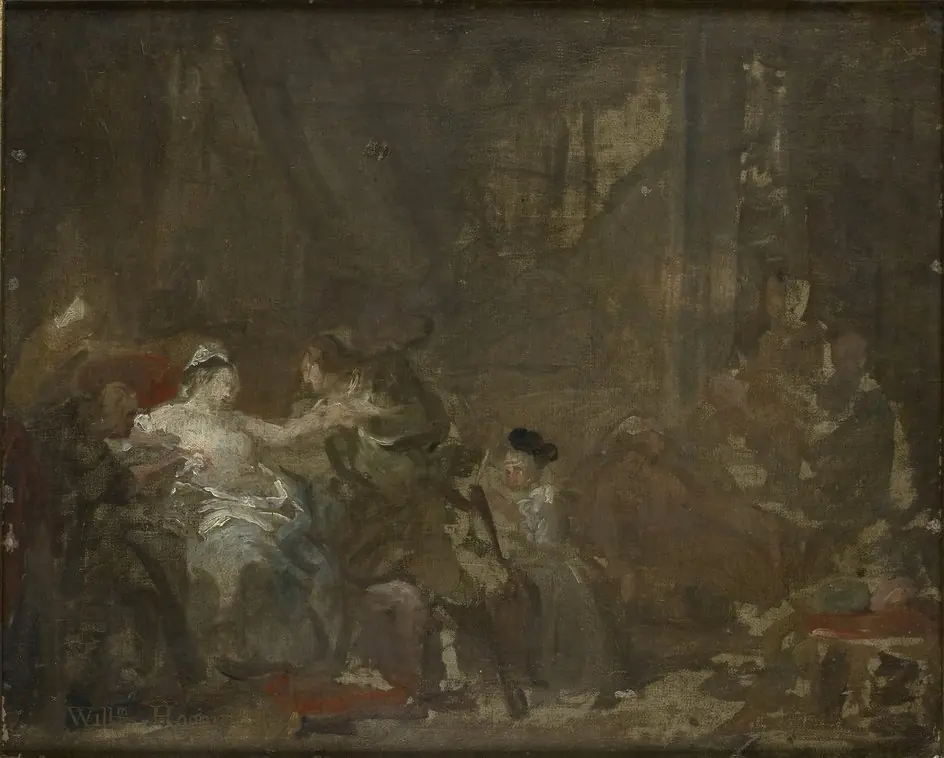 The Suicide of the Countess
 Lovers in a Landscape
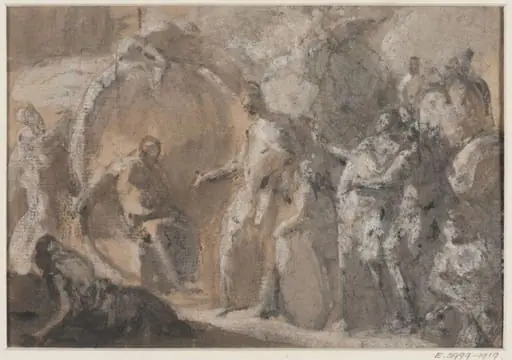 Diogenes visited by Alexander the Great
 Summer: Diana Surprised at her Bath by Actaeon
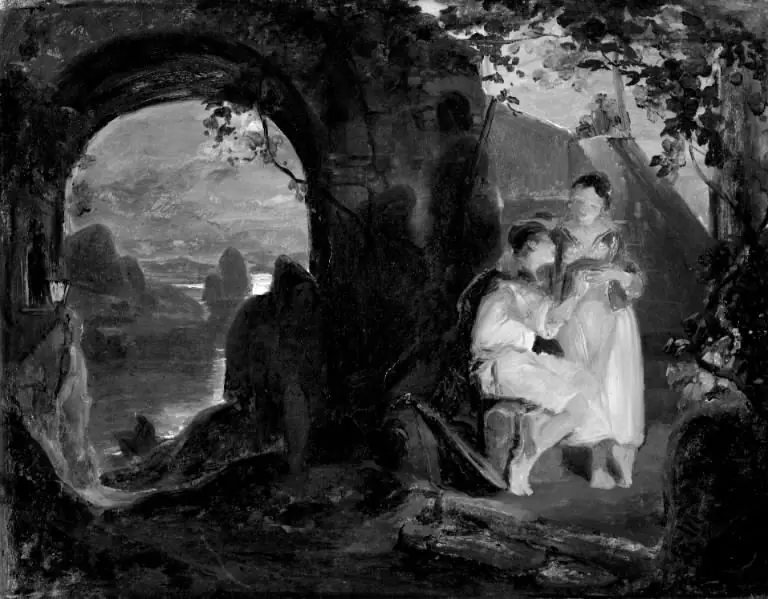 Lovers in a Landscape
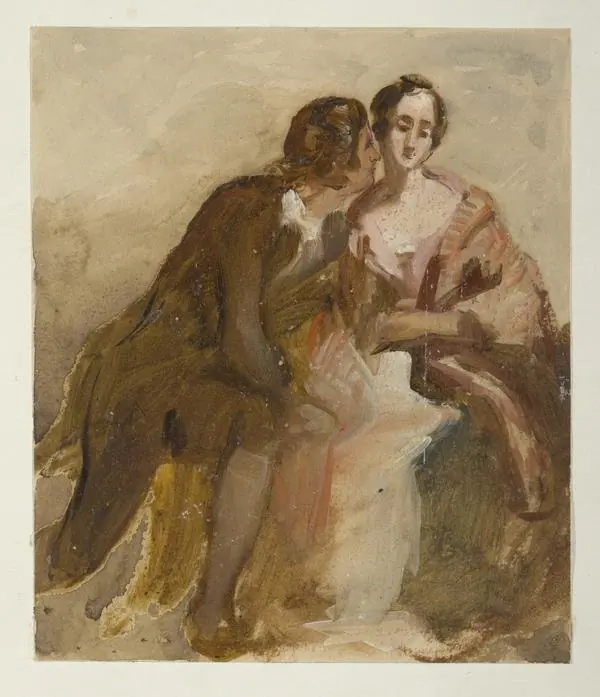 Burns and his Highland Mary
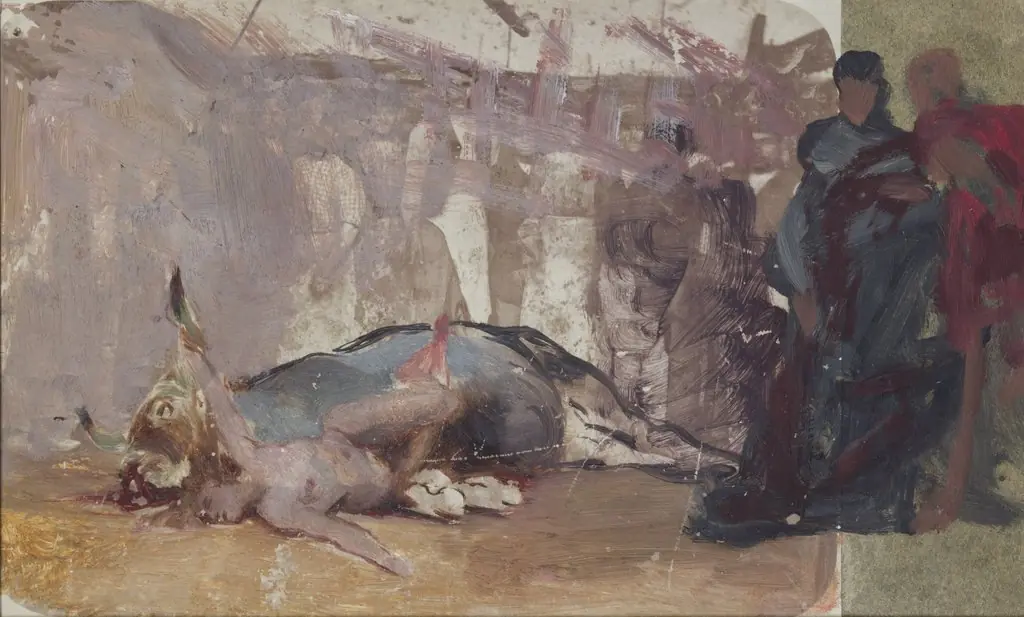 Study to the Painting "Christian Dirce"
 Susanna and the Elders
![[Untitled] (Six Figure Studies) (recto) and [Untitled] (Seven Figure Studies) (verso), by Thomas Sully](https://artifactworldgallery.com/img/thomas-sully--untitled-six-figure-studies-recto-and-untitled-seven-figure--b5b2310bda03be23-w320.webp) [Untitled] (Six Figure Studies) (recto) and [Untitled] (Seven Figure Studies) (verso)
[Untitled] (Six Figure Studies) (recto) and [Untitled] (Seven Figure Studies) (verso)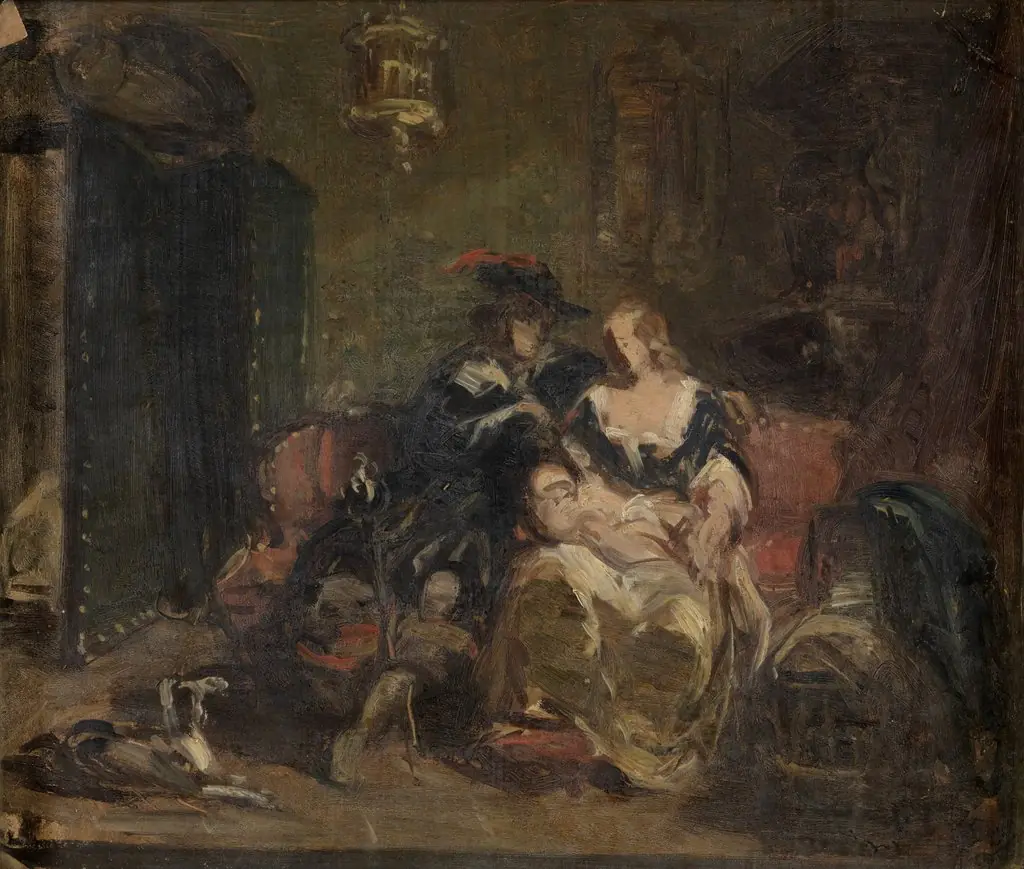 Domestic Scene
 Kneeling Woman with Child
- Study for The Fortune Teller