Artwork
Hagar and Ishmael
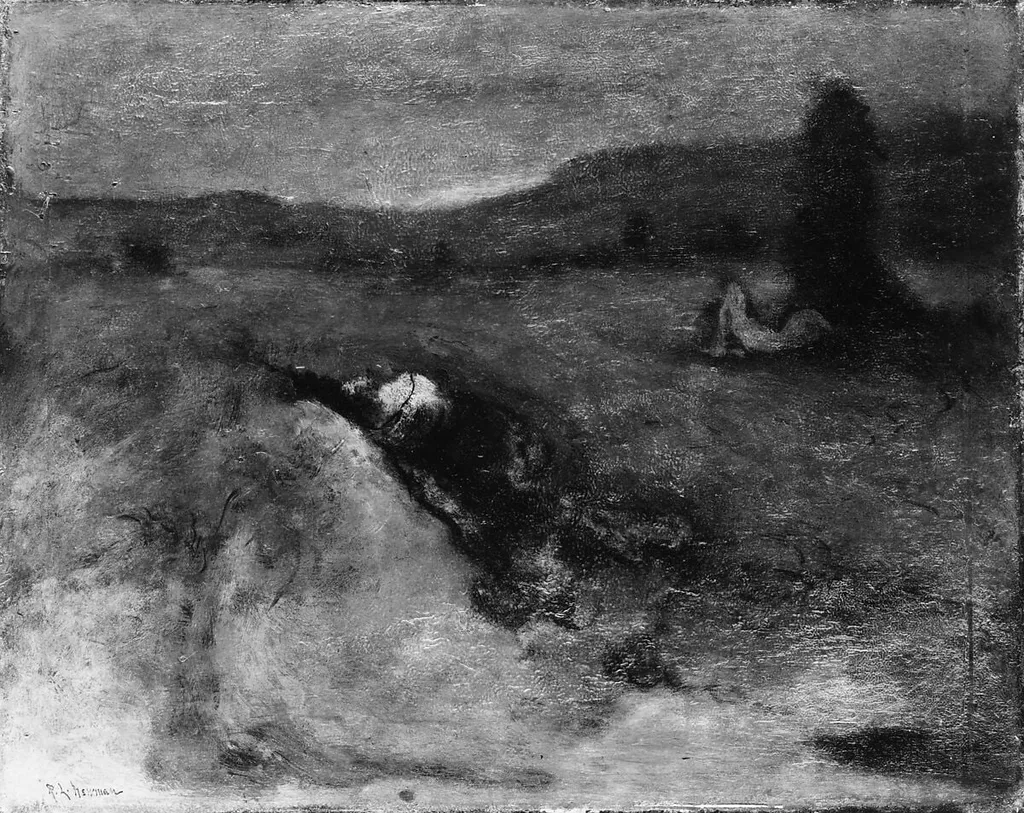
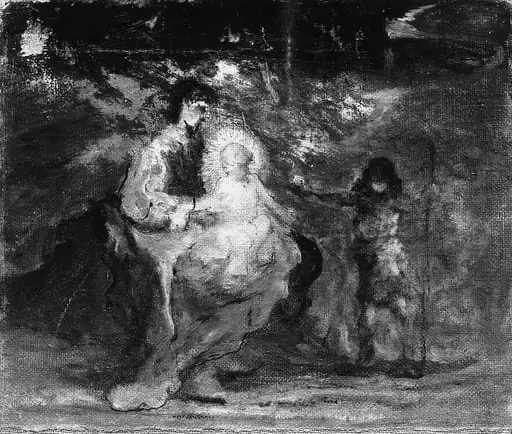
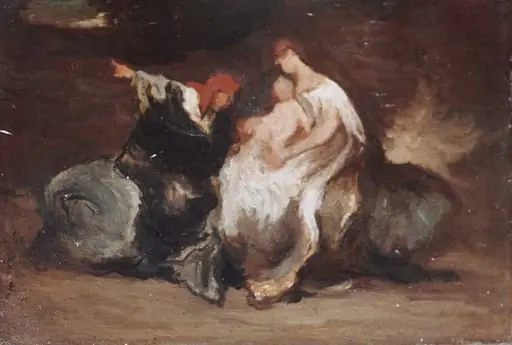
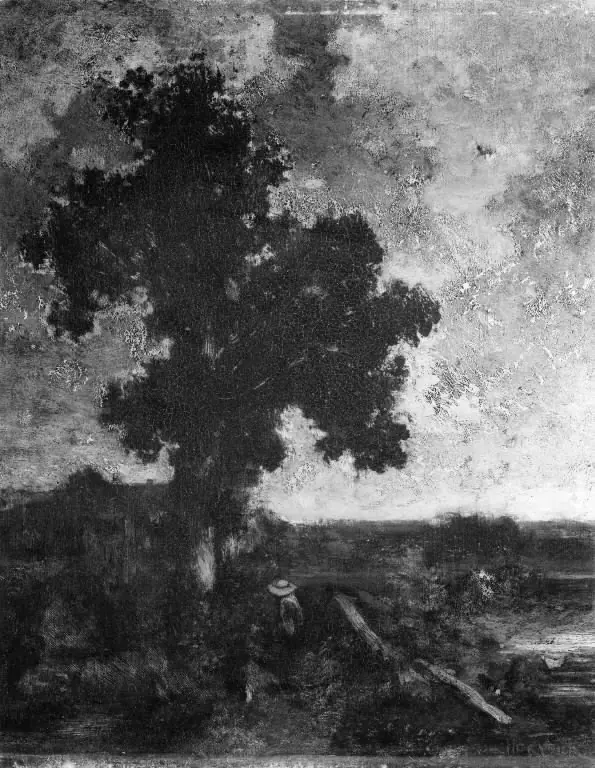
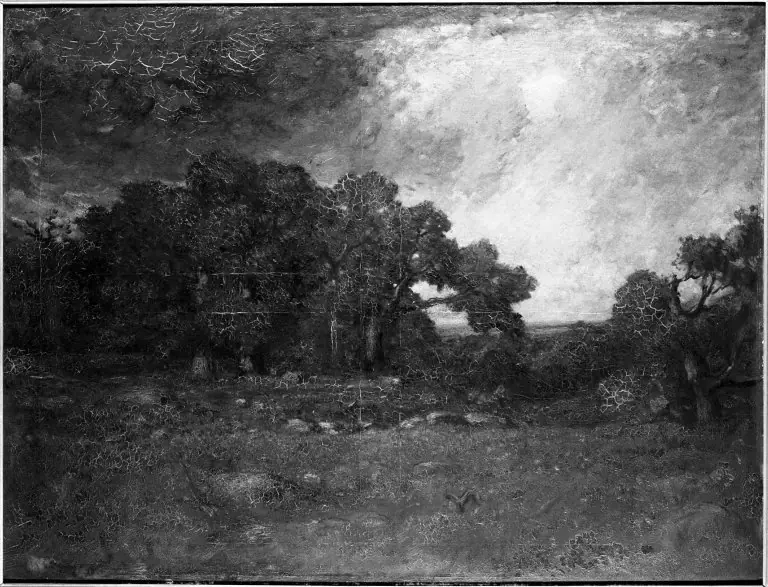
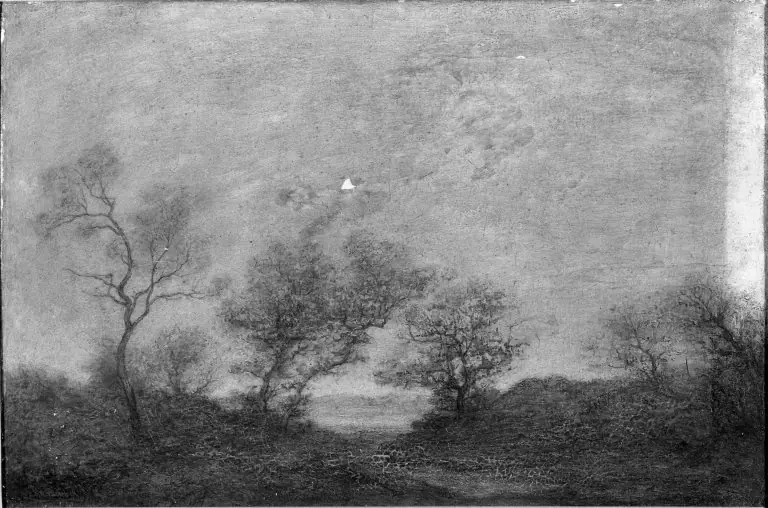
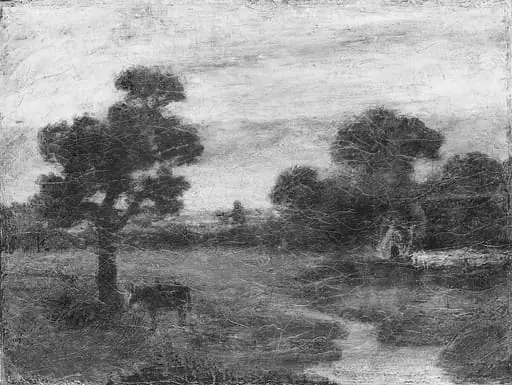
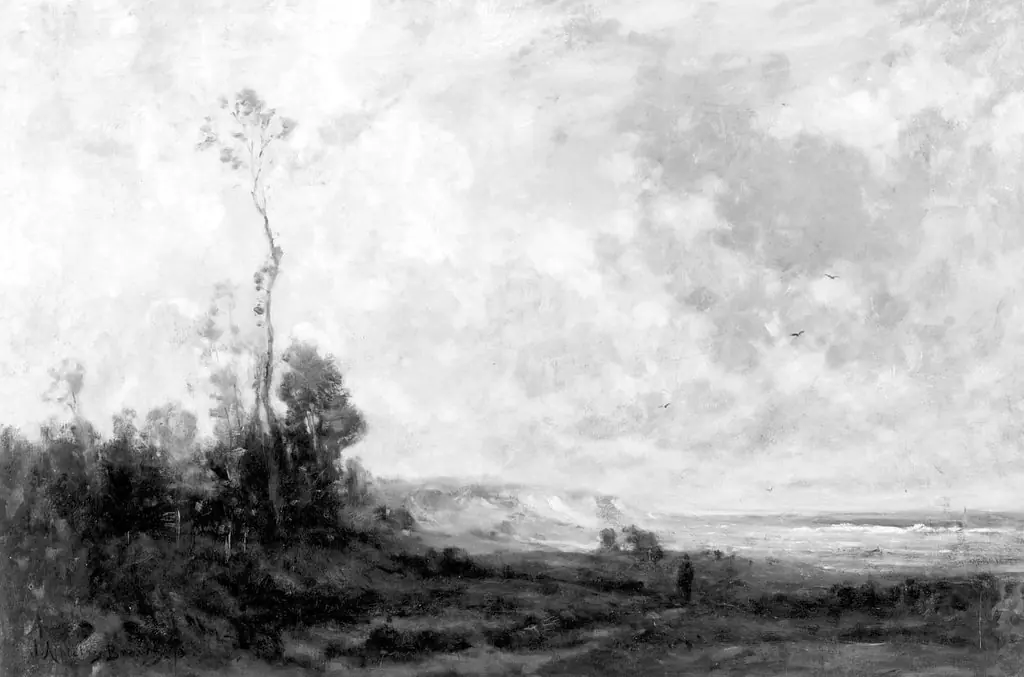
Hagar and Ishmael is an oil painting by the American Impressionist artist Robert Loftin Newman. It dates from 1894 and is held in the collection of the Metropolitan Museum of Art.
About this work
Subject & Meaning
Newman renders Hagar as a weary figure clutching a child, set against a stark landscape that emphasizes isolation and divine abandonment.
The work portrays the biblical moment of Hagar and her son Ishmael being cast out into the wilderness, a scene drawn from Genesis. Newman renders Hagar as a weary figure clutching a child, set against a stark landscape that emphasizes isolation and divine abandonment. Symbolically, the composition underscores themes of maternal sacrifice, exile, and the promise of future redemption, resonating with the religious narrative tradition. The painting's dramatic lighting and subdued palette heighten the emotional gravity of the banishment.
Technique & Style
Hagar and Ishmael is executed in oil paint on canvas, a standard medium for late nineteenth-century easel painting. The work's modest dimensions, approximately 35.9 by 45.7 centimeters, situate it as an intimate cabinet-scale composition rather than a large mural or altarpiece. Classified within the Metropolitan Museum of Art's American Wing, the painting belongs to the religious genre tradition, depicting the biblical banishment of Hagar and Ishmael.
History & Provenance
Robert Loftin Newman painted Hagar and Ishmael in 1894, an oil on canvas measuring 35.9 × 45.7 cm that illustrates the biblical episode of the banishment of Hagar and Ishmael. The painting is held in the collection of the Metropolitan Museum of Art, where it is classified within The American Wing as part of the museum's religious art holdings. While the painting's dimensions are recorded, the available sources do not contain a specific accession number or a documented exhibition history for this piece.
Overview
Robert Loftin Newman’s 1894 oil on canvas, Hagar and Ishmael, belongs to the American Wing collection. The work portrays the biblical figures Hagar and her son Ishmael in a barren desert setting, rendered with muted tones and gentle brushwork that convey both desolation and quiet introspection.
Context
During the late 1800s, American artists often turned to biblical subjects to explore universal themes of suffering and redemption. Newman’s choice of Hagar and Ishmael aligns with this trend, while his focus on mood and personal feeling distinguishes his approach from more overtly didactic religious art.
Artist & collection

Artist
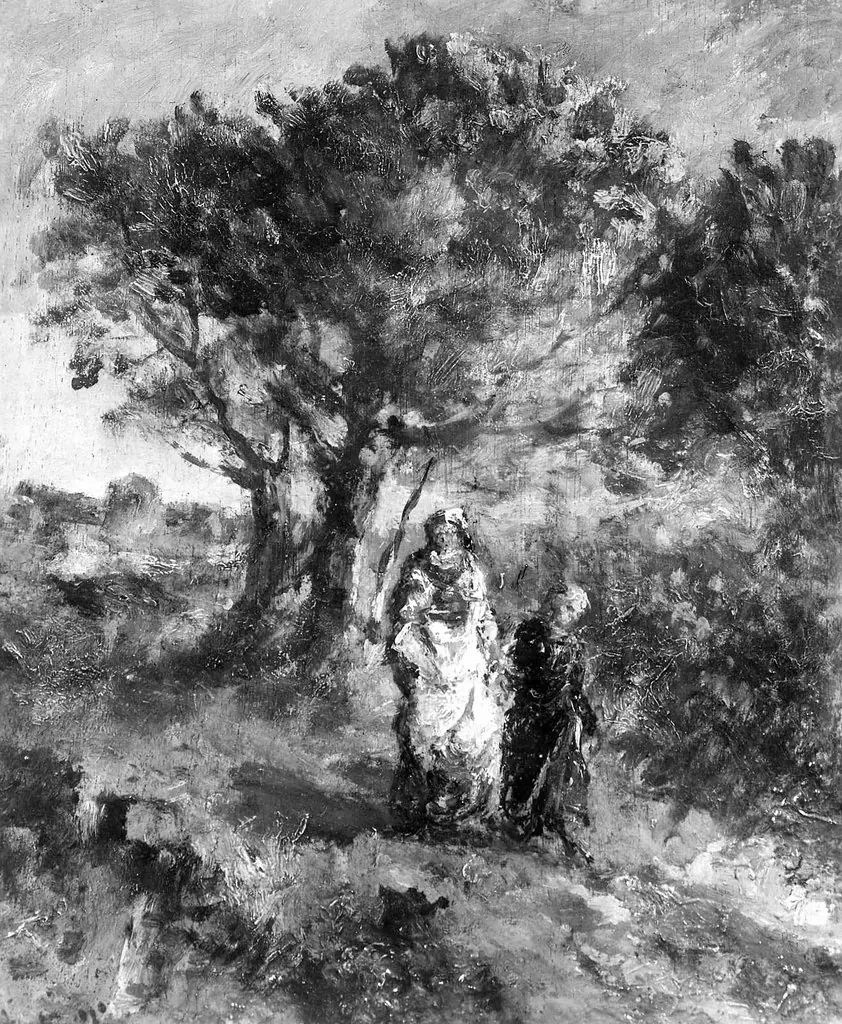
Robert Loftin Newman (November 10, 1827 – March 31, 1912) was an American painter and stained-glass designer.