Artwork
Woodbridge from the South
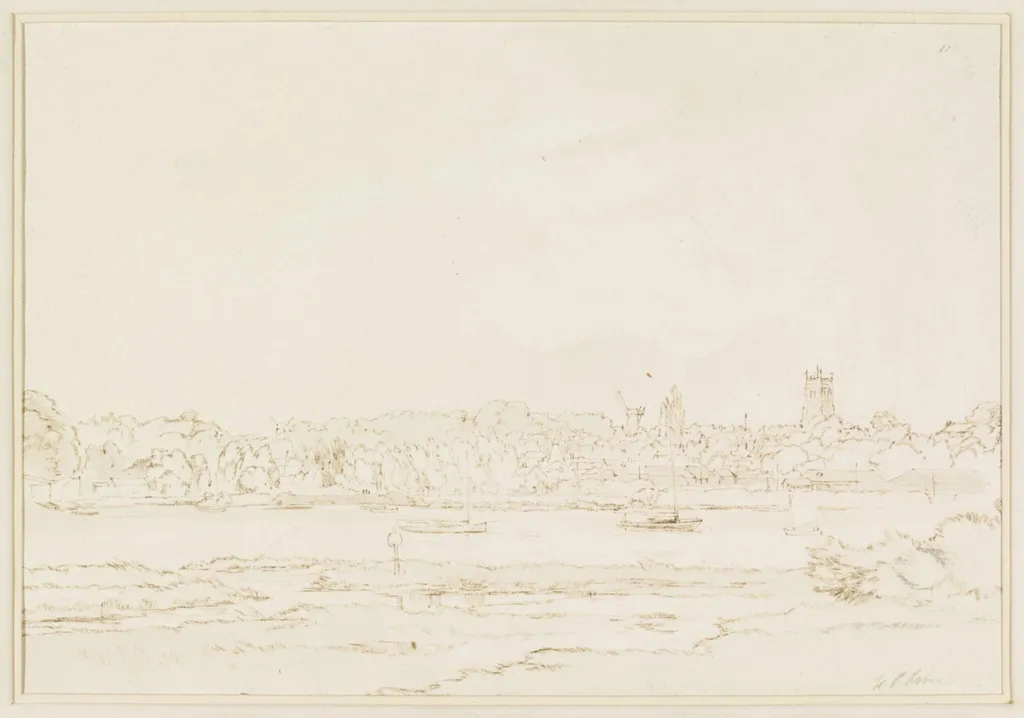
Woodbridge from the South is a watercolor work on paper by the Regionalist artist William Palmer Robins. It dates from 1940 and is held in the collection of the Victoria and Albert Museum.
About this work
This watercolour shows a quiet riverside town called Woodbridge. It was painted around 1940 by William Palmer Robins.
The scene includes two key landmarks: the tall tower of St Mary’s Church and a working tide mill. Its wheel moved without engines, pushed only by shifting tides.
Next time you’re in London, check the Victoria and Albert Museum for more like this.
Overview
Woodbridge from the South is a watercolour painting, circa 1940, depicting a serene riverside scene of Woodbridge, a town near the River Deben's mouth.
Subject & Meaning
The painting captures Woodbridge's notable landmarks, including St Mary's Church tower and the operational Tide Mill, highlighting the town's maritime and industrial heritage.
Technique & Style
Executed in watercolour, the work showcases Robins's skill in conveying a sense of tranquility through the medium's characteristic transparency and fluidity.
History & Provenance
Painted by William Palmer Robins around 1940, the artwork is now part of the Victoria and Albert Museum's collection in London.
Context
Reflecting Woodbridge's historical association with shipbuilding and boating, the painting preserves a pre-war image of the town's gentle, tide-driven industrial activity.
Legacy
As part of the V&A's holdings, 'Woodbridge from the South' contributes to the museum's collection of British watercolours, offering insight into mid-20th-century artistic interpretations of rural English life.
Artist & collection
Artist
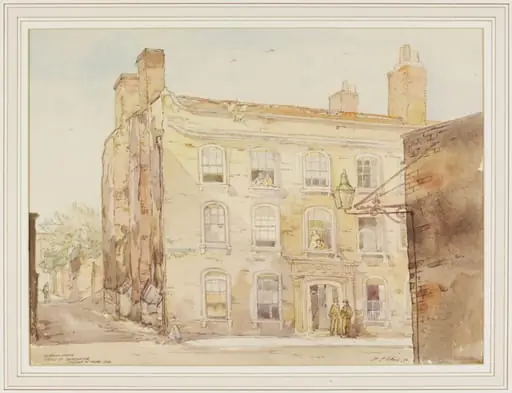
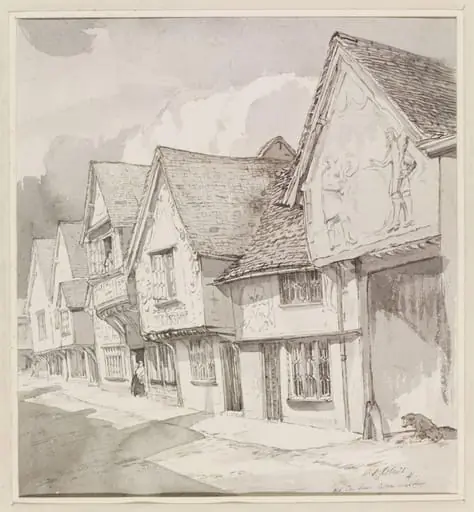
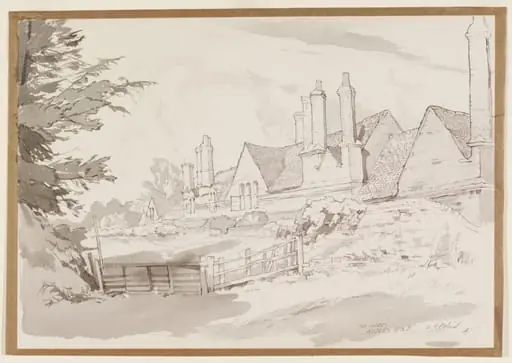
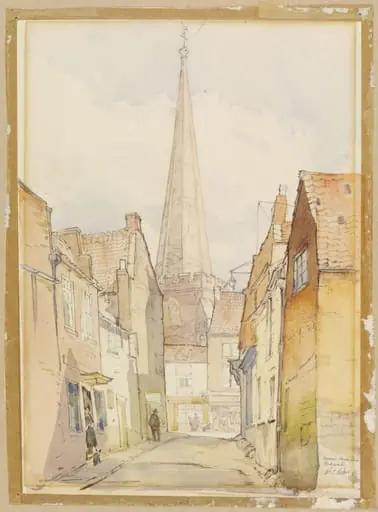
William Palmer Robins painted quiet English streets and buildings in watercolor during the 1940s.


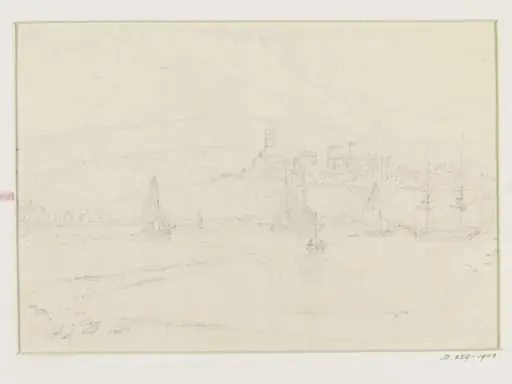 Lancaster Castle
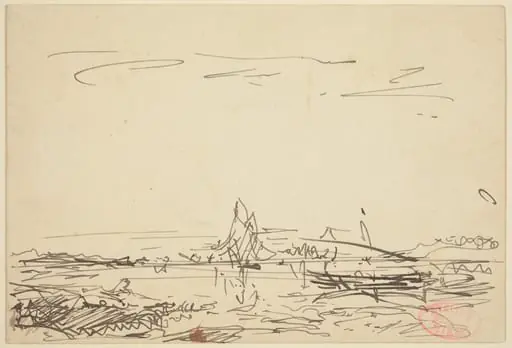 A Cove with a Sailboat
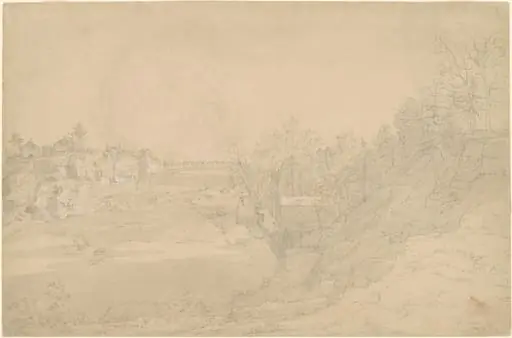 James McCullough's Leadmill
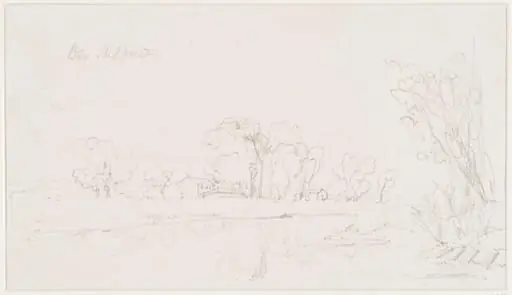 Shepperton.
 The House of the King of Poland (Angers)
 A Selection of Twenty of the Most Picturesque Views in Paris: View of the Tuilleries and Bridge and taken from Pont de la Concorde
 Asouan and Elephantine
 Greenhithe Pier
 View over the Amstel from the Rampart
 A Selection of Twenty of the Most Picturesque Views in Paris: On the Banks of the Marne below the Bridge at Charenton
 View from the shore over the Thames or the Medway