Artwork
Epping High Street
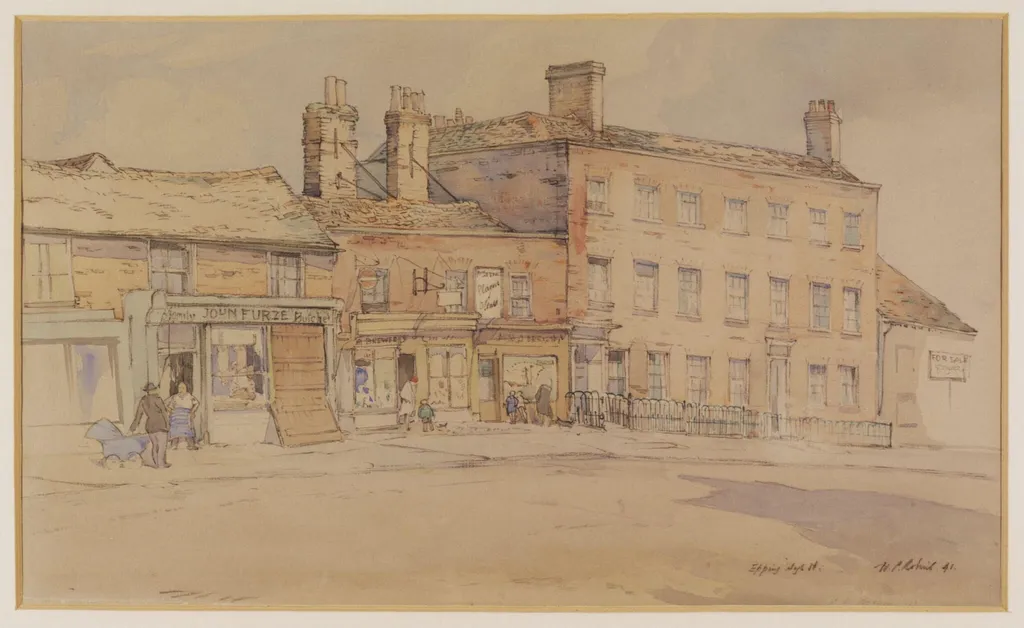
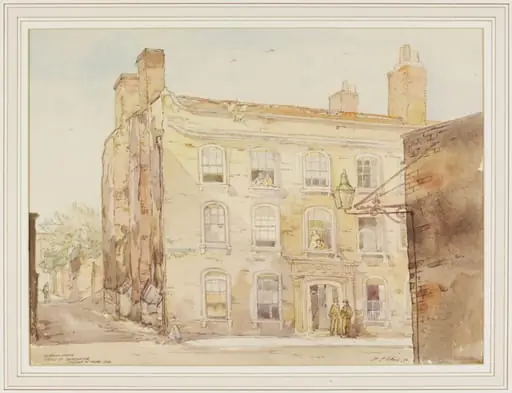
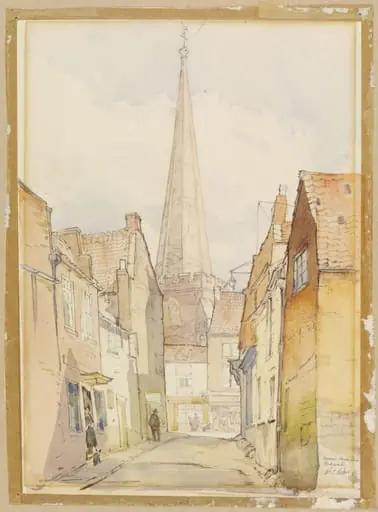
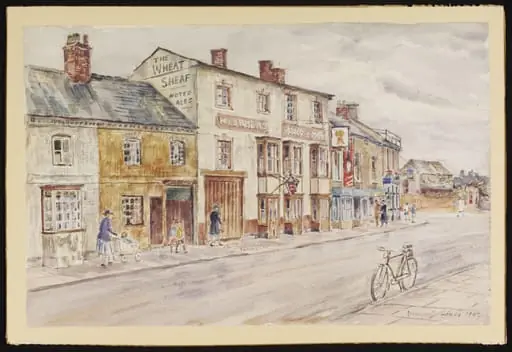
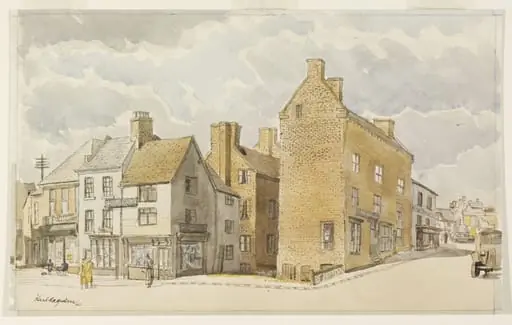
Epping High Street is a watercolor work on paper by the Social Realist artist William Palmer Robins. It dates from 1941 and is held in the collection of the Victoria and Albert Museum.
About this work
William Palmer Robins painted it for the Recording Britain project, which documented places at risk during World War II.
This watercolour shows a quiet street scene in Epping from 1941. William Palmer Robins painted it for the Recording Britain project, which documented places at risk during World War II.
Most of Robins’ works were monochrome wash drawings, but this piece is colorful. It captures a town that kept its small-town feel even though it’s close to London.
The town sits on the edge of Epping Forest and ends the Central Line. Check out the Victoria and Albert Museum for more.
Overview
Epping High Street is a watercolour painting created by William P. Robins in 1941 as part of the Recording Britain project, which aimed to document places at risk during World War II.
Subject & Meaning
The painting depicts a serene scene of Epping High Street, capturing the town's tranquil atmosphere despite its proximity to London. Epping, situated on the edge of Epping Forest, retained its small-town character.
Technique & Style
This work is one of the rare coloured pieces by Robins, who typically produced monochrome wash drawings. The watercolour showcases Robins' ability to convey a sense of calm through his use of colour.
Context
Epping was founded during Elizabeth I's reign and has maintained its distinct identity, remaining the last stop on the London Underground's Central Line.
Artist & collection
Artist
William Palmer Robins painted quiet English streets and buildings in watercolor during the 1940s.