Artwork
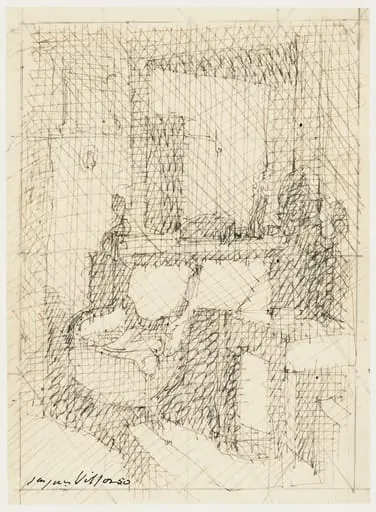
Ben Fuller, telephonist and doorman at the Windmill Theatre, drawing by Zsuzsi Roboz
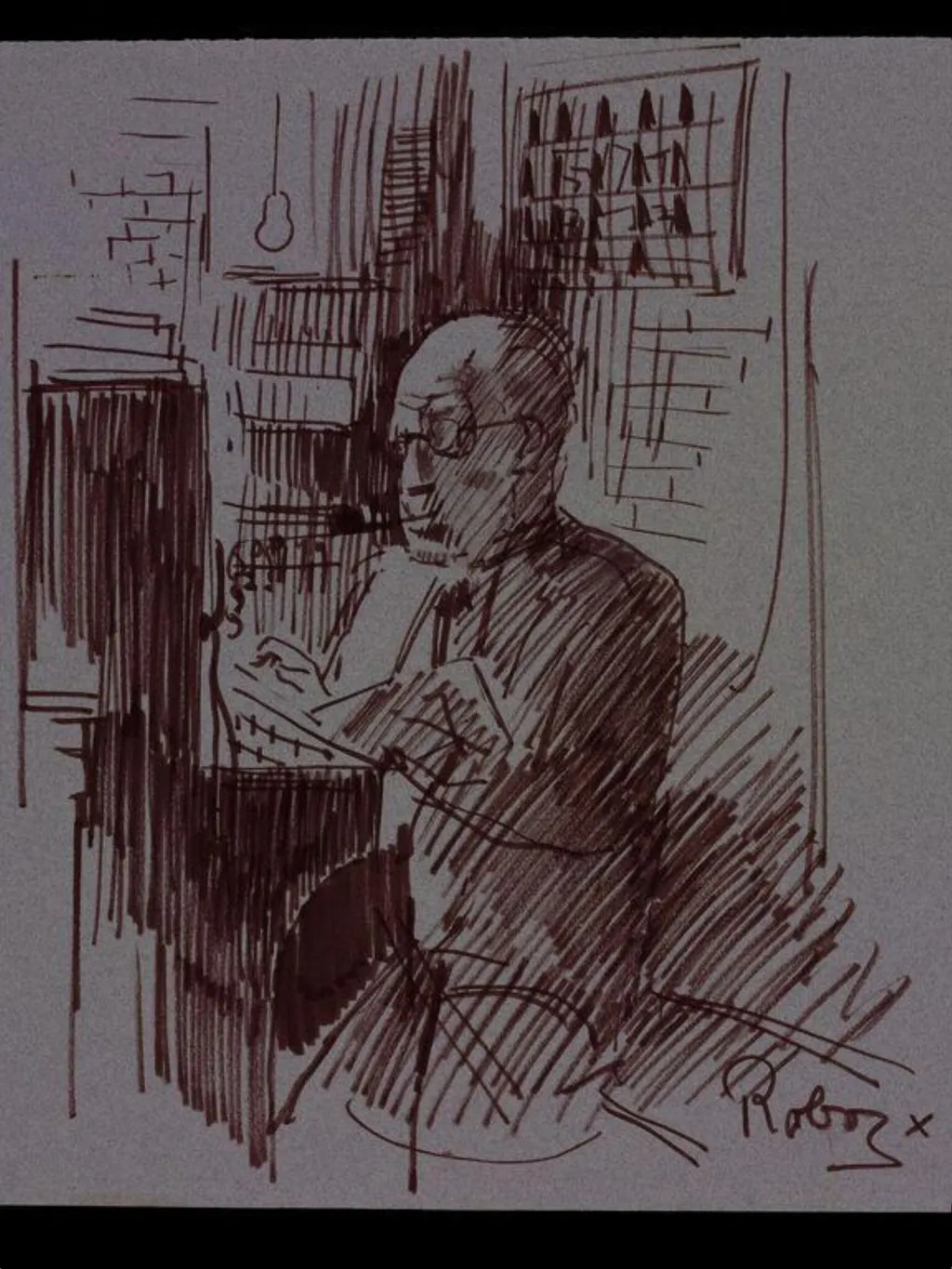
Ben Fuller, telephonist and doorman at the Windmill Theatre, drawing by Zsuzsi Roboz is a drawing by Zsuzsi Roboz. It dates from 1964 and is held in the collection of the Victoria and Albert Museum.
About this work
This is one of many backstage drawings she made before the theatre closed that October.
Zsuzsi Roboz sketched Ben Fuller at work in 1964. He was the telephonist and doorman at London’s Windmill Theatre. This is one of many backstage drawings she made before the theatre closed that October.
Roboz’s drawings were shown in a one-man show the next year. In 1975 they became lithographs. Later, these works traveled to the V&A for an exhibition about the Windmill.
Look up the Victoria and Albert Museum next.
Overview
This drawing by Zsuzsi Roboz depicts Ben Fuller, a telephonist and doorman at London’s Windmill Theatre, captured in 1964. Roboz, a Hungarian-born artist based in London, was commissioned to document the theatre’s final months before its closure. The work forms part of a series of backstage sketches, later exhibited and reproduced as lithographs, reflecting the theatre’s atmosphere during its last days.
Subject & Meaning
The drawing portrays Ben Fuller at his post, embodying the behind-the-scenes roles that sustained the Windmill Theatre’s operations. Fuller’s presence underscores the human dimension of the venue, often overshadowed by its public reputation. Roboz’s focus on staff rather than performers suggests an interest in the unseen labor that defined the theatre’s daily life.
Technique & Style
Roboz’s approach combines immediacy with economy, using swift, confident lines to convey her subjects. The drawing’s loose, gestural quality captures movement and character without excessive detail, aligning with the urgency of documenting a closing institution. Her style balances observation with a sense of fleeting moments, typical of reportage sketching.
History & Provenance
Commissioned by the Windmill Theatre’s owner, Sheila Van Damm, the drawing was created during Roboz’s backstage residency in 1964. It was first exhibited in 1965 at London’s Upper Grosvenor Gallery. In 1975, the work was reproduced in a portfolio of lithographs, Backstage at the Windmill Theatre. Later, it appeared in the Victoria and Albert Museum’s 1978 exhibition Revuedeville.
Context
The Windmill Theatre, known for its revue shows and risqué performances, closed in October 1964 after decades of operation. Roboz’s drawings preserve a transitional moment, capturing the theatre’s backstage life before its demise. Her work reflects broader mid-century interest in documenting disappearing urban spaces and cultural institutions.
Legacy
Roboz’s drawings remain a visual record of the Windmill Theatre’s final chapter, offering insight into its lesser-known operations. The works’ inclusion in exhibitions and publications has cemented their place in the theatre’s historical narrative. They exemplify the role of portraiture in preserving ephemeral social and cultural environments.
Artist & collection
Artist
Zsuzsi Roboz made careful pencil drawings of people at work in mid-century London.

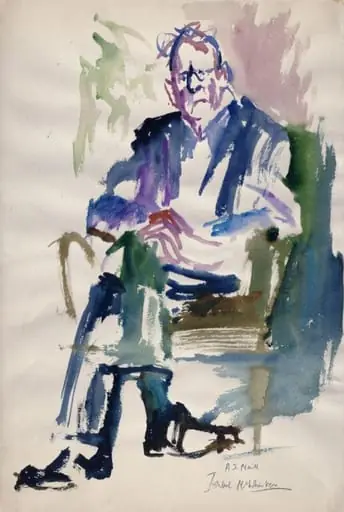
- A. S. Neill
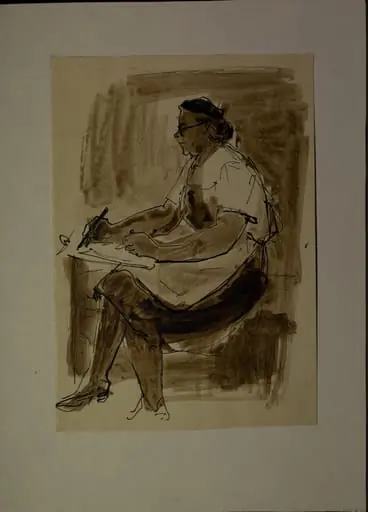 Portret în acuarelă al Mariei Borșanu, așezată, din profil, spre stânga. Desenând. Maria Borșanu a fost membră a Uniunii Artiștilor Plastici. Lucia Cosmescu (1916-1969) a fost pictoriță și graficiană româncă, Născută în Galați, a făcut studii de pictură la Academia de Arte Frumoase din București.
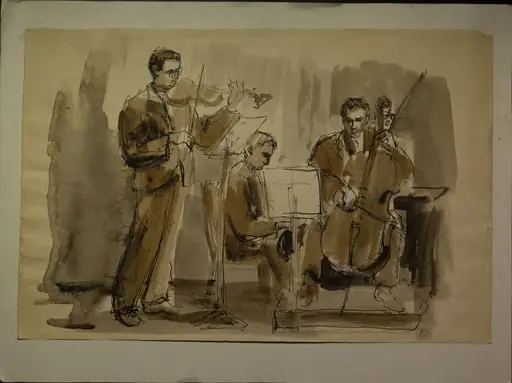 Desen în tuș și acuarelă redând o performanță muzicală a trioului compus din Valentin Gheorghiu (pian), Ștefan Gheorghiu (vioară) și Radu Aldulescu (violoncel). Lucia Cosmescu (1916-1969) a fost pictoriță și grafician român, Născută în Galați, a făcut studii de pictură la Academia de Arte Frumoase din București. A doua jumătate a sec. XX
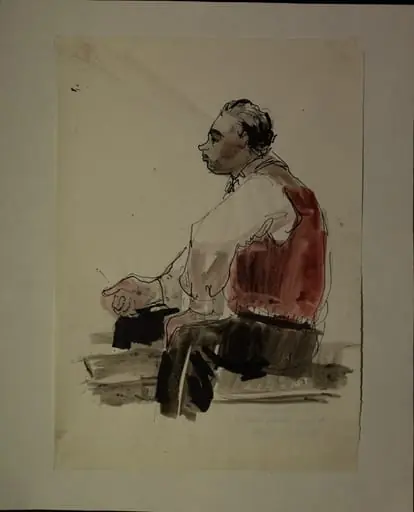 Portret al pictorului Pavel Codiță (1916-2000), până la brâu, așezat, din profil, spre stânga. la pian. Lucia Cosmescu (1916-1969) a fost pictoriță și grafician român, Născută în Galați, a făcut studii de pictură la Academia de Arte Frumoase din București.
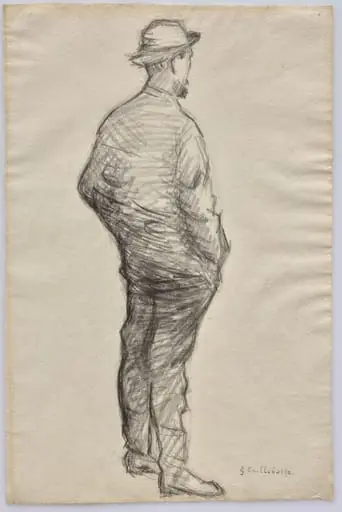 Study of a Man with Hands in His Pockets
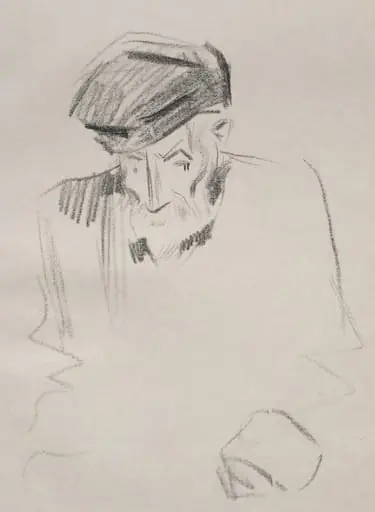 Pierre Auguste Renoir
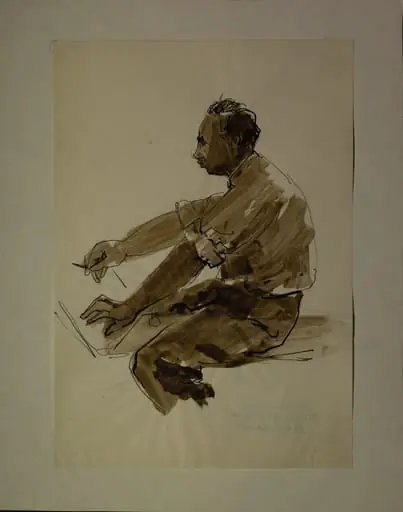 Portret al pictorului Pavel Codiță, din profil, spre stânga. Redat până la brâu, așezat, desenând. Lucia Cosmescu (1916-1969) a fost pictoriță și graficiană româncă, Născută în Galați, a făcut studii de pictură la Academia de Arte Frumoase din București.
 Untitled
 The Lithographer
 Untitled
 La cafenea
 Untitled