Artwork
The Good Samaritan
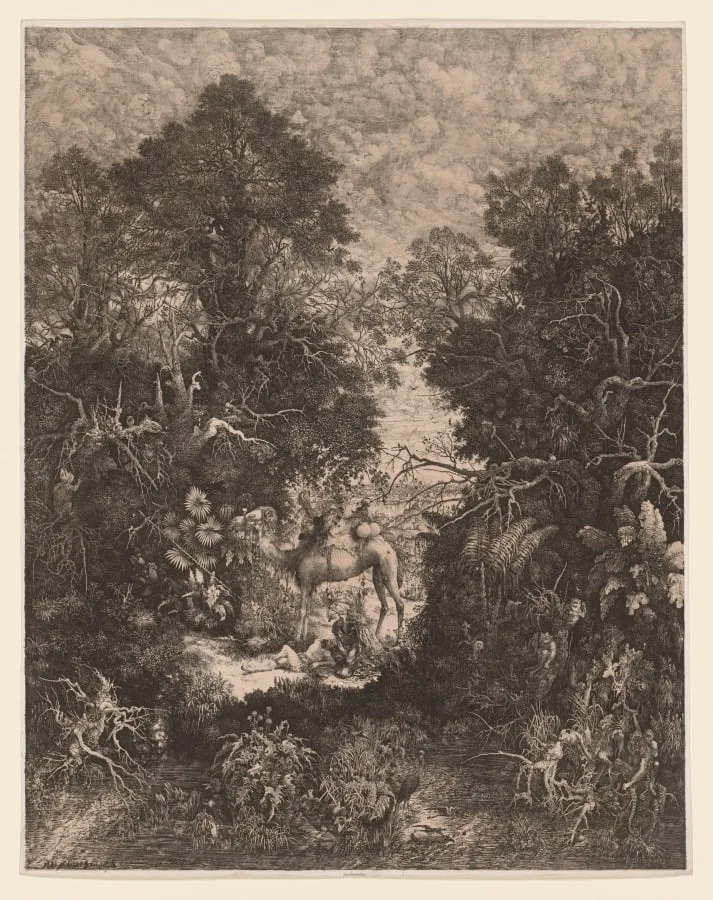
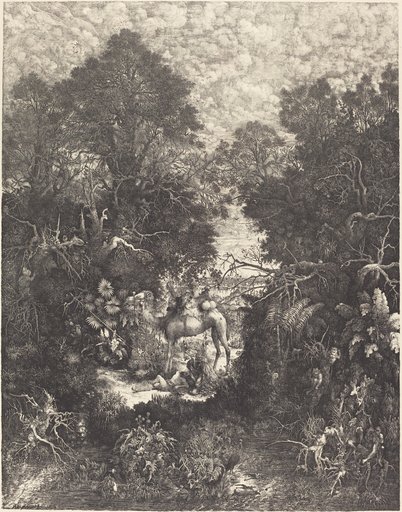
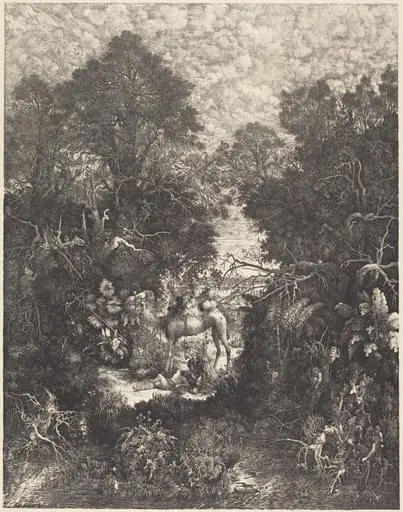
The Good Samaritan is a print by the Impressionist artist Rodolphe Bresdin. It dates from 1861 and is held in the collection of the Cleveland Museum of Art.
- Accession no.
- 1928.750
- Credit line
- Gift of Mrs. George A. Martin
About this work
Overview
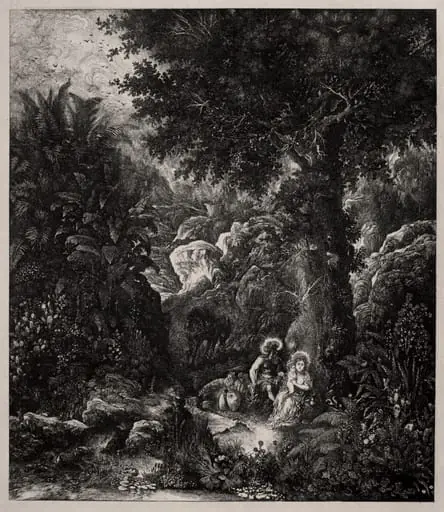
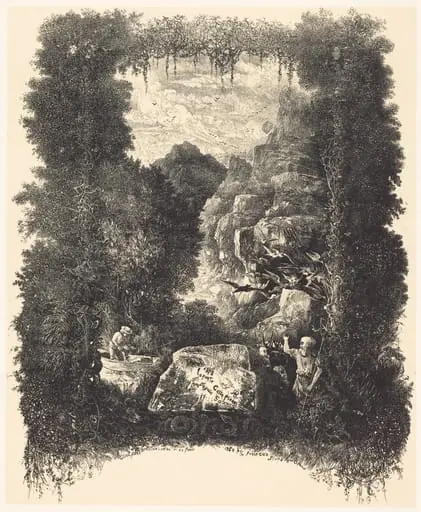
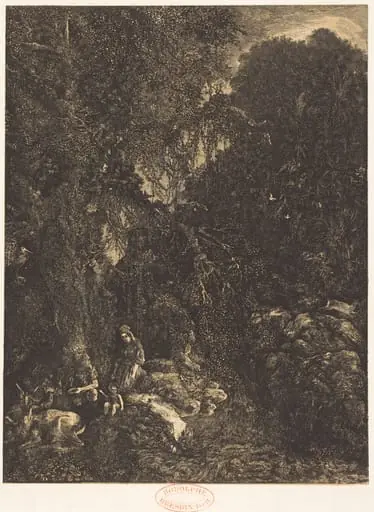
The Good Samaritan is a print depicting a biblical scene within an elaborate, fantastical landscape. The central, small-scale representation of the Samaritan aiding the injured man contrasts with the sprawling, densely populated surroundings.
Subject & Meaning
The work illustrates the parable of the Good Samaritan, highlighting an act of kindness between historical enemies (Samaritans and Jews). The juxtaposition of this serene, altruistic moment with the vibrant, chaotic landscape underscores the tranquility of the deed.
Technique & Style
Executed with pen and lithographic ink, the print showcases Bresdin's meticulous detailing of flora and fauna. The composition blends realistic and unrealistic elements, with tightly packed, intricate designs characteristic of his imaginative approach.
History & Provenance
Appreciated by a limited, literary circle during the artist's lifetime, the work was admired by notable writers Victor Hugo and Charles Baudelaire. Its unique blend of realism and fantasy resonated with this select audience.
Context
While the technique of packing detailed elements into a composition might evoke sfumato (a softening of edges, as seen in Leonardo da Vinci's work), Bresdin's approach here emphasizes contrast between the serene central scene and the lush, noisy backdrop.
Legacy
The Good Samaritan reflects Bresdin's innovative, often unappreciated-in-his-time, style, which would later influence perceptions of combining realistic narratives with imaginative, densely detailed environments.
Artist & collection