Artwork
The Holy Family with the Does
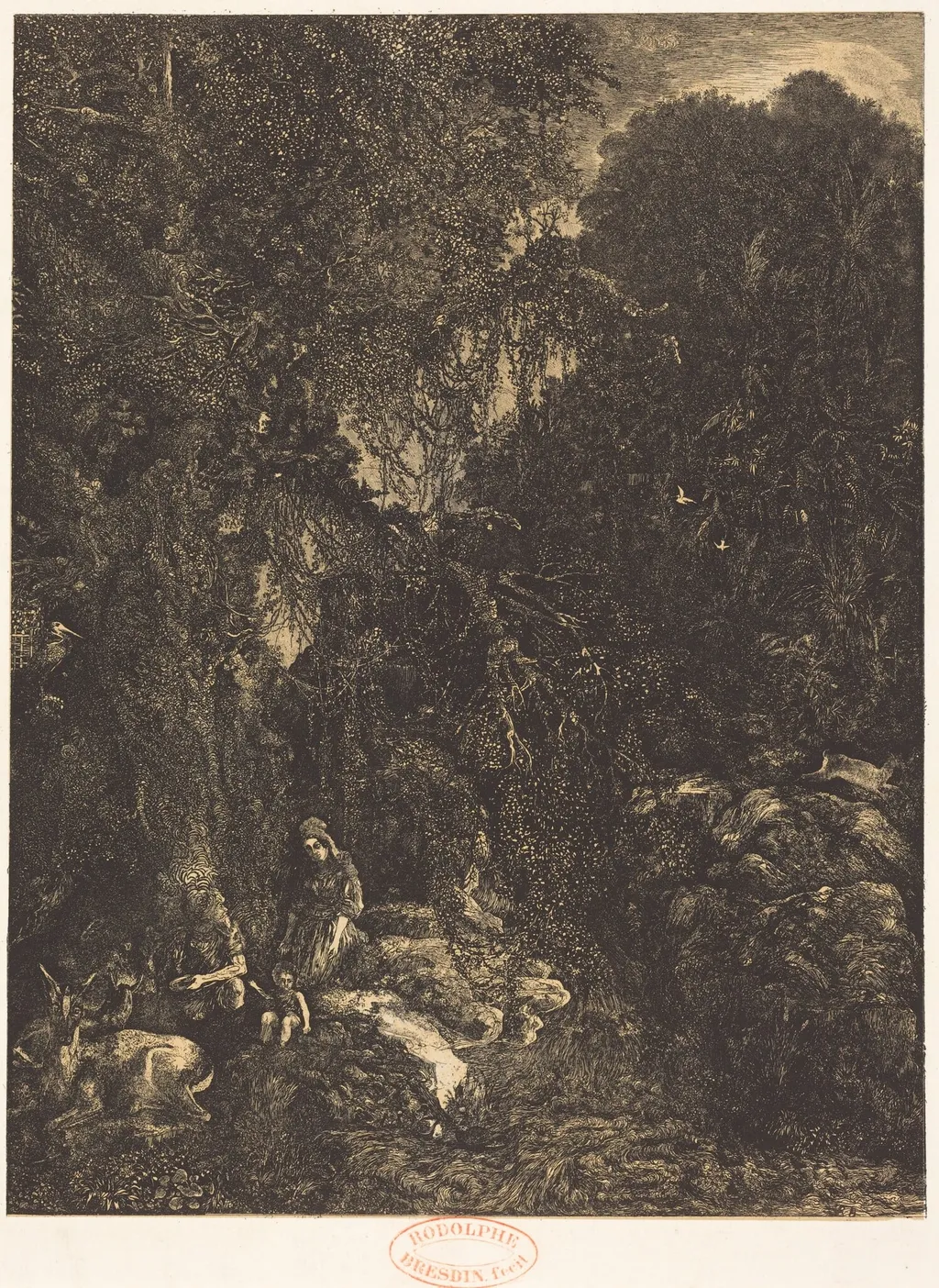
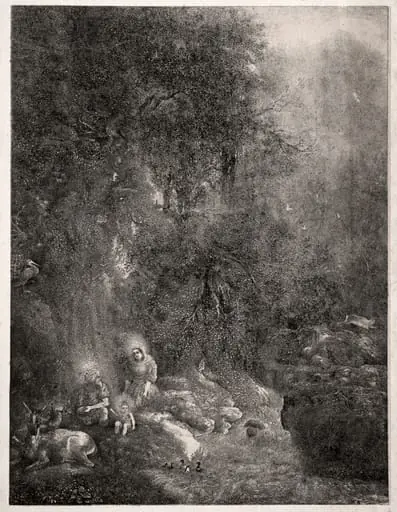
The Holy Family with the Does is an ink print by the Impressionist artist Rodolphe Bresdin. It dates from 1878 and is held in the collection of the National Gallery of Art.
- Inscription
- Inscribed:upper right in plate: Rodolphe Bresdin 1878; lower right in plate: R B.; lower center below image, stamped in red: RODOLPHE BRESDIN.fecit (Lugt 295b); by later hand, lower left in graphite: A62; by later hand, lower left to lower center verso in graphite: Rodolphe Bresdin / Le Repos en Egypte (Neumann 54) / Superbe epreuve av. la lettre sur chine fixé / timbre de l'artiste
About this work
Overview
Created in 1878, the work titled The Holy Family with the Does is a black transfer lithograph executed on chine collé. French draughtsman Rodolphe Bresnan produced the image, which combines a religious tableau with a richly detailed forest setting, featuring a seated woman, a nude child, and a nearby deer with its fawn.
Subject & Meaning
The composition presents a domestic scene set within a wooded landscape, echoing the traditional Holy Family motif while integrating elements of nature. The presence of the deer and its offspring introduces themes of innocence and pastoral harmony, aligning the sacred figures with the natural world.
Technique & Style
Bresnan employed transfer lithography, a process that allows fine line work and tonal variation, and mounted the print on a thin paper support (chine collé). The image is rendered in a realistic manner, emphasizing texture: rough bark and stone contrast with the smooth drapery of the woman's dress and the soft fur of the animals.
History & Provenance
Born in 1822, Bresnan moved from his Breton upbringing to Paris, where he associated with literary figures such as Charles Baudelaire and Victor Hugo. The 1878 print reflects his mature period, during which he frequently explored spiritual and allegorical subjects in his graphic oeuvre.
Context
Bresnan’s work belongs to a 19th‑century French tradition that merged detailed natural observation with symbolic content. His affiliation with the bohemian circles of Paris informed a sensibility that merged literary romanticism with meticulous draftsmanship, evident in the intricate forest backdrop of this piece.
Own this work as a print
Artist & collection

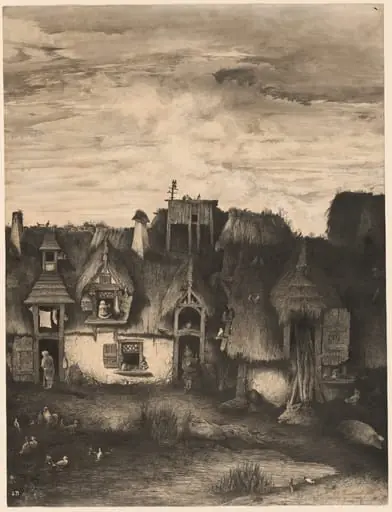
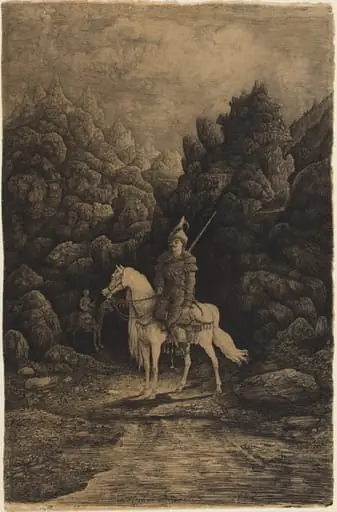
- The Towns Behind the Marsh
 The Good Samaritan (Le Bon Samaritain)
 Frontispiece
 Rest on the Flight into Egypt with a Saddled Donkey
 Untitled
 The Good Samaritan
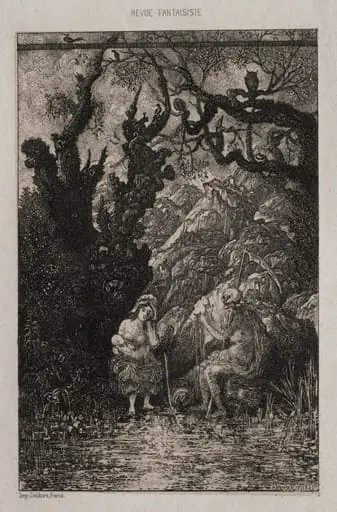 Death and the Young Mother
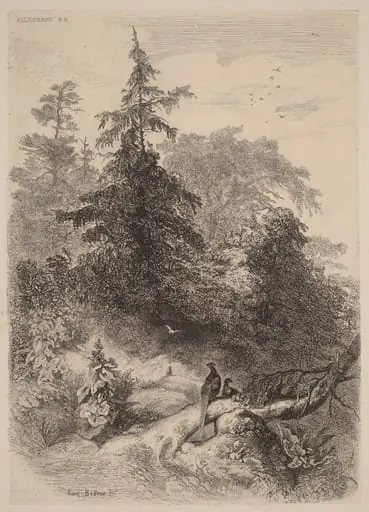 Les Faisans
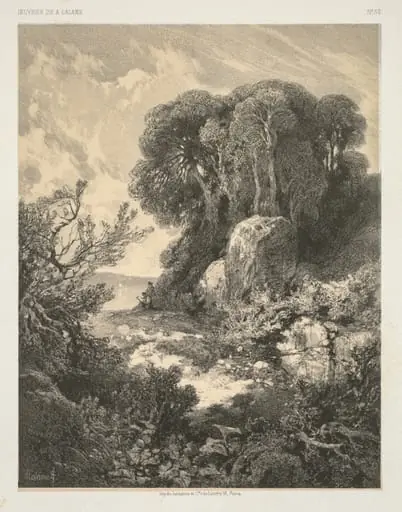 Oeuvres de A. Calame: No. 52
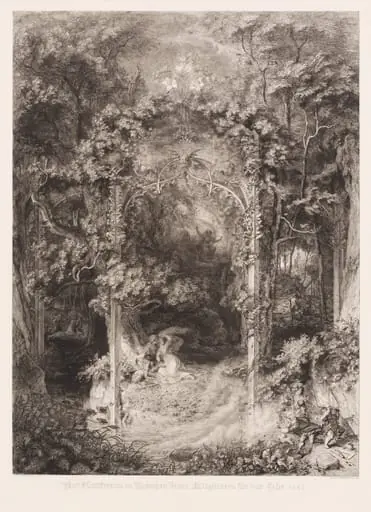 Das Waldfräulein (The Lady of the Forest)
 A Thicket; a Gnarled Willow Tree at Left, a Thicket of Vegetation at Right
 Holy Family with Deer