Artwork
Elijah fed by the ravens
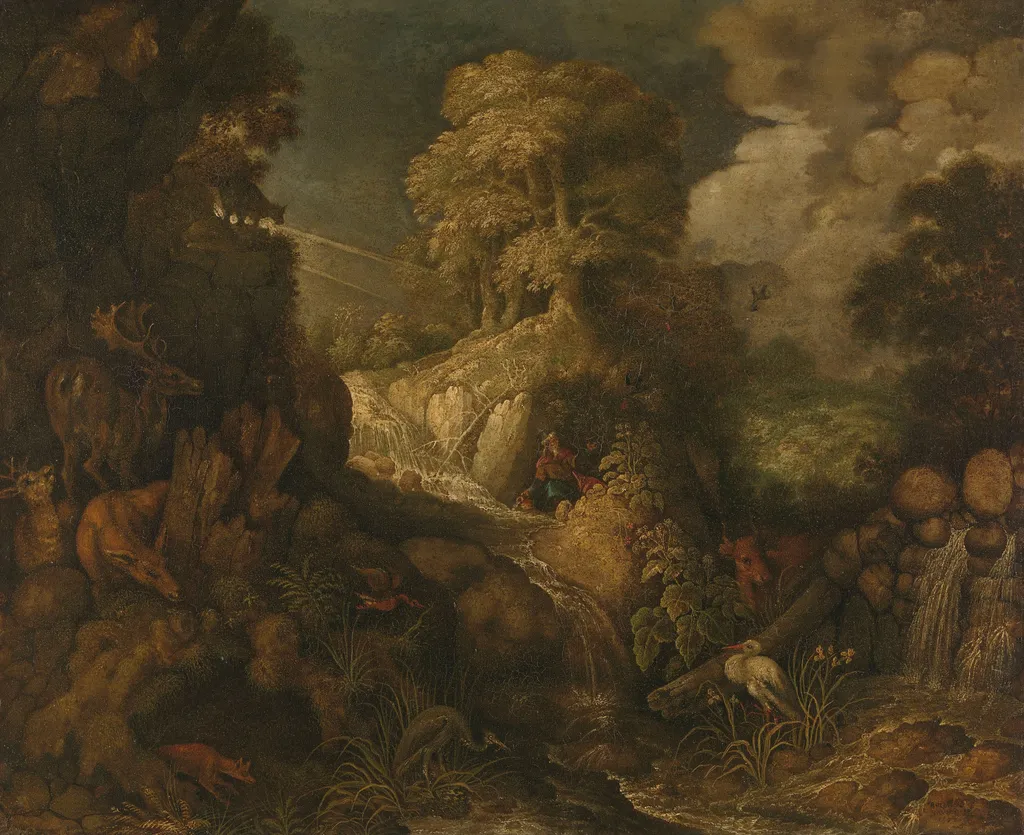
Elijah fed by the ravens is an oil painting by the Dutch Golden Age artist Roelant Savery. It dates from 1634 and is held in the collection of the Rijksmuseum.
About this work
Subject & Meaning
The painting depicts the biblical prophet Elijah, who, after predicting a drought to the king of Israel, was sent by God to hide by the Brook Cherith.
The painting depicts the biblical prophet Elijah, who, after predicting a drought to the king of Israel, was sent by God to hide by the Brook Cherith. The scene captures the moment Elijah kneels to fill a water pitcher while three ravens fly toward him carrying food in their beaks, illustrating the divine provision of sustenance during his exile. As is characteristic of Roelant Savery's style, the religious narrative is secondary to the surrounding landscape, which teems with wildlife.
Various animals, including deer, a fox, a heron, and a stork, are positioned among the rocks and trees, observing the central event. This composition emphasizes the harmony between the prophet and nature, blending the scriptural account with a detailed, animal-rich environment.
Technique & Style
The painting is executed in oil on copper, a support associated with Savery’s small-scale cabinet pictures. The handling shows mixed execution: the rocky outcrops are rendered with atypically rounded and oval forms, while the animal passages and flowing stream reflect the more detailed, naturalistic style typical of Savery’s workshop. The composition privileges landscape over narrative, using dense foliage and rugged terrain to frame the biblical scene.
The signed date 1634 appears in the lower right, though differences in quality across the surface suggest substantial involvement by a studio assistant, possibly Savery’s nephew Hans Savery (II).
History & Provenance
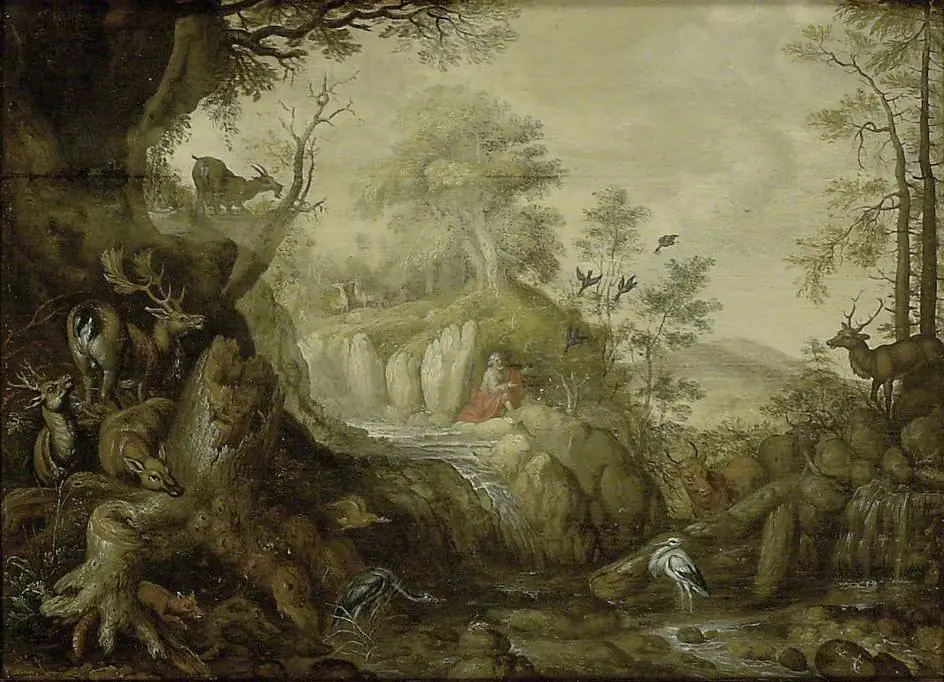
Dated 1634, this copper painting bears the signature 'ROELAND / SAVERY·FE / 16[3]4' in the lower right corner. Although long considered an autograph work by Roelant Savery, modern analysis suggests it originated from his workshop, possibly executed by his nephew Hans Savery II with varying degrees of master intervention. This attribution stems from stylistic inconsistencies, particularly the atypical depiction of stacked rocks compared to the characteristic rendering of animals and water. A nearly identical version resides in the Ashmolean Museum, Oxford, also linked to Hans Savery II.
The work entered the Rijksmuseum collection on September 7, 1885, purchased for 95 guilders at an estate auction of the Leiden leather trader Cornelis Fredricus Berré. The sale was conducted by the auction house C.F. Roos in Leiden.
Elijah fed by the ravens is held in the Rijksmuseum in Amsterdam, as part of that museum's collection.
Provenance The painting entered the Rijksmuseum on 7 September 1885, when it was purchased for 95 guilders at the estate sale of the Leiden leather merchant Cornelis Fredricus Berré (1822–1885), held at the C.F. Roos auction house in Leiden.
Exhibition history No exhibition history is documented in the available sources.
Context
The painting depicts the biblical prophet Elijah during a moment of divine sustenance in the wilderness, where ravens deliver food as he kneels by a stream, a scene described in 1 Kings. Scholars note that within Savery's oeuvre, the narrative serves as a pretext for a richly detailed naturalistic landscape populated by various animals, including deer, fox, heron, and stork, reflecting his interest in natural observation alongside religious subject matter.
The work is signed and dated 'ROELAND / SAVERY·FE / 1634' in the lower right, but art historical analysis suggests it may be executed by Savery's nephew Hans Savery II, either with or without direct supervision, based on stylistic differences such as the atypical rendering of rocks and the more characteristic treatment of fauna and water. A near-identical version in the Ashmolean Museum is also linked to Hans Savery II, supporting this attribution theory. The painting entered the Rijksmuseum collection in 1885 through a purchase at auction from the estate of Cornelis Fredricus Berré for 95 guilders, as documented in the museum's provenance records.
Legacy
The painting's legacy is complicated by questions of authorship. Although long regarded as an autograph work by Roelant Savery, the uneven quality of its components has led scholars to attribute it to his workshop, possibly executed by his nephew Hans Savery II with or without Savery's own involvement. The rocky passages on either side, rendered as stacked rounded and oval stones, are considered atypical of Savery, whereas the animals and flowing water align with his established manner.
A nearly identical version held at the Ashmolean Museum in Oxford has likewise been linked to Hans Savery II, suggesting the composition was reproduced within the Savery circle and continued to circulate as a collaborative model.
The work entered the Rijksmuseum in 1885, purchased for 95 guilders at the estate sale of the Leiden schoolbook dealer Cornelis Fredricus Berré, and has since remained in the museum's collection as a documented example of the workshop's religious output.
Overview
In 1634 Roelant Savery painted Elijah fed by the ravens on a copper support. The work belongs to the religious genre of the Dutch Golden Age and is now part of the Rijksmuseum’s collection. It presents a compact, atmospheric scene that combines landscape and narrative elements in a modestly sized composition.
Own this work as a print
Artist & collection
Artist
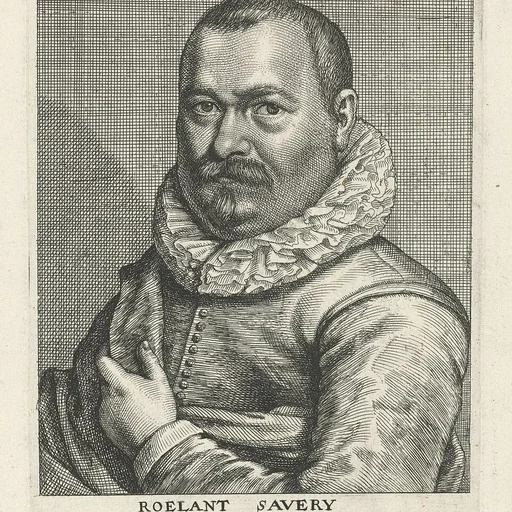
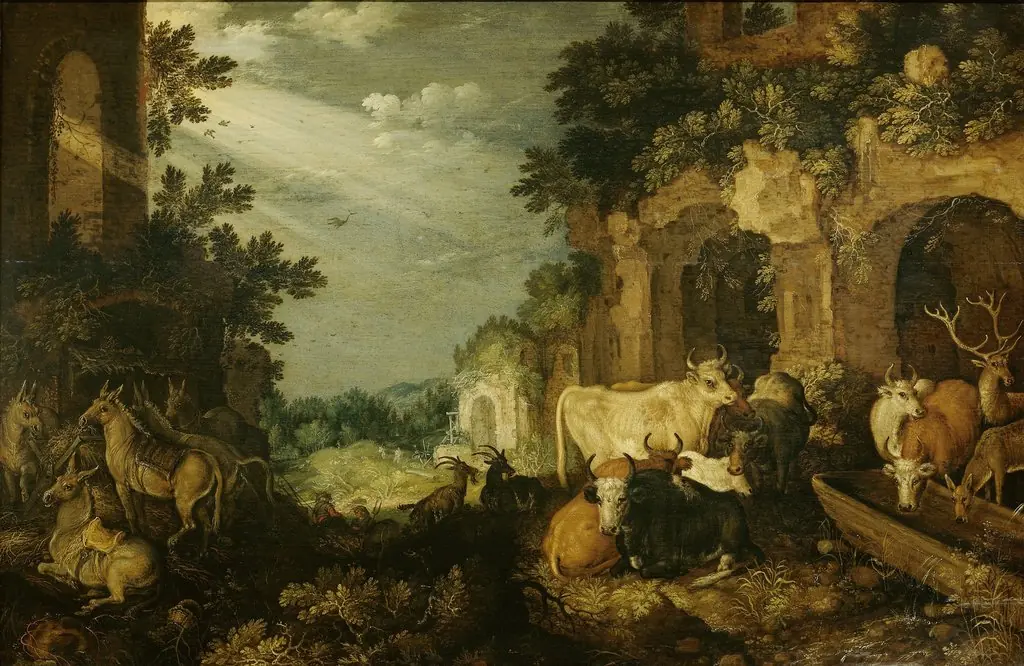
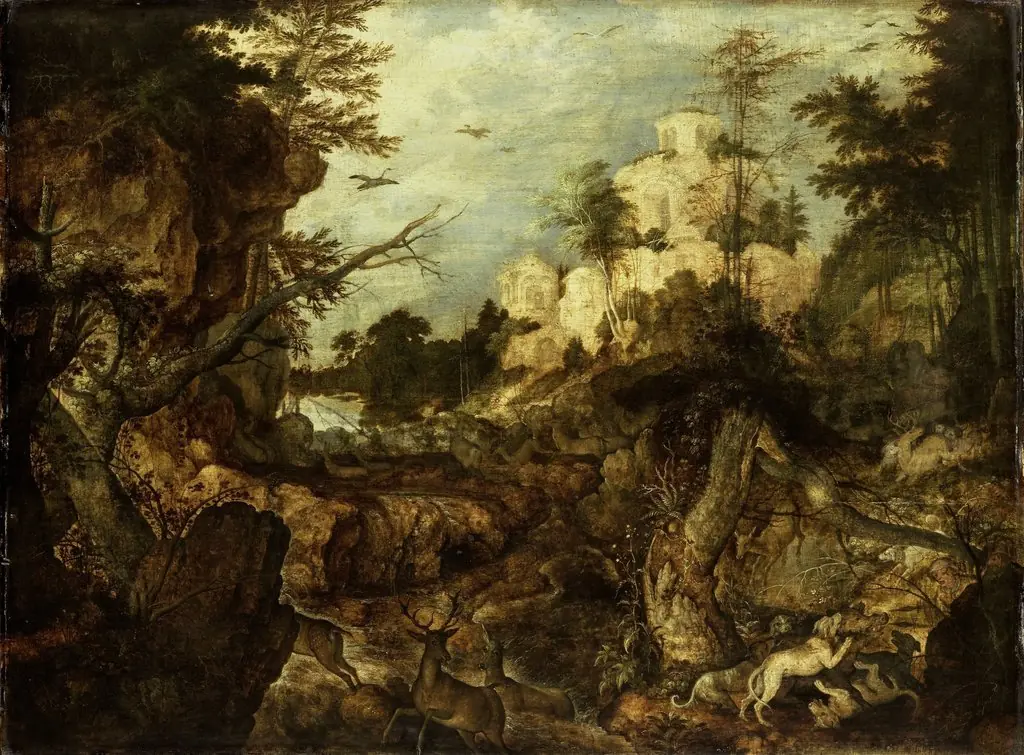
Roelant Savery (or Roeland(t) Maertensz Saverij, or de Savery, or many variants; 1576 – buried 25 February 1639) was a Flanders-born Dutch Golden Age painter.

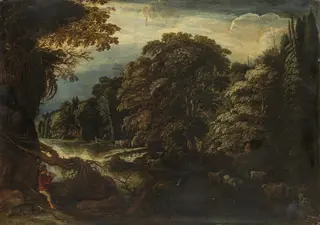 Forest
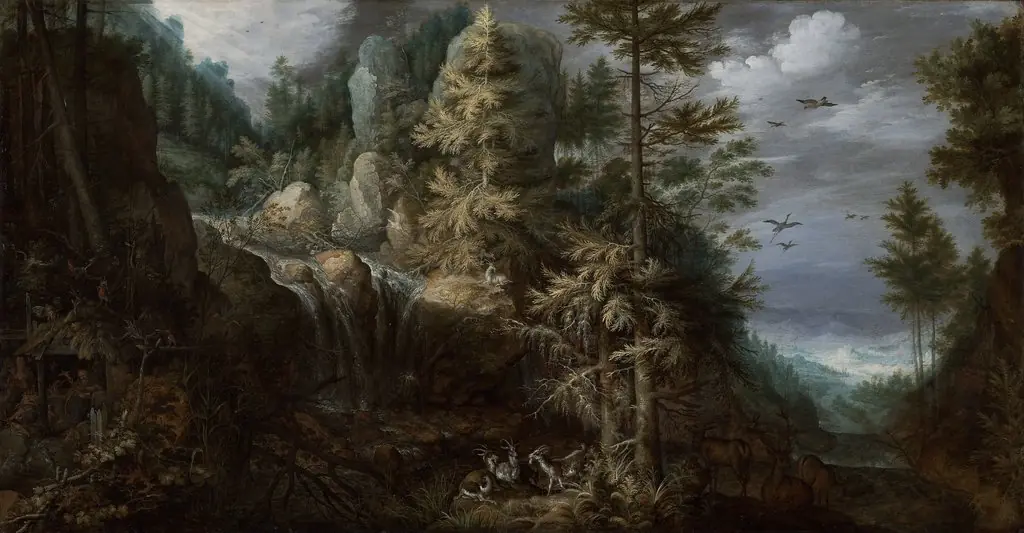 Landscape with the Temptation of Saint Anthony
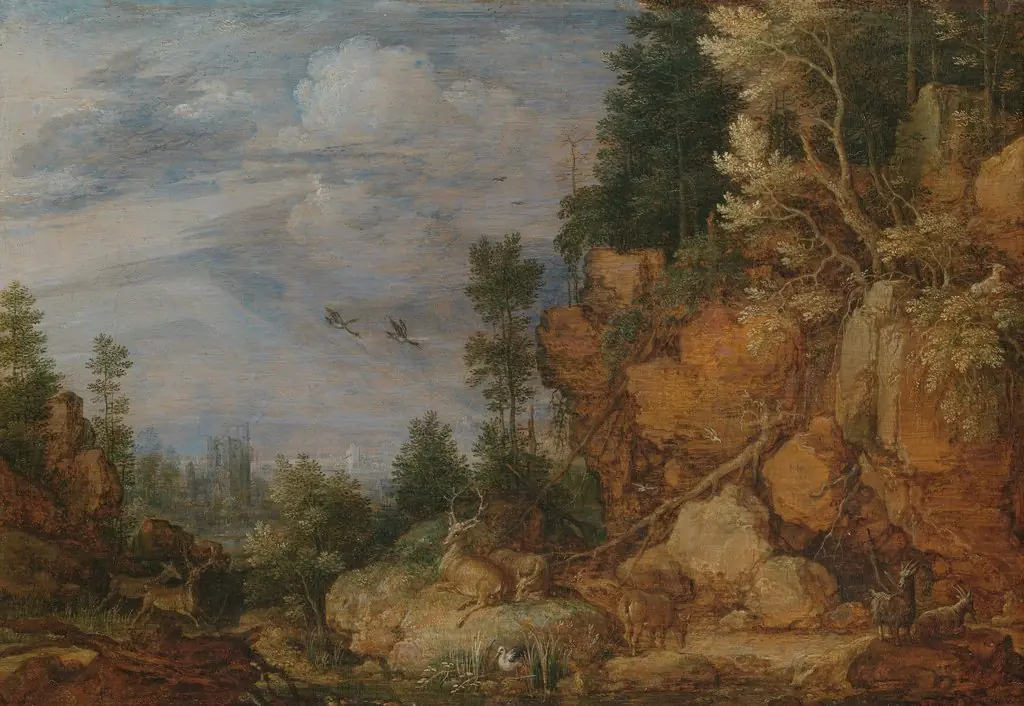 Rocky landscape with deer and goats
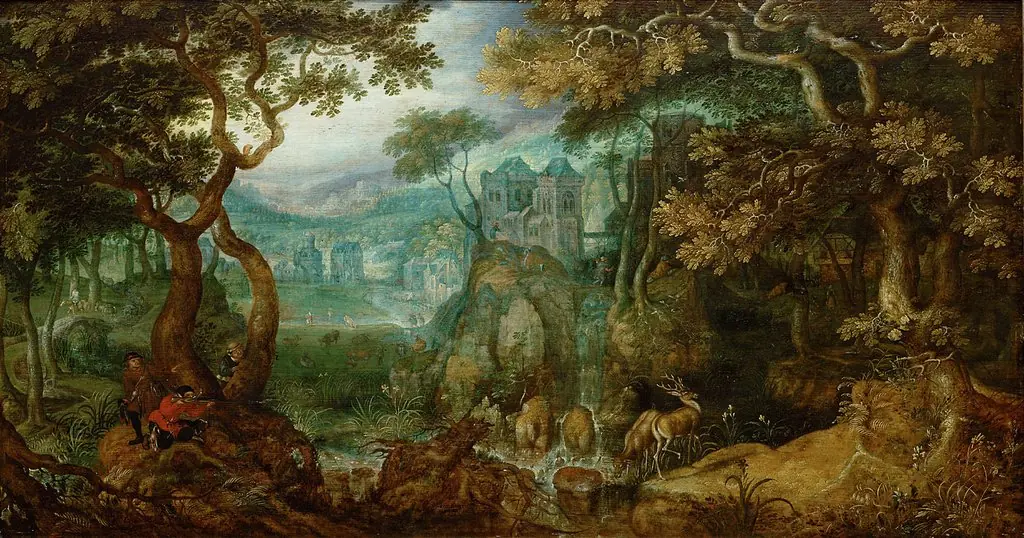 Forest Landscape with Hunters
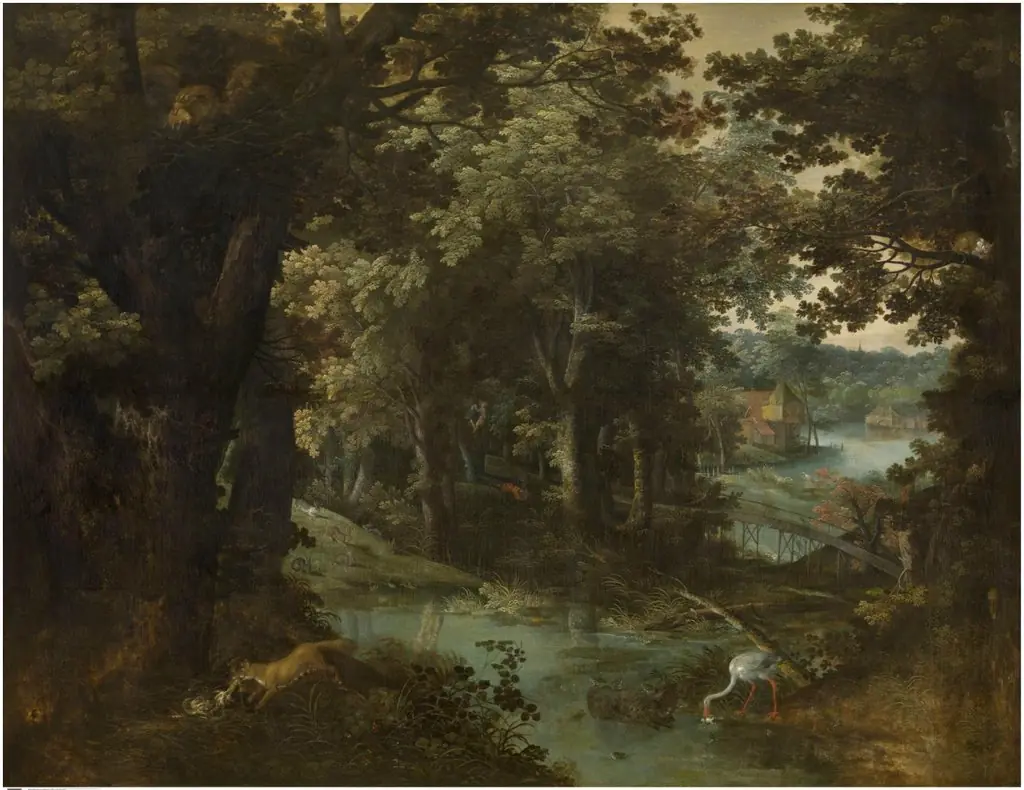 Landscape with Fables
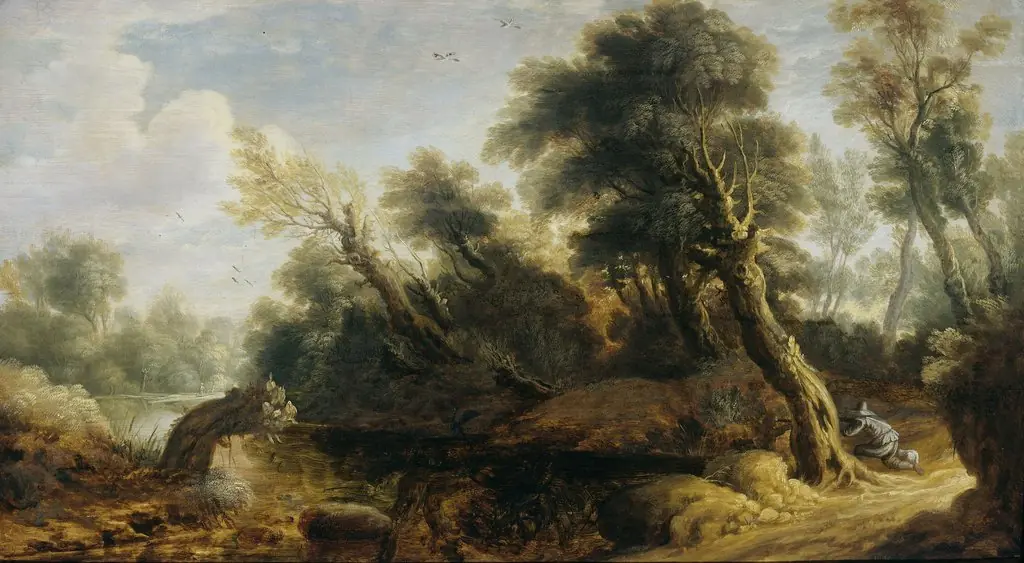 Landscape with a Hunter
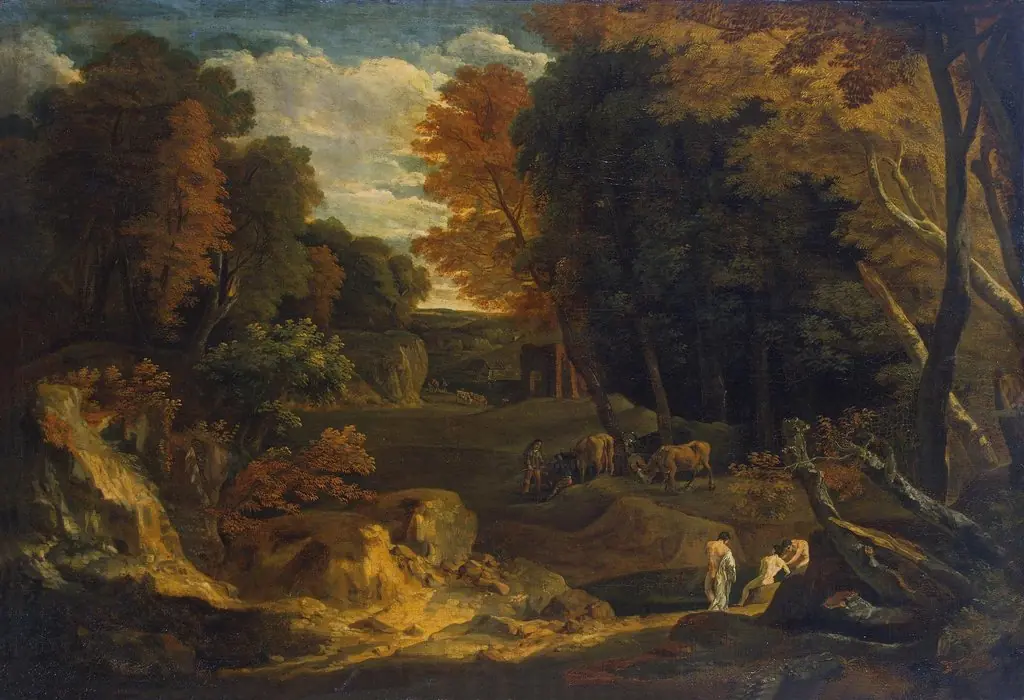 Forest Landscape with a River
 Landscape with the Flight into Egypt
 Landscape
 Hunter and Horsemen on a Wooded Road, with a Village in a Valley beyond