Artwork
Nymphs and Satyr in front of a Temple
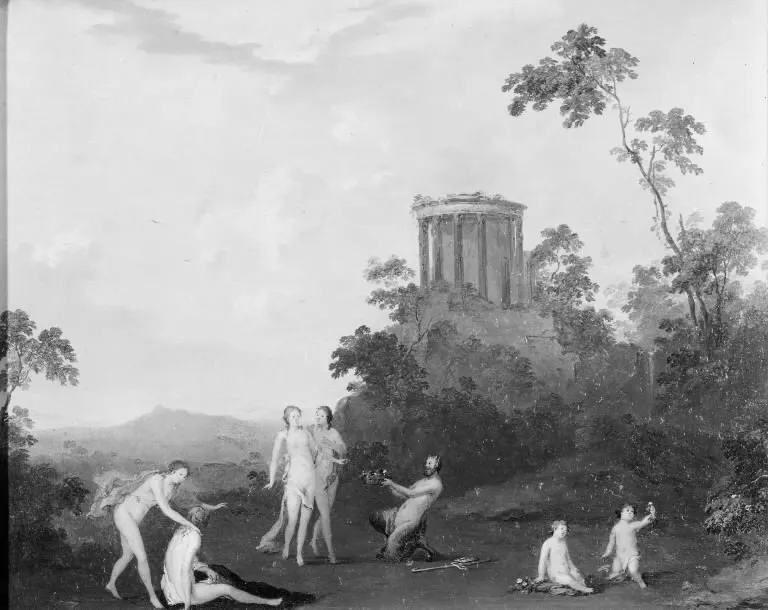
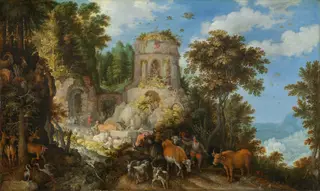
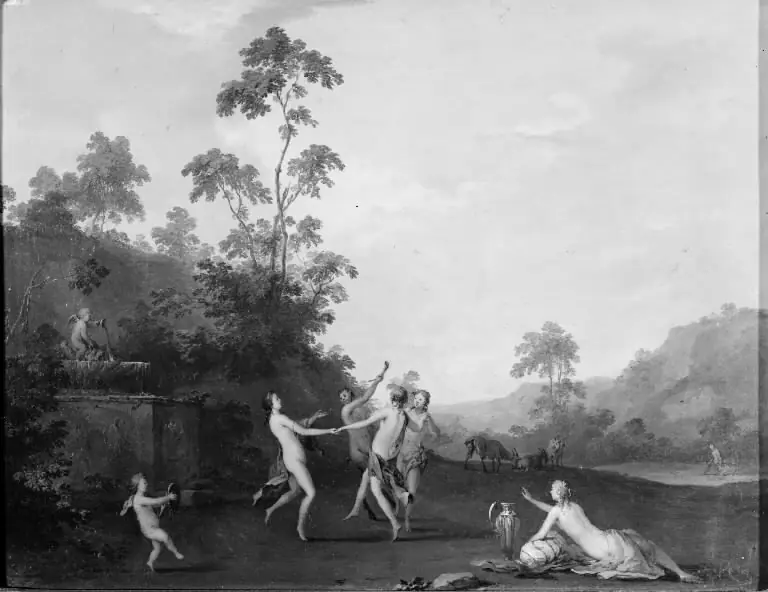
Nymphs and Satyr in front of a Temple is an unspecified painting by the Dutch Golden Age artist Roelant Savery. It dates from 1615 and is held in the collection of the Statens Museum for Kunst.
About this work
Subject & Meaning
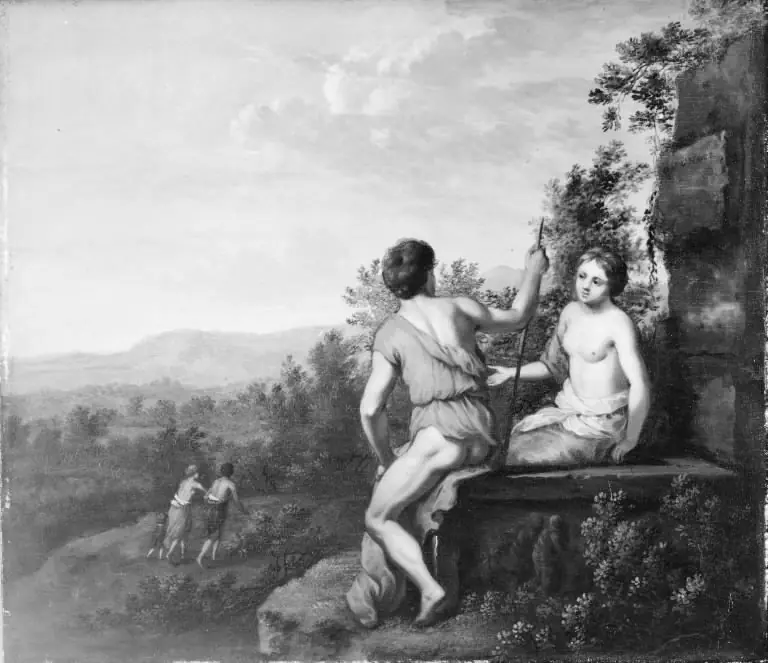
The temple in the background reinforces the classical setting, evoking an idyllic, arcadian world where gods, nymphs, and satyrs coexist in harmony with nature.
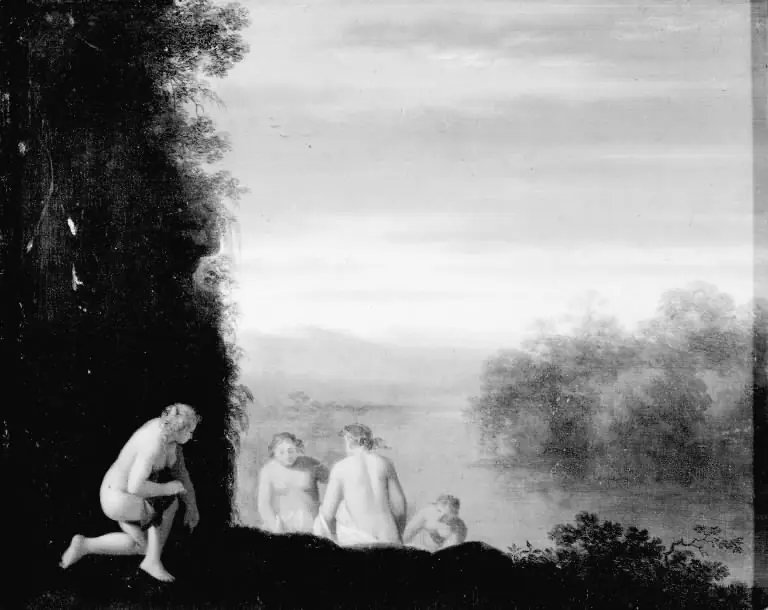
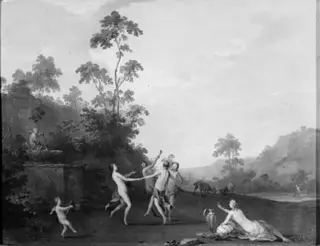
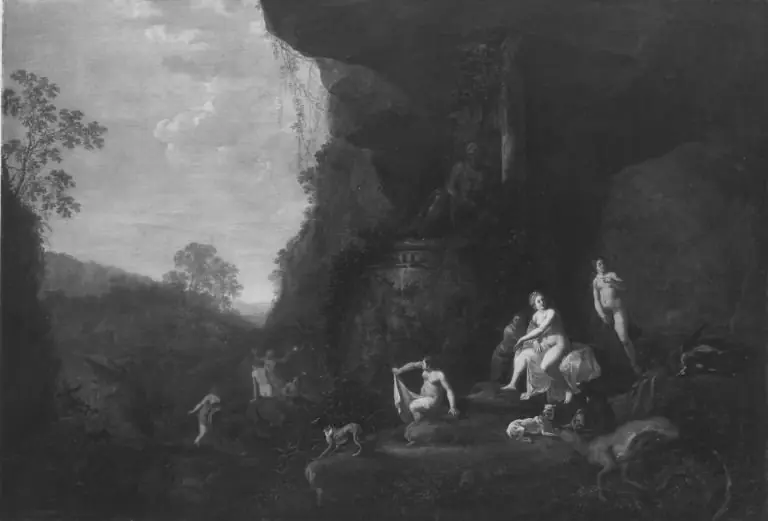
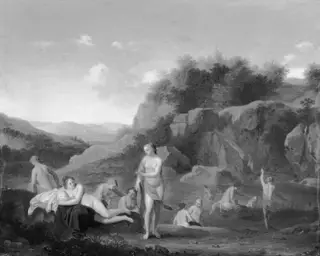
The painting depicts a mythological scene featuring nymphs and a satyr in front of a classical temple. These figures derive from Greco-Roman mythology, where nymphs, divine spirits of nature, are often associated with forests, rivers, and wild landscapes, while satyrs embody untamed, lustful woodland creatures, typically half-human and half-goat. The temple in the background reinforces the classical setting, evoking an idyllic, arcadian world where gods, nymphs, and satyrs coexist in harmony with nature.
Symbolically, the work reflects the Renaissance and Baroque fascination with antiquity, celebrating the vitality and eroticism of pagan mythology. The interaction between nymphs and the satyr may suggest themes of pursuit, seduction, or the tension between civilization (represented by the temple) and primal instinct. The scene does not illustrate a specific myth but instead synthesizes broader mythological motifs to evoke a timeless, pastoral ideal.
History & Provenance
Roelant Savery painted Nymphs and Satyr in front of a Temple in 1615, a date confirmed by both the artist’s internal records and its Wikidata entry. The work was created as an independent mythological composition, with no documented commission or patron identified in the available sources.
Since its creation, the painting has been part of the collection of the Statens Museum for Kunst in Copenhagen, where it remains housed as of the latest records.
The painting Nymphs and Satyr in front of a Temple by Roelant Savery is held in the collection of the Statens Museum for Kunst. The work, dated to 1615, depicts a mythological scene featuring nymphs and a satyr. While the museum's ownership is established, the provided records do not specify an inventory number or detail any past exhibitions for this specific piece.
Context
Roelant Savery created Nymphs and Satyr in front of a Temple in 1615, classifying it as a mythological painting within his oeuvre. The work portrays a scene from classical mythology, reflecting the artistic fascination with antique themes during the late Renaissance period.
Scholarly attention focuses on its compositional balance and the depiction of mythological figures, situating the painting within Savery's broader interest in natural history and allegorical subjects. It is housed in the collection of the Statens Museum for Kunst, where it remains part of their displayed works.
Contextual analysis emphasizes its significance as an example of mythological painting in Northern European art, contributing to understanding Savery's role in bridging scientific illustration and artistic tradition.
Legacy
Roelant Savery's mythological painting depicting a nymph and satyr before a temple influenced later artists' compositions of mythological scenes, particularly in rendering delicate natural elements and complex spatial arrangements within classical settings. The work's presence in the Statens Museum for Kunst collection ensured continued scholarly attention to Savery's technique and subject matter during the 19th century, shaping academic approaches to Northern Baroque mythology. Its legacy is noted in art historical surveys as an example of early Dutch Golden Age fascination with mythological narratives integrated with landscape and architectural detail.
Overview
Created in 1615 by the Flemish artist Roelant Savery, this oil painting presents a mythological tableau set within a wooded landscape. Five partially nude figures, three women and two men, are arranged around a modest temple perched on a hill, surrounded by trees and distant rolling terrain. The work is part of the collection of the Statens Museum for Kunst in Copenhagen.
Technique & Style
Savery employs a gentle chiaroscuro, using soft transitions between light and shadow to model the bodies and give them a slightly ethereal quality. The figures are outlined with delicate brushwork, and the foliage is rendered with fine, leafy details that blend the human forms into the surrounding forest, creating a harmonious balance between figure and landscape.
Artist & collection
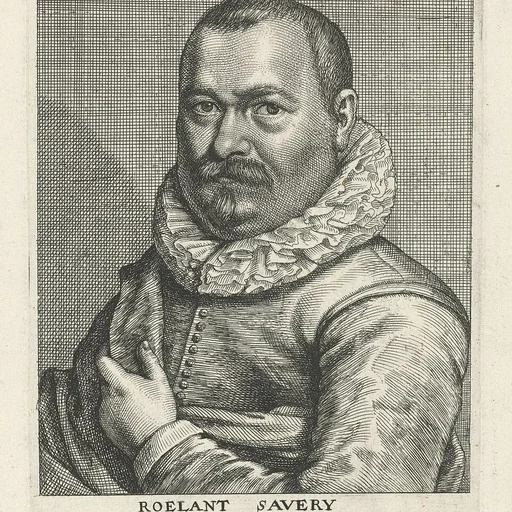
Artist
Roelant Savery (or Roeland(t) Maertensz Saverij, or de Savery, or many variants; 1576 – buried 25 February 1639) was a Flanders-born Dutch Golden Age painter.