Artwork
Wild Boars in the Snow
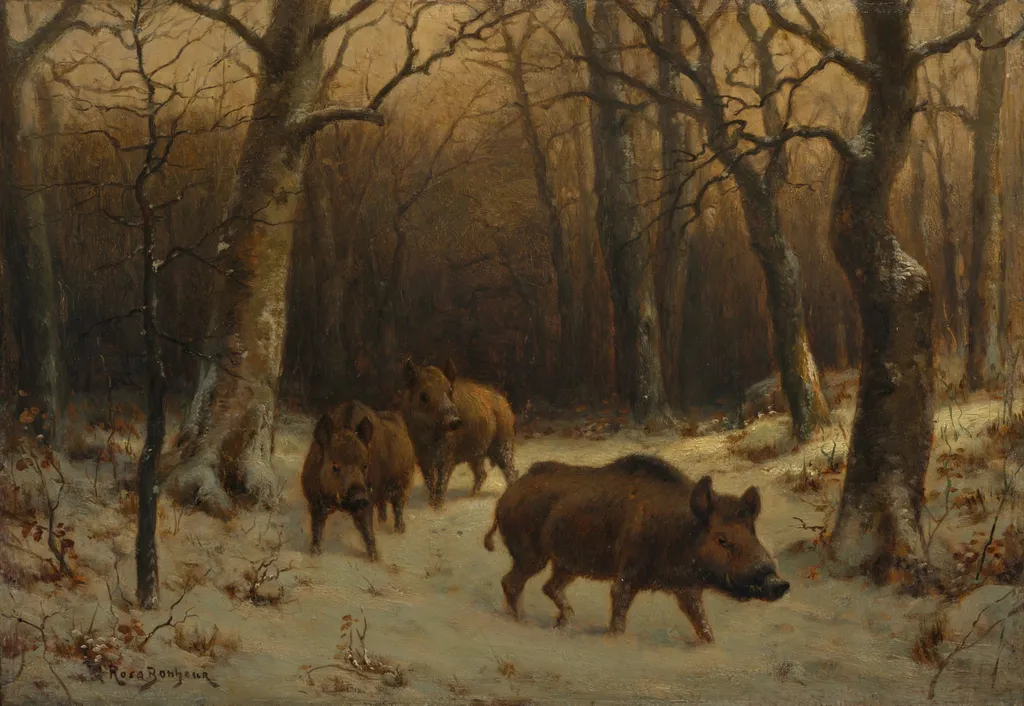
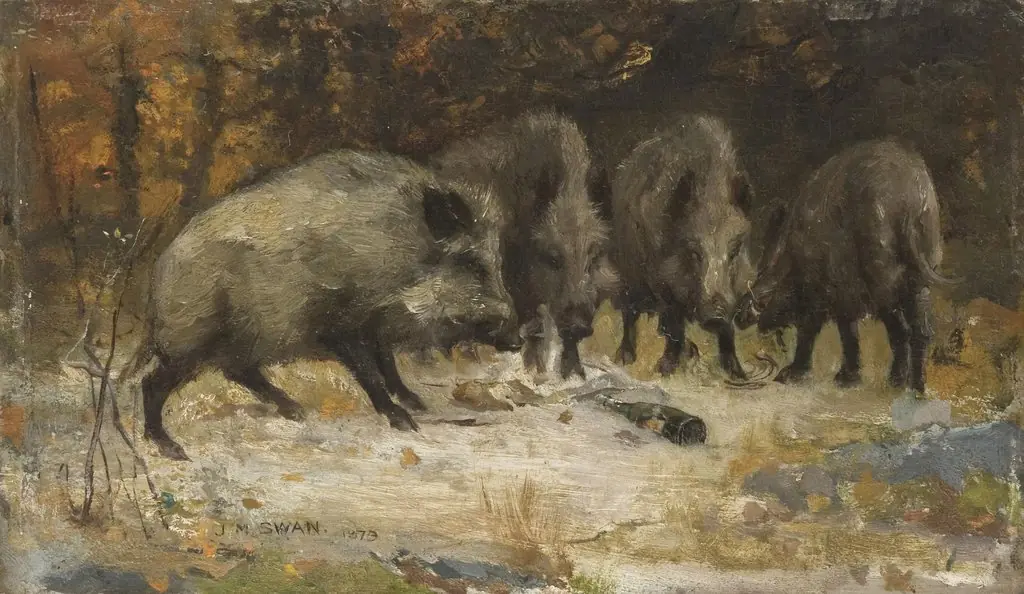
Wild Boars in the Snow is an unspecified painting by the Impressionist artist Rosa Bonheur. It dates from 1874 and is held in the collection of the Cleveland Museum of Art.
- Accession no.
- 1980.231
- Credit line
- Bequest of Noah L. Butkin
About this work
Overview
As a landscape genre work, it highlights Bonheur's skill in rendering seasonal conditions and the interplay of light and shadow in a cold, wooded setting.
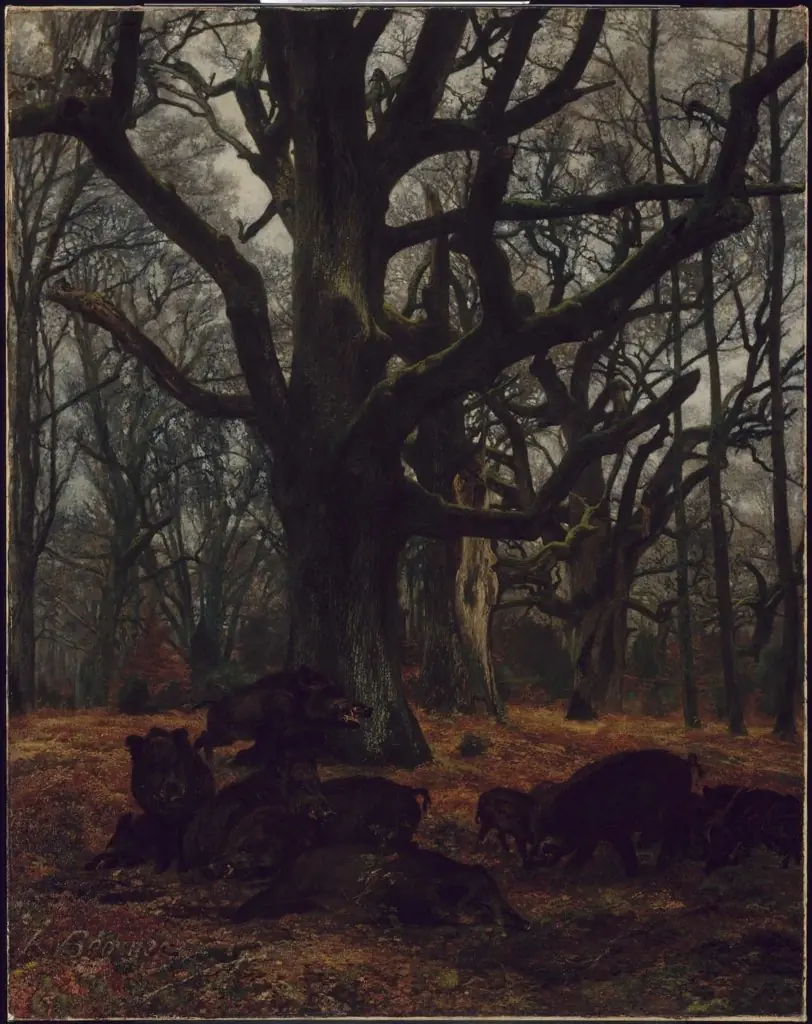
Wild Boars in the Snow, painted by French artist Rosa Bonheur in 1874, is an oil on wood panel depicting four wild boars traversing a winter forest. The composition centers on the animals moving through a landscape of bare, twisted trees set against a pale, snow-covered ground. Bonheur arranges the boars dynamically: one leads the group forward, another follows closely, while two others stand near the center, creating a sense of pause and observation within the scene.
Executed with soft brushstrokes that blend the textures of snow and bark, the work exemplifies Bonheur's renowned commitment to naturalistic observation and her mastery of animal anatomy. Created late in her career, this piece reflects her enduring focus on wildlife and rural life, themes that defined her artistic legacy. The painting captures a quiet, atmospheric moment in nature, demonstrating her ability to convey the specific character of animals within their environment without anthropomorphizing them.
As a landscape genre work, it highlights Bonheur's skill in rendering seasonal conditions and the interplay of light and shadow in a cold, wooded setting.
Subject & Meaning
The canvas captures a moment of quiet movement as the boars navigate the snowy terrain. One animal leads, another follows, while two pause near the center, suggesting a natural hierarchy and the cautious behavior of the herd in a harsh environment. The subdued atmosphere emphasizes the resilience of wildlife amid winter’s stillness.
Technique & Style
Bonheur employs a restrained palette of whites, grays, and muted earth tones, using soft brushwork to blend snow and shadow. Light is rendered with careful contrast: brighter patches illuminate the animals and portions of the trunks, while deeper shadows preserve the depth of the forest. This attention to naturalistic detail aligns the work with the Realist tradition.
History & Provenance
The painting entered the Cleveland Museum of Art’s holdings in the early 20th century, though exact acquisition details remain modestly documented. Its presence in an American institution reflects the broader 19th‑century interest in European animal painting and Bonheur’s reputation as a leading specialist in the genre.
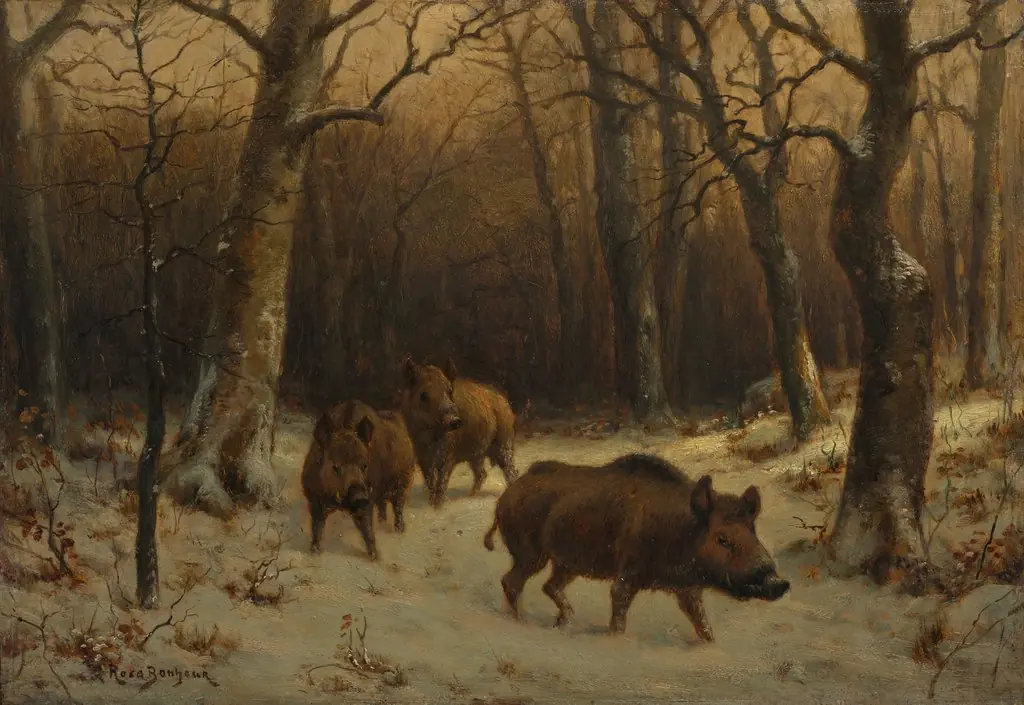
Own this work as a print
Artist & collection

Artist
Rosa Bonheur was a French artist known best as a painter of animals (animalière).