Artwork
Council Chamber, Municipal Offices, Bangor, Caernarvonshire
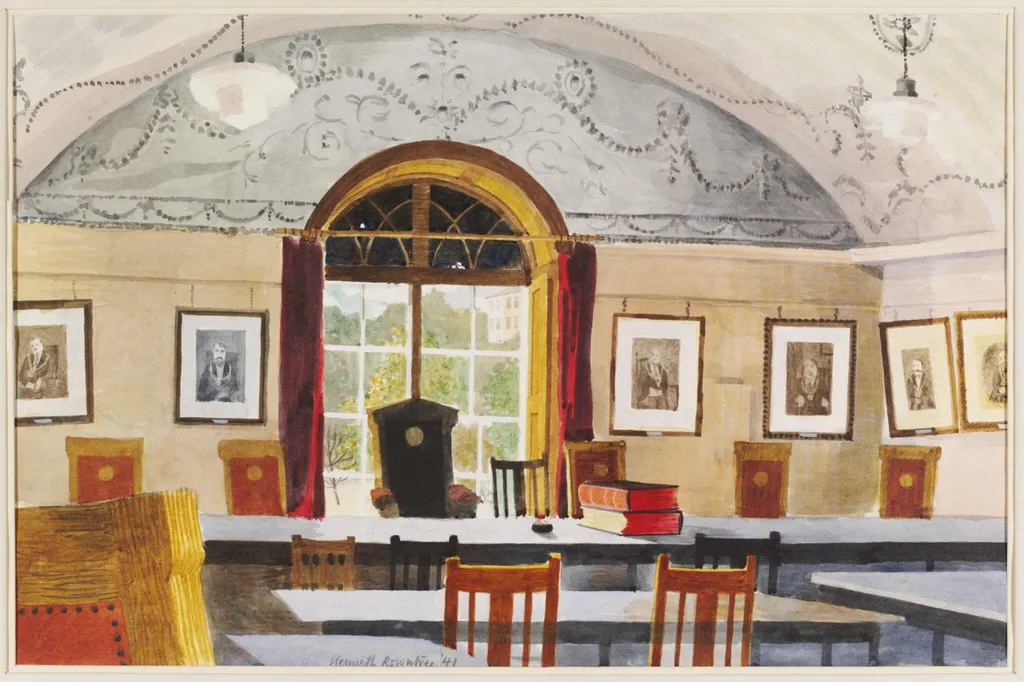
Council Chamber, Municipal Offices, Bangor, Caernarvonshire is a watercolor work on paper by the Social Realist artist Rowntree. It dates from 1941 and is held in the collection of the Victoria and Albert Museum.
About this work
Overview
The watercolor, executed in 1941 by the British artist Rowell Rowntree, portrays the interior of Bangor’s municipal council chamber in Caernarvonshire. The composition centers on a broad arched window flanked by red drapery, while long tables and chairs fill the space beneath. Portraits line the walls and an elaborate ceiling arches overhead, offering a quiet, orderly view of civic architecture.
Subject & Meaning
The painting records a formal meeting room used for local governance, emphasizing the dignity of public service through its orderly arrangement and decorative elements. By highlighting the portraits and ornamental ceiling, the work underscores the continuity of civic tradition and the communal identity tied to municipal institutions.
Technique & Style
Rowntree employs the translucent qualities of watercolor to render the chamber’s muted tones, allowing the soft light from the central window to suffuse the scene. Delicate washes convey the texture of wood and plaster, while precise brushwork captures the fine details of the portraits and the intricate ceiling pattern, creating a balance between atmospheric subtlety and architectural clarity.
History & Provenance
Created as part of the Recording Britain project, the piece was commissioned between 1940 and 1943 to document British locales threatened by wartime disruption. Funded by the Pilgrim Trust and overseen by Sir Kenneth Clark, the scheme aimed to preserve visual records of the nation’s built environment, providing artists with employment during a period of economic uncertainty.
Context
The Recording Britain initiative prioritized English sites, but included a limited number of Welsh locations such as this Bangor council chamber. Over 1,500 works emerged from the program, each intended to capture regional character and architectural heritage at risk from bombing or rapid post‑war change, thereby contributing to a broader visual archive of the United Kingdom.
Artist & collection

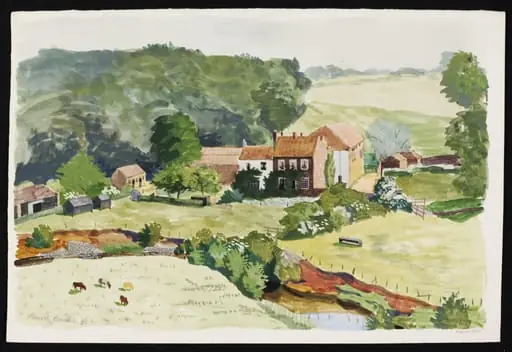
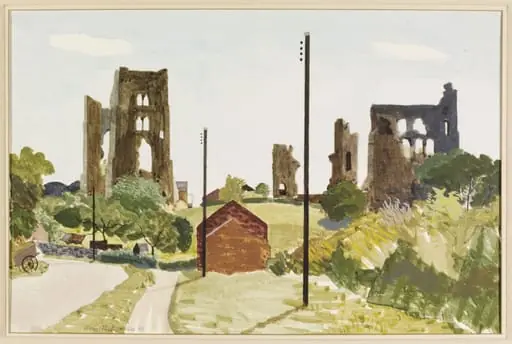
- The Guildhall, Totnes
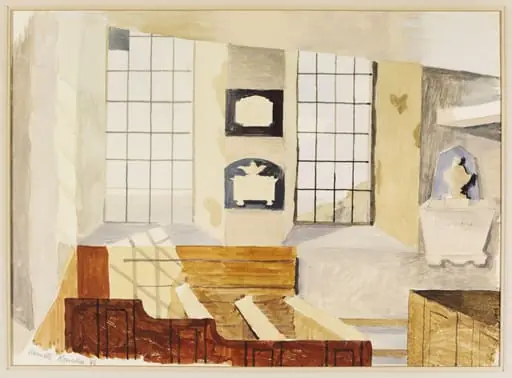 Interior of St. Mary's Church, Whitby
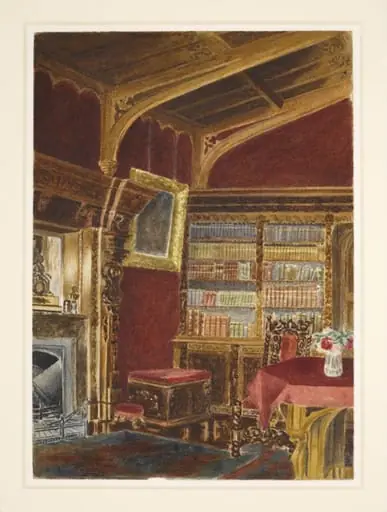 Library at Wray Castle
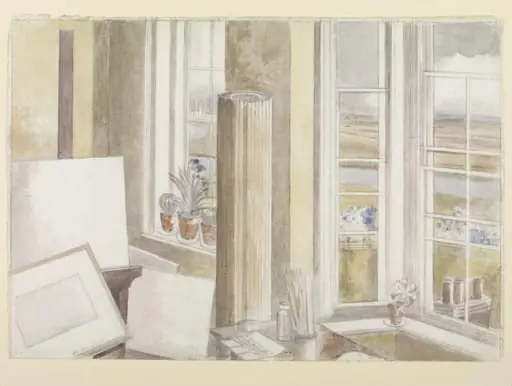 The Studio, New House, Rye
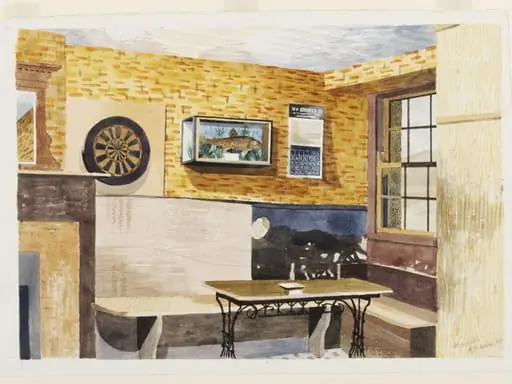 The Smoke Room, Ashopton Inn
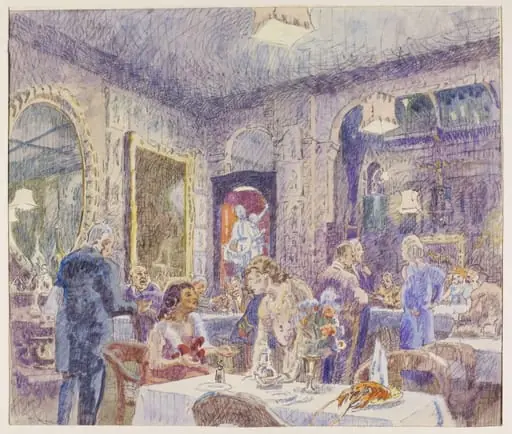 Rule's, 35 Maiden Lane, W.C.2.
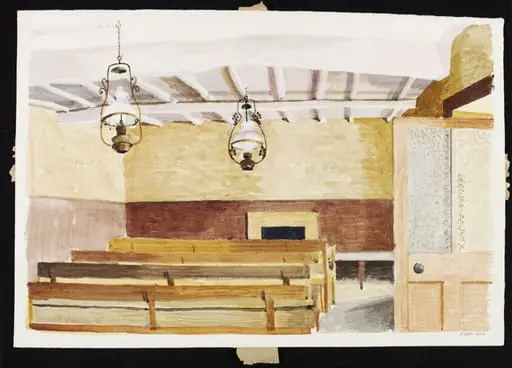 Interior of the Friends' Meeting House, Laskill, Ryedale
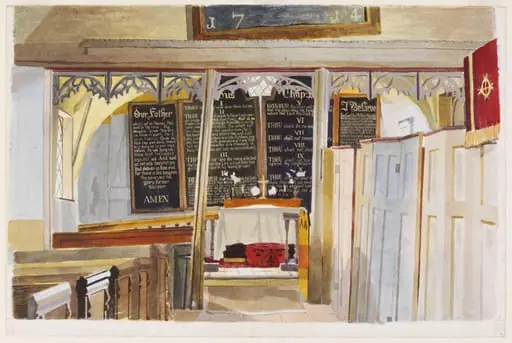 Interior, Black Chapel, North End, near Dunmow, Essex
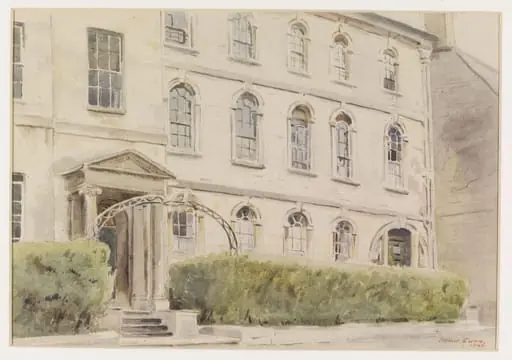 Park House, Cirencester
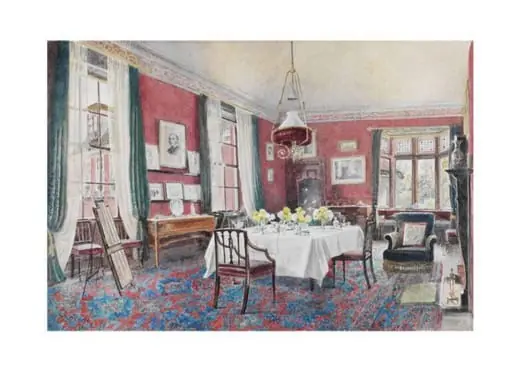 The Dining Room at No.3 The Close, Winchester
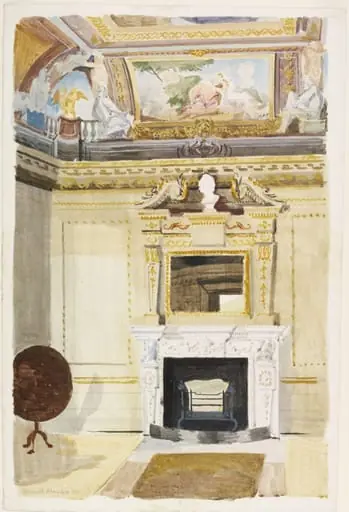 Interior of The Temple, Rievaulx Terrace, Yorkshire
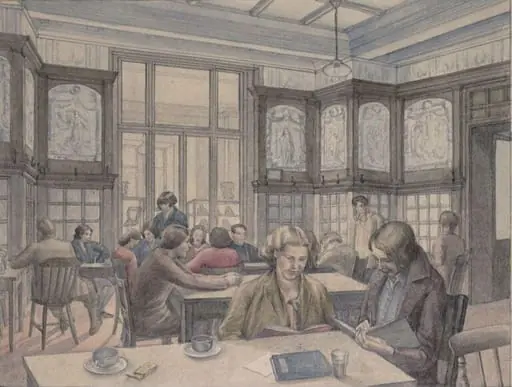 The Old Grill Room of the Victoria and Albert Museum, Occupied by Students from the Royal College of Art